



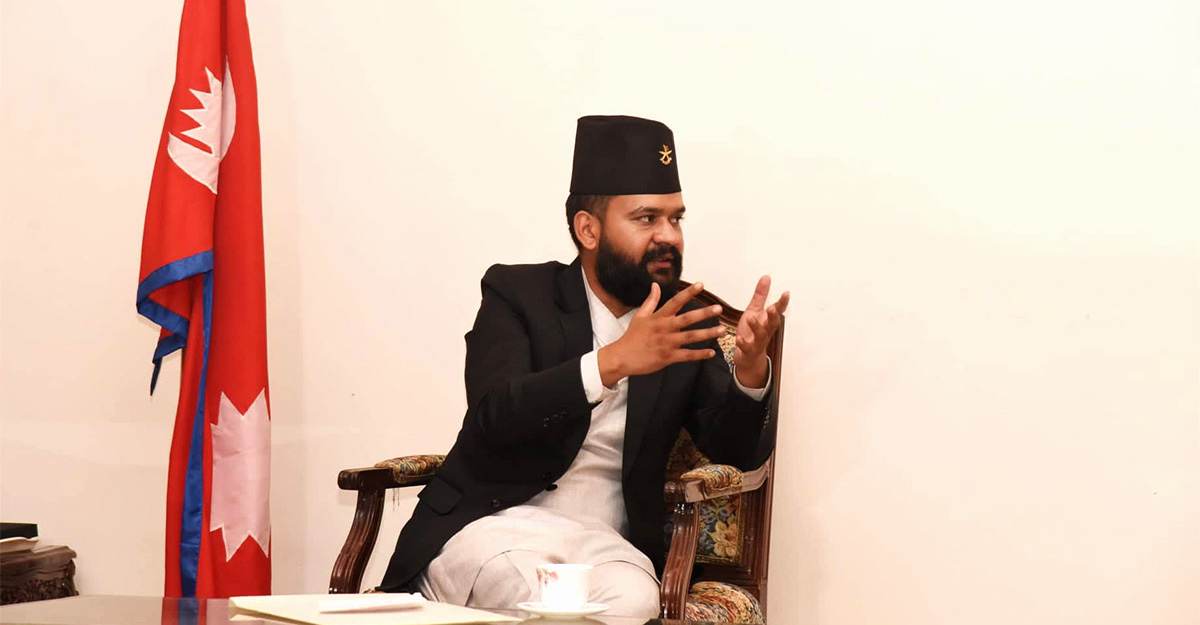
Prime Minister Directs Universities to Hold Convocations in All Seven Provinces and Create a Party Politics-Free Academic Environment
Prime Minister Balendra Shah has directed universities to focus on academic reform, financial discipline, the academic environment, and good governance. He issued the directives during a discussion on the current state of higher education in Nepal, its challenges and opportunities held on Tuesday at the Office of the Prime Minister and Council of Ministers in Singha Durbar.
Prime Minister Shah directed universities to decentralise their convocation ceremonies, which have so far been limited to the federal capital, Kathmandu, and organise them in all seven provinces in accordance with the spirit of federalism.
The Office of the Prime Minister believes this will make participation more convenient for thousands of students and parents at the local level. The Prime Minister also instructed the universities to begin special preparations for this purpose.
During the discussion, the Prime Minister instructed universities to reduce the outstanding audit irregularities accumulated over the years and maintain financial discipline. He also directed them to immediately recover and manage university land and government funds being used or occupied without authorisation and maintain cleanliness on campuses.
He further urged universities to act firmly to protect their encroached properties and focus on Nepal’s higher education reform priorities.
Vice-Chancellors Commit to Making Universities Free from Party Politics
The vice-chancellors participating in the discussion expressed a shared commitment to make academic institutions free from party politics and maintain good governance.
They resolved not to allow political activities, including student union activities, to undermine the academic environment of universities. They also collectively committed to keeping professors, employees, and students separate from party politics and focusing them solely on constructive, disciplined, and academic work.
The vice-chancellors further committed to extensive administrative, financial, and academic reforms, financial discipline, settlement of outstanding audit irregularities, and strengthened transparency.
The discussion also reached an agreement to strictly follow the national academic calendar approved and forwarded by the Ministry of Education and Sports through the University Grants Commission.
The vice-chancellors committed to immediately implementing academic calendars suited to their respective universities, conducting admissions, teaching, and examinations according to schedule, and moving forward with action plans requiring examination results to be published within a maximum of one month after the examinations are completed.
These commitments form part of the broader education reforms needed in Nepal.
Common Challenges Facing Universities
During the discussion, the vice-chancellors drew the Prime Minister’s attention to the serious problems currently facing Nepal’s universities. They identified the following major challenges:
-
A shortage of the human resources required under the approved staffing positions.
-
Encroachment on university-owned land worth billions of rupees and the inability to properly manage and protect those properties.
-
The inability to digitise the overall system because of insufficient academic and administrative coordination among universities.
-
The failure to develop modern research, technology-friendly classrooms, digital education in Nepal, digital teaching and learning methods, and a culture of innovation.
.jpg)



Comments 0
No comments yet. Be the first to start the conversation.