



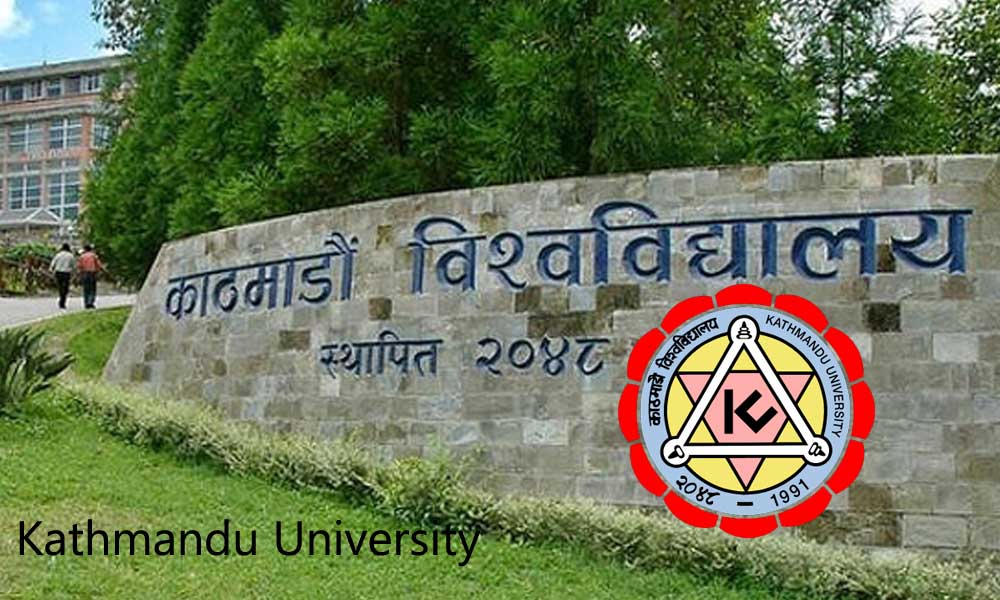
Public debate on higher education in Nepal still remains largely superficial. Sometimes a university is seen merely as an institution that distributes degrees; sometimes as a center for political appointments; sometimes as a preparatory center for employment; and sometimes its progress is measured by the number of buildings, budgets, and programs. But the core meaning of a university is not so narrow. A university is an institutional space that shapes social consciousness, produces knowledge, expands critical reason, and prepares future leadership. The progress of any nation cannot be understood separately from the standard of its universities.
Today’s question is not only, “How many universities are needed?” The main issue is what kind of universities are needed. If a university only enrolls many students, opens many programs, conducts many examinations, and distributes many certificates, it does not build the nation’s intellectual future. Such a model may produce degree-holding human resources, but it cannot create a generation capable of understanding problems, reading society, connecting technology with humanity, respecting local knowledge, and leading in a complex age. For this reason, the time has come to reimagine Kathmandu University not as a general university, but as a specialized university.
A specialized university should not be understood as a small, limited, or weak university. It means a university that identifies its specific intellectual field, national need, research capacity, and social responsibility, and builds deep excellence in those areas. Such a university should not try to cover every subject superficially; it must take on the concrete and difficult role of building depth in a few decisive areas. It seeks its strength not in the capacity to “teach everything,” but in the capacity to “study society’s necessary questions in depth.” Specialization is not contraction; it is strategic clarity. It should be measured not by the boundary of limitation, but by intellectual depth.
Looking at the historical character of Kathmandu University, the foundation for becoming such a specialized university can be seen. It was established by law as an autonomous, non-profit, self-sustaining public institution. Its declared objective is “quality education for leadership.” Its vision is to use knowledge and technology for human service. Its ideal is to take knowledge and skills “from campus classrooms to the community.” These phrases are not merely formal lines on a website; they direct Kathmandu University to move forward as an institution directly connected with Nepal’s social, technological, economic, and intellectual needs.
Can Kathmandu University already be called a specialized university today? The answer must be given carefully. Kathmandu University has the potential to become a specialized university, but potential and achievement are not the same thing. Autonomous administration, a comparatively regular academic calendar, a student-friendly environment, relations with industry and community, international trust, and a small but flexible institutional structure are its strong foundations. If these foundations cannot be transformed into a deep research culture, knowledge-centered leadership, excellence-oriented teaching system, society-linked curriculum, and an autonomous governance structure free from political interference, this potential may remain limited to an institutional claim.
At this point, Jamil Salmi’s 2009 debate on the “world-class university” becomes especially relevant. When discussing the creation of world-class universities, he does not speak only of ranking, prestige, or large investment. He gives importance to a system connected with institutional context, long-term investment, talent attraction, autonomous governance, and clear goals. If the aspiration to become world-class is limited only to the race for global rankings, it can distance a university from its own society. But if excellence is connected with national need, local context, and knowledge-based development, a university can become a major institution for social transformation.
For Kathmandu University, becoming “world-class” should not mean merely climbing higher in foreign ranking tables. For Nepal, it means producing excellent knowledge on decisive questions related to high hill and Himalayan life, climate crisis, public health, digital governance, democratic communication, local knowledge, technology, entrepreneurship, and community development. World-class quality becomes meaningful only when it is connected with the living questions of one’s own society. For Nepal, a world-class university is one that can understand the problems of Nepali society and engage in dialogue with the world.
Salmi’s argument on university excellence initiatives also presents the same foundation strongly. Many countries have started special investments, competitive grants, research centers, and high-level programs to build excellent universities. Funding alone is not enough for such initiatives to succeed. They must be connected with clear national priorities, institutional capacity, capable leadership, results-oriented research, talent management, and long-term evaluation. Otherwise, even an excellence initiative becomes limited to another project, another board, another building, and another inauguration ceremony. For Kathmandu University, the meaning of a “center of excellence” should also be the same: not merely a paper structure, but a living center of excellent knowledge collection.
Nepal’s current demographic condition has made the need for such a university even more urgent. The youth population should have been the country’s strength, but directionless higher education, weak employment structures, pressure for migration, and the mismatch between education and employment are turning this strength into anxious stagnation. A large section of our youth has not been adequately connected with employment, education, or training. The problem of youth unemployment, underemployment, and informal labor is not only an economic problem; it is a deep disconnect between education, skills, society, and the economy. When young people leave the education system, do not enter employment, and are not connected with training, the country loses not only labor power but also potential leadership.
The Nepal Labour Migration Report 2024 makes this even clearer. The report shows that more than 771,000 new and renewed labor permits were issued in fiscal year 2022/23 and more than 741,000 in 2023/24. The fact that more than 500,000 migrant workers returned to Nepal each year during the same period shows that labor migration has become not merely a one-way departure, but a cyclical socio-economic process. This means Nepal’s universities can no longer view youth only through the two narrow paths of “employment inside the country” or “preparation to go abroad.” For youth, a knowledge system must be built that understands migration, labor, skills, return, reintegration, and local entrepreneurship together.
This is where the importance of a specialized university becomes visible. Nepal today does not need a crowd of general degree holders; it needs a context-sensitive, problem-solving, and intellectually strong young generation. To prepare such a generation, merely changing the names of curricula is not enough. Teaching methods, research, community engagement, entrepreneurship, public policy, and technology must be integrated. Students should be treated not as consumers, but as co-creators. A university should be made not an examination center, but a laboratory for studying society.
Kathmandu University can identify some decisive areas for specialization. The first is innovation for the sustainability of Himalayan and high hill regions and climate change. Nepal’s hills and Himalayas are not only geography; they are connected with complex questions of water resources, lifestyles, risk, culture, migration, and development. The second is digital governance and public accountability. Nepal is under the superficial attraction of digitization, but the social meaning of digitalization, transparency, citizen rights, and the sense of accountability remain weak. The third is health technology and rural medicine. In a country with geographical inequality, research linking health services, public health, telemedicine, and community health is indispensable.
The fourth is the study of labor, migration, and reintegration. This field must now become an extremely important specialized area of knowledge that connects sociology, economics, policy studies, psychology, communication, skills development, entrepreneurship, and local governance. How can the skills of returned migrants be identified? How can they be transformed into local production, enterprise, and national knowledge capital? How can the dignity of workers and their social reacceptance be ensured? These questions must enter not only ministry files, but also university research, curricula, and community laboratories.
The fifth is indigenous knowledge, community engagement, and local development. A large part of knowledge in Nepal is embedded in community, language, culture, tradition, and local practice. If a university sidelines such knowledge as “informal” or “backward,” it serves not society, but only imported curricula. Agriculture, media, artificial intelligence, the democratic public sphere, local development, algorithmic impact, digital journalism, misinformation, and civic dialogue are not merely ordinary technical questions of today; they are also foundations of the national future.
Seen from the point of departure, the first condition for becoming a specialized university is autonomy. A university directed by ministry letters, aspirations in files, pressure from quality reviews, or immediate administrative convenience cannot build excellence. Excellence is born from critical freedom, strict intellectual standards, open competition, institutional accountability, and long-term vision. Leadership selection, faculty appointment, research priorities, and academic calendars must be guided by clear institutional policies. Without such a structure, specialization remains limited to speeches.
The second condition is excellence in teaching. In a specialized university, there is no room for making mediocrity a culture. Faculty evaluation should not be based only on seniority, position, administrative access, or formal qualifications, but on research contribution, depth of teaching, connection with society, interdisciplinary capacity, and intellectual leadership. Excellent students are prepared only through excellent teachers and an excellent research culture.
The third condition is a continuous research culture. The source of a university’s knowledge should not remain limited to undergraduate or graduate theses. MPhil, PhD, postdoctoral research, policy laboratories, community research centers, interdisciplinary collaboration laboratories, and evidence-based policy dialogue must be institutionally strengthened. If Kathmandu University wants to become larger in impact than in size, it must place research culture at the center.
The fourth condition is community-inclusive education. “From campus classrooms to the community” should not remain a slogan; it should become an educational method. Every center of excellence should maintain a long-term relationship with some community, local government, industry, school, health institution, or social organization. Students should identify problems, work with communities, conduct research, propose solutions, and critically review them. It is through this process that education becomes alive.
The future of Kathmandu University does not lie in following the path of becoming a general university. If it moves only along the path of more programs, more buildings, more degrees, and more administrative expansion, it will lose its originality. But if it works by connecting its historical autonomy, leadership-oriented education, community-centered ideal, and interdisciplinary research culture, it can become Nepal’s only specialized university.
Nepal today needs direction, not just degrees. Youth need intellectual confidence, not just certificates. Society needs thoughtful leadership, not just human resources. The nation needs not merely the slogan of “world-class quality,” but an excellent, accountable, and transformative university connected with its own context. If Kathmandu University can redefine itself in this direction, its contribution will not remain limited to institutional progress. It can build a national imagination of how Nepal connects knowledge, technology, society, labor, migration, and the future. National progress begins not from a university that teaches everything, but from a university that studies society’s decisive questions in depth.


Comments 0
No comments yet. Be the first to start the conversation.