



Effective Laws and Adequate Investment Urged for Education and Employment of Children with Special Needs
Stakeholders have stressed that the state should introduce effective laws and make adequate investments to provide skills-based education for children with special needs and enable them to compete in the employment market.
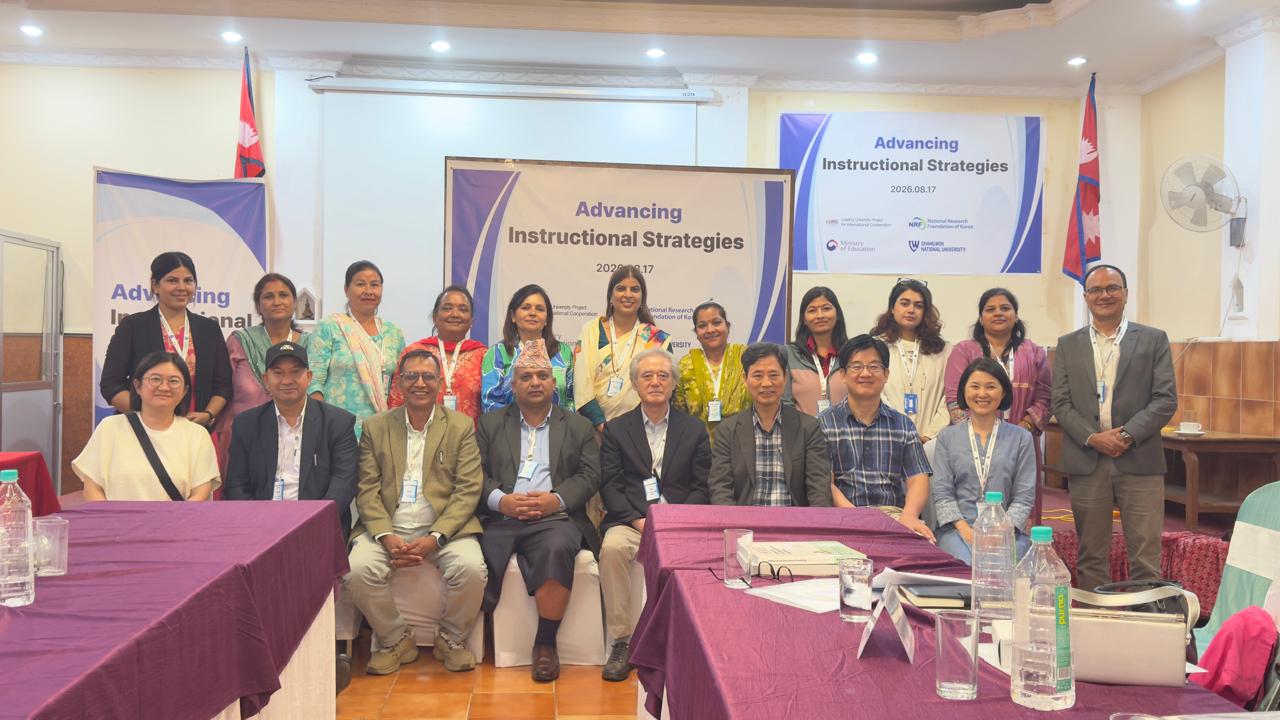
Nepali and Korean experts expressed these views at a program organized by the Leading University Project for International Cooperation (LUPIC), operated under Changwon University in Korea, in collaboration with other institutions.
LUPIC Director Prof. Dr. Jung Dae-young said the government should establish strong and effective legal provisions to ensure education and employment for children with special needs. He said the private sector, cooperatives, and other partner organizations should also be brought within the scope of such laws.
He further stated that concerned institutions should press the government to ensure through legislation that children receive priority in employment after acquiring the necessary skills.
Director Dae-young said that employers in South Korea are required to ensure an employment quota of at least 3.5 percent for persons with disabilities. He also praised the efforts the Government of Nepal has been making in this sector in recent times.
At the program, Jung Gyeong-ryul, Principal of Daegu ERM Special School in Korea, said students at his school graduate only after developing the ability to compete in the employment market.
Giving an example of the level of investment made by the school for students with special needs, he said, “There are 210 students studying at our school, while 150 staff members, including teachers, are employed to support them.”
Similarly, a teacher from Pohang Myungdo School, regarded as the first institution to provide arts and culture-related education specifically for students with special needs, emphasized the importance of educating children in a caring environment.
The teacher said that the way parents and teachers treat children at home and school has a direct impact on their learning, and that the state should therefore invest more in this area.
LUPIC Project Manager Kim Yun-young said the project has been providing various forms of support to universities and schools in Nepal.
Speaking in the context of Nepal, Pramod Bhandari, Principal of Purbanchal Gyanachakshu School in Sunsari, said Korean investment and experience in the education of students with special needs were commendable, while expressing concern that the Government of Nepal had not made adequate investment in this area.
Established in 2034 BS, the school has been providing education to students with visual impairments.
Principals and teachers from schools for children with special needs in the Kathmandu Valley and other parts of the country who participated in the program also said that, despite repeatedly requesting the government, investment has not been made according to their needs.



Comments 0
No comments yet. Be the first to start the conversation.