While giving practical shape to the concept of “Singha Durbar in every village” envisioned by the Constitution of Nepal 2072, local governments have become the closest guardians of citizens. Gosaikunda Rural Municipality, which carries the historical, religious, and tourism identity of Rasuwa District, provides services to its citizens that are not merely administrative tasks; they are the foundation for prosperity.
This presents an in-depth analysis of the services delivered by Gosaikunda Rural Municipality (Gaupalika / गोसाईकुण्ड गाउँपालिका), their legal basis, the process for receiving services, and practical measures to address the problems citizens may face. This content will serve as local government study material for students, a guiding document for policy makers, and a useful “service directory” for the general public.
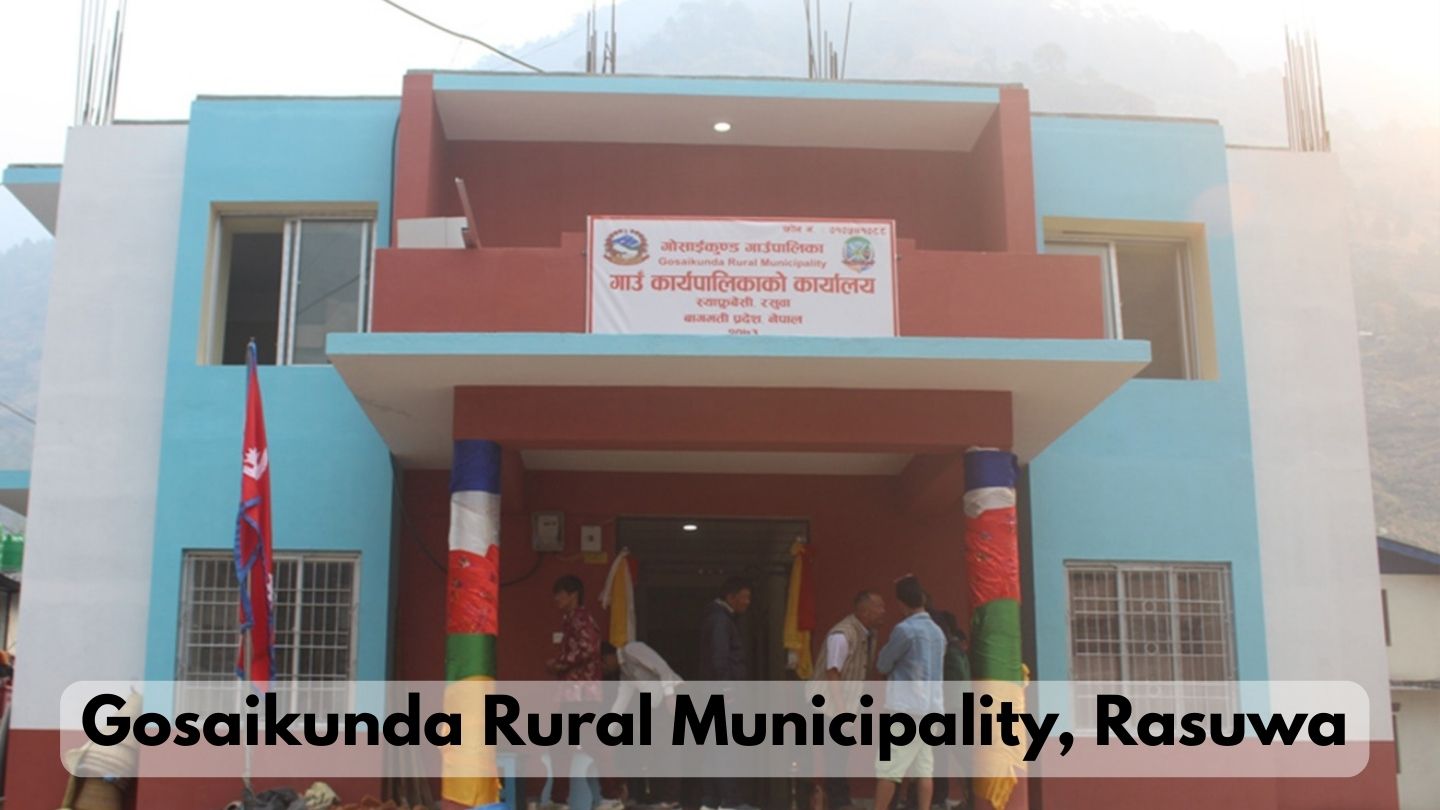
The main source of the services provided by Gosaikunda Rural Municipality is the Local Government Operation Act, 2074. Section 11 of this Act provides the rural municipality with a list of 22 exclusive powers. The philosophy of service delivery is based on “citizen supremacy.”
Here, service does not mean only the certification of documents; rather, it is the overall set of development-oriented and welfare activities that raise citizens’ living standards.
A citizen’s legal identity begins with vital registration. Through the online system (CBRS), the following services are provided from all 6 ward offices of Gosaikunda Rural Municipality:
Birth Registration: Registration is free if completed within 35 days of birth. For this, a hospital-issued birth verification document or a local postnatal check card is required. After 35 days, registration can be done by paying the prescribed fine.
Death Registration: The head of the family or a close heir must submit an application with the deceased person’s citizenship document and proof of the place of death. This is mandatory for social security and property transfer of the deceased.
Marriage Registration: Both husband and wife can register the marriage by appearing at the ward office with their citizenship documents, photographs, and a witness. This service especially ensures women’s legal rights.
Migration Registration: When permanently moving from one place to another, it is mandatory to obtain a migration certificate within 35 days. Citizens leaving Gosaikunda or entering here must submit the leaving certificate from the previous place.
Divorce Registration: After the court decision, it must be registered at the ward office.
Problem Resolution: If someone’s documents are lost or old records cannot be found, the rural municipality has arranged a provision to provide the service based on a “Sajamin Muchulka” and identification by local respected persons.
Gosaikunda Rural Municipality directly implements the state’s welfare concept.
Distribution of Social Security Allowances: Records are collected for senior citizens (70 years completed; 60 years in the case of Dalits), single women, widows, persons with disabilities, and endangered groups, and allowances are distributed quarterly through the banking system.
Issuance of Disability Identity Cards: On the recommendation of the rural municipality’s health section and the social development committee, identity cards are provided from category ‘Ka’ to ‘Gha’ based on the nature of disability.
Senior Citizen Honor: To value the experiences of senior citizens at the local level, the rural municipality also conducts programs such as health check-ups and pilgrimages.
Ward offices issue hundreds of types of recommendations needed in citizens’ daily lives. The major ones include:
Citizenship Recommendation: Relationship verification and permanent residence recommendation for those obtaining citizenship for the first time or obtaining a duplicate copy.
Relationship Verification: To establish a legal relationship among heirs or family members.
Economic Status Verification: Recommendation of economic resources required for students to receive scholarships or to go for foreign study.
House-Road Verification: A service that verifies the road access condition to the land mentioned in the land ownership certificate, which is mandatory for bank loans.
Unmarried Status Verification: A recommendation required for foreign employment or marriage.
In accordance with Article 217 of the Constitution of Nepal, a three-member Judicial Committee has been formed under the coordination of the Vice-Chairperson of Gosaikunda Rural Municipality. Its main objective is to create an environment of “justice within the village without needing to go to court.”
Jurisdiction: Minor disputes such as boundary disputes, non-payment of wages, domestic violence, crop damage by livestock, and failure to support senior citizens.
Mediation Process: The Judicial Committee, as far as possible, attempts to reach agreement through a “mediator” by bringing both parties together. In cases where mediation is not possible, decisions are made by following the legal process.
Benefit: This reduces citizens’ time, money, and mental stress. For citizens of remote areas of Rasuwa, this service has proved to be a “boon.”
To mobilize the rural municipality’s own resources and to keep the local economy active, the following services are provided:
Business Registration and Renewal: Small shops, hotels, lodges, and small industries must be registered with the rural municipality. As Gosaikunda is a tourism area, hotel business registration and monitoring have been given special priority.
Revenue Collection: Integrated property tax, land tax (Malpot), and business tax are collected. The collected revenue is spent on development and construction within the rural municipality.
Technical Support: For farmers involved in agriculture and livestock, services such as seed distribution, soil testing, and animal vaccination are provided free of cost or at subsidized rates.
From an educator’s perspective, Gosaikunda Rural Municipality is providing the following services to improve the quality of education:
Teacher Management and Monitoring: Preparation of academic calendars and management of teacher attendance for schools under the local level.
Scholarship Distribution: Scholarships for diligent, underprivileged, and Dalit students.
Basic Health Services: Through health posts in each ward, 35 types of basic medicines are distributed free of cost.
Immunization and Nutrition: Regular immunization schedules for children and programs against malnutrition.
Citizens have direct participation in development and construction works carried out by the rural municipality.
Formation of User Committees: Plans ranging from NPR 5 lakh to NPR 1 crore (within legal limits) are implemented through local user committees. This increases local employment and ownership.
Map Approval and Building Construction Permit: To ensure organized urbanization and earthquake-resistant structures, building map approval has been made mandatory.
Disaster Management: During disasters such as monsoon landslides or winter fires, services such as immediate relief and opening roads using dozers are made available 24 hours a day.
The use of technology is essential in modern administration. Gosaikunda Rural Municipality has advanced the following digital services:
Online Event Registration: Data is sent directly from the ward office to the central server.
Rural Municipality App: Information on notices, tenders, and programs through a mobile app.
Revenue System: Initiation of online tax payment.
Free Wi-Fi: Internet access in major public places and administrative buildings.
Some common problems citizens may face while receiving services, and their solutions, are presented below:
Incomplete Documents: Many citizens face delays because they do not bring complete documents. For this, the “Citizen Charter” placed outside the ward office should be read carefully.
Language Issues: As this is a Tamang-majority area, some senior citizens may find it difficult to understand the Nepali language. For this, the rural municipality has arranged staff or assistants who understand the local language.
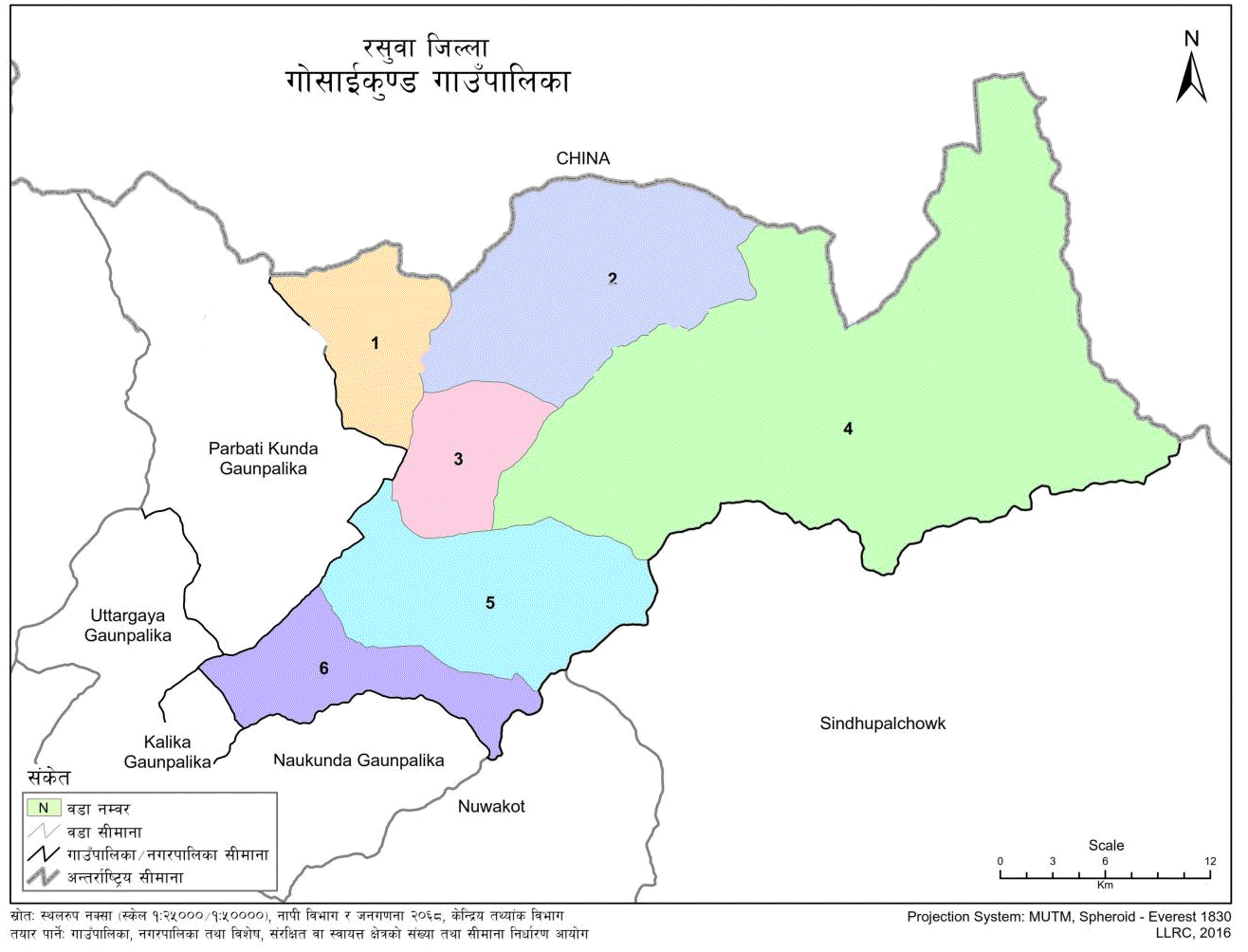
Geographic Distance: Since it can be difficult to come to the center from distant wards, the rural municipality has been conducting “integrated mobile camps” from time to time to deliver services within the settlements.
Receiving services from the local government is a citizen’s right, while paying taxes and complying with rules is a duty.
Right to Information (RTI): Citizens have the right to know about expenditures, decisions, and plans of the rural municipality. For this, an “information officer” is appointed.
Public Hearing: In public hearings organized at least twice a year, citizens can present their grievances directly.
As an administrator, some specific challenges here cannot be ignored:
Himalayan Geography: Cold weather and snowfall disrupt service delivery for some months of the year. Especially in remote wards such as Langtang, there are problems with internet and electricity.
Tourism Pressure: During the season, thousands of tourists arrive, which adds additional burden on the rural municipality for waste management and security.
Limited Resources: The gap between grants received from the center and internal revenue is large, making it difficult to implement major infrastructure plans.
In the coming days, Gosaikunda Rural Municipality has prioritized the following improvements:
Smart Ward Offices: Making all ward offices fully paperless.
Integrated Data Center: Preparing a database so that all citizen details remain in one place.
Mobile Service: Expanding “home-based service” programs for persons with disabilities and senior citizens.
Gosaikunda Rural Municipality’s local government is not only an administrative mechanism; it is the center of hope and trust for the people of Rasuwa. From vital registration to infrastructure, and from education to health, the true meaning of good governance is to make services simple, transparent, and free from unnecessary hassle.
What students need to understand is that local government is the foundation of democracy. Only if this foundation is strong will federalism succeed. The general public also needs to work together in the development of the rural municipality by being aware of their rights and fulfilling their duties. To make Gosaikunda’s service delivery more effective, a combination of technology use and human sensitivity is necessary.
Local Government Operation Act, 2074 — Government of Nepal
Vital Registration Regulations and Procedures — Ministry of Home Affairs
Annual Report and Citizen Charter of Gosaikunda Rural Municipality
Constitution of Nepal (2072) — Part 18 and 19 (Local Executive and Legislature)
Right to Information Act, 2064

.jpg)