Investment in education yields the highest return (An investment in knowledge pays the best interest). However, in today’s era, quality education, whether in Nepal or abroad, has become extremely expensive. For middle-class Nepali families, there is a compulsion to sell land or property or take loans at exploitative interest rates to make their children doctors, engineers, or pilots, or to send them abroad (Australia, the USA, Canada, the UK, etc.). This is a serious problem.
A practical and secure solution to this problem is Nepal Bank’s education loan (Nepal Bank Education Loan). Because Nepal Bank Limited is a government-owned bank, its interest rate is generally cheaper and more stable than private banks. However, many parents and students face problems of being cheated or having loans rejected because they do not understand the process and rely on middlemen.
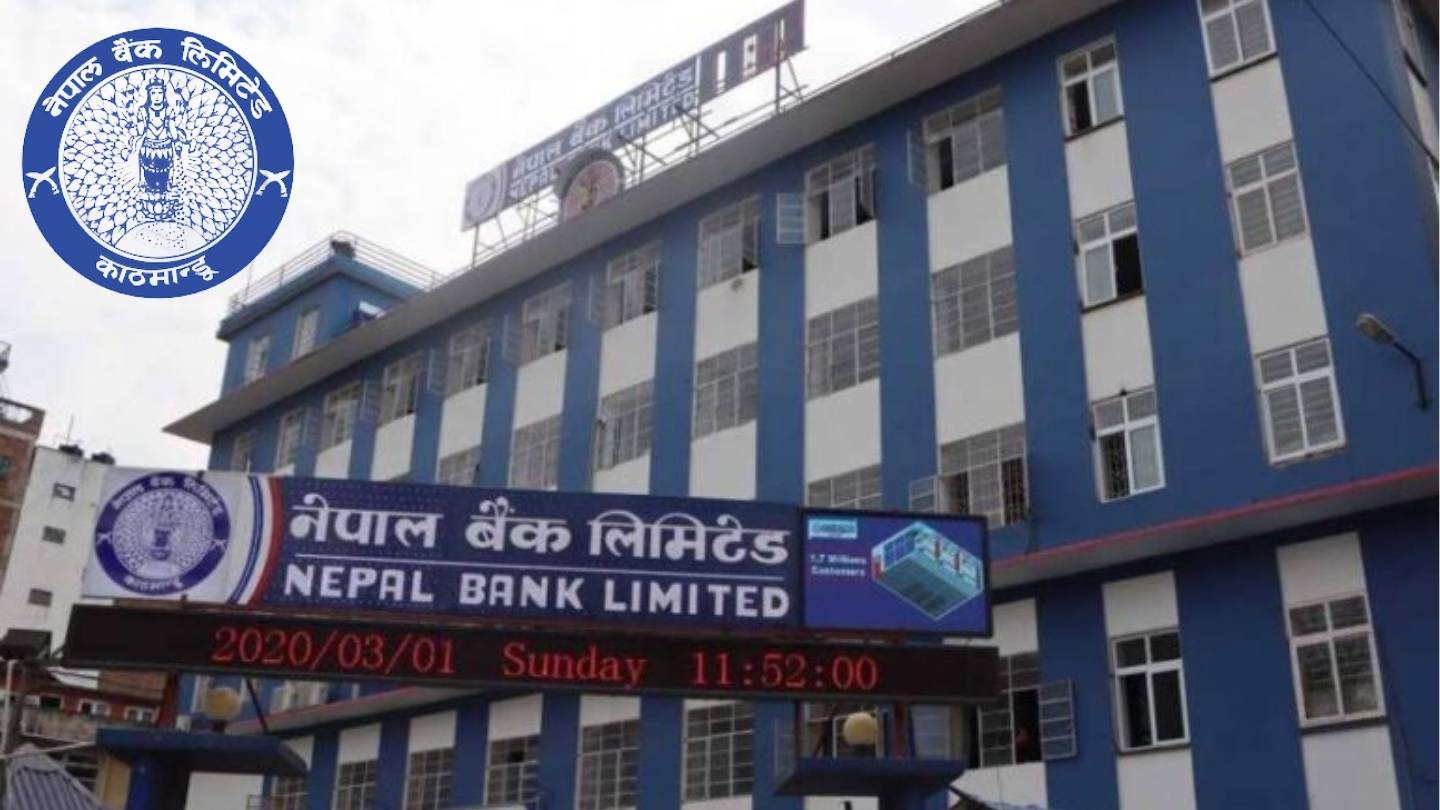
There are more than 20 commercial banks in the market. But why Nepal Bank? There are key reasons as follows:
Competitive Interest Rate (Low Interest Rate): Nepal Bank’s base rate is among the lower ones in the banking industry. As a government bank, it does not seek excessive profit. When the loan interest rate (Base Rate + Premium) is low, you save hundreds of thousands of rupees over a period of 10–15 years.
Credibility for Visa: Foreign embassies and high commissions view documents from a government bank with high credibility for visa processing. A statement and loan letter from a Class “A” government bank is a reliable basis for a visa officer.
Flexible Repayment: You do not have to start paying installments immediately after studies are completed. There is a moratorium period facility.
Based on facts, the key features of this scheme are as follows:
Target Group: Students who want to pursue higher education (Diploma, Bachelor, Master, PhD) in Nepal or abroad.
Loan Limit:
For Nepal: Based on need and collateral (generally from NPR 2.5 million to NPR 8.0 million or more, as per the bank’s latest circular).
For Abroad: Based on college tuition fee and living expense, in line with the Ministry of Education’s No Objection Letter (NOC).
Tenure: Up to 10 to 15 years (may vary according to the bank’s policy).
Grace or Moratorium Period: This is the most important aspect.
Study period plus up to 1 year. (Example: If the study period is 3 years, then up to 4 years you do not need to pay principal, only interest. This provides significant relief to parents.)
Margin: Generally, the bank finances 80% to 90% of the total cost. The remaining 10% to 20% must be arranged by the student or parents as self-investment (down payment).
Who is eligible? Do not be confused here. The bank evaluates not only the student, but also the parent’s capacity more closely.
Student Eligibility:
Must be a Nepali citizen.
Must have passed higher secondary level (Plus 2) or equivalent.
Must have received an offer letter (Offer Letter or Admission Letter) from a recognized university or college.
The study gap should not be too long (based on academic policy).
Parent or Guarantor Eligibility (Co-borrower):
Must have documents that clearly show the parent’s source of income (such as salary, house rent, business, pension, or foreign employment).
Must not be on the blacklist in the Credit Information Bureau (CIB) record.
The collateral property (house or land) must have road access and be legally dispute-free.
In my 30 years of experience, 90% of loan files get stuck due to insufficient documents. Prepare this checklist before going to the bank.
Educational Documents:
Transcript and character certificate from SLC or SEE up to the last degree.
College or university offer letter, I-20, or CAS.
If going abroad, Ministry of Education NOC (No Objection Letter).
College fee structure and details of living expenses.
Financial Documents:
If salaried: salary certificate, bank statement (6 months), tax clearance certificate, provident fund details.
If a businessperson: firm registration certificate, PAN or VAT registration, tax clearance certificate, audit report.
If house rent income: house rent agreement and receipt showing house rent tax payment (from ward office).
Collateral Documents:
Lalpurja (Land Ownership Certificate).
Four-boundary verified recommendation.
Map approval and building completion certificate (if a house).
Land revenue payment receipt.
Recommendation showing road access to the property (trace map or blueprint).
Other:
Copy of citizenship (student and parent).
Passport-size photos.
Relationship verification certificate.
From a problem-solving perspective, it is necessary to understand how the file moves forward in the bank.
Visit the credit department of the concerned branch. Meet the branch manager or credit officer and discuss your need and collateral.
Open bank accounts in the names of the student and parent. Fill out the loan application form.
The bank sends an authorized engineer (valuator) to evaluate the value of your house or land. The engineer determines the fair market value based on the government rate and the commercial rate. Remember, Nepal Bank provides loans based on distress value (emergency value).
After all documents and the valuation report are received, the bank approves the file. Here, a Debt Service Coverage Ratio (DSCR) is calculated to assess whether your income can sustain the monthly installment (EMI).
After approval, you go to the land revenue office to place the property under mortgage (Drishti Bandhak). Then the bank disburses the loan.
Important: The tuition fee amount is sent directly to the college or university account (via draft or SWIFT). It is not given in cash to the student. Living expenses may be deposited into the student’s account or loaded onto a travel card.
As a parent and financial advisor, my specific suggestions are:
Never present fake documents to the bank. A government bank verifies documents strictly. If fake documents are found, it can lead to a banking offense case in the future.
Engineers give high importance to road access. If the land has at least an 8 to 10 feet motorable road, valuation is higher and loan approval becomes easier.
When signing the agreement, confirm the premium rate. The base rate may change quarterly, but the premium rate (such as 2% or 3%) should remain fixed.
The bank requires insurance of the house used as collateral and life insurance for the student. Do not treat this as an unnecessary expense; it is a protective layer for the family in case of unforeseen events.
Start the bank process at least 1 month before the visa arrives. Government procedures can take time. Rushing at the last moment increases the chance of mistakes.
Nepal Bank Limited’s education loan is not only a means of providing money; it is a partner in building your future or your child’s future. Compared to private banks, the process may feel more complicated due to stricter paperwork. However, from the perspective of interest cost and safety, it is an excellent option.
If you proceed with correct documents, a clear income source, and patience, Nepal Bank will certainly help make your higher education goal a reality.
Note: Banking rules keep changing from time to time according to Nepal Rastra Bank directives. Therefore, before submitting an application, please contact the nearest Nepal Bank branch and obtain updated information.
Disclaimer: This information has been prepared entirely for educational and informational purposes. Please do not treat it as final information. Before making any financial decision, it is recommended to conduct self-study or consult an official financial advisor.
22 December 2025



.jpg)