




IT Courses in Nepal: Degrees, Diplomas, and Short-Course Options
Nepal’s IT education options generally fall into three routes: university degrees (often four-year undergraduate programs), TVET diplomas (commonly three-year, skill-focused programs), and short, vendor-aligned certifications. Each route can lead to real opportunities, but they signal different things to employers—degrees often show breadth and academic depth, diplomas tend to emphasize hands-on technical practice, and certifications can validate specific skills (cloud, networking, cybersecurity) when paired with projects and evidence of work.
Because of that, choosing an IT course in Nepal is really choosing a pathway. This guide compares the main routes you’ll see—BSc CSIT, BIT, BITM, CTEVT diplomas, and widely recognized certifications—using a simple quality checklist (what you study, how much practical work you produce, and how easy it is to verify the credential).
Official curricula help you confirm what’s actually taught (for example, TU’s BSc CSIT is structured across eight semesters with stated credit requirements, and CTEVT publishes detailed diploma curricula).
Table of Content
- IT Courses in Nepal: Degrees, Diplomas, and Short-Course Options
- How to read IT course titles in Nepal
- Degree vs diploma vs certification
- University degree pathways
- TVET diploma pathways (CTEVT)
- Short courses and certifications
- How to evaluate program quality in Nepal (a checklist)
- Example pathways you can adapt (not one-size-fits-all)
- Outcomes and limitations: what to expect realistically
- Conclusion
- FAQs
How to read IT course titles in Nepal
IT course names can look similar while pointing to different skill mixes:
-
“Computer Science / CSIT” usually leans toward programming, theory, and software systems (with IT components).
-
“Information Technology / IT” often emphasizes applied systems, infrastructure, and implementation.
-
“Information Systems / IT Management” often blends tech with business, operations, and management.

Degree vs diploma vs certification
Explain
-
A degree is usually the broadest option: multi-year study, structured semesters, and a wide curriculum.
-
A diploma (TVET) is typically more skill-focused and may be designed for faster entry into technical roles.
-
A certification is a targeted credential (cloud, networking, security, audit) that can complement a degree/diploma or help you specialize.
Inform
Official curriculum are your most reliable reference for what you’ll actually study. For instance, TU’s BSc CSIT curriculum states an eight-semester structure and 126 credit hours. CTEVT publishes full curriculum PDFs for diplomas, including the revised 2022 Diploma in Information Technology.
Practical Insight
When comparing options, ask: “What proof of skill will I have by graduation?”
Common proof signals include:
-
A portfolio (code, projects, write-ups)
-
Internship or industry placement
-
Lab work that produces artifacts (configs, deployments, security reports)
-
Assessments that require building, not only memorizing
Outcomes and limitations
-
Degrees can be strong for long-term growth but may feel slow if you need job-ready skills fast.
-
Diplomas can be practical but may need extra self-study to compete for roles that expect deeper software foundations.
-
Certifications can open doors only when paired with demonstrable skills (projects, labs, experience).
University degree pathways
BSc CSIT (Tribhuvan University)
Explain
BSc CSIT is a structured undergraduate program designed to cover computer science foundations plus IT and software system design/implementation.
Inform
TU curriculum describe BSc CSIT as an eight-semester program requiring 126 credit hours.
Practical Insight
BSc CSIT tends to work well if you want options across:
-
Software development and engineering
-
Data-related roles (with extra work in projects)
-
Systems and IT roles (with focused electives/projects)
A practical way to add job readiness is to align semester projects with a role target (web app, mobile app, small backend + API, data pipeline, security lab write-up).
Outcomes and limitations
-
Outcomes: Broad foundations and flexibility for multiple IT roles.
-
Limitations: If your goal is immediate employment, you may still need extra practical portfolio work alongside courses.
BIT (Bachelor in Information Technology)
Explain
BIT commonly targets applied IT and allied technical courses, often with a stronger “systems and implementation” flavor than a pure computer science track.
Inform
TU-related BIT materials describe a four-year structure and note a total requirement of 120 credit hours (as stated on a TU campus page). Curriculum PDFs for BIT courses are also published through TU IoST resources.
Practical Insight
BIT can be a good fit if you want to lean toward:
-
IT operations and support progression
-
Networking and infrastructure (with certifications or labs)
-
Systems analysis and implementation roles (depending on course mix)
Pairing BIT with a networking or cloud track (and a visible portfolio) can help employers interpret your specialization.
Outcomes and limitations
-
Outcomes: Applied pathway, often compatible with infrastructure and IT operations goals.
-
Limitations: For software engineering-heavy roles, you may need stronger programming depth and project intensity.
BITM (Bachelor of Information Technology Management)
Explain
BITM is positioned as a blend of management education and information technology, designed for students who want to work at the intersection of business and IT.
Inform
TU Faculty of Management show BITM (Bachelor of Information Technology Management) as effective from the admission batch 2025 onwards. A separate BITM course structure specifies a total of 126 credit hours and breaks credits into management, analytical/support, IT/computing, electives, plus project and internship components.
Older TU curriculum may still use the title BIM (Bachelor of Information Management), so always match the syllabus to the admission batch you’re verifying.
Practical Insight
BITM can fit roles where communication, process, and stakeholder work matter, such as:
-
Business analyst (with strong SQL + documentation samples)
-
Product or project coordination (with real project artifacts)
-
IT governance support roles (with fundamentals in security, risk, and compliance)
If you choose BITM, build “evidence of doing” early: a small system analysis, a prototype, a dashboard, or a mini case study.
Outcomes and limitations
-
Outcomes: Clear pathway toward business-facing IT roles.
-
Limitations: For deeply technical roles (advanced backend, low-level systems), you may need extra technical depth beyond the standard program.
Other common degree options you may see
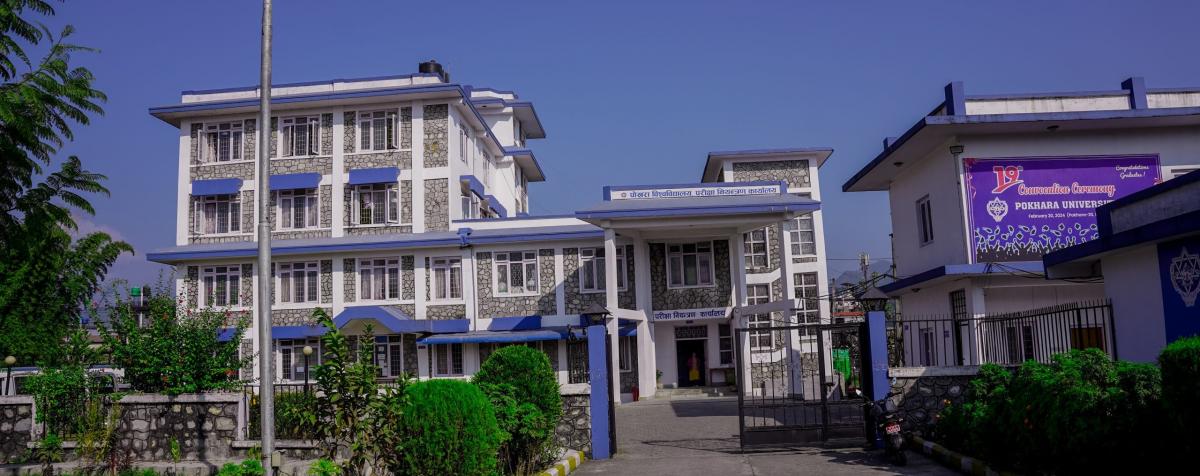
Many students also consider programs like BCA or engineering tracks such as BE IT, depending on the university and faculty. Pokhara University, for example, lists BE IT among its programs under Science and Technology.
TVET diploma pathways (CTEVT)
Explain
CTEVT diplomas are often designed to build practical skills for technical work, typically with a strong lab component.
Inform
CTEVT publishes the Diploma in Information Technology curriculum and notes it has been revised (including a revised 2022).
Practical Insight
A diploma can be a strong start if you:
-
Want earlier entry into technical work
-
Prefer hands-on learning
-
Plan to keep building skills through projects and certifications
To strengthen your signal, keep a “proof folder” of:
-
Lab outputs (configs, reports, screenshots with explanations)
-
Simple deployed projects
-
Internship letters or supervisor feedback (where available)
Outcomes and limitations
-
Outcomes: Practical readiness for certain entry-level technical roles, especially where hands-on work is valued.
-
Limitations: Some employers may still prefer degree-level breadth for certain positions; portfolio and experience become more important.
Short courses and certifications
Short courses can work best when they produce visible outcomes: a deployable project, a lab report, or a credential with a clear skill map.
Cloud fundamentals (AWS, Microsoft)
Explain
Cloud certifications often validate foundational knowledge and terminology, which can help you start a cloud learning pathway.
Inform
AWS describes the Cloud Practitioner certification as validating a foundational, high-level understanding of AWS Cloud, services, and terminology. Microsoft maintains a broad credentials and certifications catalog across cloud, security, AI, and business roles.
Practical Insight
To make cloud learning “count,” pair it with:
-
A small deployed app (static site + storage + basic IAM)
-
A documented cost-awareness and security checklist
-
A short write-up: what you built, trade-offs, and what you’d improve
Outcomes and limitations
-
Outcomes: Stronger vocabulary and clearer direction for next steps.
-
Limitations: Foundational certs alone rarely prove hands-on skill without projects.
Networking
Explain
Networking certifications can help structure learning from fundamentals to more advanced paths.
Inform
Cisco maintains a structured certification ecosystem across levels and technologies.
Practical Insight
If your goal is networking/IT infrastructure, build a lab routine:
-
Basic routing/switching scenarios
-
Network troubleshooting notes
-
Security basics (segmentation, access control concepts)
Outcomes and limitations
-
Outcomes: Clear specialization signal for networking-oriented roles.
-
Limitations: Without lab evidence, a certification can look “theoretical.”
IT support and security foundations
Explain
Foundational certifications can help for IT support entry points and building toward security or networking roles.
Inform
CompTIA describes A+ as a starting credential for IT operational and support roles, requiring two exams (Core 1 and Core 2).
Practical Insight
Make support skills visible by documenting:
-
Troubleshooting playbooks you wrote
-
A small home lab (OS installs, user accounts, backup routines)
-
Ticket-style write-ups (problem → steps → result)
Outcomes and limitations
-
Outcomes: A clearer entry-level support signal.
-
Limitations: For developer roles, you still need code-based portfolio proof.
Audit, governance, and risk
Explain
Audit/governance certifications typically align with roles focused on controls, risk, compliance, and enterprise IT governance.
Inform
ISACA maintains multiple credentialing tracks (including CISA and CISM among others).
Practical Insight
This route fits best when you can show:
-
Policy summaries and control mapping samples
-
Risk registers (practice examples)
-
Clear writing and structured thinking
Outcomes and limitations
-
Outcomes: Strong alignment with governance-focused career tracks.
-
Limitations: Often expects professional context; early learners should focus on fundamentals and practical writing samples.
How to evaluate program quality in Nepal (a checklist)
Explain
Quality is not just the course title. It is the combination of curriculum, teaching/assessment rigor, learning environment, and what students can actually produce by the end.
Inform
Use official curriculum first (university/CTEVT) to confirm structure and requirements. For institution-level quality signals, Nepal’s UGC maintains QAA-related information and lists of QAA receiving HEIs.
Practical Insight
Use this short checklist when shortlisting colleges/programs:
-
Curriculum: Do you have the latest syllabus for your admission batch?
-
Assessment: Are there labs, projects, presentations, or only written exams?
-
Practical output: What projects will you finish, and can you show them?
-
Faculty and support: Are there labs, mentoring, and a clear project process?
-
Industry exposure: Is an internship/project component clearly defined?
-
Quality signals: Does the institution publish QAA status or equivalent quality documentation?
-
Versioning clarity: Are you seeing BITM, and does it match your batch?
Outcomes and limitations
A strong checklist score improves your odds of getting real learning value, but it cannot guarantee outcomes; your projects, consistency, and communication still matter.
Example pathways you can adapt (not one-size-fits-all)
Pathway 1: Student aiming for software development
-
Degree base: BSc CSIT (or another software-heavy degree)
-
Parallel track: Git + portfolio projects (one per semester)
-
Proof: 2–3 deployable projects, clean documentation, basic testing habits
Pathway 2: Student aiming for networking or IT operations
-
Degree/diploma base: BIT or a CTEVT diploma (depending on preference)
-
Parallel track: Cisco-style networking study + home lab
-
Proof: lab write-ups, configs, troubleshooting logs
Pathway 3: Student aiming for business-facing IT roles
-
Degree base: BITM (2025 batch onwards naming)
-
Parallel track: SQL + dashboards + documentation
-
Proof: system analysis mini-projects, clear presentations, structured reports
Pathway 4: Career-switcher with limited time
-
Start: one foundational certification (cloud or support), plus a small project
-
Add: a structured learning plan (weekly build + document)
-
Proof: one portfolio project + one case-study style write-up
Outcomes and limitations: what to expect realistically
Nepal’s IT ecosystem is shaped by both local demand and global trends, with national strategies highlighting digital development priorities. Still, credentials alone rarely do the full job. Employers typically look for evidence you can build, troubleshoot, communicate, and learn continuously.
A helpful way to think about outcomes:
-
Degrees/diplomas help you build foundation + credibility
-
Certifications can add focus + keywords
-
Projects and internships provide proof
Limitations to keep in mind:
-
Different colleges can deliver very different learning experiences under the same program title.
-
Curriculum show intended structure; real quality depends on delivery, assessment, and your own practice habits.
-
If you need a role-specific target (cybersecurity, for example), frameworks like NICE can help you understand skill areas and role language, but you still need hands-on practice and evidence.
Conclusion
IT courses in Nepal fall into three practical routes: university degrees, CTEVT diplomas, and short certifications. The right choice depends on your goal, learning style, time, and how you plan to show proof of skill. Start by verifying the official curriculum for your batch (especially where program names have changed, like BITM vs older BIM), then use a quality checklist that looks beyond the title: assessments, labs, projects, internships, and credible institutional signals.
If you can leave your program with clear evidence—projects, lab work, documented learning—you will usually be in a stronger position than someone relying only on the credential name.
FAQs
What is BITM in Nepal?
BITM stands for Bachelor of Information Technology Management, used in TU Faculty of Management effective from the admission batch 2025 onwards.
Is BIM the same as BITM?
Older TU curriculum use BIM (Bachelor of Information Management), while newer introduce BITM for later admission batches. Always match the syllabus to your admission batch.
How long is BSc CSIT in TU, and how many credits is it?
TU curriculum describe BSc CSIT as an eight-semester program requiring 126 credit hours.
Where can I verify the latest CTEVT diploma curriculum?
CTEVT publishes curriculum listings and curriculum PDFs (including the revised 2022 Diploma in Information Technology).
Do certifications replace a degree?
Certifications can validate specific skills (cloud, networking, security), but they typically work best when paired with projects and demonstrable practice rather than replacing broad academic foundations.




Comments 0
No comments yet. Be the first to start the conversation.