



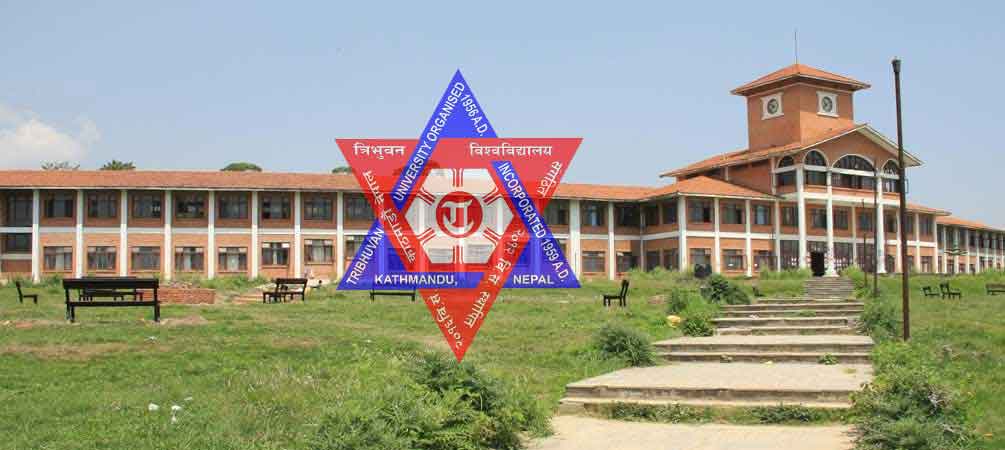
Choosing Humanities and Social Sciences at TU
A changing world has become a subject of global concern in higher education. The learning and research carried out by universities play an important role in transforming society, teaching about changes taking place in society, and influencing present and future change.
Higher education study and research prepare students in a practical and lasting way to face this changing world. Through curriculum, instruction, laboratories, libraries, services, and educational technology, universities today face the challenge of producing the kind of workforce employers seek for the changing world of work.
Many students who have completed their bachelor’s degree face a range of questions. They often remain uncertain for months about whether to pursue higher education, whether to study abroad or in Nepal, which university to choose in Nepal, and which subject to study.
This situation is linked to several factors: the lack of a clear long-term study and employment plan at the individual and family level, the absence of proper study counseling and career counseling arrangements in schools and universities, and the influence of others’ choices through the demonstration effect. For students facing such uncertainty, career planning remains a major concern in choosing higher education.
There is also a predetermined social mindset that students who studied science at the bachelor’s level must continue in science at the master’s level, and those who studied engineering, computer science, mathematics, management, agriculture, forestry, public health, and similar fields must continue in the same subjects. Because of this, many students continue to face problems even after enrolling at the postgraduate level.
So far, the state has neither created an institutional arrangement for such counseling nor have universities made adequate arrangements in this regard. Likewise, Nepal’s private sector also lacks well-organized institutions that provide study and career counseling.
This article discusses what humanities are, what social sciences are, what subjects are available under the Faculty of Humanities and Social Sciences at Tribhuvan University at the postgraduate level, and where and why they should be studied.
What Are Humanities and Social Sciences?
Humanities are the subjective study of human beings, our history, culture, and society, whereas social sciences use a scientific and evidence-based approach.
Social science is the objective study of humanity and its past, present, trends, and future projections. It studies how people interact with one another. Social scientists examine how society functions.
Social science helps us gain knowledge about the society we live in, and it leads toward greater efficiency and better quality of life for all.
Both the social scientist and the humanist are essential for a civilized society, and both humanities and social sciences are necessary for higher education. Social science subjects are academic fields that examine different aspects of society. There are many branches of social science, but all share the same purpose: to understand how people behave, interact, and influence the world.
Social science helps us understand how society works. It also helps us understand how processes can be improved at social, community, and individual levels. As a result, the study of social science can open many opportunities and provide students with a wide range of valuable skills.
What Do the Humanities Do?
Education is not only about knowing, but also about doing. Science helps people learn how to do things and teaches the basic skills needed to use technology in a career.
Humanities also teach people how to do important things. They help us learn how to communicate ideas. They teach us how to express ideas through poetry, stories, painting, music, sculpture, and dramatic arts.
Some people think a humanistic education is not practical. That is false, because understanding, evaluating, and appreciating final goals are also practical matters. This can be understood only by those who recognize the value of humanistic education.
Humanities strengthen people’s ability to think, reason, present ideas, and develop humanistic skills.
Why Is It Important to Study Social Sciences?
The study of social sciences is important because it helps us understand what it means to be human. When we understand ourselves better, we can better understand how the world works.
Once we understand this, we become able to identify the root causes of social problems and find more effective solutions. Social sciences help explain how society functions. They also help us understand why things are the way they are and assist in developing policies, interventions, and actions that can work with people to achieve better outcomes for individuals and society.
Social science is concerned with how social and economic well-being can be improved.
What Programs Are Offered Under This Faculty?
Tribhuvan University, Nepal’s oldest and largest university, is also counted among the universities with a large student population. Under Tribhuvan University, five technical institutes and four general faculties are in operation. One of them is the Faculty of Humanities and Social Sciences, Tribhuvan University.
At the bachelor’s level, this faculty offers around 43 subjects. At the postgraduate diploma level, it offers 5 subjects.
At the master’s level, teaching is conducted in 36 subjects, including 22 central departments. MPhil–PhD level study is being offered in 24 subjects.
Which Subjects Can Be Studied?
The subjects regularly taught under the Faculty of Humanities and Social Sciences at Tribhuvan University include:
-
Anthropology
-
Buddhist Studies
-
Economics
-
English
-
Fine Arts
-
Dance
-
Nepalese History, Culture and Archaeology
-
Geography
-
Hindi
-
History
-
Journalism and Mass Communication
-
Home Science
-
Library Science
-
Linguistics
-
Maithili
-
Nepal Bhasha
-
Nepali
-
Political Science
-
Population Studies
-
Psychology
-
Rural Development
-
Sanskrit
-
Sociology
-
Philosophy
In addition, the faculty runs one-year, two-semester postgraduate diploma programs through internal resources in the following fields:
-
School Counseling Psychology
-
Counseling Psychology
-
Dietetics and Public Health Nutrition
-
Women Studies
-
Yogic Science
Social sciences help students understand the importance of democracy, freedom, and rights, and how to live in society. They make students responsible, active, and reflective toward society. They also help students understand culture, religion, and society more deeply. In short, they help students become well-informed citizens.
What Are the New Subjects?
In addition to the regular programs mentioned above, the Dean’s Office has also been running postgraduate programs in various subjects through internal resources.
At the master’s level, subjects such as the following are being run through four different departments:
-
International Relations and Diplomacy
-
Conflict, Peace and Development Studies
-
Social Work
-
Gender Study
Similarly, the faculty has also been operating master’s-level programs through internal resource mobilization in the following subjects:
-
Sports Science
-
Labour Studies
-
Counseling Psychology
-
Governance and Anti-Corruption Studies
-
Tourism and Hospitality Management Studies
-
Crisis Management Studies
-
Yogic Science
Among these, Crisis Management Studies is being run at Crisis Management College in Dhumbaraahi, while the others are conducted within the University Campus, Kirtipur.
Under the Faculty of Humanities and Social Sciences, Strategic Study is taught at the Army Staff College, Shivapuri, and Security, Peace and Development is taught at the Armed Police Force Nepal Staff College, Sano Gaucharan.
Where Should You Study Which Subject?
Study Locations in Kathmandu Valley
Most of the above-mentioned master’s-level subjects are taught on the University Campus, Kirtipur. Other subjects are taught at major campuses within the Valley.
Ratna Rajya Laxmi Campus, Exhibition Road, is the only constituent campus of Tribhuvan University where only humanities and social sciences subjects are taught.
In addition, bachelor’s and master’s classes in many humanities and social sciences subjects are conducted according to student demand in morning, day, and evening shifts at the following campuses:
-
Patan Multiple Campus, Lalitpur
-
Padmakanya Multiple Campus, Bagbazar
-
Tri-Chandra Multiple Campus, Ghantaghar
-
Saraswati Multiple Campus, Thamel
-
Bhaktapur Multiple Campus
Maithili is taught at Ramswaroop Ramsagar Multiple Campus, Janakpur.
Nepal Bhasha is taught at the central department located in the premises of Patan Multiple Campus and at Ratna Rajya Campus.
Journalism and Mass Communication is taught not only at the central department but also at Mahendra Morang Campus and Madan Bhandari College, New Baneshwor.
Apart from these, various community and affiliated campuses in Kathmandu Valley also run bachelor’s and master’s programs in different subjects.
Major Valley campuses that run postgraduate programs at the community level include:
-
Madan Bhandari College
-
Pashupati Multiple Campus
-
Baneshwor Multiple Campus
-
Khwopa College, Bhaktapur
-
Bageshwari College
-
Dillibazar Kanya Campus
-
Gramin Adarsha Campus
These campuses offer subjects such as Sociology, Political Science, English, Nepali, Rural Development, and others.
At the private level, Kathmandu Model College runs a master’s program in English, while GoldenGate College offers Economics. Likewise, K and K College, Baneshwor, runs classes in Psychology and Gender Study.
Other private campuses also run Sociology and related subjects. Beyond the Valley, from Mechi in the east to Mahakali in the west, constituent and affiliated campuses across all seven provinces also provide bachelor’s and master’s-level classes in various humanities and social sciences subjects, giving local students access to study opportunities.
What Is the Situation Outside the Valley?
Bachelor’s and master’s-level study in different subjects is being conducted across all seven provinces outside the Valley as well.
Koshi Province
Campuses under Province 1 include:
-
Mahendra Ratna Multiple Campus, Ilam
-
Mechi Multiple Campus, Jhapa
-
Damak Campus, Jhapa
-
Post Graduate Campus, Biratnagar
-
Mahendra Morang Adarsha Campus, Biratnagar
-
Mahendra Campus, Dharan
-
Dhankuta Multiple Campus
-
Tehrathum Campus
-
Myanglung Campus
-
Urlabari Campus
-
Diktel Campus
Madhesh Province
Campuses under Madhesh Province include:
-
Mahendra Bindeshwori Campus, Saptari
-
Ramswaroop Ramsagar Campus, Janakpur
-
Thakur Ram Multiple Campus, Birgunj
-
J.S. Murarka Campus, Lahan
-
Rampratap Ramprasad Tamang Campus, Golbazar
-
Janajyoti Multiple Campus, Chandranigahapur
-
Hari Khetan Campus, Birgunj
-
National People College, Kanchanpur, Saptari
These campuses are running different bachelor’s and master’s-level subjects.
Bagmati Province
Outside the Valley, campuses in Bagmati Province include:
-
Birendra Multiple Campus, Bharatpur
-
Shahid Smriti Campus, Tandi
-
Saptagandaki Campus, Bharatpur
-
Makwanpur Multiple Campus, Hetauda
-
Sindhuli Multiple Campus, Sindhulimadi
-
Kavre Multiple Campus, Kavre
-
Lampantar Campus, Sindhuli
These campuses have been running quality bachelor’s and master’s-level education.
Gandaki Province
Tribhuvan University campuses in Gandaki Province include:
-
Prithvi Narayan Multiple Campus, Pokhara
-
Dhaulagiri Campus, Baglung
-
Kalika Multiple Campus, Pokhara
-
Marsyangdi Multiple Campus, Lamjung
-
Kumarwarti Multiple Campus, Kawasoti
-
Waling Multiple Campus
-
Galyang Multiple Campus
-
Adikavi Bhanubhakta Campus, Damauli
These campuses offer various humanities subjects at bachelor’s and master’s levels.
Lumbini Province
In Lumbini Province, the following campuses are offering different subjects at bachelor’s and master’s levels:
-
Tribhuvan Multiple Campus, Palpa
-
Butwal Multiple Campus, Butwal
-
Bhairahawa Multiple Campus, Rupandehi
-
Rammani Campus, Butwal
-
Annapurna Model College, Butwal
-
Mahendra Multiple Campus, Dang
-
Rapti Babai Campus, Tulsipur
-
Mahendra Multiple Campus, Nepalgunj
Sudurpashchim Province
In Sudurpashchim Province, the following campuses are running classes in humanities and social sciences:
-
Doti Multiple Campus
-
Dadeldhura Multiple Campus
-
Ghodaghodi Multiple Campus, Sukhad, Kailali
-
Rastriya College
Likewise, Janajyoti Campus, Mahendranagar, Kanchanpur, has also been running programs up to the master’s level.
Why and Which Subject Should You Study?
Humanities and social sciences should be studied in order to understand society. These subjects teach students about social norms and codes of conduct, helping them become aware of their role in society.
Before enrolling in higher education, students need to consider what return they can expect from the investment of time, labor, and money. Under the Faculty of Humanities and Social Sciences, there are many excellent subjects based on students’ interests, aspirations, and needs.
In a country like ours, it cannot be said that higher education is pursued only for knowledge. There are many subjects in this faculty through which students can also gain employment opportunities. The faculty aims to develop social responsibility, analytical ability for policy-making, and human qualities. These subjects have gained greater priority especially after higher education began to be connected more directly with employment.
Subject Choice and Career Direction
For example, those who want to become capable administrators in higher positions in the civil service in the future may find subjects such as Economics, Political Science, Geography, History, and Culture useful.
Those interested in foreign affairs and diplomacy may find International Relations and Diplomacy and English suitable choices.
Those who wish to work in national and international non-governmental organizations may choose among:
-
Sociology
-
Anthropology
-
Rural Development
-
Population Studies
-
Conflict, Peace and Development Studies
-
Gender Study
-
Labour Studies
-
Social Work
-
Crisis Management
-
Governance and Anti-Corruption Studies
People planning to enter politics need knowledge not only of Political Science but also of Economics, Sociology, and History.
For those who wish to become capable teachers and professors in the future, subjects such as English, Economics, Sociology, Mathematics, Nepali, and Rural Development may be appropriate.
Economics is a strong subject for those who want to serve in Nepal Rastra Bank and other banks and financial institutions, as well as for those who want to become economists and conduct strong research. Economics and Population Studies may also be useful for those who want to work under the Department of Statistics.
Those who want to build journalism as a profession and gain expertise in it may choose Journalism and Mass Communication.
Those interested in language and literature may choose from Sanskrit, Nepali, English, Hindi, Linguistics, Maithili, and Nepal Bhasha.
Likewise, Buddhist Studies is a useful subject for gaining expertise in Buddhist philosophy. Those interested in music, tabla performance, painting, sculpture, dance, and film studies have also been provided opportunities to study such subjects.
For those who want to gain expertise in sports, Sports Science is necessary. For those who want to develop competence in tourism, Tourism and Hospitality Studies has emerged as a strong subject within this faculty.
Psychology, Counseling Psychology, Philosophy, and Yogic Science are also leading subjects for those interested in those areas. These subjects appear to attract many students from medical education streams as well. Their study opens not only theoretical understanding but also practical learning and employment pathways.
Who Can Study What?
Under the Faculty of Humanities and Social Sciences, all students who have passed Grade 12 can enroll in any subject of their choice at the bachelor’s level.
At the master’s level, however, admission to English and other language-related subjects requires prior study of the same subject at the bachelor’s level.
For other subjects, students who have completed bachelor’s degrees from the faculties of Management, Law, Education, and from institutes such as Engineering, Science and Technology, Forestry, and Agriculture may enroll in different master’s-level subjects under this faculty according to their interests, provided they meet the minimum conditions set by the subject committee.
Looking at past enrollment patterns, the number of students entering this faculty from other faculties and institutes appears significant. In particular, a large number of students from other faculties and institutes have been coming to study subjects such as Economics, Sociology, Rural Development, and other interdisciplinary areas.
Linking Arts with Technology
There is no disagreement that the subjects under the Faculty of Humanities and Social Sciences are connected with art, literature, humanity, and social fields.
In today’s scientific age, if art is not linked with technology, it becomes difficult to keep pace with social transformation. For this reason, in recent years the faculty has been running the four-year, eight-semester Bachelor’s Degree in Computer Application (BCA) at the bachelor’s level under the semester system.
All students from the first graduating batch have moved ahead successfully in self-employment as well as in domestic and international competitive job markets.
From this year, the Dean’s Office has also been preparing to launch the two-year, four-semester Master’s Degree in Computer Application (MCA) at the postgraduate level under the semester system.
What Are the Admission Criteria?
For admission to all bachelor’s and master’s-level semester-based programs under the Faculty of Humanities and Social Sciences, students who have passed the lower level must appear in the entrance examination as prescribed by the Dean’s Office.
Only after passing the entrance examination can students who meet the minimum qualification and the standards set by the subject committee enroll in the first semester.
Although the seat number is not fixed in ordinary subjects, the maximum seat number in programs run through internal resources has been set at 50.
For admission entrance examinations and examinations of other semesters, the Dean’s Office has arranged for students to fill out forms online through the website, which appears to have made the process easier.
What Is the Study, Teaching, and Examination System Like?
At the bachelor’s level, students must complete eight semesters in four years. At the master’s level, students must complete four semesters in two years.
Each semester requires at least 16 weeks of study. Across the four semesters, the total credit hours are about 63. One credit hour is equal to 16 hours of instruction time.
Except in language subjects, the medium of instruction in class is English.
In each semester, 40 percent of the evaluation is internal and 60 percent is external. Internal assessment includes attendance, presentation, assignments, project work, teacher evaluation, and written examination.
The external examination is generally a three-hour written examination except in practical subjects. External examinations are conducted by the Dean’s Office.
To be eligible for the external examination, students must have 80 percent attendance in class and must pass all subjects in the internal examination.
To pass the examination, students must obtain a minimum of 50 percent in each subject, equivalent to GPA 2.7, and an aggregate of 60 percent, equivalent to CGPA 3.0.
According to the semester examination operating procedure of Tribhuvan University, if the difference between internal and external marks exceeds 20 percent, the internal marks are reduced so that they are only 20 percent higher. Students interested in this structure may also review the broader Tribhuvan University examination system.
Quality Education at Minimum Cost
The fees for postgraduate-level study under the semester system in the Faculty of Humanities and Social Sciences are generally moderate.
In ordinary and regular subjects, the total fee for four semesters in central departments and constituent campuses is around NPR 40,000 to 50,000.
In postgraduate programs run through internal resources, where the program bears its own costs, the fee is around NPR 150,000 to 200,000.
At affiliated campuses, these fees vary from one campus to another.
Conclusion
Humanities and social science degrees may differ widely, but they share one common feature: they are centered on human life.
Humanities subjects are often analytical or philosophical. Social science subjects are more scientific and practical.
Social sciences help students understand the importance of democracy, freedom, and rights, and how to live in society. They make students responsible, active, and reflective toward society. They also help students understand culture, religion, and society more deeply.
In short, they help students become well-informed citizens. For students considering postgraduate study in Nepal, the broader question of why to study a master’s degree remains closely tied to purpose, subject choice, and future direction.






Comments 0
No comments yet. Be the first to start the conversation.