




Learning Spanish can strengthen language skills, support communication across cultures, and provide regular mental exercise. It requires learners to remember vocabulary, distinguish unfamiliar sounds, understand new grammatical patterns, and select the right words during conversation.
These activities engage several cognitive processes, but claims about bilingualism and brain health require careful interpretation. Research does not show that Spanish is uniquely beneficial to the brain, nor does learning a second language guarantee better memory or protection from dementia. The possible benefits come from the sustained challenge of learning and using another language, regardless of which language a person chooses.
Table of Content
- How Learning a Second Language Engages the Brain
- Regular Practice Exercises Memory
- Possible Effects on Attention and Cognitive Control
- Spanish Learning and Brain Plasticity
- Does Bilingualism Delay Dementia?
- Can Learning Spanish Later in Life Help?
- Social and Cultural Benefits
- Creativity and Flexible Communication
- Practical Ways to Learn Spanish
- Consistency Matters More Than Intensity
- A Balanced View of Bilingualism and Brain Health
How Learning a Second Language Engages the Brain
Language learning requires several brain systems to work together. A learner must connect sounds or written forms with meaning, retrieve words from memory, follow sentence structure, and monitor whether a response fits the situation.
Research examining second-language learning has reported changes in brain activity, connectivity, and structure. These findings reflect neuroplasticity—the brain’s ability to adapt in response to experience. However, the extent of these changes differs according to factors such as age, proficiency, study intensity, and frequency of language use.
Students beginning Spanish can strengthen this learning process through regular practice rather than relying on occasional intensive sessions. A broader review of language-learning and acquisition strategies can help learners choose methods suited to their level and goals.
Regular Practice Exercises Memory
Learning Spanish involves remembering vocabulary, verb forms, pronunciation, and sentence patterns. Retrieving this information during reading, listening, writing, or conversation gives learners repeated practice in encoding and recalling new material.
This does not mean that studying Spanish will automatically improve memory in every part of daily life. Research on whether language learning transfers to broader memory abilities remains mixed. Some studies involving older adults have found improvements in selected areas, while others have reported limited or no advantage over other mentally demanding activities.
Learners can improve their ability to retain Spanish vocabulary by reviewing words at gradually increasing intervals and actively trying to recall them before checking the answer. These methods are explained in this guide to spaced repetition and long-term memory.
Possible Effects on Attention and Cognitive Control
Using two languages often requires a speaker to manage competing vocabulary and select the language appropriate to the situation. Researchers have therefore examined whether bilingual experience strengthens executive functions such as attention control, task switching, inhibition, and working memory.
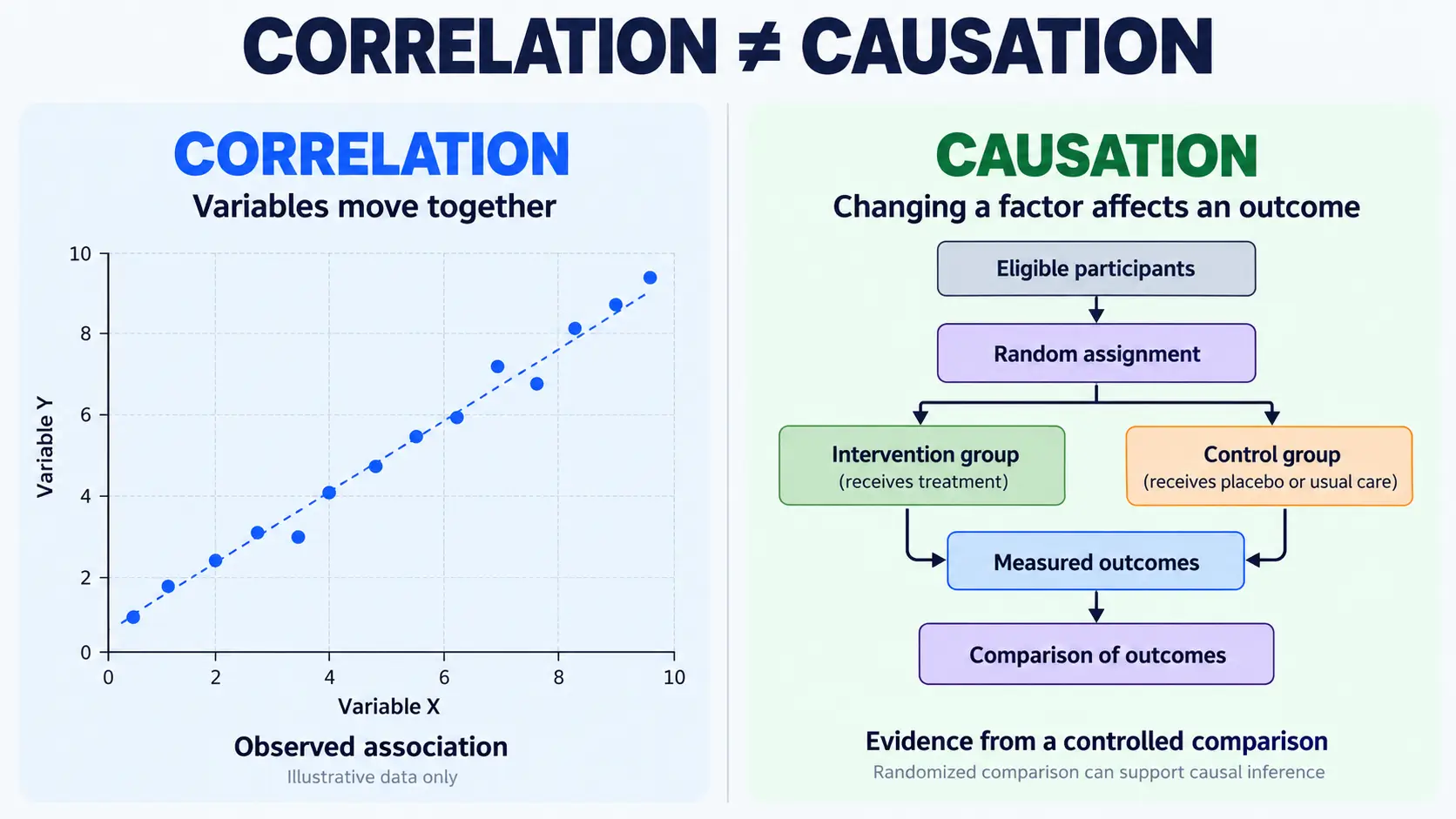
The evidence is not uniform. Some studies have found small advantages for bilingual participants, but several meta-analyses have reported that the effects become very small or disappear after researchers account for publication bias and differences between studies. The results can also vary by age, task, language experience, and frequency of use.
The most accurate conclusion is that managing two languages may exercise aspects of attention and cognitive control, but bilingualism does not give everyone a general or measurable advantage in problem-solving.
Language learners still practise useful habits such as monitoring errors, changing strategies, interpreting context, and finding alternative ways to express an idea. These activities can complement broader critical-thinking and problem-solving skills.
Spanish Learning and Brain Plasticity
Spanish provides a meaningful learning challenge for people who do not already speak a closely related language. Students encounter new vocabulary, pronunciation patterns, grammatical gender, verb conjugations, and differences in formal and informal communication.
A longitudinal study of classroom-based Spanish learners reported structural brain changes over two semesters, supporting the broader finding that sustained second-language study can be associated with neuroplastic adaptation. Such findings demonstrate that learning changes how the brain processes language, but they do not prove that these changes prevent illness or improve every cognitive ability.
The amount and type of practice are likely to matter. Memorizing isolated word lists creates a different learning experience from listening, reading, speaking, and responding in meaningful situations.
Does Bilingualism Delay Dementia?
Research has investigated whether lifelong bilingualism contributes to cognitive reserve—the brain’s ability to maintain functioning despite age-related changes or disease.
Some observational studies and meta-analyses have found that bilingual people with dementia were diagnosed or began showing symptoms later than monolingual people. However, other research has not found a lower risk of developing dementia or a consistently slower rate of cognitive decline. Education, migration, occupation, socioeconomic conditions, cultural background, and patterns of language use can also influence the findings.
The US National Institute on Aging describes bilingualism as a possible contributor to cognitive reserve but notes that its effect on resilience to Alzheimer’s disease and related dementias remains controversial. Researchers continue to study why some investigations report benefits while others do not.
Bilingualism should therefore not be described as a way to prevent, cure, or treat dementia. Learning Spanish can be an enjoyable and mentally active pursuit, but it is not a substitute for medical care or established health guidance.
Can Learning Spanish Later in Life Help?
A person does not need to become bilingual in childhood to benefit from learning a language. Adults can develop useful Spanish skills and experience the intellectual and social rewards of continued learning.
In one randomized trial, adults aged 65 to 75 studied Spanish through an app for 16 weeks. The group improved on some measures of executive function compared with a waiting-list group, although the effects were not present across every test and were different from those produced by a brain-training program.
Another randomized study found that older language learners improved in episodic memory and cognitive flexibility, but most changes were not substantially greater than those associated with music training. The researchers concluded that the unique cognitive effects of later-life language learning appeared limited.
These findings suggest that language study can be one valuable form of mentally engaging activity. They do not establish it as a guaranteed method of slowing cognitive decline.
Social and Cultural Benefits
The strongest benefits of Spanish are not limited to laboratory measures of cognition. Learning the language may allow a person to communicate with more people, understand Spanish-language media, travel with greater independence, and engage more directly with different communities and cultural traditions.
Conversation also adds a social dimension to learning. Speaking with classmates, tutors, friends, or family members requires listening, cooperation, and rapid interpretation. For many learners, these interactions provide motivation that cannot be gained from vocabulary drills alone.
The value of Spanish will depend on the learner’s location, relationships, education, work, and personal interests. Another language may be a more practical choice where it offers greater opportunities for regular use.
Creativity and Flexible Communication
When learners do not know an exact Spanish word, they often need to describe an idea using the vocabulary they already have. They may rely on context, gestures, comparisons, or simpler sentence structures.
This encourages flexible communication, but claims that bilingualism directly makes people more creative are difficult to establish. Creativity is influenced by many personal, educational, and environmental factors.
A safer conclusion is that language learning gives people practice in approaching meaning from different directions. It may also expose them to expressions, stories, customs, and perspectives that are less visible through one language alone.
Practical Ways to Learn Spanish
The cognitive demands of language learning come from active and sustained participation. Passive exposure may be useful, but it is unlikely to produce strong skills without practice.
A balanced routine can include:
-
Reviewing vocabulary through active recall
-
Listening to material appropriate to the learner’s level
-
Reading short texts and identifying unfamiliar expressions
-
Writing simple sentences or journal entries
-
Speaking regularly, even with limited vocabulary
-
Repeating difficult sounds and phrases
-
Revisiting earlier material
-
Using new words in meaningful contexts
Podcasts can help learners become familiar with pronunciation, rhythm, and everyday speech. Beginners should choose content designed for their level and use transcripts where available. Listening should be combined with speaking, reading, writing, and feedback.
Digital resources can also support structured practice, although their quality, privacy terms, and teaching methods differ. Learners comparing apps and platforms can review available computer-assisted second-language learning tools.
Consistency Matters More Than Intensity
A manageable routine is usually more sustainable than occasional long sessions. Ten to twenty minutes of focused daily practice may be easier to maintain than several hours once a week.
Learners can begin with a small set of useful goals, such as:
-
Learn expressions needed for basic introductions.
-
Practise listening to short, understandable recordings.
-
Review vocabulary several times across the week.
-
Write or speak using recently learned material.
-
Track progress according to practical ability rather than the number of lessons completed.
Fluency takes time, and progress may not be steady. Forgetting words, confusing grammar, and struggling to follow native speakers are normal parts of language development.
A Balanced View of Bilingualism and Brain Health
Learning Spanish provides clear educational, cultural, social, and communication benefits. It also challenges the brain through memory retrieval, attention, listening, interpretation, and language selection.
Research supports the idea that second-language learning can produce neuroplastic changes and may influence selected cognitive abilities. However, evidence for a broad bilingual advantage is mixed, and studies linking bilingualism with later dementia symptoms do not prove that learning Spanish prevents dementia.
Spanish is worth learning because it can expand how a person communicates, learns, and participates in the world. Any possible cognitive benefit should be treated as an additional reason to remain mentally active—not as a medical promise.





Comments 0
No comments yet. Be the first to start the conversation.