




Understanding Addiction: Why College Students Are at Increased Risk and How to Stay Safe
Addiction can affect students in universities across the world. While alcohol and drug use are often discussed in relation to college life, excessive internet use and other compulsive behaviours can also affect student wellbeing.
Addiction is not something students should feel ashamed of or hide. Prevention, early support, and recovery are possible when students recognise the concern and seek appropriate help. Universities, health professionals, student wellbeing services, and trusted support networks can all play an important role.
This article explains why college students may face a higher risk of addiction and how mental health support, student wellbeing services, and clear guidance to support resources can help reduce harm and support recovery.
Why Are College Students More Vulnerable to Addiction?
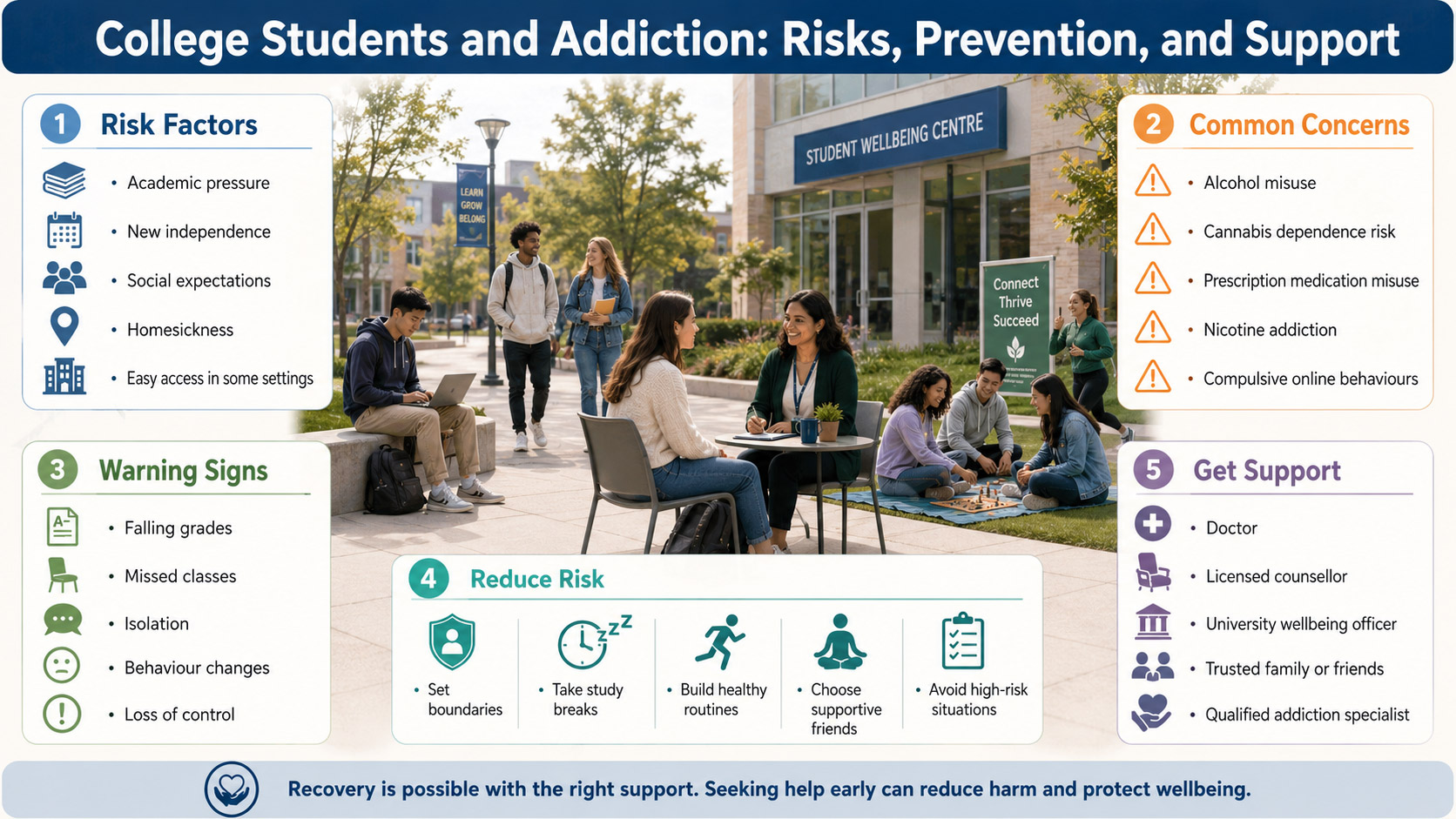
College life can expose students to new pressures, social environments, and responsibilities. In some university settings, alcohol, nicotine, or other substances may be more visible or socially accepted, especially where nightlife or party culture is a strong part of student life. These conditions do not cause addiction on their own, but they can increase risk when combined with stress, isolation, or limited support.
Transition into independence – Moving away from home can help students build confidence and life skills, but it may also place them in situations where they need to make decisions about alcohol, nicotine, or other substances without the same level of family supervision.
Academic pressure – Deadlines, exams, grades, and setbacks can create stress. When students do not have healthy coping strategies or enough support, they may be more likely to use substances or compulsive behaviours to manage difficult emotions.
Social expectations – Party culture, peer pressure, and the desire to make new friends can sometimes encourage students to drink more than planned or experiment with substances.
Homesickness and isolation – Students who move away from home, especially to a new city or country, may experience loneliness, culture shock, or social isolation. These challenges can increase the risk of using substances as a way to cope.
Ease of access – In some student environments, alcohol, nicotine products, or other substances may be more visible or easier to access. This can make it harder for some students to maintain boundaries or avoid risky situations.
These factors can affect students’ mental health and decision-making. For younger students in particular, ongoing brain development, stress, and social pressure may make impulse control and risk assessment more difficult.
Addiction among college students can affect health, relationships, academic performance, attendance, concentration, and long-term wellbeing.
Common Types of Addiction Seen Among University Students
Addiction risks among college students can vary depending on the country, culture, campus environment, personal circumstances, and availability of substances. Common concerns discussed in university settings may include substance-related addictions and behavioural addictions.
Alcohol – Heavy drinking and binge drinking can be normalised in some student social settings, increasing the risk of harmful use or dependence.
Cannabis – Some students may underestimate the risks of cannabis use. Regular or heavy use can affect mental health, concentration, motivation, and may lead to dependence in some people.
Prescription medication – Misusing prescription pain relievers, sedatives, or stimulant medicines without medical supervision can create serious health risks, including dependence.
Prescription stimulant misuse – Exam pressure may lead some students to misuse stimulant medication. This can carry physical, mental health, academic, and legal risks.
Nicotine – Nicotine products, including cigarettes and vapes, can be highly addictive and may be widely accessible in student environments.
Behavioural addictions and compulsive habits – Excessive or compulsive use of social media, gaming, gambling, or online sexual content can affect wellbeing, relationships, sleep, and academic performance.
Staying safer at university involves setting clear boundaries, balancing study and rest, building supportive friendships, choosing healthy activities, and avoiding high-risk situations. Early support from student wellbeing services, counsellors, doctors, or trusted adults can help prevent substance use or compulsive behaviours from developing into more serious problems.
What Are Some Practical Ways Students Can Reduce Risks?
Managing academic pressure and building healthy coping strategies can help students reduce the risk of using substances or compulsive behaviours to cope with stress. Taking regular breaks, getting enough sleep, planning study time, and making space for rest can support overall wellbeing.
Students can also benefit from setting clear personal boundaries before they face high-pressure situations. Thinking in advance about how to say no to alcohol, substances, or risky social situations can make it easier to make safer choices.
Healthy routines can also reduce risk. Activities such as exercise, meditation, yoga, non-drinking social events, creative hobbies, and sports clubs can support mood, confidence, and social connection. They can also help students build a support network outside party or substance-focused environments.
Anxiety, sleep problems, or ongoing stress should be discussed with a doctor, counsellor, or student wellbeing service. These concerns may be managed through lifestyle changes, therapy, structured support, or medication when clinically appropriate. If medication is prescribed, students should take it only as directed and speak to a healthcare professional about any concerns.
There is no shame in seeking help for addiction or harmful habits. An important step is recognising the concern and speaking with someone trustworthy, such as a family member, friend, doctor, counsellor, or university wellbeing officer.
Students can also use mental health and wellbeing resources from trusted organisations. For example, Mind offers free information and student wellbeing resources, while universities, local health services, and licensed professionals may provide guidance, referrals, and direct support.
How Can Colleges Create a Healthier and More Supportive Campus Culture?
Universities can help reduce addiction risks by creating an environment that supports student wellbeing, reduces unnecessary stress, and offers healthy ways to connect outside substance-focused social settings. Balancing academic expectations with accessible wellbeing support can help students manage pressure more safely.
A harm-reduction approach can also help colleges respond more effectively to substance use and compulsive behaviours. This means focusing on safety, education, early support, and non-judgemental guidance rather than relying only on punishment or stigma. Staff training, clear policies, confidential support pathways, and safe spaces for students to seek help can all reduce risk.
Student support services can provide an early point of contact when students are struggling. Wellbeing officers, counsellors, or trained support staff should offer a non-judgemental space where students can speak openly about substance use, compulsive behaviours, stress, or mental health concerns. They can also guide students toward appropriate professional help when needed.
For students experiencing addiction or serious substance use concerns, support is available. Drug and alcohol rehab for teens and young adults may be appropriate in some serious cases, but students should first seek guidance from a doctor, licensed counsellor, university wellbeing officer, or qualified addiction specialist.







Comments 0
No comments yet. Be the first to start the conversation.