



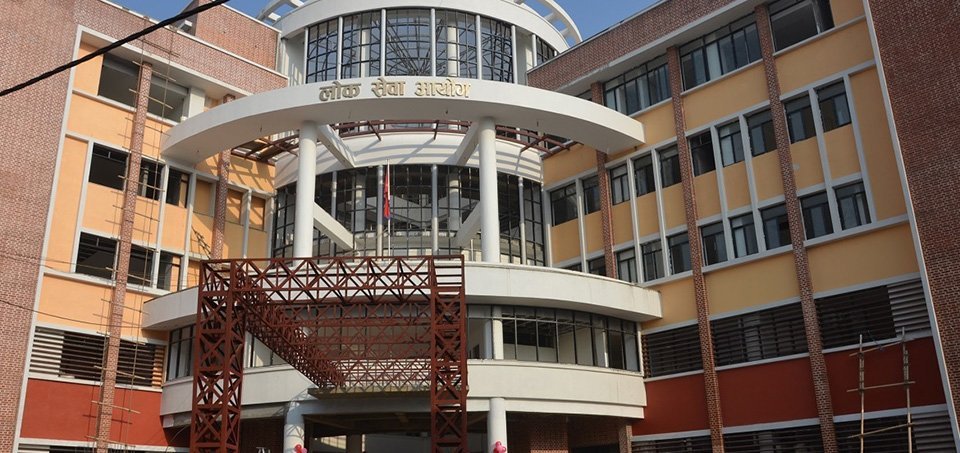
Historical Development of Staff Selection System in Nepal and Continuous Reform of the Public Service Commission
The beginning of the staff selection system in the world is believed to have started through written examinations during China’s Sui dynasty in AD 605, a system that continued for about 1,300 years until AD 1905. Along with the origin and development of the state, the need for capable employees has always been felt.
In ancient times, Chanakya stated that while selecting ministers, qualities such as intelligence, the ability to explain matters, courage, loyalty, and the capacity to remain steady under pressure were necessary.
In the context of modern Nepal, then King Prithvi Narayan Shah, during the process of state unification, adopted a policy of recruiting fighting soldiers by combining Khas, Magar, Gurung, and Thakuri communities, and not removing anyone from office except in cases of “Panchkhat.”
However, after the rise of the Rana regime in BS 1903, staff selection became completely based on flattery, servility, and loyalty to the rulers. Under the “Pajani” system, there was an annual practice of removing employees from jobs or continuing their service, in which the access of ordinary citizens was very weak.
Establishment of the Public Service Commission and Diamond Jubilee
In Nepal, the beginning of staff selection based on merit, fairness, and neutrality became possible only after the political change of BS 2007. In accordance with the constitutional provision of the Interim Government of Nepal Act, 2007 BS, the “Public Service Commission” (Lok Sewa Aayog) was established on Ashadh 1, 2008 BS. The Commission celebrated its Diamond Jubilee throughout the year from Ashadh 1, 2072 BS to Ashadh 1, 2073 BS, until the beginning of its 66th year, through various programs.
At the time of its establishment, considering the human resources available within the country, the Commission simplified the examination system. In the beginning, since there were only a few graduates in Nepal, the written examination was started with subjects such as mathematics, history, geography, and general knowledge.
Gradual Reform in the Examination System and Curriculum
In its early days, the Commission followed only the subjective examination system. From BS 2024, it began the practice of the objective, multiple-choice examination system. With the entry of psychological expert late Madhav Bahadur Singh Karki in BS 2028, methods such as psychological testing, IQ testing, and group discussion were added to the examination.
In the syllabi up to BS 2015, compulsory subjects included essay and Majmun [composition] carrying 150 full marks, and general knowledge carrying 150 full marks. Under optional subjects, English and two other subjects carried a total of 600 full marks.
Even in personality tests, or interviews, more than 200 full marks were allocated for administrative and foreign services. Later, in BS 2018, it was made mandatory that answers to all subjects other than language subjects had to be written in either Nepali or English. Similarly, around BS 2022/2023, the full marks for compulsory subjects were set at 450, including essay, general knowledge, and intellectual test.
Modern Technology and New Testing Methods
The Commission has continued to refine the use of technology since its establishment. From the early use of litho machines, typewriters, and printing presses, the entire working system of the Commission has now been transformed into a computerized system.
From BS 2063/64, the Commission began classifying the levels of knowledge in question paper preparation into three sections: “conceptual,” “procedural,” and “cognitive.” This has made the standard of the examination more reliable and objective. Similarly, as part of modern reform, from BS 2073, an “In-Basket” exercise was introduced in the examination for Gazetted Second Class Officer posts to test decision-making ability.
With the development of the merit system, fairness, and neutrality as its core objective, the Public Service Commission has been continuously taking reform measures to select capable and qualified human resources for Nepal’s civil service and other government bodies by adopting modern testing methods and technologies practiced around the world.







Comments 0
No comments yet. Be the first to start the conversation.