



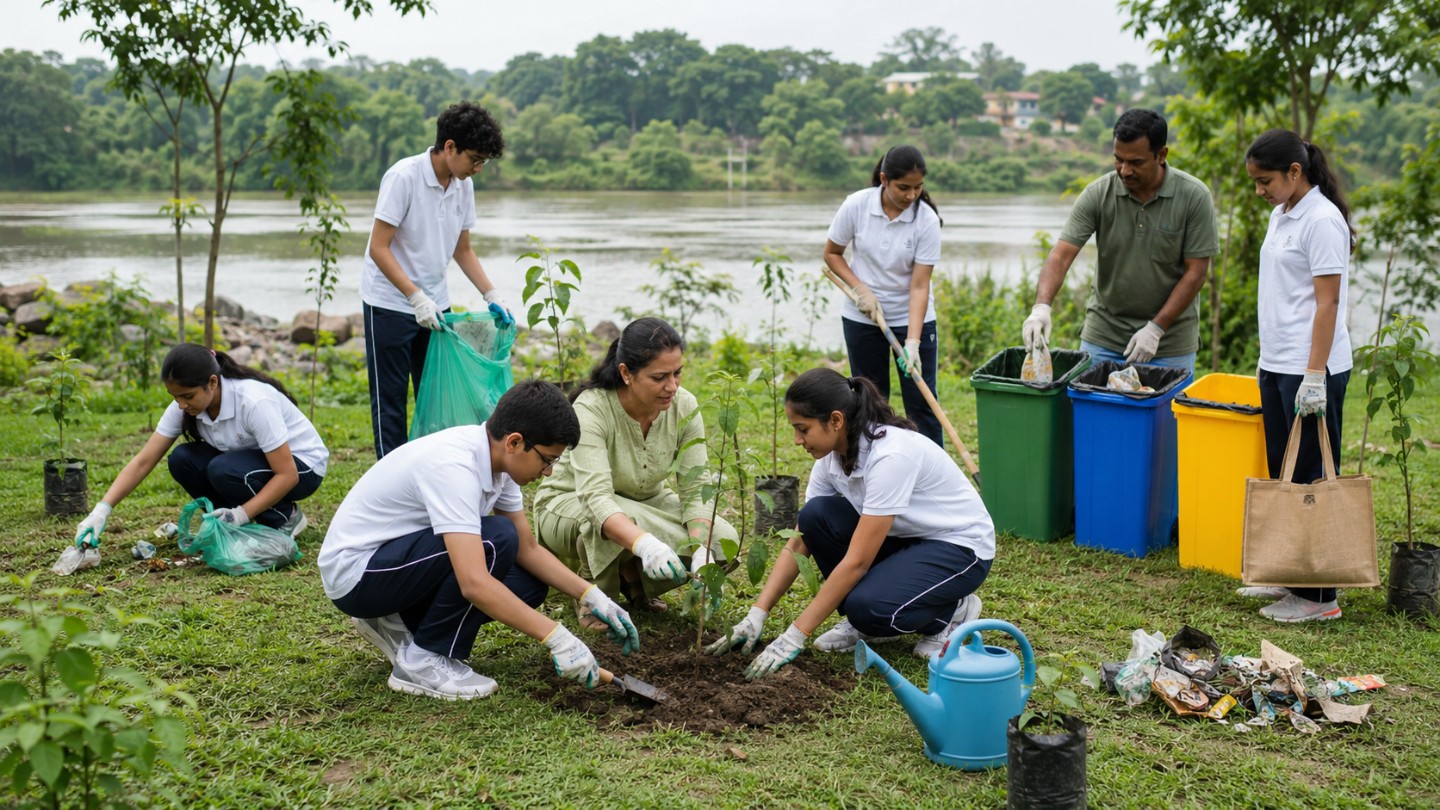
World Environment Day is observed every year on 5 June to raise awareness and encourage action for environmental protection. Led by the United Nations Environment Programme (UNEP), the day connects global environmental concerns with everyday choices made by individuals, schools, communities, organizations, and governments.
The environment is not separate from human life. Clean air, safe water, fertile soil, forests, rivers, oceans, wildlife, and climate systems support health, food, safety, and future well-being. When these systems are damaged, people and nature both feel the effects.
Answer Summary:
World Environment Day is a global observance held on 5 June every year to promote awareness and action for environmental protection. It was established by the UN General Assembly in 1972 and first celebrated on 5 June 1973. The day highlights issues such as pollution, climate change, biodiversity loss, deforestation, waste, and unsustainable consumption, while encouraging practical action at home, in schools, and across communities.
Table of Content
- What Is World Environment Day?
- Why Is World Environment Day Celebrated on 5 June?
- Why World Environment Day Matters
- Environmental Issues Highlighted by World Environment Day
- How Students and Schools Can Observe World Environment Day
- How Communities Can Protect the Environment
- Daily Habits That Help Protect the Planet
- What Individual Action Can and Cannot Do
- Conclusion
Key Takeaways:
-
World Environment Day is observed every year on 5 June.
-
UNEP leads the global observance.
-
The day was established in 1972 and first celebrated in 1973.
-
It focuses attention on pollution, climate change, biodiversity loss, forests, waste, and resource use.
-
Students and schools can turn the day into year-round environmental learning.
-
Personal habits help, but public systems and policies also matter.
-
The most useful way to observe the day is to connect awareness with regular action.
What Is World Environment Day?
World Environment Day is a global day for environmental awareness and action. It encourages people to understand environmental problems and take practical steps to protect nature.
According to the official World Environment Day history page, the observance is led by UNEP, was established by the UN General Assembly in 1972, and was first celebrated on 5 June 1973. The same source describes it as one of the world’s largest platforms for environmental outreach, with participation across more than 150 countries.
In simple words, World Environment Day reminds us that Earth’s natural systems support daily life. Air, water, soil, plants, animals, forests, oceans, and climate are connected to human health, food, safety, and quality of life.
Annual themes and host countries
Each year, World Environment Day focuses on a specific environmental theme and has a host country. This helps global campaigns focus attention on one urgent issue while keeping the wider purpose of environmental protection.
Annual themes and host countries change, so schools, publishers, and event organizers should verify the current campaign details before preparing dated speeches, notices, or programs.
Why Is World Environment Day Celebrated on 5 June?
World Environment Day is celebrated on 5 June because the date is linked to the 1972 United Nations Conference on the Human Environment in Stockholm. That conference helped place environmental protection on the international agenda.
The date matters because World Environment Day did not begin as a casual awareness event. It grew from global concern about pollution, natural resources, development, and human responsibility toward the environment.
For students, this history gives the day more meaning. It shows that environmental protection is not only about planting trees or making posters. It is also about how societies make decisions, manage resources, reduce harm, and protect the systems that support life.
Why World Environment Day Matters
World Environment Day matters because environmental damage affects basic human needs. People need clean air to breathe, safe water to drink, healthy soil to grow food, and stable ecosystems to support life.
Air pollution and health
Air pollution shows how environmental problems affect people directly. The World Health Organization reports that, in 2019, 99% of the world’s population lived in places where WHO air quality guideline levels were not met. WHO also estimates that ambient outdoor air pollution caused 4.2 million premature deaths worldwide in 2019.
This makes environmental protection a public health concern as well as a nature concern. Clean air matters for children, older adults, workers, families, and communities.
For related reading, Collegenp’s article on the health impacts of water pollution can help connect environmental damage with everyday health risks.
Climate change and daily life
Climate change refers to long-term shifts in temperature, rainfall, sea level, weather patterns, and climate-related risks. The Intergovernmental Panel on Climate Change (IPCC) states that human activities, mainly greenhouse gas emissions, have caused global warming, and that human-caused climate change is already affecting many weather and climate extremes across the world.
For students and communities, climate change can be understood through practical examples: hotter days, changing rainfall, flood risks, water stress, farming challenges, damaged roads, and disruption after extreme weather.
In Nepal and other climate-sensitive regions, local planning also matters. Readers interested in this angle may find Collegenp’s article on climate change adaptation strategies in Nepal useful for understanding how communities prepare for climate-related risks.
Awareness and responsibility
Awareness has value when it leads to action. A speech, poster, rally, or school program can start discussion, but the stronger result is regular practice: reducing waste, saving water, caring for trees, improving school systems, cleaning local areas, and protecting water sources.
World Environment Day works best when it connects personal responsibility with wider community and policy responsibility.
Environmental Issues Highlighted by World Environment Day
World Environment Day highlights environmental issues that affect both people and ecosystems. These include pollution, climate change, biodiversity loss, deforestation, land degradation, waste, and unsustainable consumption.
Pollution
Pollution happens when harmful substances enter air, water, soil, or living systems. It can come from smoke, chemicals, waste, plastics, unsafe disposal, untreated sewage, transport, industries, and household practices.
Plastic pollution is one visible example. UNEP reports that 19–23 million tonnes of plastic waste leak into aquatic ecosystems each year, polluting lakes, rivers, and seas. UNEP also notes that plastic pollution can alter habitats and natural processes.
For schools and communities, pollution can be studied through local observation. Students can examine litter near roads, blocked drains, unmanaged waste areas, smoky traffic zones, or polluted water bodies.
Climate change
Climate change is linked to energy use, transport, land use, industry, agriculture, and consumption patterns. It affects weather risks, water availability, food systems, health, and infrastructure.
World Environment Day can help students connect climate change with practical examples: saving electricity, reducing waste, protecting trees, using safer transport options where practical, and learning how public systems affect emissions.
Biodiversity loss
Biodiversity means the variety of life on Earth, including plants, animals, insects, microorganisms, genes, and ecosystems. Biodiversity supports food, pollination, soil health, water systems, medicine, culture, and natural balance.
Biodiversity loss can appear in local ways: fewer birds, loss of native plants, damaged wetlands, polluted rivers, declining insects, or reduced forest cover. Students can begin by observing their local area and asking what species, habitats, or water sources need protection.
Deforestation and forest damage
Forests support wildlife, store carbon, protect soil, influence water systems, and provide resources for many communities. Cutting forests without responsible management can damage habitats, increase erosion, reduce shade, disturb water cycles, and weaken natural protection against floods and landslides.
Tree planting can help when it is planned well. Native species, local climate, water availability, soil conditions, and long-term care should guide planting programs. Planting trees only for photographs or without aftercare has limited value.
For wider context, Collegenp’s article on environmental protection and sustainability connects environmental care with long-term social responsibility.
Waste and overconsumption
Waste becomes an environmental problem when materials are produced, used, and thrown away faster than societies can manage them safely. UNEP’s Global Waste Management Outlook 2024 projects municipal solid waste generation to rise from 2.1 billion tonnes in 2023 to 3.8 billion tonnes by 2050 if current patterns continue.
Reducing waste begins before disposal. People can buy only what they need, reuse items, repair usable materials, avoid unnecessary packaging, compost organic waste where practical, and support recycling where local systems exist.
How Students and Schools Can Observe World Environment Day

Students and schools can observe World Environment Day by combining learning with practical action. The goal should be more than a one-day event.
Classroom activities
Schools can organize activities that help students understand environmental issues through evidence and observation. Useful options include:
-
Essay writing on environmental protection
-
Poster-making on pollution, water, forests, or climate
-
Debates on plastic reduction and public transport
-
Environmental quizzes
-
Classroom discussions on local environmental problems
-
Waste audits of classrooms
-
Tree care programs
-
Clean-up activities around the school area
-
Student presentations based on verified sources
These activities work better when students observe real problems and suggest realistic solutions. For example, a class can inspect how much paper is wasted in one week, identify where plastic litter collects near the school, or check whether planted trees are being watered and protected.
School practices after 5 June
A stronger school approach is to turn World Environment Day into a starting point for regular habits. Schools can:
-
Reduce unnecessary paper use
-
Keep separate bins where waste services support segregation
-
Maintain gardens and planted trees
-
Check leaking taps
-
Switch off lights and fans when rooms are empty
-
Create eco-clubs
-
Include local environmental issues in classroom discussions
-
Encourage students to report waste, water, or cleanliness concerns responsibly
The aim is not to hold a program and stop there. The aim is to build practical environmental responsibility into school life.
How Communities Can Protect the Environment
Communities can protect the environment by focusing on local problems first. A local issue is easier to understand, discuss, and act on.
Some communities may face unmanaged waste. Others may face water pollution, loss of greenery, poor drainage, smoke, noise, riverbank damage, or unsafe dumping. World Environment Day can be used to identify the most urgent local issue and agree on practical action.
Practical community actions
Communities can:
-
Organize clean-up programs with safe waste handling
-
Work with local bodies on waste collection
-
Protect public water sources
-
Plant and care for suitable trees
-
Reduce single-use plastic in local events
-
Keep public spaces clean
-
Support school environmental clubs
-
Discuss drainage, waste, and greenery with local authorities
Community action is stronger when schools, youth groups, local clubs, municipalities, health workers, and residents work together. Local authorities are especially important because waste collection, drainage, public spaces, road safety, tree protection, and water management often depend on public systems.
Daily Habits That Help Protect the Planet
Daily habits can reduce pressure on the environment when many people practice them consistently. These habits do not replace policy, but they support environmental responsibility.
Reduce single-use plastic
Carrying reusable bags, bottles, and containers can reduce disposable plastic use. Avoiding unnecessary packaging and reusing materials also helps.
Plastic reduction matters because plastic waste can move through drains, rivers, lakes, and oceans. It can also create long-term cleanup challenges for communities.
Save water
Water should be used carefully because people, farms, animals, and ecosystems depend on it. Useful habits include repairing leaks, turning taps off when not in use, using water carefully while cleaning, and protecting local water sources from waste.
Save energy
Saving electricity can reduce energy demand and related pollution, depending on the energy source. Useful habits include switching off unused lights, fans, chargers, and devices. Schools and households can also choose efficient appliances when replacement is needed and affordable.
Choose cleaner transport where safe and practical
Walking, cycling, carpooling, and public transport can reduce vehicle use where they are safe, available, and practical. Transport choices depend on road safety, distance, cost, age, disability access, and local infrastructure. Students should not be encouraged to walk or cycle where routes are unsafe.
Respect plants, animals, and public spaces
Environmental protection also means avoiding littering, not damaging trees, protecting gardens, respecting animals, and keeping shared spaces clean. Small acts of care help create cleaner and safer surroundings.
What Individual Action Can and Cannot Do
Individual action matters, but it has limits. A balanced World Environment Day message should encourage responsibility without suggesting that personal choices alone can solve global environmental problems.
Personal action can reduce waste, save water, improve school surroundings, protect local greenery, and influence family habits. It can also help students learn responsibility through daily practice.
Larger problems need larger systems. Air pollution, climate change, unsafe waste disposal, deforestation, and biodiversity loss require public policy, infrastructure, regulation, scientific monitoring, business responsibility, and community cooperation. This is why World Environment Day should connect household habits with civic responsibility. People can act in daily life while also supporting better public systems.
Conclusion
World Environment Day is more than an annual observance. It is a reminder that clean air, safe water, healthy soil, forests, biodiversity, and stable climate systems are part of everyday life.
The day began from global concern about the human relationship with the environment, but its message is practical for every school, family, and community. Learn the facts. Identify local problems. Reduce avoidable waste. Save resources. Care for trees and public spaces. Support better systems.
The most meaningful way to observe World Environment Day is to turn awareness into regular action.







Comments 0
No comments yet. Be the first to start the conversation.