



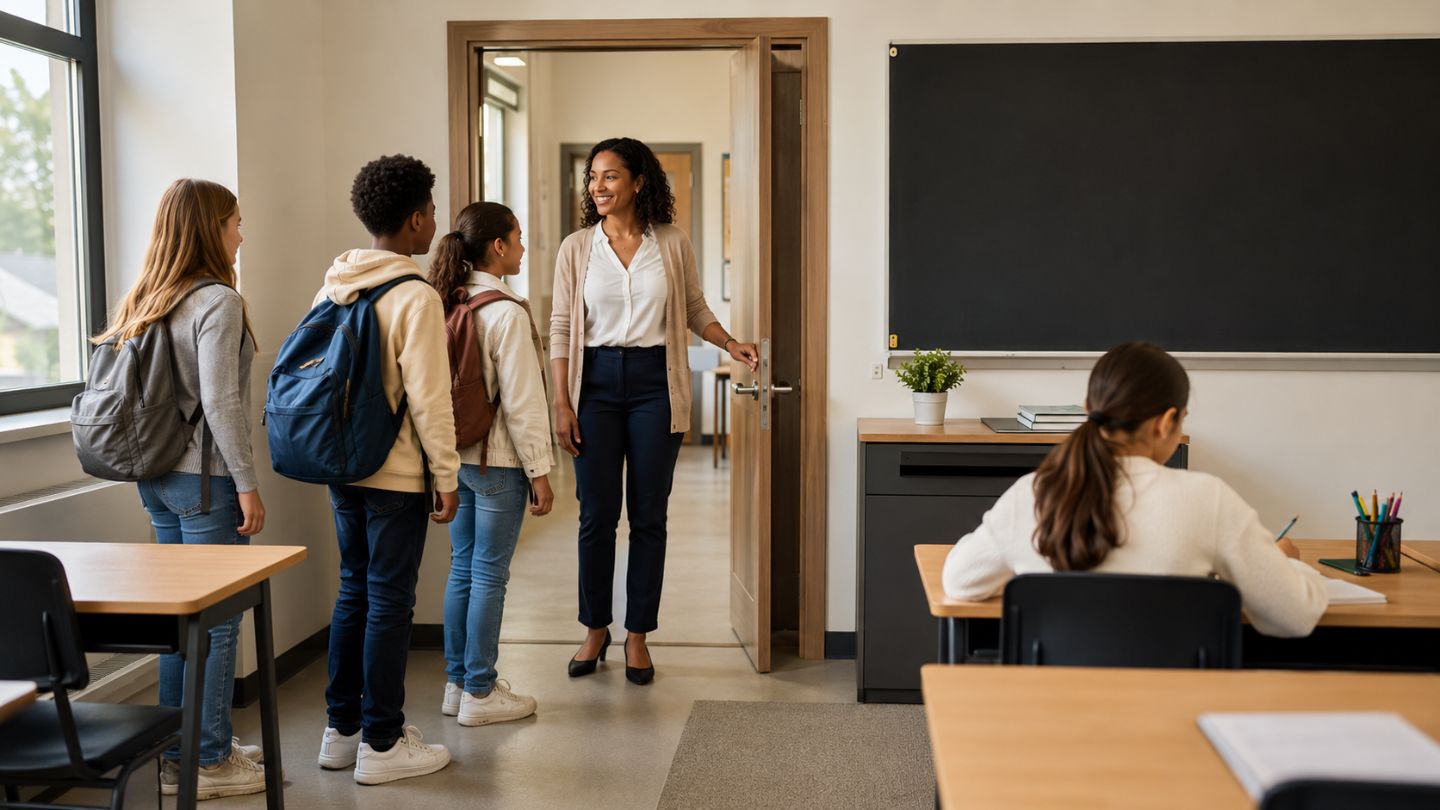
Teachers build positive relationships with students through repeated, respectful actions that help students feel known, safe, and fairly treated. The most useful practices are practical and visible: learn names, greet students, teach routines, listen calmly, give specific feedback, correct behavior with dignity, invite student voice, and communicate with families through approved school channels.
A positive teacher-student relationship is not friendship. It is a professional learning relationship built on trust, fairness, care, boundaries, and clear expectations. The Australian Education Research Organisation’s explainer on positive teacher-student relationships describes these relationships as supportive and fair, and places them inside effective classroom management rather than outside it.
Answer Summary:
Teachers can build positive relationships with students by combining warmth with structure. Start with names, greetings, predictable routines, calm listening, specific praise, private correction where practical, student voice, and respectful family contact. These actions support trust, belonging, engagement, and classroom climate. They work best alongside clear instruction, fair expectations, school policies, and added support for students who need it.
Table of Content
- What a Positive Teacher-Student Relationship Means
- Why Positive Relationships Matter in the Classroom
- Practical Ways Teachers Can Build Trust
- How to Connect With Difficult or Disconnected Students
- Teacher Scripts and Classroom Examples
- Age-Level and Online Adaptations
- Professional Boundaries Teachers Should Keep
- 30-Day Relationship-Building Plan
- Quick Weekly Checklist
- Related Reading on Collegenp
- Final Thoughts
Key Takeaways:
-
Relationships grow through repeated actions, not one speech.
-
Warmth works best with predictable routines.
-
Correct name use helps students feel seen.
-
Specific praise is more useful than vague approval.
-
Private correction protects student dignity.
-
Student voice supports belonging and responsibility.
-
Boundaries keep teacher care professional and safe.
What a Positive Teacher-Student Relationship Means
A positive teacher-student relationship is a professional connection where the student experiences the teacher as respectful, fair, reliable, and invested in learning. It includes care, but it also includes structure.
UNESCO’s teacher definition describes teachers as people who support learning, design instructional strategies, and convey knowledge across subjects. In that sense, relationship-building belongs to everyday teaching practice: how the teacher gives instructions, responds to mistakes, handles conflict, and helps students participate.
A strong classroom relationship usually includes:
-
Trust: students know the teacher follows through.
-
Respect: students are corrected without humiliation.
-
Fairness: expectations are clear and applied consistently.
-
Care: students feel noticed as learners and people.
-
Boundaries: the relationship stays professional.
-
High expectations: support does not lower learning standards.
Relationship-building does not mean trying to be popular. It means creating conditions where students can learn, ask for help, recover from mistakes, and accept feedback without feeling dismissed or shamed.
Why Positive Relationships Matter in the Classroom
Positive relationships matter because they shape how students experience the classroom. They can support belonging, motivation, engagement, peer connection, and behavior, but they do not solve every academic or behavior issue by themselves.
AERO links positive teacher-student relationships with safer learning environments, stronger belonging, positive attitudes toward school, and better engagement conditions. Its guidance also connects relationships with routines, consistency, and predictable classroom management.
The Education Endowment Foundation guidance on improving behaviour in schools is useful wider context because it treats behaviour support as a school and classroom practice issue, not as a matter of teacher personality alone.
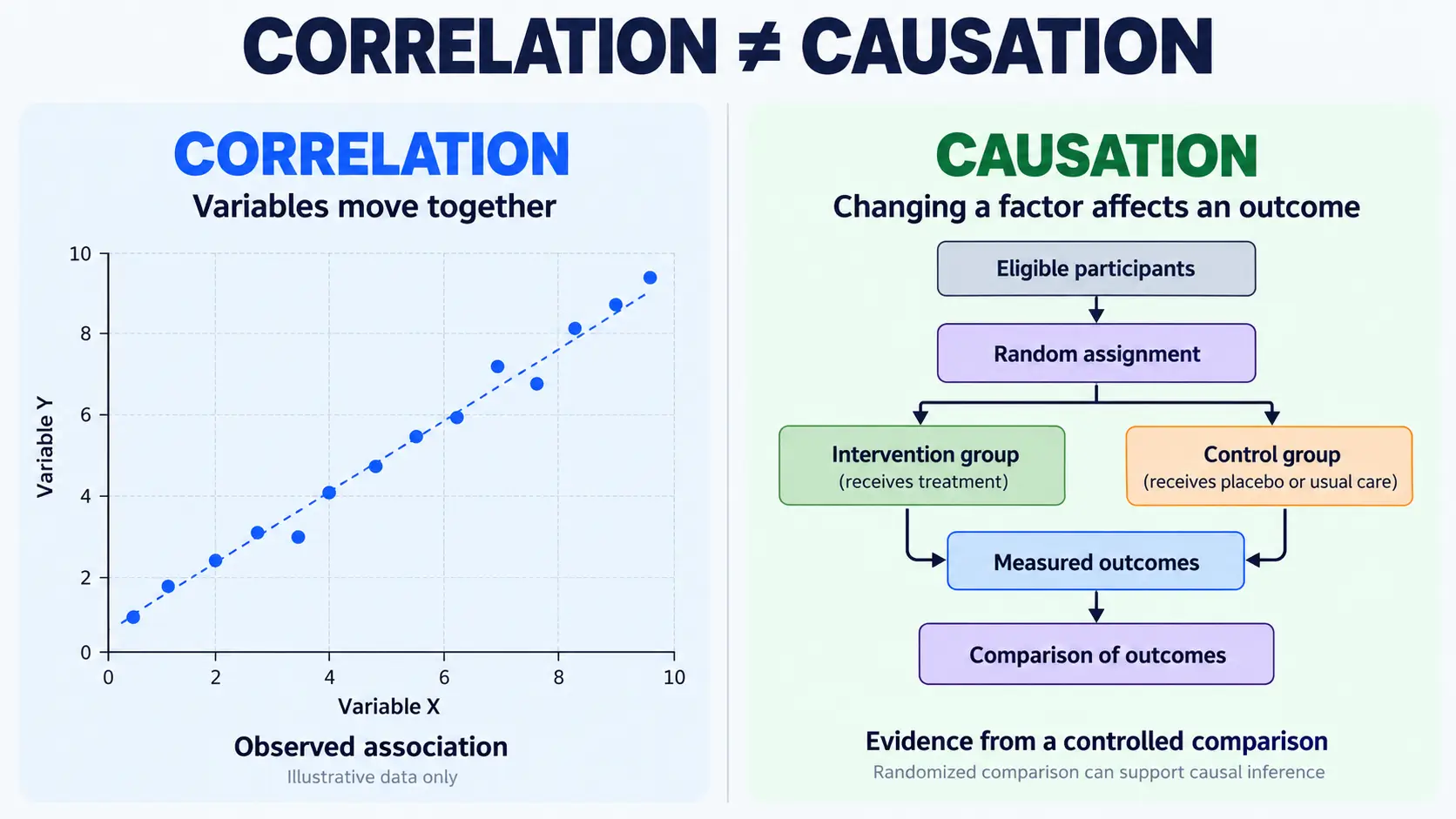
A 2001 study by Bridget K. Hamre and Robert C. Pianta examined whether kindergarten teachers’ perceptions of teacher-child relationships predicted later school outcomes. The ERIC record for the study reports that relational negativity in kindergarten was related to academic and behavioral outcomes through eighth grade, especially for children with behavior concerns in kindergarten and for boys.
A 2025 article in the European Journal of Psychology of Education studied teacher-student relationships and achievement motivation among 779 students in 13 high-tracking schools in Brandenburg, Germany. The Springer article found short-term links with achievement drive, perseverance, and effort, but did not find long-term significance from the relationship dimensions in that analysis. This is an important caution: relationships matter, but the evidence does not support claiming that relationships alone produce lasting academic change in every setting.
For teachers, the practical message is balanced: build relationships seriously, but pair them with clear teaching, routines, feedback, family communication, and school-level support.
Practical Ways Teachers Can Build Trust
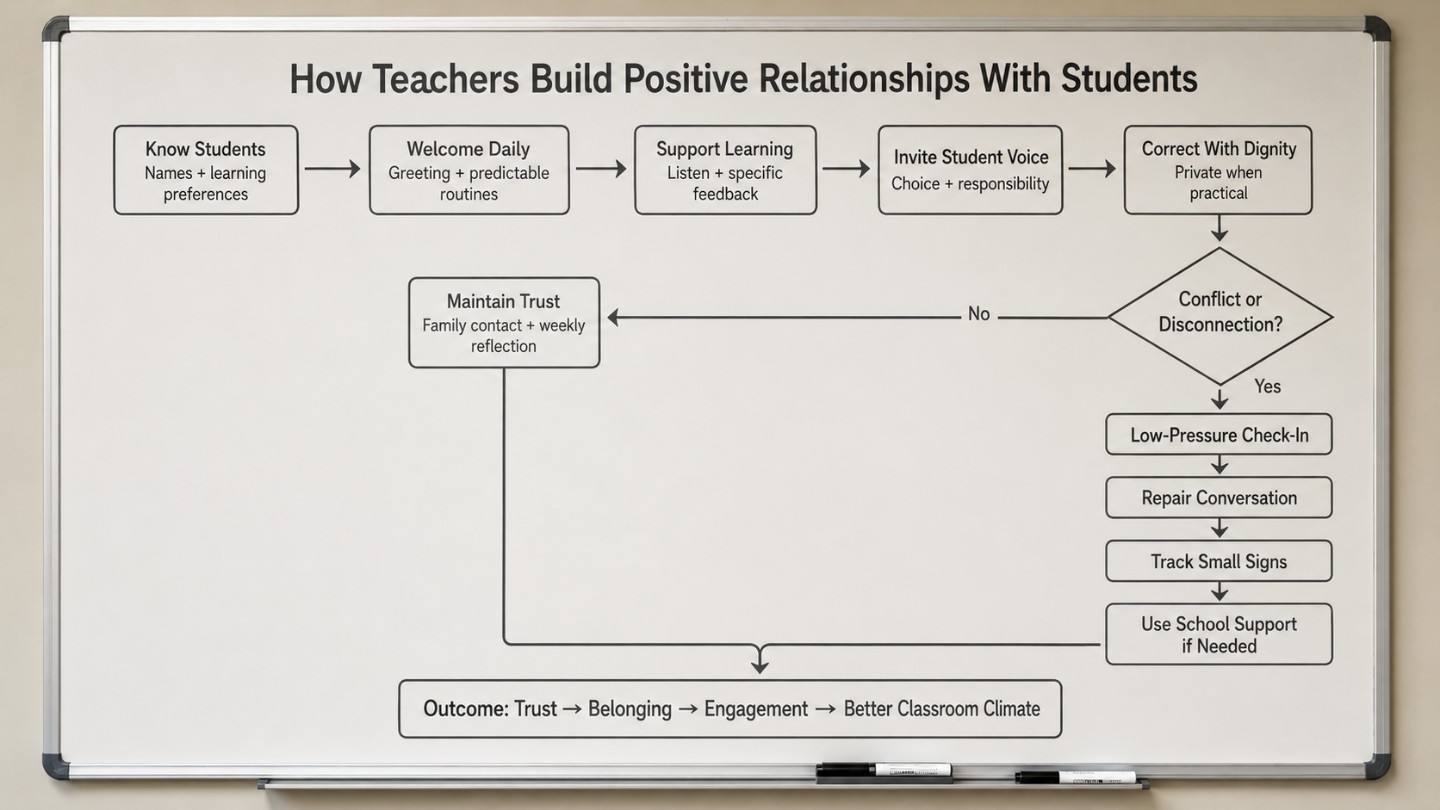
Teachers build trust through small actions students experience every day. Consistency matters more than personality.
Learn and use students’ names correctly
Using a student’s name correctly is one of the simplest ways to show respect. AERO recommends greeting students warmly and consistently using their names, while the Institute of Education Sciences guidance on building positive relationships with students recommends learning about students’ learning history, cultural identity, and preferences for learning and feedback.
Practical actions:
-
Ask students how to pronounce their names.
-
Use name cards during the first week.
-
Add pronunciation notes to a private seating chart.
-
Correct your own mistake without making the student feel responsible.
-
Use the name the student prefers in classroom use, within school policy.
Teacher language:
“Please help me say your name correctly. I want to get it right.”
Greet students warmly and consistently
A greeting tells students they are seen before instruction begins. The OSSE Relationship-Building Strategies for the Classroom toolkit describes greeting at the door as a strategy for welcoming each student by name in person and in virtual settings. The toolkit recommends greeting students by name, having a brief positive interaction, and directing them to the first activity.
Teacher language:
“Good morning, Asha. Start with the question on the board.”
“Nice to see you, Karim. You need your notebook first.”
A useful greeting is brief enough to repeat every day. It should not delay the lesson or become a public performance.
Teach predictable routines
Routines reduce confusion and help correction feel less personal. AERO’s explainer on teaching routines says routines provide consistency, predictability, and structure in classroom management.
Useful routines include:
-
Entry task
-
Materials routine
-
Help signal
-
Partner discussion routine
-
Exit question
-
Private check-in routine
Teacher language:
“Our routine is: enter, open your notebook, answer the first prompt. Reset and begin there.”
When routines are taught and practiced, the teacher can redirect students toward a shared expectation instead of turning every correction into a personal exchange.
Show interest without pressuring students
Teachers can learn about students without asking for private disclosure. The purpose is to understand learning preferences, interests, strengths, and support needs.
Useful tools:
-
Short interest survey
-
Reading preference question
-
Learning preference card
-
Exit ticket about what helped
-
Optional goal-setting question
-
Family or caregiver input form, where school policy allows
IES recommends that teachers learn about students’ learning history, cultural identity, and preferences for learning and feedback, and that they validate students’ personal and cultural learning histories.
Teacher language:
“What helps you begin a hard task: seeing a model, working with a partner, or having quiet time first?”
This type of question helps the teacher adjust instruction without asking students to reveal more than they want to share.
Use specific praise and useful feedback
Specific praise tells students what worked. Vague approval may feel pleasant, but it gives less guidance.
AERO recommends praise that is timely, genuine, informative, and specific. OSSE also includes behavior-specific praise as a classroom relationship strategy that names the student, recognizes effort or behavior, and connects it to expectations.
Less useful:
“Good job.”
More useful:
“You used evidence from the text before explaining your opinion. That made your paragraph stronger.”
Feedback should also guide the next action:
“Your idea is clear. Add one example from the experiment to support it.”
Specific praise should not be overused or forced. Students often notice when feedback is automatic rather than accurate.
Listen and respond calmly
Listening does not mean agreeing with every complaint. It means gathering information before responding.
OSSE identifies listening as a relationship-building skill and links it to students feeling heard by educators and peers.
Teacher language:
“I hear that you felt rushed. We still need to finish the task, and I can help you choose the first step.”
This response acknowledges the concern while keeping the learning expectation in place.
Give students voice and responsibility
Student voice helps students feel that classroom life is not only done to them. CASEL’s framework includes relationship skills and responsible decision-making among its five social and emotional learning competencies. It also places learning within classrooms, schools, families, and communities.
Practical options:
-
Let students choose between two task formats.
-
Ask for feedback on one classroom routine.
-
Rotate classroom roles.
-
Co-create discussion norms.
-
Invite students to suggest review questions.
-
Use anonymous check-ins when public answers may be uncomfortable.
Student voice should be structured. It does not mean students control every decision. It means they have meaningful, age-appropriate ways to contribute.
Correct behavior privately when practical
Private correction protects dignity. Public correction may be needed for safety or urgent disruption, but many behavior issues can be handled quietly.
Teacher language:
“Return to the task. I’ll check back in two minutes.”
After class:
“You left the group twice today. What made it hard to stay with the task, and what plan can we use tomorrow?”
AERO notes that students often want to avoid embarrassment in front of peers and recommends giving students a chance to change behavior without embarrassment when practical.
Communicate with families for strengths as well as concerns
Family communication should not happen only when something goes wrong. Respectful contact can build trust and help the teacher understand the student better.
Teacher language:
“I wanted to share that Sita asked a thoughtful science question today. It helped the group examine the evidence more carefully.”
CASEL describes school-family-community partnerships as part of learning environments that support social, emotional, and academic development.
Keep family communication factual, respectful, and aligned with school policy. Avoid sharing sensitive student information through personal channels.
How to Connect With Difficult or Disconnected Students
Students who seem resistant often need consistency before they trust adult attention. Teachers should avoid forcing closeness and focus on low-pressure, reliable contact.
OSSE includes the 2x10 strategy for students who are hard to reach. The toolkit describes short, non-contingent time centered on the student’s interests and recommends monitoring the effect over time.
Use these steps:
-
Choose one student to check in with for a short period.
-
Keep the conversation low-pressure.
-
Do not connect the contact to punishment.
-
Notice effort, not personality.
-
Track small changes in task start, help-seeking, or response to correction.
Teacher language:
“I noticed you chose the design option yesterday. What did you think of it?”
After conflict:
“That exchange did not help either of us. Tomorrow, I want us to reset. The expectation stays the same, and I will give you a private cue before it becomes a public issue.”
Trust with disconnected students is usually built through repeated evidence: the teacher stays calm, follows through, keeps expectations clear, and gives the student a path back after mistakes.
Teacher Scripts and Classroom Examples
Scripts help teachers avoid sarcasm, vague praise, or long correction under pressure. They should sound natural, but the structure helps keep the response clear.
| Classroom moment | Teacher language |
|---|---|
| Student begins after avoiding work | “You started with the first sentence. That gives us something to build on.” |
| Student helps a peer | “You explained the direction without giving the answer. That helped your partner keep thinking.” |
| Student revises work | “Your second draft uses clearer evidence. I can see the revision.” |
| Student returns after conflict | “You came back and restarted. That was a responsible choice.” |
| Side conversation | “Pause the conversation. You will have partner time after the example.” |
| Refusal | “Start with question one. I’ll return in two minutes.” |
| Disrespectful tone | “Use a respectful voice. I’ll listen when we can talk calmly.” |
| Student feels singled out | “You felt I focused on you. I hear that. Let’s agree on a private cue.” |
The aim is not to memorize every line. The aim is to speak in a way that protects dignity, names the expectation, and gives the student a next step.
Age-Level and Online Adaptations
Relationship-building should match student age, setting, and communication needs. The principle stays the same: warmth with structure.
Elementary classes
Elementary students often benefit from visible routines and concrete signs of belonging.
Useful practices:
-
Morning greeting
-
Picture-based emotion check-in
-
Name games
-
Job chart
-
Short teacher-student conference
-
Class agreement with drawings
Teacher language:
“You are part of this class. We listen when someone is speaking.”
Keep instructions short. Practice routines more than once. Praise effort and behavior in clear, observable terms.
Middle school classes
Middle school students may want connection but resist anything that feels forced. Use structured choice, brief check-ins, and private correction.
Useful practices:
-
Quick polls
-
Private check-ins
-
Group roles
-
Student-created examples
-
Interest-based writing prompts
-
Repair conversations
Teacher language:
“You do not have to share personal details. Choose one learning preference that helps me teach you better.”
At this age, dignity matters. Avoid teasing, labels, or public comparisons.
High school classes
High school students often respond to respect, relevance, autonomy, and appropriate boundaries.
Useful practices:
-
Learn names and goals.
-
Connect examples to student interests.
-
Offer structured choices.
-
Ask for course feedback.
-
Keep personal sharing limited and relevant.
-
Use private correction when practical.
Teacher language:
“I’m not asking you to agree with me. I’m asking you to make a serious attempt and explain your reasoning.”
High school students often notice inconsistency quickly. If a rule or deadline changes, explain the reason clearly.
Online and blended classes
Online teachers need visible routines for presence and response. OSSE’s toolkit adapts greetings and community circles for virtual settings, including verbal or nonverbal welcomes, check-in routines, visual questions, and chat options.
Useful practices:
-
Greet students by name as they enter.
-
Use a predictable opening question.
-
Give participation options.
-
Assign breakout-room roles.
-
Send short feedback through school-approved systems.
-
Use recorded welcomes for asynchronous lessons.
Avoid personal private channels. Follow school communication, safeguarding, documentation, and data privacy rules.
Professional Boundaries Teachers Should Keep
Professional boundaries make relationship-building safer. Teachers can be warm, approachable, and caring while staying inside their role.
Healthy boundaries include:
-
Use school-approved communication channels.
-
Avoid secretive private messaging.
-
Keep personal disclosure limited and relevant.
-
Do not ask students for emotional support.
-
Avoid favoritism.
-
Document serious concerns through school procedures.
-
Follow referral procedures for safeguarding, wellbeing, or repeated behavior concerns.
Teacher language:
“I care about how you are doing, and I can connect you with the right school support.”
This keeps care visible while respecting the teacher’s professional role. A teacher should not try to handle serious wellbeing, safety, or safeguarding concerns alone. Follow school policy and involve the designated staff member or support team.
30-Day Relationship-Building Plan
A 30-day plan helps teachers turn good intentions into classroom habits. It also gives teachers a way to notice whether their actions are becoming consistent.
Days 1–5: Names and routines
-
Confirm name pronunciation.
-
Use name cards or a seating chart.
-
Teach entry and exit routines.
-
Greet students at the door or online entry point.
-
Notice students who seem isolated or hesitant.
Days 6–10: Learn about students
-
Use a short student survey.
-
Ask one learning preference question.
-
Identify students who need quiet encouragement.
-
Send two positive family messages through approved channels.
-
Add one structured peer activity.
Days 11–15: Improve feedback
-
Use specific praise daily.
-
Replace vague approval with clear details.
-
Correct privately when practical.
-
Ask students what type of feedback helps them revise.
-
Track which students receive teacher attention.
Days 16–20: Add student voice
-
Offer two task format choices.
-
Ask for feedback on one routine.
-
Rotate classroom responsibilities.
-
Invite students to help refine discussion norms.
-
Hold a short class reflection.
Days 21–25: Repair and reconnect
-
Choose one student for a low-pressure check-in.
-
Hold one repair conversation after conflict.
-
Review whether correction is public or private.
-
Check whether quiet students have been heard.
-
Adjust one routine that causes confusion.
Days 26–30: Review patterns
-
Review names, greetings, praise, correction, and family contact.
-
Ask one anonymous belonging question.
-
Identify students who still need support.
-
Discuss patterns with a mentor or team.
-
Set one relationship goal for the next month.
This plan is not a test score. It is a reflection tool. Use it to notice patterns, not to blame yourself or students.
Quick Weekly Checklist
Use this checklist at the end of each week:
-
I used students’ preferred names.
-
I greeted students consistently.
-
I taught routines clearly.
-
I gave specific praise.
-
I corrected privately when practical.
-
I heard from quiet students through speech, writing, or survey.
-
I gave students a meaningful choice.
-
I contacted families for strengths, not only concerns.
-
I repaired after conflict.
-
I identified students who need more adult connection.
The checklist is most useful when paired with one small action for the next week.
Related Reading on Collegenp
Teachers who want to strengthen classroom systems can also read Collegenp’s guide on classroom management tips for teachers. For practical participation ideas, see student engagement activities in the classroom.
For broader teaching context, Collegenp also has articles on why educational psychology matters for teachers, classroom activities for social-emotional learning, and how teachers support students’ mental health.
Final Thoughts
Positive teacher-student relationships are built through steady classroom habits. Names, greetings, routines, listening, specific feedback, student voice, private correction, family communication, and repair conversations give students repeated evidence that the classroom is safe, fair, and focused on learning.
A useful next step is to choose one connection habit and one structure habit for the next week. For example, greet every student by name and reteach the entry routine. Then review what changed in task start, student response, and classroom tone.




Comments 0
No comments yet. Be the first to start the conversation.