



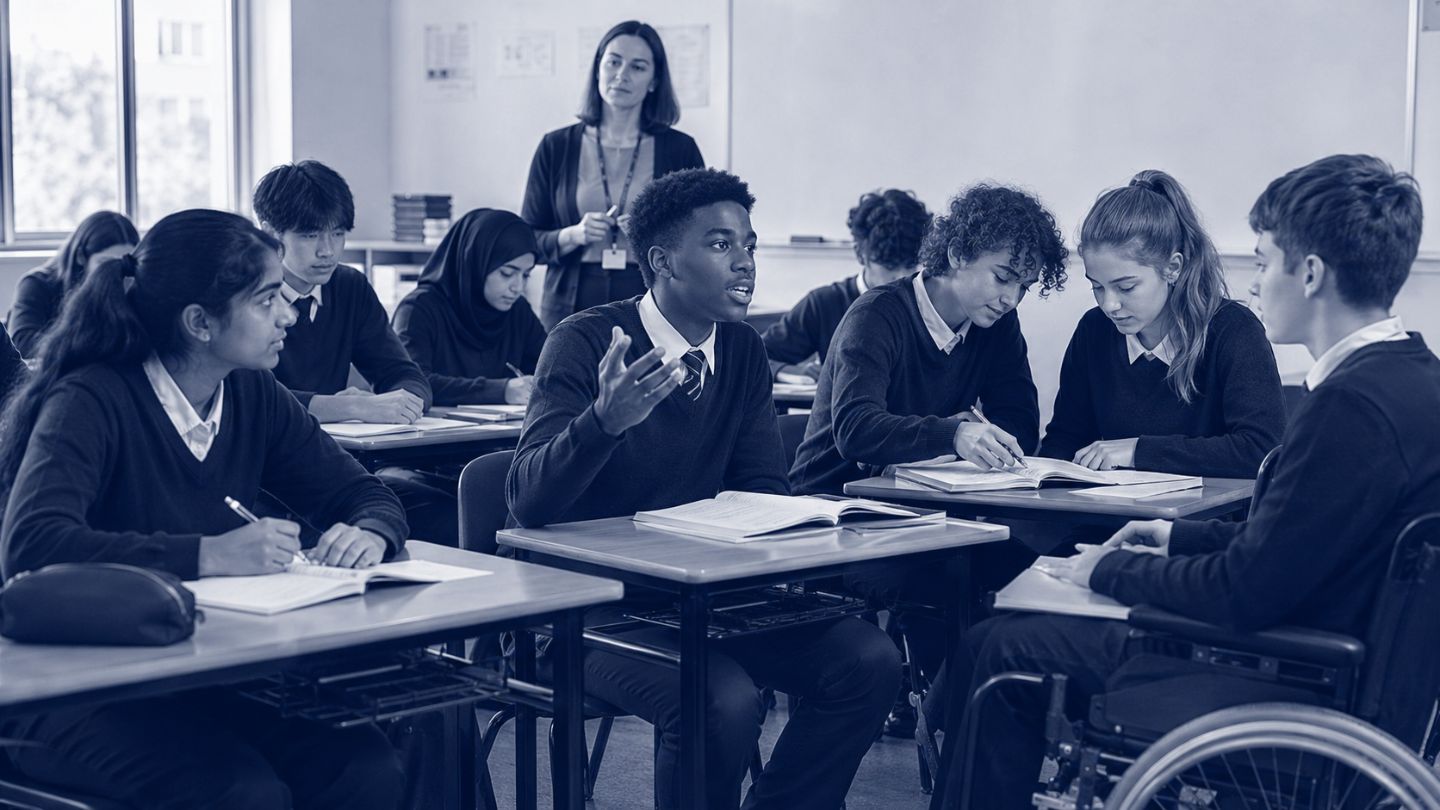
Research does not show that school uniforms consistently improve student engagement. Findings vary according to the outcome measured, the students studied, the policy design, and how the rules are implemented.
This distinction matters because student engagement is not a single result. Attendance, classroom participation, behavior, motivation, concentration, belonging, and physical involvement represent different parts of school life. A uniform policy may influence one without improving the others.
The Education Endowment Foundation review describes the evidence on uniforms and academic outcomes as extremely weak. It concludes that little robust evidence shows that introducing a uniform by itself improves academic performance, behavior, or attendance.
Answer Summary: School uniforms are not a proven stand-alone method for increasing student engagement. One U.S. elementary-school study found no overall improvement in attendance or social behavior and reported lower school belonging in fifth grade. An older district study found attendance gains in secondary grades. Affordability, comfort, inclusion, student consultation, and enforcement can shape how students experience a policy, but their effects remain context-dependent.
Table of Content
- What Does Student Engagement Mean?
- How Do School Clothing Policies Differ?
- What Does the Research Show Overall?
- Do School Uniforms Improve Attendance?
- Do Uniforms Improve Behavior, Concentration, or Learning?
- Can Uniforms Affect Belonging and Student Voice?
- Can Clothing Design Affect Physical Participation?
- How Do Affordability, Inclusion, and Enforcement Matter?
- Why Can the Same Policy Produce Different Results?
- How Should Schools Evaluate a Uniform Policy?
- Common Claims About School Uniforms
- What Is the Final Assessment?
Key Takeaways:
-
Student engagement includes several separate outcomes.
-
Uniform compliance is not evidence of academic engagement.
-
Attendance findings differ across age groups and settings.
-
Broad improvements in behavior and learning have not been established.
-
Student belonging may differ from adults’ perceptions of cohesion.
-
Clothing design may affect comfort and physical participation.
-
Schools should evaluate named outcomes rather than compliance alone.
Scope note: This article offers a global, evidence-informed explanation. It does not provide country-specific legal guidance. Government duties, equality rules, consultation requirements, and uniform-cost regulations vary by jurisdiction.
What Does Student Engagement Mean?
Student engagement concerns how students participate in school, connect emotionally with the school community, and invest attention and effort in learning.
It is useful to consider engagement through three connected but distinct dimensions.
Behavioral Engagement
Behavioral engagement includes attendance, punctuality, classroom participation, effort, task completion, conduct, and involvement in school activities.
Following a uniform rule is one form of compliance. It does not show whether a student attends regularly, contributes to lessons, persists with difficult work, or participates in wider school life.
Emotional Engagement
Emotional engagement includes belonging, acceptance, interest, safety, and connection with teachers, peers, and the school.
A shared uniform may symbolize membership for some students. Others may experience the same rule as uncomfortable, restrictive, unaffordable, or inconsistent with their identity or needs.
Cognitive Engagement
Cognitive engagement concerns concentration, motivation, curiosity, persistence, and the effort students invest in understanding.
A standardized appearance does not demonstrate attention or learning. Students can comply with a clothing requirement while remaining mentally disengaged from schoolwork.
These dimensions should be measured separately. Attendance cannot stand in for belonging, and compliance with a clothing rule cannot be treated as evidence of concentration.
Schools seeking a broader explanation can refer to Collegenp’s discussion of student engagement in schools, which examines participation, emotional connection, and cognitive involvement.
How Do School Clothing Policies Differ?
A school uniform generally means clothing that students are required to wear. A dress code sets limits or expectations without necessarily requiring every student to wear standardized garments.
A physical education kit is clothing required for sport or movement-based lessons. An activity-friendly or sports-style uniform is designed to allow greater movement throughout the school day.
Policies may differ in whether they:
-
require branded or school-specific garments;
-
permit generic alternatives;
-
offer several approved clothing choices;
-
distinguish garments by gender;
-
allow religious or cultural adaptations;
-
provide disability or sensory adjustments;
-
change according to climate or season;
-
impose sanctions for non-compliance;
-
involve students and families in policy design.
These differences limit comparison. Evidence from a formal mandatory policy cannot automatically be applied to a flexible dress code or a daily sports-uniform policy.
What Does the Research Show Overall?
The research does not support a single conclusion covering attendance, behavior, learning, belonging, and physical participation.
Studies use different populations, definitions, and methods. Some examine changes after a policy is introduced in one district. Others compare students in schools with and without uniform rules. Government evaluations may focus on participant perceptions, while physical-activity research may examine clothing design.
| Evidence type | What it can show | Important limitation |
|---|---|---|
| Longitudinal observational study | Associations among students followed over time | Cannot remove every alternative explanation |
| District fixed-effects study | Changes associated with policy adoption in one district | Findings may not transfer to other systems |
| Survey or qualitative evaluation | How participants perceive and experience a policy | Perceptions do not establish causal effects |
| Ecological analysis | Population-level patterns across countries or regions | Cannot determine individual-level causation |
| Systematic review | Patterns across eligible studies | Strength depends on study quality and comparability |
The most defensible interpretation is outcome-specific. Some findings show no meaningful difference, some are limited to particular settings, and others identify possible policy mechanisms rather than demonstrated effects.
Do School Uniforms Improve Attendance?
Attendance evidence is mixed.
A U.S. elementary-school study used nationally representative data from 6,320 students followed through elementary school. Students in schools requiring uniforms did not have better attendance overall than students in schools without uniform requirements. The researchers found some indication of better attendance among low-income students, but the overall attendance result remained null.
The study was observational. Although the researchers adjusted for many student, family, and school characteristics, uniform and non-uniform schools may still have differed in unmeasured ways. The findings therefore do not prove that uniforms have no possible effect in every setting.
An earlier district study used student and school fixed-effects models to examine uniform adoption in one large urban school district. It found evidence of improved attendance in secondary grades. That result should remain tied to the district, age group, and research design studied.
How Cost and Access May Affect Attendance
Uniform requirements may create practical difficulties when a student lacks the correct item, a clean replacement, suitable footwear, or money for compulsory clothing.
Possible support measures include:
-
allowing generic garments;
-
providing second-hand options;
-
offering confidential financial assistance;
-
allowing temporary flexibility;
-
avoiding exclusion from lessons for minor clothing issues;
-
checking whether sizing or supplier access is creating barriers.
These measures may reduce implementation problems, but they do not demonstrate that uniforms will improve attendance. Schools need local evidence to determine whether clothing rules are helping or hindering attendance.
Do Uniforms Improve Behavior, Concentration, or Learning?
There is little robust evidence that uniforms alone improve behavior, concentration, or academic performance.
The U.S. elementary-school study found no overall advantage in social skills or internalizing and externalizing behavior for students in schools with uniform requirements.
A standardized appearance may make clothing expectations easier to identify and may affect how adults perceive order. Those observations do not demonstrate improved motivation, classroom participation, concentration, or academic achievement.
A 2026 French government evaluation examined uniform pilots conducted during 2024 and 2025. Its survey received responses from 87 primary-school directors and 16 secondary-school heads. A separate qualitative component examined eight primary schools and four lower-secondary schools.
The qualitative evidence indicated limited perceived effects on learning, concentration, academic success, listening, and investment in schoolwork. Some school leaders reported positive changes, but these were perceptions rather than objective causal measurements of learning.
Schools seeking stronger classroom participation should focus on instruction, feedback, meaningful tasks, accessible participation, and supportive relationships. Collegenp’s collection of classroom engagement activities provides examples that address learning directly rather than relying on clothing rules.
Can Uniforms Affect Belonging and Student Voice?
Evidence on belonging is mixed. Adults’ perceptions of institutional cohesion should not be treated as equivalent to students’ emotional connection to school.
The U.S. elementary-school study reported lower school belonging among fifth-grade students attending schools with uniform requirements. This result applied to fifth grade and should not be extended to every age group or school system.
The French evaluation produced a different type of evidence. Many participating school leaders perceived positive changes in belonging or institutional cohesion. The qualitative findings were more cautious, identifying weaker student acceptance and possible tensions linked with non-compliance.
The qualitative component also found that students had often remained outside meaningful policy development. Their involvement was sometimes limited to details such as colors or logos. The evaluation suggested that acceptance was weaker where the policy had not been discussed or developed with students. This was a qualitative observation, not proof that consultation guarantees support.
Meaningful consultation may address:
-
the purpose of the policy;
-
affordability and replacement;
-
climate and comfort;
-
movement and physical education;
-
religion, culture, disability, and sensory needs;
-
fit and garment choice;
-
enforcement and exceptions;
-
the timing of policy review.
Consultation also works best within a wider school culture where students feel heard. Collegenp’s guide to positive student–teacher relationships explains how listening, consistency, and respectful routines can support that culture.
Can Clothing Design Affect Physical Participation?
Evidence suggests that clothing design may be related to physical activity, particularly among girls, but the research remains limited.
A 2025 systematic review examined traditional and sports-style uniforms in relation to physical activity and fitness. Only five studies met its inclusion criteria. Their methods, populations, and clothing definitions differed, limiting firm conclusions.
The included studies did not produce identical results. One small crossover study found that girls took more steps during breaks while wearing a sports uniform. Another study found no statistically significant difference in girls’ moderate-to-vigorous or total physical activity, although exploratory findings suggested small changes in lighter activity and sedentary time.
The evidence therefore supports considering movement and comfort during policy design, but it does not prove that sports-style uniforms increase activity for every student.
Schools may assess:
-
freedom of movement;
-
footwear requirements;
-
heat, cold, humidity, and rain;
-
fabric and sensory comfort;
-
garment fit and transparency;
-
body diversity and physical growth;
-
disability-related adjustments;
-
clothing worn during physical education and active breaks.
How Do Affordability, Inclusion, and Enforcement Matter?
Affordability, inclusion, and enforcement are policy conditions that may create or remove barriers. They should not be presented as proof that uniforms inherently produce equality or exclusion.
Purchase, Replacement, and Laundering
Uniform costs may extend beyond the initial purchase. Families may need replacement garments, footwear, seasonal clothing, laundering, several sizes, and access to an approved supplier.
A shared appearance may reduce some visible clothing differences without removing socioeconomic inequality. Branded garments, restricted supplier arrangements, and frequent replacement may place greater pressure on some households.
Schools can reduce these pressures by limiting compulsory specialist items, allowing widely available alternatives, maintaining second-hand provision, and offering private support.
Religious, Cultural, Gender, and Disability Inclusion
Uniform rules may interact with religion or belief, culture, sex, gender identity, disability, sensory needs, body shape, medical needs, and local climate.
An inclusive policy may provide:
-
several approved garment choices;
-
religious and cultural accommodations;
-
varied cuts and sizes;
-
disability and sensory adjustments;
-
climate-appropriate options;
-
a clear and private exception process.
The legal duties applying to these matters vary by country. Schools should check the requirements of the relevant education authority and jurisdiction.
Enforcement and Learning Time
Enforcement can create conflict when non-compliance results from cost, damaged clothing, incorrect sizing, weather, disability, or circumstances outside a student’s control.
The French evaluation identified fit problems among the reported reasons for non-compliance and noted that unclear implementation and weak acceptance could create tensions, particularly in secondary settings.
A proportionate response may involve private discussion, temporary alternatives, access to spare clothing, financial support, or an accommodation review. Removing students from lessons should not become the default response to a clothing problem.
Why Can the Same Policy Produce Different Results?
The same policy can produce different results because uniform requirements operate within wider school, family, and social contexts.
Important variables include:
-
student age and school phase;
-
formal, flexible, or sports-style clothing;
-
compulsory or partly optional rules;
-
garment costs and supplier access;
-
climate and seasonal conditions;
-
student and family consultation;
-
disability and religious accommodations;
-
enforcement and sanction practices;
-
existing attendance and behavior systems;
-
school relationships, safety, and teaching quality;
-
the outcome selected for measurement.
The attendance evidence illustrates this problem. A nationally representative elementary-school study found no overall improvement, while a district study found gains in secondary grades. The studies examined different populations and policy environments using different research methods.
The French evidence also shows that positive administrator perceptions of cohesion can coexist with lower student acceptance in qualitative interviews. These findings represent different perspectives rather than directly confirming or disproving each other.
How Should Schools Evaluate a Uniform Policy?
Schools should define the result they want to examine before introducing or revising a policy. “Improving engagement” is too broad unless it is translated into measurable outcomes.
1. Define the Intended Outcome
A school should identify whether it is examining:
-
attendance or punctuality;
-
classroom participation;
-
behavior incidents;
-
school belonging;
-
motivation or investment in schoolwork;
-
physical participation;
-
student acceptance;
-
time spent enforcing the policy.
These measures should not be treated as interchangeable.
2. Establish a Baseline
Relevant baseline information may include attendance data, student surveys, participation records, requests for financial assistance, accommodation requests, uniform-related sanctions, and time removed from lessons.
3. Review Policy Design
A school can ask:
-
What specific problem is the policy intended to address?
-
What evidence supports the expected outcome?
-
Are the garments affordable and locally available?
-
Are generic or second-hand options available?
-
Is the clothing appropriate for the climate and daily movement?
-
Are disability, sensory, religious, cultural, and body-fit needs addressed?
-
Were students and families meaningfully consulted?
-
Are support and exception procedures clear?
-
Is enforcement proportionate?
-
When will intended and unintended effects be reviewed?
4. Measure More Than Compliance
A high percentage of students wearing the required clothing does not establish stronger attendance, belonging, motivation, concentration, or learning.
Evaluation should measure the intended outcome and include students’ experiences, not only the perceptions of staff or school leaders.
5. Record Other Changes
Attendance or behavior may also change because of teaching reforms, staffing, transport, leadership, safeguarding, family circumstances, or student-support programs.
When several changes occur together, schools should not automatically attribute the result to uniform policy.
Common Claims About School Uniforms
| Common claim | Evidence status | Factual interpretation |
|---|---|---|
| Uniforms improve attendance | Mixed | One secondary-district study found gains; a national elementary study found no overall improvement |
| Uniforms improve behavior | Weak or mixed | Broad behavioral gains have not been shown consistently |
| Uniforms improve concentration or grades | Unproven as a general claim | Current evidence does not establish a direct broad effect |
| Uniforms strengthen belonging | Mixed | Adult perceptions may be positive, while one study found lower fifth-grade belonging |
| Uniforms eliminate inequality | Unsupported | Shared appearance does not remove cost, access, identity, or accommodation differences |
| Uniforms reduce bullying | Insufficient for a broad claim | Available evidence does not justify a universal conclusion |
| Sports-style uniforms increase activity | Qualified and emerging | Some studies favor them, but the small and varied evidence base prevents firm causal conclusions |
What Is the Final Assessment?
School uniforms are not a reliable stand-alone method for improving student engagement. Findings differ across attendance, behavior, belonging, concentration, learning, policy acceptance, and physical participation.
Some policies may reduce practical barriers when garments are affordable, comfortable, available, inclusive, and suited to the climate and school day. Other policies may create problems involving cost, fit, movement, identity, or enforcement.
Current evidence does not show that either outcome follows automatically from requiring a uniform.
Schools should identify a specific intended result, consult the affected community, establish baseline evidence, and monitor intended and unintended effects. Uniform policy should not replace work on teaching quality, relationships, safety, attendance support, belonging, or access to learning.





Comments 0
No comments yet. Be the first to start the conversation.