



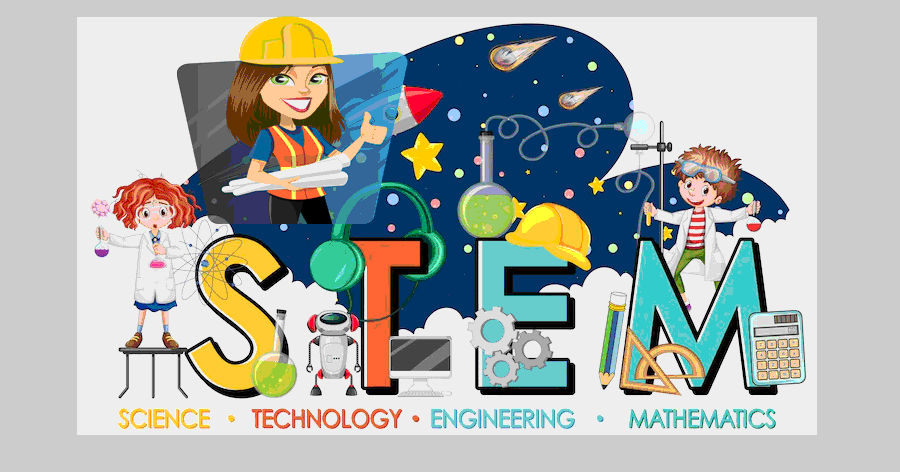
STEM Education Career Paths, Options, and Outlook
STEM is a broad label for careers and study pathways in science, technology, engineering, and mathematics. In this guide, “STEM education” refers to the learning routes that prepare people for STEM roles, not only teaching careers. STEM roles exist in many sectors, including healthcare services, energy systems, manufacturing, agriculture, transportation, finance, software, public infrastructure, and research.
STEM careers are not a single track. Job titles, entry expectations, and licensing requirements vary by country, industry, and employer. This article explains common pathways, what people do in practice, how specialization usually develops, and how to plan an education-to-career route that fits different contexts.
This article is for informational purposes only. It is not a substitute for academic advising, professional licensing guidance, or career counseling.
Career snapshot
Typical work settings
-
Research labs, testing labs, and quality environments
-
Software and technology teams (products, platforms, IT systems)
-
Engineering and manufacturing sites (design, operations, maintenance)
-
Healthcare and life sciences environments (devices, labs, data, systems)
-
Environmental monitoring, energy systems, and infrastructure projects
-
Analytics teams in many sectors (operations, risk, planning)
Core functions
-
Solve problems using evidence, models, experiments, and iteration
-
Build, test, and improve systems (digital, physical, or biological)
-
Analyze data to support decisions and performance improvement
-
Document methods, results, and constraints clearly and responsibly
Scope and variability
-
Roles range from hands-on fieldwork to lab work to computer-based work
-
Titles and responsibilities differ across regions and organizations
-
Some roles require formal licensure or regulated credentials depending on local rules
Understanding STEM careers
A practical way to understand STEM careers is to focus on the type of “work product” you create.
-
Science roles often produce validated knowledge: measurements, experiments, reports, and evidence that supports decisions or further research.
-
Technology roles often produce working software systems, secure infrastructure, or reliable digital services.
-
Engineering roles often produce designs and systems that work safely under real constraints: cost, materials, safety, reliability, and standards.
-
Mathematics roles often produce models and methods: statistical analysis, optimization, forecasting, and risk measurement.
Many jobs blend these areas. For example, robotics combines engineering, software, and applied math. Environmental monitoring combines science, data analysis, and sometimes engineering systems.
How STEM careers typically develop
Most STEM careers develop through stages. The pace and sequence depend on the field and the local labor market.
Stage 1: Foundation learning
This stage builds the basics that transfer across many STEM paths: math skills, scientific reasoning, computational thinking, and clear communication. In school or early college, this often includes algebra, calculus foundations, basic physics or chemistry concepts, introductory programming, and structured writing.
Stage 2: Core specialization
At the undergraduate level (or equivalent), students usually pick a major area: computer science, electrical engineering, biology, chemistry, statistics, and related programs. This is where you start learning discipline-specific methods, tools, and terminology.
Stage 3: Applied experience
Internships, lab practicums, research assistant roles, fieldwork, or supervised projects help translate theory into practice. Many employers value this stage because it shows you can work with real constraints: incomplete data, time limits, safety rules, and team coordination.
Stage 4: Early-career practice
Entry roles often involve structured tasks with supervision: testing, analysis, documentation, implementation support, or operational troubleshooting. This stage builds reliability, professional habits, and confidence in methods.
Stage 5: Deeper specialization or leadership
After foundational experience, many professionals specialize (for example, cybersecurity, power systems, data engineering, clinical lab methods, or quality engineering). Others move toward technical leadership, system architecture, or research-focused routes.
Core skills that support most STEM roles
Technical reasoning and problem solving
-
Break complex problems into testable parts
-
Form hypotheses, test them, and revise based on results
-
Use models and tools as decision aids, not as substitutes for judgment
-
Track errors, uncertainty, and limitations
Data literacy
-
Collect, clean, and interpret data responsibly
-
Understand measurement limits and bias risks
-
Communicate what the data supports and what it does not support
Communication and documentation
-
Write clear notes, lab records, design documents, and reports
-
Explain results in plain language for mixed audiences
-
Document assumptions, methods, and version changes
Collaboration and professional practice
-
Work in teams with defined roles and shared timelines
-
Manage feedback and peer review
-
Follow safety and quality procedures consistently
STEM career families and typical pathways
Science pathways
Science careers often focus on observation, measurement, experimentation, and interpretation.
Common entry routes
-
Bachelor’s degree leading to lab technician, research assistant, field assistant, quality testing roles (titles vary)
-
Master’s or PhD routes for research-intensive roles, advanced analysis, and academic pathways (depending on the system)
What you study and how it connects to work
-
Biology and chemistry support lab methods, sample handling, and interpretation of results
-
Physics supports measurement, instrumentation, and modeling of physical systems
-
Earth and environmental sciences support field surveys, monitoring, and data interpretation
How specialization develops
-
Lab-based specializations: analytical methods, instrumentation, quality systems
-
Field-based specializations: environmental monitoring, geoscience surveys, ecology methods
-
Research specializations: experimental design, advanced modeling, publication-oriented work
Where extra credentials may matter
-
Some lab and clinical-adjacent roles have regulated requirements, depending on local rules and the type of testing performed.
Technology pathways
Technology careers focus on building, operating, and improving digital systems.
Common entry routes
-
Bachelor’s degree in computer science, IT, information systems, software engineering, or related fields
-
Alternative pathways: structured bootcamps plus strong project portfolios can work in some markets, but expectations vary widely
What you study and how it connects to work
-
Programming and software engineering supports building reliable applications and services
-
Databases and systems supports data integrity, performance, and operational stability
-
Networking and operating systems supports troubleshooting, infrastructure, and service delivery
-
Security fundamentals supports safe access, logging, and risk-aware configuration
How specialization develops
-
Software development: backend, frontend, mobile, platform engineering
-
Cloud and infrastructure: deployment, reliability, monitoring, automation
-
Cybersecurity: identity, incident response support, secure configuration, risk assessment
-
Data: data engineering, analytics, machine learning support (scope varies by role)
Engineering pathways
Engineering careers focus on designing and maintaining systems that must work safely in the real world.
Common entry routes
-
Bachelor’s degree in an engineering discipline (civil, mechanical, electrical, chemical, biomedical, and others)
-
Some roles require accredited degrees or supervised practice periods, depending on local licensing systems
What you study and how it connects to work
-
Mechanics, materials, and design supports safe structures and machines
-
Circuits, power, and controls supports electrical systems, automation, and reliable operation
-
Thermodynamics and process design supports manufacturing, energy systems, and process safety
How specialization develops
-
Design-focused roles: CAD, simulation, prototyping, verification testing
-
Field and operations roles: commissioning, maintenance, reliability improvement
-
Systems roles: controls, automation, embedded systems, safety engineering
Where licensure may matter
-
In some regions, certain engineering roles (especially sign-off on public infrastructure) may require formal licensure or accredited pathways.
Mathematics pathways
Mathematics careers focus on modeling, analysis, and decision support.
Common entry routes
-
Bachelor’s degree in mathematics, statistics, actuarial science, or related quantitative programs
-
Many roles also accept adjacent degrees if the candidate has strong quantitative skills and project evidence
What you study and how it connects to work
-
Statistics supports experiments, surveys, and evidence-based conclusions
-
Probability and risk supports forecasting, reliability analysis, and uncertainty
-
Optimization supports logistics, resource planning, and system performance improvement
How specialization develops
-
Applied statistics and analytics: experimental design, reporting, inference
-
Actuarial and risk roles: structured risk measurement in regulated contexts
-
Operations research: optimization in logistics, scheduling, and planning
-
Quantitative computing: statistical programming and reproducible analysis pipelines
Education routes and training options
STEM education pathways are flexible, but the best route depends on the role’s technical depth and regulation.
High school preparation
Useful preparation commonly includes:
-
Strong math foundations and problem-solving practice
-
Basic science lab discipline and careful record keeping
-
Introductory programming or logical reasoning (where available)
-
Communication skills: clear writing and presentations
Undergraduate degrees
Bachelor’s programs often provide:
-
Foundational theory and methods
-
Labs, assignments, and supervised projects
-
Exposure to tools used in the field
Choosing electives matters. Electives often shape your early specialization and project portfolio.
Postgraduate study
Master’s programs may deepen specialization, while PhD routes are typically research-intensive. Whether postgraduate study is necessary depends on the role and local hiring norms.
Certifications and short courses
Certifications can be helpful in technology and some applied roles, but they are not universal requirements. Their value is strongest when paired with hands-on practice and clear project evidence.
Practical experience: internships, projects, and portfolios
Practical work is the bridge between education and employability.
Good experience options
-
Internships or supervised placements
-
Lab practicums and fieldwork
-
Capstone projects with clear requirements and testing
-
Research assistant work (where available)
Ethical portfolio building
-
Use only public, permitted, or self-created materials
-
Do not include confidential data, proprietary code, or private information
-
Document your process: problem statement, method, tests, results, limitations
-
Prefer fewer, well-finished projects over many incomplete ones
Employment context and outlook
STEM demand is influenced by how quickly industries adopt new tools, build infrastructure, and invest in research and product development. Demand also varies by region, language requirements, local industry mix, and regulation.
In general terms:
-
Technology and data roles can change quickly as tools evolve. Continuous learning is often expected.
-
Engineering roles may depend on infrastructure cycles, manufacturing activity, and local standards.
-
Science roles can vary widely between research, industry labs, and field-based work, with different expectations for advanced degrees.
-
Mathematics roles often sit inside other sectors (finance, logistics, health analytics, product analytics), so domain knowledge becomes important over time.
A realistic outlook is strongest when you match your skills to a specific sector and build evidence of applied work.
Emerging fields and evolving directions
New fields and subfields appear as tools and needs change. The relevance of each area depends on the region and the maturity of local industries.
Examples of areas many learners explore
-
Artificial intelligence and machine learning (often requires strong math and data foundations)
-
Cybersecurity (often combines technical depth with disciplined processes)
-
Data science and analytics (requires careful measurement and reproducibility)
-
Biomedical engineering and health technology (often requires regulated awareness)
-
Environmental monitoring and sustainable systems (often combines field data with modeling)
-
Robotics and automation (blends software, controls, and hardware reliability)
-
Quantum computing (often research-driven and math-intensive)
-
Bioinformatics (blends biology, statistics, and computing methods)
These areas do not replace fundamentals. Most of them rely on strong basics in math, programming, systems thinking, and careful documentation.
Challenges in STEM careers and how to navigate them
Common challenges include rigorous learning curves, fast-changing tools, and the need to maintain high standards of accuracy and safety.
Practical ways to navigate
-
Strengthen fundamentals before chasing advanced topics
-
Use structured learning plans with frequent practice and feedback
-
Build habits of documentation and version control for your work
-
Seek mentors, supervisors, or peer review for projects
-
Be cautious about claims you cannot verify; state limitations clearly
STEM resources and professional communities
Many professionals learn through communities and standards-based organizations. The best choices depend on your specialization, but common examples include computing associations, engineering societies, and discipline-specific scientific societies. Local universities, research centers, and professional networks can also provide workshops, seminars, and supervised project opportunities.
Frequently asked questions
What does “STEM education” mean in a career context?
It refers to the learning and training pathways that prepare you for STEM work, including school coursework, degrees, labs, projects, internships, and supervised practice.
Do I need a university degree for every STEM career?
Not for every role. Some technology roles accept alternative pathways if you have strong, verifiable project evidence. Many science and engineering roles, especially regulated ones, commonly require formal degrees. Requirements vary by region and employer.
Which STEM field should I choose if I am unsure?
Start by identifying which work you prefer: experiments and measurement (science), building software systems (technology), designing physical systems (engineering), or modeling and analysis (mathematics). Try small projects in each area before committing.
How important are internships?
Often very important, because they demonstrate applied skills and professional habits. They also help you understand real constraints: safety, timelines, incomplete data, and teamwork.
What skills transfer across all STEM careers?
Problem-solving, data literacy, clear communication, and disciplined documentation. These skills support learning new tools and moving between related roles over time.
Do emerging fields require advanced degrees?
Sometimes, but not always. Research-heavy work often requires graduate study. Applied work may be accessible with strong fundamentals, targeted training, and practical projects.
How can I build a portfolio safely?
Use self-created projects, public datasets, or approved materials. Avoid private data and proprietary content. Explain your method, tests, results, and limitations clearly.
How do I plan a realistic career pathway?
Choose a target role family, review local job descriptions for required skills, build projects that match those tasks, and pursue internships or supervised experiences that add credible evidence of practice.
Practical next steps
-
Choose one STEM pathway to explore first and build a small project around it.
-
Strengthen fundamentals in math, scientific reasoning, and clear writing.
-
Add supervised experience through internships, labs, or fieldwork when possible.
-
Build a concise portfolio that shows your method and your results, with clear limitations.
-
Check local requirements for roles that may involve licensing or regulated practice.
STEM careers are diverse and can lead to many kinds of work, from hands-on field practice to lab research to building digital systems. A strong pathway combines solid fundamentals, applied experience, and careful, ethical professional practice.





Comments 0
No comments yet. Be the first to start the conversation.