




How to Study for Exams: A Practical Revision System That Improves Recall
Good exam preparation is not measured by the number of hours spent at a desk. It is measured by how well you can recall, apply, and explain the material without help.
The most effective study sessions usually have three parts: identifying what you do not know, practising retrieval, and correcting mistakes. Rereading notes can feel useful, but it often gives a false sense of confidence. The American Psychological Association identifies repeated retrieval practice as a strong study method because it requires learners to bring information back from memory.
1. Build a Topic List Before You Start Studying
Do not begin with random chapters, highlighted pages, or whatever feels easiest. Start by listing the exact topics likely to appear in the exam.
Use your syllabus, teacher’s revision guide, class notes, textbook contents, past questions, or official exam outline.
| Topic | Current level | Next action |
|---|---|---|
| Chemical bonding | Weak | Redraw diagrams and answer practice questions |
| Quadratic equations | Medium | Solve mixed problems without notes |
| Essay introductions | Strong | Practise two timed openings |
This turns revision into a checklist instead of a guessing game.
2. Study by Testing Yourself
After reviewing a topic, close the book and write down what you remember. Then check what you missed. This method is more useful than reading the same page again because it exposes the gaps in your memory.
Use retrieval practice in simple ways:
-
Answer textbook questions without checking the example first.
-
Turn headings into questions.
-
Write definitions from memory.
-
Explain a process aloud in your own words.
-
Cover your notes and recreate a diagram, formula, timeline, or argument plan.
-
Redo questions you previously got wrong.
The goal is not to feel comfortable while studying. The goal is to find weak points before the exam does.
3. Space Your Revision Across Several Days
One long session is less useful than several shorter sessions spread over time. UC San Diego’s guidance on effective studying recommends distributing exam preparation across multiple sessions instead of relying on last-minute cramming.
A simple spacing plan:
| Time | Task |
|---|---|
| Same day | Review the topic and create questions |
| Next day | Answer the questions from memory |
| Three days later | Redo weak areas |
| One week later | Complete mixed practice |
Spacing works because it makes your brain retrieve the same information after some forgetting has happened. That effort strengthens recall.
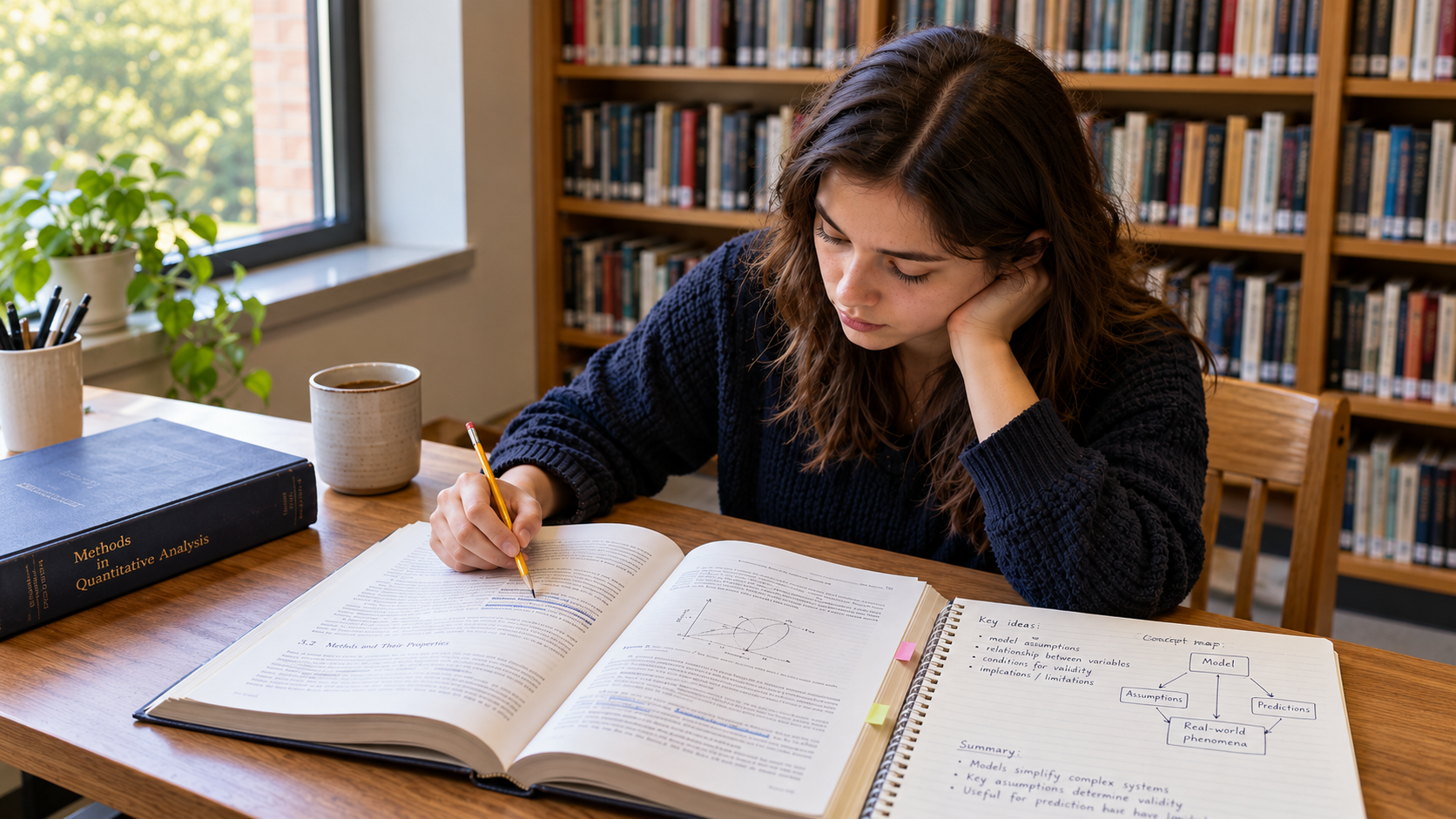
4. Use Notes as a Testing Tool
Notes are not useful just because they are neat. They are useful when they help you revise quickly and test yourself.
The Cornell note-taking system separates notes, cue questions, and a summary area. Cornell’s Learning Strategies Center describes this structure as a way to record lecture points, form questions, recite answers, and review material.
Use this structure:
| Section | What to write |
|---|---|
| Main notes | Key ideas, examples, formulas, dates, diagrams, or steps |
| Cue questions | Questions that test the main notes |
| Summary | A short explanation written after studying |
Avoid copying long paragraphs. Write the minimum needed to understand and recall the idea later.
5. Match the Method to the Subject
Different subjects require different types of practice.
| Subject | What to do |
|---|---|
| Maths | Solve problems without looking at worked examples |
| Science | Draw diagrams, explain processes, and answer application questions |
| History | Build timelines and compare causes, effects, and evidence |
| Literature | Plan arguments using themes, techniques, and short quotations |
| Languages | Practise vocabulary, grammar, listening, speaking, and short writing tasks |
| Computer science | Trace code, explain logic, and solve past-paper-style problems |
Do not revise every subject by reading. If the exam asks you to solve, explain, compare, calculate, or write, your revision must include that task.
6. Fix Mistakes Properly
A mistake is only useful if you understand why it happened.
After each practice session, sort errors into three groups:
| Error type | Example | Fix |
|---|---|---|
| Knowledge gap | You forgot a definition | Review and test it again tomorrow |
| Method error | You used the wrong formula | Redo similar questions step by step |
| Exam error | You misread the question | Underline command words during practice |
Keep a short mistake log. It should show the question, the error, and the corrected method. Revisit this log more often than your strongest topics.
7. Practise Under Exam Conditions
Timed practice teaches pacing. It also shows whether you can retrieve information under pressure.
Use this method:
-
Choose a short section of a past paper or practice test.
-
Set a timer.
-
Work without notes.
-
Mark the answers.
-
Rewrite only the questions you missed or guessed.
-
Repeat those questions after a gap.
Do not wait until the night before the exam to attempt timed work. By then, there is little time to correct patterns.
8. Reduce Exam Anxiety With Clear Actions
Anxiety often increases when preparation feels vague. Make the exam day predictable.
Before the exam:
-
Check the date, time, room, rules, and required materials.
-
Pack pens, pencils, calculator, admit card, or approved equipment the night before.
-
Sleep instead of doing an all-night revision session.
-
Review only key points on the morning of the exam.
-
Use slow breathing before reading the paper.
The CDC notes that enough sleep helps students stay focused and improves concentration and academic performance. (CDC)
During the exam, read the instructions carefully, answer easier questions first, and return to harder ones after securing the marks you know how to get.
9. Use Reliable Resources
Start with the materials closest to the exam:
-
Class notes
-
Teacher-provided revision sheets
-
Required textbooks
-
Official exam-board specifications
-
Past papers and mark schemes
-
School or college learning support materials
Use online videos, flashcard apps, and study websites only when they match your syllabus. Avoid any site that claims to provide leaked papers, guaranteed answers, or shortcut certificates.
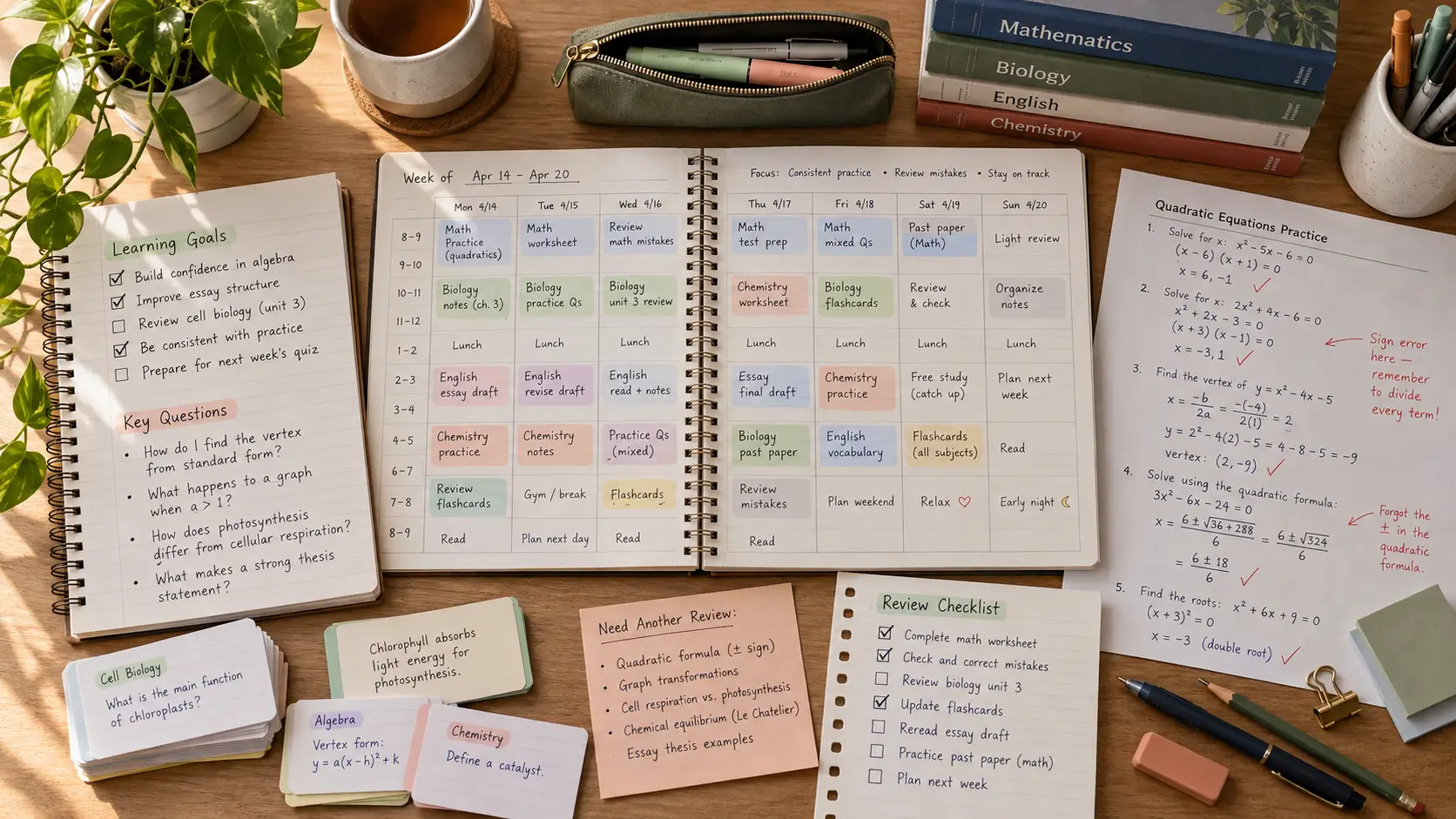
10. Follow a One-Week Revision Plan
| Day | Task |
|---|---|
| Day 1 | List all topics and mark weak areas |
| Day 2 | Study weak topics and create questions |
| Day 3 | Test yourself without notes |
| Day 4 | Complete mixed practice questions |
| Day 5 | Review mistakes and redo difficult questions |
| Day 6 | Complete a timed practice section |
| Day 7 | Review summaries, pack materials, and rest |
This plan can be expanded for longer exams by repeating the same cycle for each subject.
Final Exam Preparation Checklist
Before the exam, make sure you can:
-
Recall key facts, formulas, definitions, or arguments without notes
-
Answer practice questions under time pressure
-
Explain difficult topics in your own words
-
Redo questions you previously got wrong
-
Identify common mistakes and avoid repeating them
-
Use notes for quick review rather than first-time learning
-
Enter the exam with the correct materials and a clear plan
Effective studying is active, spaced, and honest. It shows you what you know, reveals what still needs work, and gives you enough time to fix problems before the exam.



Comments 0
No comments yet. Be the first to start the conversation.