



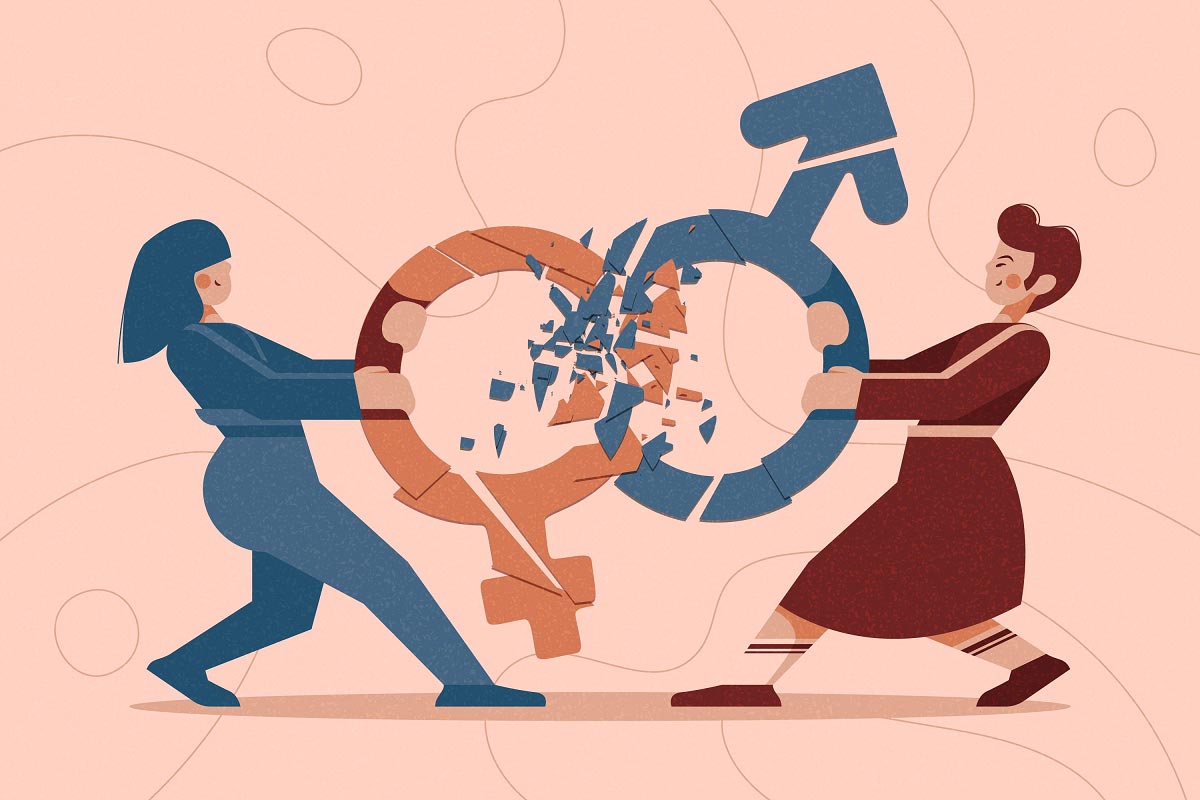
Women’s rights and gender equality remain important public issues in Nepal. The country has made legal and political progress through constitutional guarantees, laws against violence and trafficking, and inclusion policies. However, women and girls still face barriers in education, employment, safety, health care, property rights, leadership, and decision-making.
Nepal’s National Population and Housing Census 2021 recorded a total population of 29,164,578, with females making up 51.13% of the population. This shows that gender equality is not a separate or narrow concern; it is directly connected with national development, public services, economic participation, and social justice.
Quick Information
| Area | Current Situation | Key Point |
|---|---|---|
| Constitutional rights | Nepal’s Constitution guarantees equality and specific rights for women | Strong legal protections exist |
| Population context | Females make up 51.13% of Nepal’s population, according to the 2021 census | Gender equality affects national development |
| Economic participation | Female labor force participation remains lower than male participation | Economic barriers remain significant |
| Violence against women | Domestic violence, intimate partner violence, and trafficking remain concerns | Protection and enforcement need strengthening |
| Political representation | Women are represented in federal parliament, but leadership gaps remain | Representation must translate into influence |
Constitutional and Legal Provisions
The Constitution of Nepal provides a strong legal foundation for equality. Article 18 guarantees equality before the law and prohibits discrimination on several grounds, including sex. It also bars gender-based discrimination in remuneration and social security for the same work.
Article 38 specifically addresses women’s rights. It recognizes women’s equal lineage rights, the right to safe motherhood and reproductive health, protection from physical, mental, sexual, psychological, and other forms of violence or exploitation, proportional participation in state bodies, special opportunities in education, health, employment and social security, and equal rights of spouses in property and family affairs.
Nepal also has specific laws to address violence and exploitation. The Domestic Violence (Offence and Punishment) Act, 2066 addresses domestic violence, while the Human Trafficking and Transportation (Control) Act, 2064 addresses human trafficking and transportation. Both laws are listed by the Nepal Law Commission.
Current Status of Gender Equality in Nepal
Nepal has made progress in legal recognition and political inclusion, but equality in daily life remains uneven. The World Economic Forum’s Global Gender Gap Report 2025 measures gender parity across economic participation, educational attainment, health and survival, and political empowerment. The 2025 report covers 148 economies and reports that the global gender gap score stands at 68.8% closed.
Economic participation is one of the clearest gaps. The World Bank Gender Data Portal reports Nepal’s 2025 labor force participation rate at 27.5% for women and 52.9% for men. This gap reflects barriers such as unpaid care work, limited access to formal employment, social expectations, mobility constraints, and unequal access to skills, finance, land, and markets.
Violence against women remains a serious concern. Analysis based on the Nepal Demographic and Health Survey 2022 reports that about 23% of women aged 15–49 have experienced physical violence, about 7% have experienced sexual violence, and about 13% have experienced emotional violence in their lifetime. The same analysis reports that about 27% of women have experienced some form of intimate partner violence.
Women’s political representation has improved, but representation does not always mean equal influence in decision-making. IPU Parline data for Nepal’s House of Representatives provides current and historical information on women’s representation in parliament.
Major Challenges to Women’s Rights and Gender Equality
Patriarchal Social Norms
Patriarchal attitudes continue to affect women’s education, work, property ownership, mobility, leadership, and family decision-making. In many communities, social expectations still shape how families invest in girls’ education, how women participate in paid work, and how survivors of violence are treated. Related social patterns are discussed in Gender Roles in Modern Society.
Unequal Economic Participation
Many women contribute through unpaid household work, agriculture, informal labor, and care work, but this contribution is often undervalued. Limited access to formal employment, safe workplaces, credit, land ownership, and business networks can restrict women’s economic independence.
Violence and Underreporting
Domestic violence, sexual harassment, intimate partner violence, trafficking, and other forms of gender-based violence affect women’s safety and participation in public life. Legal remedies exist, but survivors may face stigma, family pressure, financial dependence, weak institutional support, and delays in justice. A broader explanation of related issues is available in Forms of Gender Violence in Society.
Gaps Between Law and Implementation
Nepal has constitutional and legal protections for women, but implementation remains a major challenge. Laws are effective only when survivors can report safely, public institutions respond properly, and women can access justice, health care, legal aid, and social support without discrimination.
Unequal Access to Education and Services
Girls’ and women’s access to education, health services, legal information, digital resources, and public services varies by geography, caste, class, disability, ethnicity, language, and income level. Rural and marginalized communities often face additional barriers. Education remains one of the most important tools for improving women’s participation and independence, as discussed in Role of Education in Empowering Women.
Role of Government, NGOs, and Civil Society
The Government of Nepal has the main responsibility to implement constitutional guarantees, enforce laws, and ensure equal access to public services. This includes strengthening police response, legal aid, health services, shelters, education access, social security, and gender-responsive budgeting.
NGOs, women’s rights groups, youth networks, community organizations, and development partners also play important roles. Their work often includes legal awareness, survivor support, education programs, economic empowerment, leadership training, and advocacy for stronger implementation of existing laws.
Long-term progress depends on coordination among federal, provincial, and local governments, schools, families, media, community leaders, service providers, and civil society organizations.
Opportunities for Progress
Nepal can strengthen women’s rights and gender equality by focusing on practical implementation. Key priorities include:
-
Improve law enforcement and survivor support
Police, courts, local governments, health institutions, and service providers need better coordination so survivors of violence can access protection, medical care, legal aid, psychosocial support, and justice without stigma or delay. -
Expand girls’ and women’s education
Equal access to quality education, digital literacy, vocational training, and higher education can support women’s long-term participation in employment, leadership, and public life. -
Support women’s economic independence
Policies should address unpaid care work, safe employment, access to finance, land and property rights, entrepreneurship support, skills training, and fair wages. -
Increase meaningful political participation
Representation is important, but women also need influence in leadership roles, party structures, committees, local planning, budgeting, and policy decisions. -
Engage men and boys
Gender equality cannot be achieved by women alone. Men and boys should be included in education, caregiving, violence prevention, and efforts to challenge harmful stereotypes. -
Strengthen data and accountability
Reliable sex-disaggregated data is necessary to track education, employment, violence, health, representation, and access to services. Public institutions should use such data to improve planning, budgeting, and accountability.
Conclusion
Nepal has a clear constitutional and legal foundation for women’s rights and gender equality. Women have formal protections related to equality, violence, reproductive health, property, employment, education, and participation in state bodies. However, the main challenge is turning these legal rights into equal outcomes in everyday life.
Progress requires stronger implementation of laws, better survivor support, equal access to education and work, recognition of unpaid care work, safer public and private spaces, and meaningful participation of women in decision-making. Gender equality in Nepal is not only a legal goal; it is essential for social justice, democratic participation, and national development.





Comments 0
No comments yet. Be the first to start the conversation.