



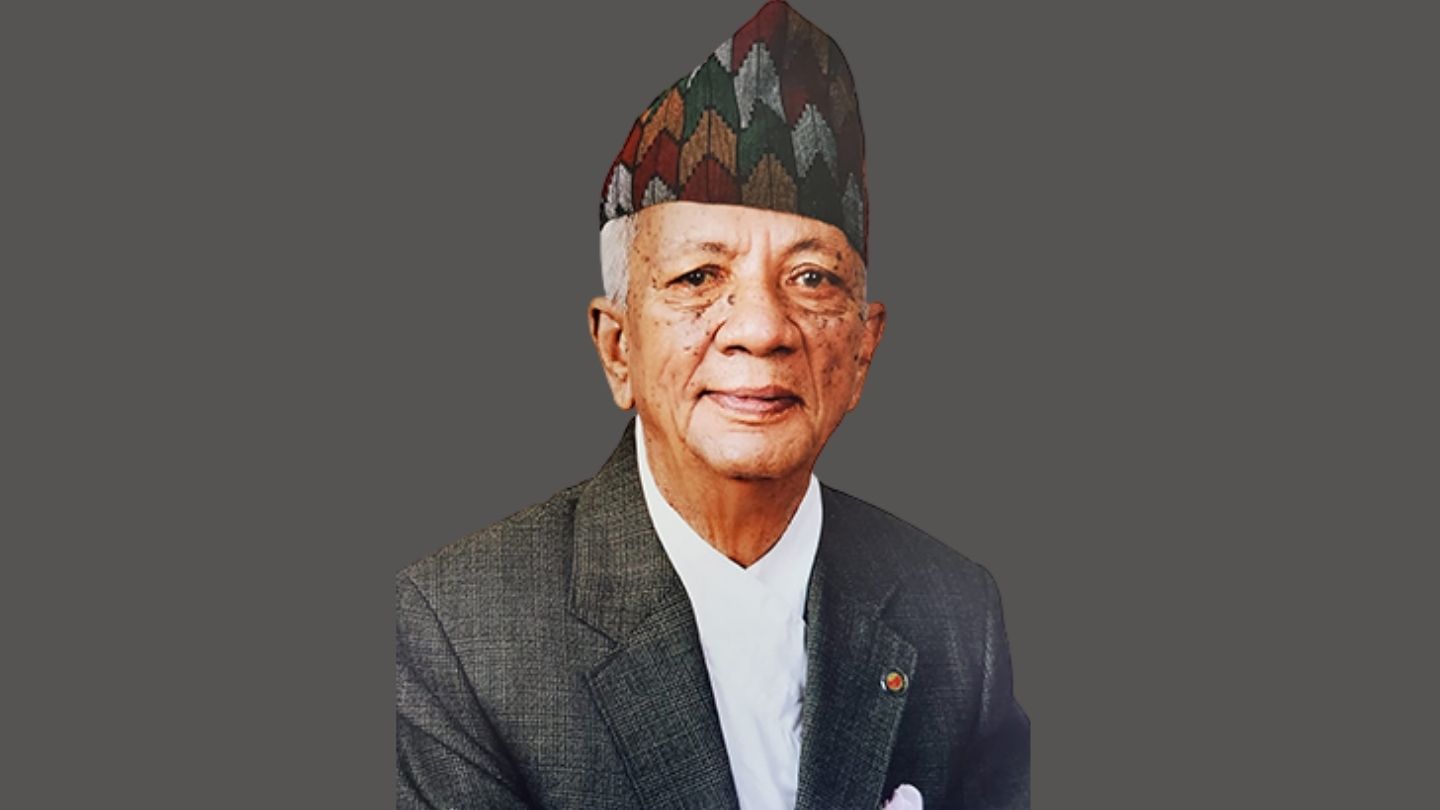
Natikaji Shrestha (1982 BS–2060 BS), whose real name was Amrit Lal Shrestha, was a prominent Nepali composer and singer. Widely known by the honorary title Sangeet Maharshi, he played an important role in the development of modern Nepali music through his compositions, performances and long association with Radio Nepal.
His musical career covered modern songs, patriotic compositions, folk-inspired music, devotional songs, musical dramas and film soundtracks. His compositions combined elements of Nepali folk melodies and classical music with arrangements that reflected the emotions and meanings of the lyrics.
Natikaji worked with several prominent lyricists and singers, including Madhav Prasad Ghimire, Rajendra Thapa, Yadav Kharel, Tara Devi, Narayan Gopal, Prem Dhoj Pradhan, Phatteman Rajbhandari and Yogesh Vaidya.
Among his best-known compositions are Nepali Hami Rahaula Kahan, Phool Ko Thunga Bahera Gayo, Aajai Ra Rati, Para Laijaau Phoolharu, Sochejasto Hunna Jeevan and Sapana Bhulai Sara.
His contributions to broadcasting, recording and music direction helped establish an important body of work in the history of Nepali modern music.
Natikaji Shrestha: Personal Profile
| Particular | Details |
|---|---|
| Full name | Amrit Lal Shrestha |
| Popular name | Natikaji Shrestha |
| Honorary title | Sangeet Maharshi |
| Date of birth | Poush 3, 1982 BS |
| Birthplace | Pulchowk, Lalitpur, Nepal |
| Father | Mohan Lal Shrestha |
| Mother | Champa Devi Shrestha |
| Spouse | Saraswati Rajbhandari |
| Nationality | Nepali |
| Profession | Composer and singer |
| Major institutional association | Radio Nepal |
| Musical fields | Modern songs, patriotic songs, folk music, devotional songs and film music |
| Major awards | Indra Rajya Laxmi Pragya Puraskar, Chhinnalata Geet Puraskar and Bhupal Sangeet Puraskar |
| State decoration | Gorkha Dakshin Bahu, First Class |
| Date of death | Kartik 16, 2060 BS (November 2, 2003) |
Early Life, Family and Childhood
Natikaji Shrestha was born on Poush 3, 1982 BS, in Pulchowk, Lalitpur. His parents were Mohan Lal Shrestha and Champa Devi Shrestha.
According to published biographical accounts, he lost both parents during childhood and grew up with his maternal grandparents in the Guhyeshwari area of Kathmandu.
His maternal grandfather was associated with religious worship at a temple. Growing up in this setting exposed Natikaji to devotional singing, religious gatherings and traditional musical practices.
He began playing the harmonium at approximately seven years of age. Participating in the Guhyeshwari Bhajan Mandali provided opportunities to practise singing and instrumental music.
Biographical sources also identify Tuyunarayan Shrestha as one of his early music teachers.
These childhood experiences formed the basis of his musical education before he became involved in modern Nepali songs and professional broadcasting.
How Did He Get the Name Natikaji?
His birth name was Amrit Lal Shrestha.
According to biographical accounts, his grandparents affectionately called him Natikaji. The family nickname gradually became his public identity.
He eventually became widely recognized by this name in Nepal's music community, rather than by his birth name.
Beginning of His Musical Career
Natikaji's early musical activities were closely associated with devotional singing and harmonium performances.
Before joining Radio Nepal, he participated in religious and cultural gatherings. These performances helped him develop his singing and musical skills.
During that period, opportunities for recording and regularly broadcasting modern Nepali songs were limited. Musical activities were influenced by traditional Nepali practices, Indian music and gramophone recordings.
Natikaji gradually expanded his interests beyond devotional music to modern compositions and singing.
Published accounts indicate that he began composing songs around 2004 BS.
He initially worked as a singer as well as a composer. In 2010 BS, he reportedly recorded Pahad Basi Banma Kheli, written by Pushpa Nepali, in his own voice. It is identified as one of his early recorded songs.
Although he continued to be associated with singing, he later gained greater recognition for composing music for other performers.
Natikaji's Career at Radio Nepal
Radio Nepal played a major role in Natikaji's professional musical career.
According to the broadcaster's institutional history, Radio Nepal was established on Chaitra 20, 2007 BS. Its establishment created an organized platform for recording, broadcasting and promoting Nepali-language songs.
Natikaji became associated with Radio Nepal in 2007 BS. Available biographical accounts indicate that he began formal service at the institution in 2008 BS.
Musical Work and Responsibilities
During Radio Nepal's early years, composers and performers were responsible for developing musical material suitable for broadcast.
Natikaji contributed by composing melodies, rehearsing with singers and preparing songs for recording and transmission.
His music was performed by artists including Tara Devi, Narayan Gopal, Prem Dhoj Pradhan, Phatteman Rajbhandari and Yogesh Vaidya.
These collaborations helped bring modern Nepali songs to radio audiences.
Contribution to Music Management
Natikaji's involvement at Radio Nepal extended beyond composition and singing.
He also handled responsibilities connected with musical production and management.
Radio Nepal's activities included voice testing, song recording, broadcasting and organizing musical programmes. Natikaji's long association with these activities made him part of the institution's contribution to the development of modern Nepali music.
Natikaji's Musical Style and Characteristics
Natikaji's compositions are distinguished by their use of Nepali folk melodies, elements of classical music and attention to lyrical expression.
His work covered different emotional and thematic subjects, including patriotism, love, separation, memories and reflections on life.
Use of Nepali Folk Melodies
Natikaji incorporated characteristics of traditional Nepali melodies into modern compositions.
His music often followed the rhythm and pronunciation of Nepali lyrics, allowing the words and melodies to work together naturally.
This approach connected his modern compositions with the broader music and dance heritage of Nepali culture.
Music That Reflected the Lyrics
The relationship between words and music was an important feature of Natikaji's compositions.
His patriotic songs used musical arrangements suited to their national themes. Songs about love, separation and personal experiences were given different melodic expressions.
Compositions such as Aajai Ra Rati, Sochejasto Hunna Jeevan and Sapana Bhulai Sara illustrate his ability to create music suited to the themes of the lyrics.
Collaboration with Different Vocal Styles
Natikaji composed music for singers with distinct vocal characteristics.
His work with Tara Devi, Narayan Gopal and Phatteman, among others, demonstrates the range of performers associated with his compositions.
These collaborations also reflect the importance of the relationship between lyricists, composers, singers and instrumentalists in the development of Nepali modern music.
Famous Songs Composed by Natikaji Shrestha
Natikaji composed music for numerous Nepali modern songs, patriotic compositions and film songs.
The following table presents eight well-known compositions, along with their lyricists and original singers.
| Song | Lyricist | Original Singer |
|---|---|---|
| Nepali Hami Rahaula Kahan | Madhav Prasad Ghimire | Natikaji |
| Phool Ko Thunga Bahera Gayo | Madhav Prasad Ghimire | Tara Devi |
| Aajai Ra Rati | Madhav Prasad Ghimire | Narayan Gopal |
| Para Laijaau Phoolharu | Rajendra Thapa | Prem Dhoj Pradhan |
| Sochejasto Hunna Jeevan | Dinesh Adhikari | Tara Devi |
| Sapana Bhulai Sara | Shiva Adhikari | Yogesh Vaidya |
| Yasto Pani Hudo Raichha | Yadav Kharel | Phatteman Rajbhandari |
| Marna Baru Garho Hunna | Tirtharaj Tuladhar | Phatteman Rajbhandari |
These credits are supported by music archives and published records. Some compositions have also been performed or recorded by later generations of singers.
Nepali Hami Rahaula Kahan
Nepali Hami Rahaula Kahan is a patriotic song written by Madhav Prasad Ghimire and composed and sung by Natikaji.
The song addresses Nepal's national identity and the importance of the country's existence.
It is particularly significant because it represents both Natikaji's composition and his own singing.
Phool Ko Thunga Bahera Gayo
Phool Ko Thunga Bahera Gayo was written by Madhav Prasad Ghimire, composed by Natikaji and originally sung by Tara Devi.
The song was included in the Nepali film Man Ko Bandh, directed by Prakash Thapa.
Its themes include separation, memories and the hope of meeting again. Tara Devi's vocal performance and Natikaji's composition express these emotions through the relationship between the lyrics and melody.
Aajai Ra Rati
Aajai Ra Rati is a modern Nepali song written by Madhav Prasad Ghimire, composed by Natikaji and originally sung by Narayan Gopal.
The song deals with dreams and the uncertainty of life.
It is a notable example of the collaboration between Ghimire as lyricist, Natikaji as composer and Narayan Gopal as vocalist.
Para Laijaau Phoolharu
Para Laijaau Phoolharu was written by Rajendra Thapa, composed by Natikaji and originally sung by Prem Dhoj Pradhan.
The composition explores memories and separation in a romantic relationship.
The original singer's attribution is documented in the Nepalaya Paleti music archive, which also records a later live performance by Prem Dhoj Pradhan.
Sochejasto Hunna Jeevan
Sochejasto Hunna Jeevan was written by Dinesh Adhikari, composed by Natikaji and originally sung by Tara Devi.
The song reflects on the differences between life's expectations and actual experiences.
Its lyrics and music address changing circumstances, happiness, difficulties and the uncertainty of personal experiences.
Sapana Bhulai Sara
Sapana Bhulai Sara was written by Shiva Adhikari, composed by Natikaji and sung by Yogesh Vaidya.
The song concerns love, separation and memories.
It remains one of the documented examples of the musical collaboration between Natikaji and Yogesh Vaidya.
Yasto Pani Hudo Raichha
Yasto Pani Hudo Raichha was written by Yadav Kharel, composed by Natikaji and sung by Phatteman Rajbhandari.
The composition expresses experiences of love, disappointment and emotional change.
It is one of the songs associated with the collaboration between Natikaji and Phatteman.
Marna Baru Garho Hunna
Marna Baru Garho Hunna was written by Tirtharaj Tuladhar, composed by Natikaji and sung by Phatteman Rajbhandari.
The song explores the emotional strength of love and attachment.
Its credits are documented in the Nepalaya Paleti archive.
Contributions to Patriotic and Devotional Music
Natikaji's compositions were not limited to modern romantic songs.
He also contributed to patriotic music, devotional songs, folk-inspired compositions and musical dramas.
Nepali Hami Rahaula Kahan, written by Madhav Prasad Ghimire, is among his notable patriotic works. His musical contributions are also associated with songs such as Yo Nepali Shir Uchali.
His involvement in devotional music began during childhood through religious gatherings and the Guhyeshwari Bhajan Mandali.
This background remained an important part of his musical experience as he expanded into modern compositions and professional broadcasting.
Natikaji's Contributions to Nepali Film Music
Natikaji also worked as a music director in Nepali cinema.
His film credits include Man Ko Bandh, Sindoor, Pachchis Basanta and Shanti Dip.
| Film | Year | Musical Contribution |
|---|---|---|
| Man Ko Bandh | 1974 | Music direction by Natikaji |
| Sindoor | 1980 | Music credited to Natikaji and Gopal Yonjan |
| Pachchis Basanta | 1989 | Music direction with Shiva Shankar Manandhar |
| Shanti Dip | 1989 | Music direction with Shiva Shankar Manandhar |
Man Ko Bandh (1974)
Directed by Prakash Thapa, Man Ko Bandh was released in 1974.
Natikaji contributed to the film's music, including the composition Phool Ko Thunga Bahera Gayo, performed by Tara Devi.
The film represents an important example of his involvement in Nepali cinema.
Sindoor (1980)
Sindoor, directed by Prakash Thapa, is listed as a 1980 film in the Fribourg International Film Festival archive.
The festival credits both Natikaji and Gopal Yonjan for the film's music.
This provides documentary evidence of their contribution to the same film soundtrack.
Pachchis Basanta and Shanti Dip (1989)
Natikaji worked with Shiva Shankar Manandhar on the music of Pachchis Basanta and Shanti Dip, both listed as 1989 films.
Film credit records identify both artists as music directors.
These productions demonstrate Natikaji's continued involvement in cinema and his collaboration with other composers.
Awards, Honours and Recognition
Natikaji received several awards and honours for his contributions to Nepali music.
His notable distinctions include:
| Award or Honour | Details |
|---|---|
| Indra Rajya Laxmi Pragya Puraskar | Received in 2036 BS in the music category |
| Chhinnalata Geet Puraskar | Recognition for contributions to Nepali songs and music |
| Bhupal Sangeet Puraskar | Award recognizing musical contributions |
| Gorkha Dakshin Bahu, First Class | Former state decoration |
Nepal Academy's official award records identify Natikaji as the recipient of the Indra Rajya Laxmi Pragya Puraskar in 2036 BS, under the music category.
He is also respectfully referred to as Sangeet Maharshi, reflecting the recognition he received for his musical contributions.
Death and Musical Legacy
Natikaji Shrestha died on Kartik 16, 2060 BS (November 2, 2003).
His musical work continued to reach audiences through recordings, broadcasts, public performances and later interpretations by other singers.
The preservation of these compositions remains important for understanding the development of modern Nepali music.
Natikaji Smriti Samaj
The Natikaji Smriti Samaj was established in his memory and has continued to recognize people who have contributed to Nepali music.
Its awards and honours include the Natikaji National Distinguished Music Honour, Natikaji National Music Honour and Natikaji National Talent Award.
The society also organizes commemorative activities and programmes associated with Natikaji's birth anniversary and musical contributions.
These activities help maintain public interest in his work and recognize the contributions of other Nepali musicians.
Natikaji's Importance in the History of Nepali Music
Natikaji's importance can be understood through three main areas of his musical career.
Development of modern Nepali songs: He combined elements of folk and classical musical traditions with modern compositions, paying particular attention to the meaning and emotional expression of lyrics.
Contribution to Radio Nepal: His involvement in music creation, recording and institutional activities during Radio Nepal's early decades helped support the growth of Nepali modern music through broadcasting.
Collaboration with prominent artists: He worked with several generations of lyricists and singers, creating compositions performed by artists with different vocal styles.
His association with major performers, his participation in film music and his long professional relationship with Radio Nepal place him among the important composers in the development of Nepali modern music.
Conclusion
Natikaji Shrestha was an influential composer and singer whose career extended from childhood devotional music to modern songs, patriotic compositions, film soundtracks and institutional music production.
His work with Radio Nepal and his collaborations with prominent lyricists and singers contributed to the development and wider circulation of modern Nepali music.
His compositions combined Nepali musical traditions with melodies suited to the words and emotions of individual songs.
The continued preservation, performance and study of his music provide valuable insight into the history and development of Nepali modern music.
References and Sources
-
Nepal Academy. Official records of Pragya Puraskar recipients.
-
Radio Nepal. Institutional overview and founding history.
-
Rastriya Samachar Samiti (RSS), via Onlinekhabar. Natikaji's contribution and inspiration to new generations of musicians.
-
Tika Bhandari, Music Khabar. Natikaji in Nepali Music.
-
Music Khabar. Biography of Natikaji Shrestha.
-
News of Nepal. Biographical article on Natikaji.
-
Kantipur. Article discussing Madhav Prasad Ghimire's patriotic songs and musical collaborations.
-
Nepalaya Paleti. Aajai Ra Rati: Composer, lyricist and original singer credits.
-
Nepalaya Paleti. Phool Ko Thunga: Composer, lyricist and original singer credits.
-
Nepalaya Paleti. Para Laijaau Phoolharu: Music and performance records.
-
Nepalaya Paleti. Sochejasto Hunna Jeevan: Music and original singer credits.
-
Nepalaya Paleti. Sapana Bhulai Sara: Composer, lyricist and singer credits.
-
Nepalaya Paleti. Yasto Pani Hudo Raichha: Composer, lyricist and singer credits.
-
Nepalaya Paleti. Marna Baru Garho Hunna: Composer, lyricist and singer credits.
-
Prakash Sayami, Nagarik. Article on collaborative music direction in Nepali cinema.
-
Fribourg International Film Festival. Sindoor: Film details and music credits.
-
Lens Nepal. Film collaborations between Shiva Shankar Manandhar and Natikaji Shrestha.
-
The Rising Nepal. Natikaji Puraskar Announced: Information about honours awarded by Natikaji Smriti Samaj.




Comments 0
No comments yet. Be the first to start the conversation.