



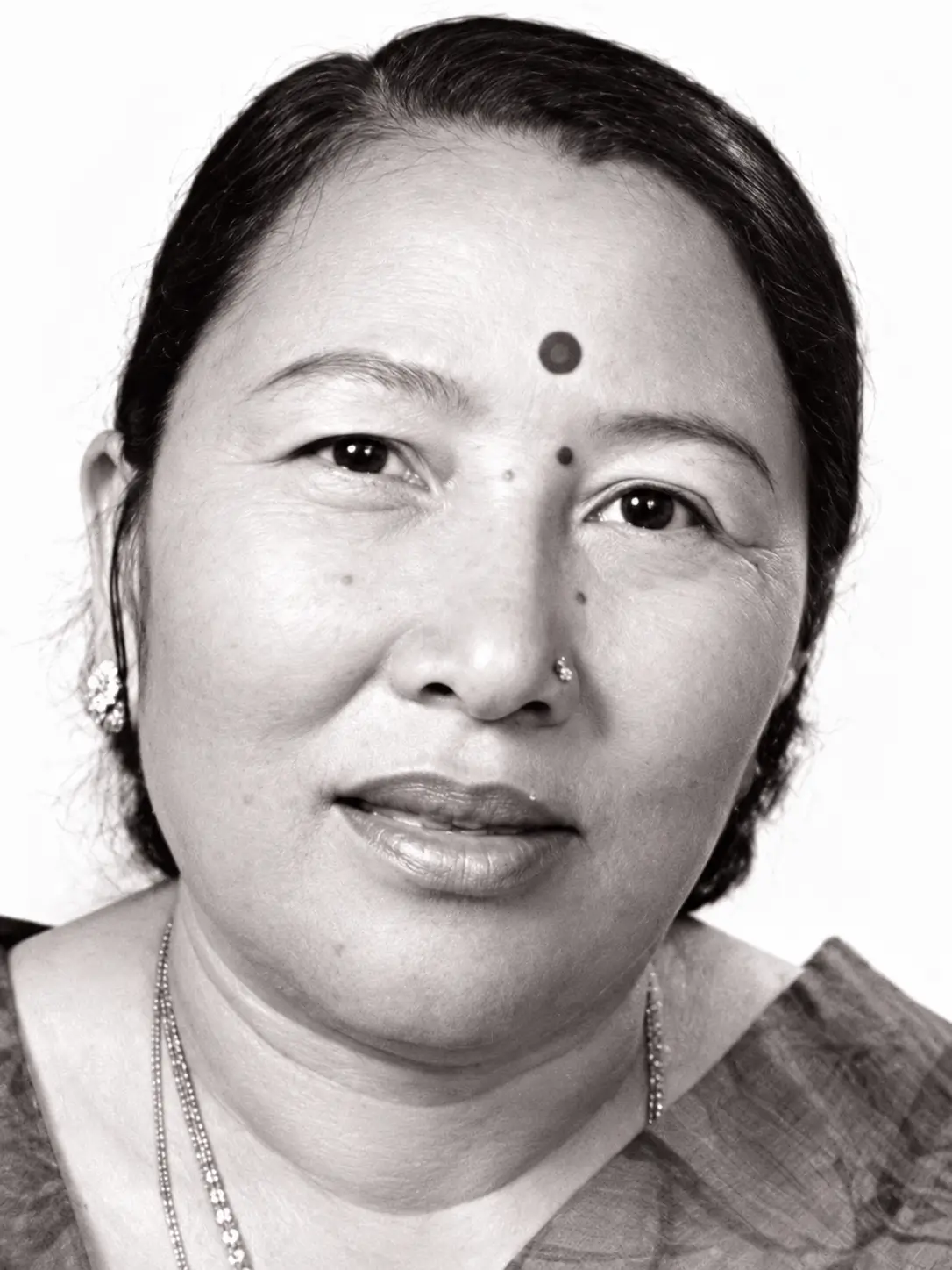
Tara Devi Shrestha (2002–2062 BS) was an important singer and musician in the history of modern Nepali music. Known as Swor Kinnari, she performed modern songs, patriotic songs, folk-style compositions, devotional songs and playback songs for Nepali films.
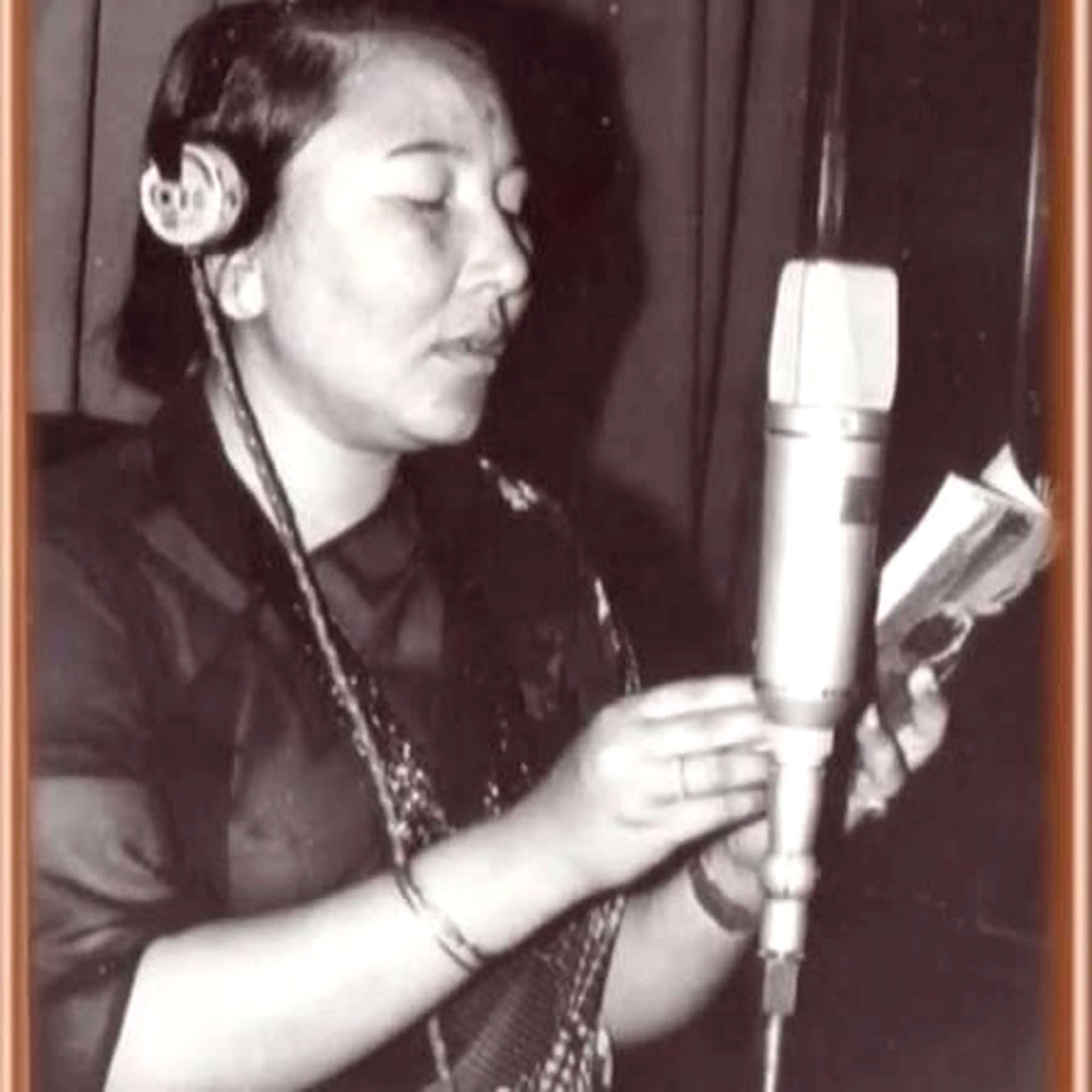
Born on Magh 2, 2002 BS (January 15, 1946), in Indra Chowk, Kathmandu, Tara Devi began singing during childhood. She was associated with Radio Nepal for approximately four decades, contributing to the broadcasting, recording and professional development of Nepali music.
Some of her best-known songs include Ukali Orali Haruma, Phoolko Thunga Bahera Gayo, Soche Jasto Hunna Jeevan, Shubhakamana Bhari and Himalko Kakhama Chha Sano Mero Gaun. Her contributions extended beyond modern Nepali songs to film music and musical drama.
In recognition of her contribution to Nepali singing, Tara Devi received the Jagadamba Shree Award for 2050 BS. The Madan Puraskar Guthi acknowledged her four decades of musical dedication and her contribution to the musical development of the Nepali language.
Tara Devi: Quick Facts
| Details | Information |
|---|---|
| Full Name | Tara Devi Shrestha |
| Popular Name | Tara Devi |
| Known As | Swor Kinnari |
| Date of Birth | Magh 2, 2002 BS (January 15, 1946) |
| Birthplace | Indra Chowk, Kathmandu, Nepal |
| Father | Krishna Bahadur Karki |
| Mother | Radha Devi |
| Date of Death | Magh 9, 2062 BS (January 22, 2006) |
| Nationality | Nepali |
| Profession | Singer and musician |
| Musical Genres | Modern songs, patriotic songs, folk-style songs, devotional songs and film playback singing |
| Principal Workplace | Radio Nepal |
| Spouse | Shiva Bahadur Shrestha |
| Major Recognition | Jagadamba Shree Award, 2050 BS |
| Notable Songs | Ukali Orali Haruma, Phoolko Thunga Bahera Gayo, Soche Jasto Hunna Jeevan, Shubhakamana Bhari |
The birth details are based on records maintained by the Madan Puraskar Guthi, while the date of death follows information published by Radio Nepal and Rastriya Samachar Samiti (RSS).
Early Life and Family Background
Tara Devi was born on Magh 2, 2002 BS (January 15, 1946), in Indra Chowk, Kathmandu. Her father was Krishna Bahadur Karki, and her mother was Radha Devi.
The official records of the Madan Puraskar Guthi provide details of her birth date, birthplace and parents.
Growing up in the culturally active inner city of Kathmandu, Tara Devi developed an interest in music at an early age. The opportunity to sing at Radio Nepal during childhood became an important starting point in her musical career.
At that time, radio broadcasting in Nepal was still in its early stages of development. Radio Nepal was among the principal institutions providing opportunities for Nepali songs to reach the public and for artists to work within an established broadcasting organization.
Early Musical Career and Education
Tara Devi began her musical journey as a child performer. Her early singing training and entry into Radio Nepal are associated with musician Bhairav Bahadur Thapa.
Association with Bhairav Bahadur Thapa
According to published biographical accounts, Tara Devi visited Radio Nepal with Bhairav Bahadur Thapa when she was still young.
Thapa guided her during the initial stages of her singing career. At a time when opportunities for child performers were limited, access to radio broadcasting played an important role in her musical development.
A biography published by Nepal Samacharpatra states that she began singing during live radio broadcasts in childhood.
Entry into Radio Nepal as a Child Artist
Radio Nepal began its regular broadcasting service on Chaitra 20, 2007 BS. This date is recorded in the institution's official history.
Tara Devi's childhood singing career was closely connected with Radio Nepal's early development.
During that period, facilities for recording songs and broadcasting them again were limited. Artists commonly performed live from broadcasting studios.
Tara Devi gained practical singing experience in this broadcasting setting.
Formal Music Education
Alongside regular singing practice, Tara Devi also pursued formal music education.
Published biographical accounts, including material from Nepal Samacharpatra, state that she completed undergraduate-level studies in music.
Her academic training and practical experience appear to have contributed to the development of her singing technique. Her recordings demonstrate an ability to communicate the emotional meaning of lyrics, maintain clear pronunciation and control rhythm.
Professional Musical Career at Radio Nepal
Tara Devi's professional musical career was primarily associated with Radio Nepal. Having begun as a child performer, she later established singing as her regular profession.
During her time at Radio Nepal, she collaborated with numerous lyricists, composers and fellow performers. Many of her familiar modern, patriotic and folk-style songs emerged from these collaborations.
Regular Singing and Recording
During Radio Nepal's early years, performers introduced their compositions to listeners through live singing. As sound-recording facilities developed, preserving songs and rebroadcasting recorded performances became more common.
Tara Devi's career covered both periods.
She sang about love, separation, personal experiences, social relationships and patriotism. Radio broadcasts helped her songs reach listeners across different parts of Nepal.
Approximately Four Decades of Service
According to information published by Radio Nepal in 2023, Tara Devi remained associated with the institution for approximately four decades.
The same account states that she contributed not only as a singer but also as a composer for some songs.
Her long association with Radio Nepal connects her musical career with the institution's history of music production, broadcasting and artist development.
Famous Songs of Tara Devi
Tara Devi's songs explore love, separation, reflections on life, rural settings, family relationships and national identity.
Her repertoire includes compositions with different themes, rhythms and musical arrangements, demonstrating the range of her singing in modern Nepali music.
Major Songs, Lyricists and Composers
| Song | Lyricist | Composer |
|---|---|---|
| Ukali Orali Haruma | Chandani Shah | Natikaji |
| Phoolko Thunga Bahera Gayo | Madhav Prasad Ghimire | Natikaji |
| Soche Jasto Hunna Jeevan | Dinesh Adhikari | Natikaji |
| Shubhakamana Bhari | Chandani Shah | Natikaji |
| Himalko Kakhama Chha Sano Mero Gaun | Kiran Kharel | Shiva Shankar |
| Sanguri Bari Ni Ho | Punya Prasad Subedi | Natikaji |
| Nau Saya Khola | Yadav Kharel | Shiva Shankar |
| Usko Mamata Mero Ho | Laxman Lohani | Natikaji |
These song credits have been matched with information published by Sanskritik Sansthan, Nepalaya's Paleti music archive and Kantipur's reporting on musical programmes.
Usko Mamata Mero Ho features the combined voices of Narayan Gopal and Tara Devi.
Ukali Orali Haruma
Ukali Orali Haruma is one of Tara Devi's well-known modern Nepali songs.
Written by Chandani Shah and composed by Natikaji, the song uses imagery from Nepal's hilly geography to express love, companionship and emotional closeness.
Tara Devi's vocal expression and clear pronunciation complement the song's emotional character.
The song was also performed during a Tara Devi memorial programme organized by Sanskritik Sansthan in 2082 BS.
Phoolko Thunga Bahera Gayo
Phoolko Thunga Bahera Gayo was written by Madhav Prasad Ghimire and composed by Natikaji.
Tara Devi was the original singer of the song. Nepalaya's Paleti archive identifies her as the original performer and records the contributions of the lyricist and composer.
The song explores love, separation and human relationships. Its literary language and musical arrangement represent the emotion-centred style of modern Nepali songs.
Other artists have also performed new renditions of the composition in subsequent years.
Soche Jasto Hunna Jeevan
Soche Jasto Hunna Jeevan is a song recorded in Tara Devi's voice that reflects on the experiences and realities of human life.
Written by Dinesh Adhikari and composed by Natikaji, the song expresses the difference between personal expectations and actual life experiences.
Tara Devi's restrained vocal delivery reflects the contemplative character of the composition.
Nepalaya's Paleti archive also identifies her as its original singer.
Shubhakamana Bhari
Shubhakamana Bhari was written by Chandani Shah and composed by Natikaji.
The song expresses goodwill, affection and positive wishes.
Its continued presentation in Nepali musical programmes associated with expressions of goodwill illustrates another aspect of Tara Devi's singing repertoire.
Himalko Kakhama Chha Sano Mero Gaun
Himalko Kakhama Chha Sano Mero Gaun was written by Kiran Kharel and composed by Shiva Shankar.
The composition expresses affection for Nepal's natural surroundings, rural life and one's birthplace.
Although the song contains patriotic themes, its presentation centres on a personal connection with village life and the local environment.
Sanguri Bari Ni Ho
Sanguri Bari Ni Ho was written by Punya Prasad Subedi and composed by Natikaji.
The folk-style composition incorporates language and rhythmic characteristics associated with rural life.
Official information published by Sanskritik Sansthan about a Tara Devi memorial programme identifies its lyricist, composer and original singer.
Other Well-Known Songs
Other familiar songs associated with Tara Devi include:
-
Kali Pare Dai Kati Ramro
-
Timra Pauharuma
-
Bida Hune Bhaigayo Bela
-
Aau Na Aau Timrai Khushi
-
Manko Nishchalatama
-
Aama Bhaera Boki Hera
These compositions further demonstrate the emotional, social and musical diversity of her singing.
Collaboration with Lyricists and Composers
Throughout her musical career, Tara Devi worked with numerous lyricists and composers.
Natikaji, Shiva Shankar and other composers played important roles in creating songs associated with her voice.
Collaboration with Natikaji
Natikaji was among the composers who collaborated extensively with Tara Devi.
Songs including Ukali Orali Haruma, Phoolko Thunga Bahera Gayo, Soche Jasto Hunna Jeevan and Shubhakamana Bhari were composed by him.
Performing compositions in Natikaji's different musical styles allowed Tara Devi to express a wide range of emotions associated with love, separation and personal experiences.
Collaboration with Shiva Shankar
Tara Devi also collaborated with composer Shiva Shankar.
Himalko Kakhama Chha Sano Mero Gaun and Nau Saya Khola are among the songs associated with their collaboration.
Nau Saya Khola was written by Yadav Kharel. Records maintained by Sanskritik Sansthan confirm Shiva Shankar as the composer and Tara Devi as the singer.
Association with Other Creative Artists
Tara Devi performed compositions written by Madhav Prasad Ghimire, Chandani Shah, Dinesh Adhikari, Kiran Kharel, Yadav Kharel and other lyricists.
Working with different writers helped broaden the themes and emotional expressions represented in her singing.
Tara Devi's Playback Singing in Nepali Films
Tara Devi participated in playback singing during the early development of Nepali cinema.
Playback singing involves recording a song for use in a film.
As Tara Devi's voice became familiar through Radio Nepal, it also appeared in songs produced for Nepali films.
Playback Singing in Aama
Tara Devi's early film playback career is associated with Aama.
Directed by Hira Singh Khatri, Aama was an early Nepali feature film. The Film Development Board's historical records identify it as the first film made in Nepal.
The film was shot in Nepal, while its technical production work was completed in Kolkata.
Published accounts of Nepali film music identify Tara Devi as one of the playback singers associated with the film.
Contributions to Other Nepali Films
Following Aama, Tara Devi also sang for other Nepali films.
An article on Nepali film music written by Prakash Sayami and published in Nagarik identifies her playback contributions to films including:
-
Parivartan
-
Manko Bandh
-
Kumari
-
Sindoor
-
Jeevan Rekha
-
Pachchis Basanta
Her involvement in film music extended her contribution beyond radio broadcasting into another medium of Nepali musical production.
Tara Devi's Contribution to the Musical Drama Muna Madan
Tara Devi also contributed her voice to Nepali musical drama. One of the notable productions in which she participated was Muna Madan.
Based on the narrative poem by Mahakavi Laxmi Prasad Devkota, the musical drama Muna Madan is associated with the history of Sanskritik Sansthan.
According to the institution's official records, the musical drama was composed by Chandra Raj Sharma.
Its singing ensemble included Narayan Gopal, Tara Devi, Ganesh Rasik, Kamala Shrestha and other performers.
The musical drama was first staged on Ashadh 5, 2032 BS.
Tara Devi's participation in this production demonstrates that her musical career was not confined to modern songs and film playback singing.
Tara Devi's Singing Style
Tara Devi's singing is characterized by clear pronunciation, rhythmic control and the ability to adapt vocal expression to the emotional content of a song.
Three aspects of her singing are particularly noticeable.
Clear Pronunciation and Emotional Expression
The words are clearly audible in many of Tara Devi's recordings.
This clarity helps listeners understand the literary meaning of the lyrics. Her performances of songs about love, separation and reflections on life demonstrate an ability to convey emotions through vocal expression.
Diversity of Musical Genres
In addition to modern Nepali songs, Tara Devi performed patriotic songs, folk-style compositions, devotional songs, film music and musical drama.
Differences in her vocal delivery can be heard according to the subject and musical style of each composition.
Duets and Group Performances
Tara Devi participated in solo performances as well as duets and group singing.
Sanskritik Sansthan identifies Usko Mamata Mero Ho as a song performed jointly by Narayan Gopal and Tara Devi.
Such recordings also represent her musical collaboration with other performers.
How Many Songs Did Tara Devi Sing?
Published accounts indicate that Tara Devi sang thousands of songs during her lifetime.
A report published by Radio Nepal on December 2, 2023, states that she recorded more than 3,500 songs. Another account from Rastriya Samachar Samiti reports that she sang approximately 3,500 songs.
Some other biographical publications estimate her total output at approximately 4,000 songs.
However, these figures should not be treated as a single, fully verified catalogue.
Because published estimates differ, her total number of performances and the number of permanently preserved recordings require separate examination.
Awards and Honours
Tara Devi received several awards and honours in recognition of her contribution to Nepali singing.
Jagadamba Shree Award, 2050 BS
Tara Devi was awarded the Jagadamba Shree honour for 2050 BS.
According to the Madan Puraskar Guthi's official records, the award recognized her long dedication to Nepali vocal music and her contribution to the musical development of the Nepali language.
She received the Jagadamba Shree Award for 2050 BS at a ceremony held on Ashoj 22, 2051 BS.
Other Awards and Recognitions
Published biographical accounts, including those in Nepal Samacharpatra, state that Tara Devi also received honours including:
-
Gorkha Dakshina Bahu
-
Indra Rajya Laxmi Award
-
Chhinnalata Song Award
These honours reflect recognition of her musical contributions by different institutions.
Narayan Gopal Memorial Award
In 2080 BS, the Narayan Gopal Music Trust decided to honour Tara Devi posthumously with the Narayan Gopal Memorial Award.
Radio Nepal reported the decision in an article published on December 2, 2023.
Marriage and Family Life
Tara Devi married Shiva Bahadur Shrestha, an aircraft pilot, in 2022 BS.
According to published biographical accounts, the couple had two sons and one daughter. Their daughter's name is Charu Shrestha.
Tara Devi continued her professional musical career alongside her family responsibilities.
Later in life, she experienced the loss of one of her sons and her husband. These events are mentioned in published biographical accounts as difficult periods in her personal life.
Death of Tara Devi
According to accounts published by Radio Nepal and Rastriya Samachar Samiti, Tara Devi died on Magh 9, 2062 BS (January 22, 2006).
Although some other biographical publications provide different dates of death, this article follows the date reported by both Radio Nepal and Rastriya Samachar Samiti.
Her songs have continued to be performed at musical programmes, through new renditions and at memorial events held after her death.
Tara Devi's Contribution to Nepali Music
Tara Devi's contribution covers modern Nepali singing, radio broadcasting, film playback music and musical drama.
Her career connects several stages in the institutional history of Nepali music.
Development of Modern Nepali Songs
Tara Devi performed modern Nepali songs addressing a range of themes and emotions.
Her recordings about love, separation, reflections on life and social relationships have become part of the history of modern Nepali vocal music.
Music Broadcasting Through Radio
Her long service at Radio Nepal was an important part of her professional career.
She worked during a period when radio music production was developing from live studio performances toward expanded recording and rebroadcasting practices.
Her career therefore provides a useful reference for understanding the history of Nepali music on radio.
Participation of Women in Professional Nepali Singing
Tara Devi belonged to an early generation of women who were professionally active in Nepali music.
Through regular performances at Radio Nepal and participation in film playback singing, she contributed to the continued institutional involvement of women performers in Nepali music.
Preservation of Musical Heritage
Tara Devi's recordings form an important part of the historical record of Nepali musical heritage.
Preserving these compositions requires maintaining accurate records of lyricists, composers, original performers and recording details.
Proper documentation and attribution support the study, reinterpretation and preservation of older Nepali songs and their musical history.
Memorial Programmes Dedicated to Tara Devi
Following Tara Devi's death, various musical programmes have been organized to commemorate her contribution.
At events organized by the Tara Devi Memorial Foundation, artists from older and younger generations have performed her songs.
Similarly, Sanskritik Sansthan organized Samjhanama Tara Devi Sangitik Samarpan Karyakram, 2082, a musical tribute programme, on Magh 9, 2082 BS, marking the 20th anniversary of her death.
Artists and trainees associated with the institution performed her songs during the programme.
Sanskritik Sansthan published details of the event on its official website.
Such activities have helped introduce Tara Devi's music and contributions to subsequent generations.
Conclusion
Tara Devi was a singer closely associated with the development of modern Nepali music. Beginning her musical career in childhood, she served at Radio Nepal for many years and contributed to modern songs, patriotic songs, devotional music, film soundtracks and musical drama.
Her collaborations with composers such as Natikaji and Shiva Shankar, along with numerous lyricists, produced songs that remain familiar parts of Nepali musical history.
Her contribution extended beyond singing alone. Her association with Radio Nepal, participation in early Nepali film playback singing and involvement in musical drama connected her career with several areas of Nepali music.
Recognized with the Jagadamba Shree Award and other honours, Tara Devi continues to be remembered through her songs, preserved recordings and memorial programmes.
References and Sources
-
Madan Puraskar Guthi — Tara Devi — Official information about her birth, parents, birthplace and Jagadamba Shree Award.
-
Radio Nepal — Narayan Gopal Memorial Award to Tara Devi, Rasik — Information about her death, service at Radio Nepal, recorded songs and posthumous recognition.
-
Radio Nepal — Seven Decades of Broadcasting — Institutional history and the beginning of Radio Nepal's broadcasting service.
-
Sanskritik Sansthan — 20th Death Anniversary of Tara Devi — Information about the memorial programme and credits for songs, lyricists and composers.
-
Nepalaya Paleti — Phoolako Thunga — Archival credits identifying the original singer, lyricist and composer.
-
Nepalaya Paleti — Soche Jasto Hunna Jeevan — Archival reference for song attribution.
-
Film Development Board — Historical Timeline of Nepali Cinema — Historical information about the film Aama.
-
Sanskritik Sansthan — History of the Musical Drama Muna Madan — Information about its first performance, composition and original singing ensemble.
-
Nagarik — Ti Tara Devi, Ti Aruna Lama — Article about Nepali film playback singing and musical collaboration.
-
Nepal Samacharpatra — Swor Kinnari Tara Devi — Published biographical information about her early singing career, music education, family life and other awards.



Comments 0
No comments yet. Be the first to start the conversation.