



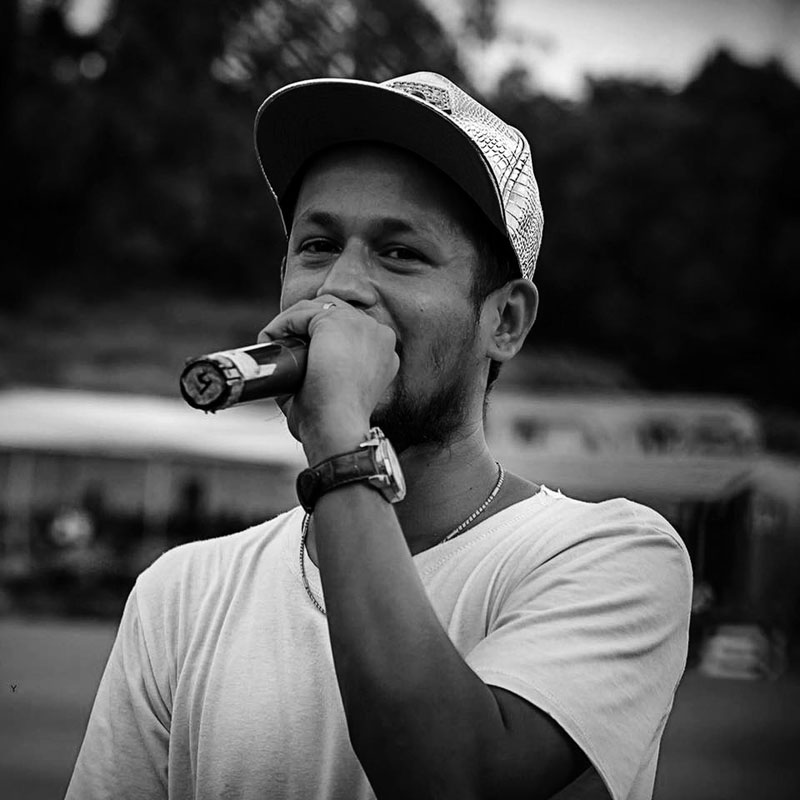
Yama Buddha was the stage name of Anil Adhikari, a Nepali rapper and songwriter known for his contributions to Nepali hip-hop music. Born on May 30, 1987 (Jestha 16, 2044 BS), Adhikari died in London, United Kingdom, on January 14, 2017 (Magh 1, 2073 BS), at the age of 29.
As a songwriter and rapper, Yama Buddha addressed social problems, family relationships, friendship, and the challenges of young people's lives through his music. Songs such as Saathi, Aama, Yo Prasanga, Footpath Mero Ghar, Didi, and Antya Ko Suruwat are among his works associated with the development of Nepali hip-hop.
His contribution extended beyond songwriting and performing. He played a role in establishing and developing Raw Barz, a rap battle platform, as a co-founder and host. The platform gave emerging rappers opportunities to demonstrate their word choice, rhyming skills, and performance abilities before public audiences.
The history of Nepali rap began before Yama Buddha's musical career. He helped expand a genre developed by earlier artists by connecting it with social storytelling, digital platforms, and competitive performances. For this reason, news reports and reviews examining the development of Nepali hip-hop frequently recognize his musical contributions.
Yama Buddha: Personal Profile
-
Real Name: Anil Adhikari
-
Stage Name: Yama Buddha
-
Date of Birth: May 30, 1987 (Jestha 16, 2044 BS)
-
Place of Birth: Eastern Nepal; published sources identify either Leguwa in Dhankuta or Salakpur in Morang
-
Date of Death: January 14, 2017 (Magh 1, 2073 BS)
-
Place of Death: Ruislip, London, United Kingdom
-
Age at Death: 29 years
-
Nationality: Nepali
-
Profession: Rapper and songwriter
-
Father: Ambika Prasad Adhikari
-
Mother: Urmila Adhikari
-
Spouse: Asmita Sedhain
-
School Education: The Excelsior School, Kathmandu
-
Higher Secondary Education: Edmark Academy, Science stream
-
Major Music Albums: Ekadesh and Khatra
-
Contribution to Music Platforms: Co-founding and organizing Raw Barz
-
Notable Songs: Saathi, Aama, Yo Prasanga, Footpath Mero Ghar, Didi, Antya Ko Suruwat, Jutta Maa, and Aaudaichu Ma
Birth, Family Background, and Childhood
Anil Adhikari was born on May 30, 1987, in eastern Nepal. His father was Ambika Prasad Adhikari, and his mother was Urmila Adhikari.
Published sources provide conflicting information about his exact birthplace. A biographical article published in Saptahik in 2014 identified Leguwa in Dhankuta as his birthplace. However, a memorial article published in Kantipur in 2017 stated that he was born in Salakpur, Morang.
Since sufficient official records supporting either account are not available, neither location can be presented as an undisputed fact. Nevertheless, published sources are largely consistent regarding his birth date and his family's connections with eastern Nepal.
During his childhood, Adhikari lived with his family in Salakpur, Morang. The family subsequently moved to Kathmandu.
His father, Ambika Prasad Adhikari, was involved in political and social activities. Because the family lived in different places, Anil experienced both rural and urban settings in eastern Nepal.
In interviews published later, he explained that living in different places during childhood gave him opportunities to understand various aspects of social life.
His songs addressed poverty, social inequality, and the experiences of people facing difficult circumstances. Although his childhood surroundings provide useful background for understanding his interest in these subjects, there is insufficient evidence to identify any single family event as the direct cause of his musical themes.
Education and Early Interests
Anil Adhikari received his early schooling in eastern Nepal. After moving to Kathmandu, he studied at The Excelsior School.
According to his biography published in Saptahik in 2014, he passed the School Leaving Certificate (SLC) examination from The Excelsior School. He subsequently completed his higher secondary education in the Science stream at Edmark Academy.
He developed an interest in writing poetry and songs during his school years. The biography noted that he practiced writing English-language songs and rhyming words while attending higher secondary school.
During adolescence, his interest in hip-hop and rap music increased. Experimenting with rhythm, expressing ideas concisely, and presenting stories through lyrics became part of his early musical activities.
Introduction to Online Rap Battles
After completing higher secondary education, Adhikari began preparing to pursue further studies abroad. He initially planned to travel to Australia, but a motorcycle accident affected those plans.
He subsequently continued studying and practicing music while staying at home. His biography states that he began participating in rap battles conducted over the internet during this period.
In a rap battle, two or more artists compete through lyrics, rhymes, rhythm, and performance. The artist's writing ability and capacity to communicate ideas effectively are important elements of these competitions.
Adhikari used the name "Buddha" in his early online competitions. These experiences allowed him to practice the competitive aspects of rap.
He later participated in rap battles in Nepal. These early experiences provided a useful foundation for his subsequent musical career and involvement with Raw Barz.
How Did Anil Adhikari Get the Name Yama Buddha?
Anil Adhikari initially used the name "Buddha" during the early stages of his musical career. He later added "Yama" before it to create the stage name "Yama Buddha."
In a 2014 interview with Saptahik, he explained that he selected the name to reflect different aspects of his personality.
The word "Buddha" is associated with peace, compassion, and wisdom, while "Yama" refers to a deity associated with death and justice in Hindu religious traditions.
Yama Buddha explained that he intended these two symbols to represent the peaceful and stern aspects of human nature.
This explanation comes from his own interview about the origin of his stage name and can be understood as his personal reason for choosing it.
Move to the United Kingdom and Early Musical Practice
Anil Adhikari traveled to the United Kingdom in 2009 for higher education. According to the account published in Saptahik, he arrived in the UK in September of that year with the intention of studying Information Technology.
During his stay in the UK, he worked alongside his studies. In interviews, he described his experiences working in restaurants and other service-sector jobs.
His interest in music continued while he lived abroad. He kept writing, practicing, and performing rap.
According to reporting published in The Caravan in 2014, he practiced rap and freestyle performances with other artists while living in London. He also participated in musical events at local open venues.
These experiences introduced him to different aspects of songwriting and public performance.
Return to Nepal
Anil Adhikari returned to Nepal on January 2, 2011. After returning, he became actively involved in Nepali hip-hop music.
He began recording songs and releasing music through digital platforms.
According to Saptahik, he recorded the song Saathi in March 2011.
The initial recording circulated as a digital file among friends, helping his music reach new listeners. His musical recognition expanded further after the song's video was released.
Saathi: The Song That Expanded His Musical Recognition
Saathi holds an important place in Yama Buddha's musical career. Recorded in 2011, the song uses storytelling to explore friendship, drug misuse, and its social consequences.
The song focuses on relationships between friends and the changes that occur in their lives.
One of its distinguishing features is its presentation of social problems through characters and a sequence of events rather than through general commentary alone.
Its narrative raises questions about personal decisions, social circumstances, and changes in relationships.
In a 2014 interview published in Saptahik, Yama Buddha explained that the song's initial digital recording reached many listeners as friends shared the file.
His recognition subsequently expanded through YouTube and other online platforms.
Following the public release of Saathi, he continued using Nepali-language rap to address social issues.
Major Songs of Yama Buddha and Their Themes
Yama Buddha's songs cover social problems, personal experiences, family relationships, and subjects connected with everyday life.
His songwriting frequently presents characters from different social circumstances. This narrative approach is an important feature of many of his songs.
1. Saathi
Saathi is a song about friendship and drug misuse.
It presents the relationship between two friends and changes in their lives through a narrative.
Alongside the emotional aspects of friendship, the song addresses how addiction can affect individuals and their relationships.
Its storytelling approach became an important factor in expanding Yama Buddha's musical recognition.
2. Aama
Aama explores the relationship between a mother and her child, motherhood, sacrifice, and family responsibilities.
The song presents a mother's contribution to her child's life and the importance of family relationships.
It features a musical collaboration with Mistah K.
Aama is included in Yama Buddha's album Ekadesh.
3. Yo Prasanga
Yo Prasanga focuses on the serious social problem of human trafficking.
It uses storytelling to portray exploitation and injustice, particularly situations that women and girls may face.
The song addresses the social consequences of human trafficking and the circumstances of those affected.
It is an example of Yama Buddha's use of rap to raise difficult social issues.
4. Footpath Mero Ghar
Footpath Mero Ghar addresses the circumstances of children living on the streets.
It presents the absence of family protection, poverty, and social neglect from the perspective of street-connected children.
The song encourages listeners to recognize these children as individuals with their own experiences and difficulties rather than viewing them merely as a social problem.
A review of Yama Buddha published in The Kathmandu Post in 2017 also discussed this song as an example of his social storytelling.
5. Didi
Didi addresses family relationships and subjects connected with women's lives.
The song presents themes associated with family emotions and social circumstances.
It is another of Yama Buddha's works based on social and family-related subjects.
6. Antya Ko Suruwat
Antya Ko Suruwat addresses personal challenges, change, and new beginnings.
It presents individual experiences and circumstances through music.
The song is included in Ekadesh. Its recorded version features a collaboration with Leezum Bhutia.
7. Jutta Maa
Jutta Maa is another example of Yama Buddha's songwriting and rap performance.
A song with this title appears on the album Ekadesh. A song titled Jutta Maa, featuring Yama Buddha's vocals, was also released as part of the soundtrack of the Nepali film Shree 5 Ambare.
The official video of the film-related song was released through Highlights Nepal.
8. Aaudaichu Ma
Aaudaichu Ma is associated with Yama Buddha's energetic rap performances.
The song is connected with the soundtrack of the Nepali film Talakjung vs Tulke.
It demonstrates that his musical work extended beyond independent rap recordings into film music.
9. Other Musical Works
Other songs associated with Yama Buddha include Pagalpan, Kohi, Think Smart, KTM Grime, Ma Futchhu Tara Jhukdina, and Narunu Timi.
These works demonstrate his use of personal expression, social storytelling, and different performance styles in rap.
When examining his discography, it is important to distinguish between individual songs, mixtapes, albums, and recordings produced for films.
Ekadesh: A Major Music Album
Ekadesh is one of Yama Buddha's major music albums. It features rap in Nepali and English, addressing social issues and personal experiences.
According to Apple Music's digital records, Ekadesh is listed as an album dated July 6, 2012. That version contains 12 tracks.
The collection includes songs such as Aama, Yo Prasanga, Antya Ko Suruwat, Pagalpan, Jutta Maa, Kohi, KTM Grime, and Think Smart.
It also features collaborations with Mistah K, Leezum Bhutia, Aidray, and other artists.
However, a 2014 interview published in Saptahik discussed the commercial album version of Ekadesh becoming available in the market. The release date recorded on a digital music platform and the date when the commercial album became available in the local market should not necessarily be treated as the same event.
Ekadesh brings together Yama Buddha's narrative songwriting, selection of different subjects, and collaborations with other artists.
Its songs address subjects ranging from family relationships to social problems. The album consequently serves as a useful record for understanding his musical style.
Establishment and Development of Raw Barz
Raw Barz is a rap battle platform associated with Nepali hip-hop. It provided emerging and established rappers with opportunities to demonstrate their artistic abilities through competitive performances.
Yama Buddha worked with other artists and colleagues to establish and develop Raw Barz.
Published sources differ regarding the year the platform began operating.
In 2015, The Kathmandu Post reported that Raw Barz began in 2010. However, firsthand reporting published in The Caravan in 2014 identified Yama Buddha as a co-founder of Raw Barz in 2013.
These accounts suggest differences between the reported beginnings of Raw Barz's activities and its formal establishment. It is consequently more cautious to describe Raw Barz as a Nepali rap battle platform that developed during the early 2010s.
How Rap Battles Worked at Raw Barz
In the early Raw Barz competitions, two rappers generally faced each other and competed through their lyrics and performance abilities.
Many performances followed an a cappella format, meaning they were delivered without instrumental accompaniment.
Artists used rhyme, wordplay, metaphors, and responses to their opponents' performances.
These competitions required a different form of preparation from recording songs. Rappers needed to memorize their lyrics, deliver them effectively, and express their ideas within the allotted opportunities.
Raw Barz provided a platform for artists involved in these activities to reach public audiences.
Because videos of the competitions were published through digital platforms, people who could not attend the events in person could also watch the performances.
Contribution to the Development of Emerging Rappers
The early musical careers of rappers such as Laure (Ashish Rana), Unique Poet (Utsaha Joshi), and other artists were associated with Raw Barz.
In an article published in The Kathmandu Post in 2017, Laure recalled being encouraged by Yama Buddha to participate in Raw Barz.
Similarly, reporting published in The Caravan in 2014 described the rap battle between Laure and Unique Poet as an important event in Nepal's competitive hip-hop scene.
Raw Barz gave emerging artists opportunities to present their work publicly and become known to listeners.
Yama Buddha's contribution involved providing a platform for new artists and supporting the development of competitive rap culture.
However, the subsequent musical achievements of those artists also depended on their own songwriting, practice, performance abilities, and individual efforts. It would therefore be inappropriate to attribute their entire success to Raw Barz or any single individual.
Continuation of Raw Barz After Yama Buddha's Death
Activities associated with Raw Barz continued at different times after Yama Buddha's death.
In 2022, a new version of the competition was introduced under the name Raw Barz Reboot.
The revised format included rap performed over musical beats and freestyle rounds alongside a cappella performances.
According to a report published by Nepal News on March 27, 2022, changes were also introduced to the judging process and competition structure.
This confirms that activities associated with Raw Barz continued through other organizers and artists after Yama Buddha's lifetime.
Film Music and Collaborations with Other Artists
Yama Buddha's musical career was not limited to independent rap recordings. He also recorded songs for Nepali films.
Aaudaichu Ma and Jutta Maa are examples of his musical contributions associated with films.
His participation in film music created opportunities for Nepali hip-hop performances to reach cinema audiences.
He also collaborated with other singers and rappers on musical projects, including Ekadesh.
His collaborative recordings combined solo rap performances with chorus vocals and contributions from other artists.
These projects demonstrate that his musical work involved both individual songwriting and performance and collaborative creative efforts.
Yama Buddha's Songwriting and Musical Style
Social storytelling was an important feature of Yama Buddha's musical style. Many of his songs presented their subjects through characters, circumstances, and sequences of events.
His songwriting can be understood primarily through its narrative approach, use of conversational language, and attention to social concerns.
Storytelling Through Rap
Narrative presentation is prominent in songs such as Saathi and Footpath Mero Ghar.
Rather than merely mentioning social problems as general ideas, these songs connect them with the experiences of individual characters.
This approach helps listeners understand the subjects and reflect on the social circumstances presented in the lyrics.
Presenting Themes in the Nepali Language
Many of Yama Buddha's songs use words and expressions from everyday spoken Nepali.
He incorporated familiar language and situations from ordinary life to develop the stories in his songs.
This approach illustrates how he adapted social subjects to the rhythm and structure of rap music.
Use of English and Nepali
During the early stages of his musical development, Yama Buddha was familiar with English-language rap. He subsequently continued writing and performing songs in Nepali.
Both languages appear in his songs and musical collections.
His work helps illustrate how an artist familiar with international hip-hop styles incorporated Nepali social experiences into musical compositions.
Concern for Social Issues
His songs addressed human trafficking, drug misuse, the circumstances of street-connected children, poverty, and family relationships.
In a review published in The Kathmandu Post in 2017, Timothy Aryal associated Yama Buddha's contribution with his ability to express the experiences of people facing difficult social circumstances through music.
In this respect, his songs can be evaluated not only through their performance styles but also through their subjects and narrative structures.
Personal Life and Later Years in the United Kingdom
Yama Buddha was married to Asmita Sedhain. During the later years of his life, he lived with his wife in the London area of the United Kingdom.
At that time, he continued working on music alongside regular employment.
According to news reports published in January 2017, he had been living in the Ruislip area of London.
Before his death, he was preparing a new music album titled Khatra.
This indicates that he remained actively involved in recording music and developing new creative work during the final period of his life.
Yama Buddha's Death and Final Tributes
Yama Buddha died in London, United Kingdom, on January 14, 2017. He was 29 years old.
Following his death, artists from Nepal's music industry, relatives, and listeners paid tribute to him.
His remains were brought to Nepal on January 28, 2017.
According to a report by the Rastriya Samachar Samiti (RSS), his remains were placed at the Nepal Academy in Kathmandu for people to pay their final respects.
His funeral rites were subsequently performed at Pashupati Aryaghat.
Artists, relatives, fans, and members of the public attended the tribute ceremony.
Khatra: The Album Released After His Death
Khatra is a music album by Yama Buddha that was released after his death.
He had been working on recordings for the album during the final period of his life.
According to a report published in The Kathmandu Post on May 4, 2017, Khatra was released in March of that year.
The album contains seven tracks:
-
Taaj
-
Paisa
-
Khatra
-
Sapana
-
Allarey Thita
-
Yodda
-
Ke Bhako Hola
The music video for Taaj, a song from the album, was also released after his death.
According to The Kathmandu Post, the video was filmed in London.
Khatra was a musical project that began during Yama Buddha's lifetime and reached listeners after his death. It provides a record of his later recording work.
Yama Buddha's Contribution to the Development of Nepali Hip-Hop
The development of Nepali hip-hop has resulted from the collective contributions of artists, music producers, and listeners across different generations.
Girish Khatiwada, Pranil Timilsina, Nirnaya Shrestha, and other artists played roles in developing and promoting Nepali rap before Yama Buddha's musical career.
Nepali rap, which had been developing since the 1990s, subsequently expanded through digital platforms, new artists, and different performance styles.
Yama Buddha was among the important artists associated with this development.
His contribution can primarily be understood through three areas.
Giving Priority to Social Themes
He made problems and experiences connected with people's everyday lives subjects of his rap songs.
Saathi addressed drug misuse, Yo Prasanga explored human trafficking, and Footpath Mero Ghar presented the circumstances of children living on the streets.
These songs represent his approach to expressing social issues through narrative rap.
Promoting Music Through Digital Platforms
The internet and social media played important roles in expanding Yama Buddha's musical recognition.
He used digital platforms to release his songs and reach listeners.
In a 2013 conversation with Kantipur, he also expressed the view that musicians should receive fair value for their creative work and enjoy appropriate rights over their music.
This indicates that his musical concerns extended beyond producing songs to music distribution and artists' rights.
Providing Opportunities for New Rappers
Through his involvement in the development and operation of Raw Barz, he helped create opportunities for emerging artists to present their performances publicly.
The platform helped artists practicing competitive rap reach audiences.
This contribution differed from the success of his individual songs. It involved encouraging the participation of new artists, supporting public performances, and advancing competitive musical activities.
Activities Organized in Memory of Yama Buddha
Musical and social activities have been organized in memory of Yama Buddha since his death.
The Yama Buddha Foundation, established in his name, is among the organizations associated with these activities.
According to a report published in The Rising Nepal on August 22, 2026, the foundation established a scholarship endowment fund of Rs. 1 million (Rs. 10 lakh) at Sukuna Multiple Campus in Sundarharaicha, Morang.
The report stated that the foundation's chairperson, Ambika Prasad Adhikari, and treasurer, Urmila Adhikari, handed over the amount to representatives of the campus management.
According to the news report, the endowment was established using funds collected through a memorial program organized by the foundation and contributions from family members.
This initiative demonstrates that activities undertaken in Yama Buddha's memory have included educational support alongside musical events.
Yama Buddha's Musical Legacy
Yama Buddha's musical legacy is associated with his songs, narrative songwriting, and contribution to the development of competitive rap in Nepal.
He made different social problems and personal experiences in Nepali society subjects of his songs. Many of his works use straightforward language, characters, and sequences of events.
His songs provide examples of rap songwriting that addresses social issues in the Nepali language.
Through his involvement in developing Raw Barz, he also helped provide emerging artists with opportunities to participate in competitive performances.
His contribution should be evaluated within the broader history of Nepali hip-hop. The work of artists who preceded him, the contributions of his contemporaries, and the creations of subsequent generations have also advanced Nepali rap.
Within this wider history, Yama Buddha is recognized as a musician who prioritized social storytelling and participated in developing a platform for emerging artists.
His songs, published interviews, and recordings of Raw Barz competitions remain important sources for studying the development of Nepali hip-hop.
Conclusion
Yama Buddha, whose real name was Anil Adhikari, was a rapper and songwriter who contributed to the development of Nepali hip-hop.
His musical career included songwriting, recording, digital music distribution, film music, and participation in competitive rap events.
Songs such as Saathi, Aama, Yo Prasanga, and Footpath Mero Ghar represent his interest in social issues and his narrative songwriting style.
His role in co-founding and operating Raw Barz helped create opportunities for emerging artists to perform before public audiences.
Although he died in 2017, his songs, albums, and records of his musical activities remain useful references for understanding the development of Nepali hip-hop.
References
1. Saptahik. (February 28, 2014). नेपहपका दुई सेलिब्रेटी. A biographical article covering Anil Adhikari's childhood, education, journey to the United Kingdom, stage name, and early musical activities.
2. Sajana Baral. (January 20, 2017). यमबुद्धको विरासत. Kantipur. A memorial article based on his musical journey, social themes, and interviews with artists.
3. Timothy Aryal. (January 21, 2017). Voice of a Generation. The Kathmandu Post. A review examining the development of Nepali hip-hop and Yama Buddha's contribution.
4. Ross Adkin. (May 1, 2014). War of the Words: Rap Battling Is Taking Nepali Hip-Hop to New Heights. The Caravan. Firsthand reporting on Raw Barz and competitive rap in Nepal.
5. The Kathmandu Post. (November 21, 2015). Nepal's Road to Rap. An article discussing the history of Nepali rap and Raw Barz.
6. Apple Music. Ekadesh — Yama Buddha. Digital release information and album details for Ekadesh.
7. The Kathmandu Post. (May 4, 2017). Yama Buddha's Last Music Video Released. Reporting on the Khatra album and a music video released after his death.
8. Rastriya Samachar Samiti / The Himalayan Times. (January 28, 2017). Yama Buddha's Body Brought to Nepal, Cremated. A news report covering his final tributes and funeral.
9. Ajit Pandey. (March 27, 2022). Kathmandu Auditions for Raw Barz Reboot. Nepal News. Reporting on the renewed Raw Barz competition and changes to its structure.
10. The Rising Nepal. (August 22, 2026). Yama Buddha Foundation Sets Up Rs. 1M Scholarship Endowment Fund. Reporting on the scholarship endowment established by the Yama Buddha Foundation at Sukuna Multiple Campus.


Comments 0
No comments yet. Be the first to start the conversation.