



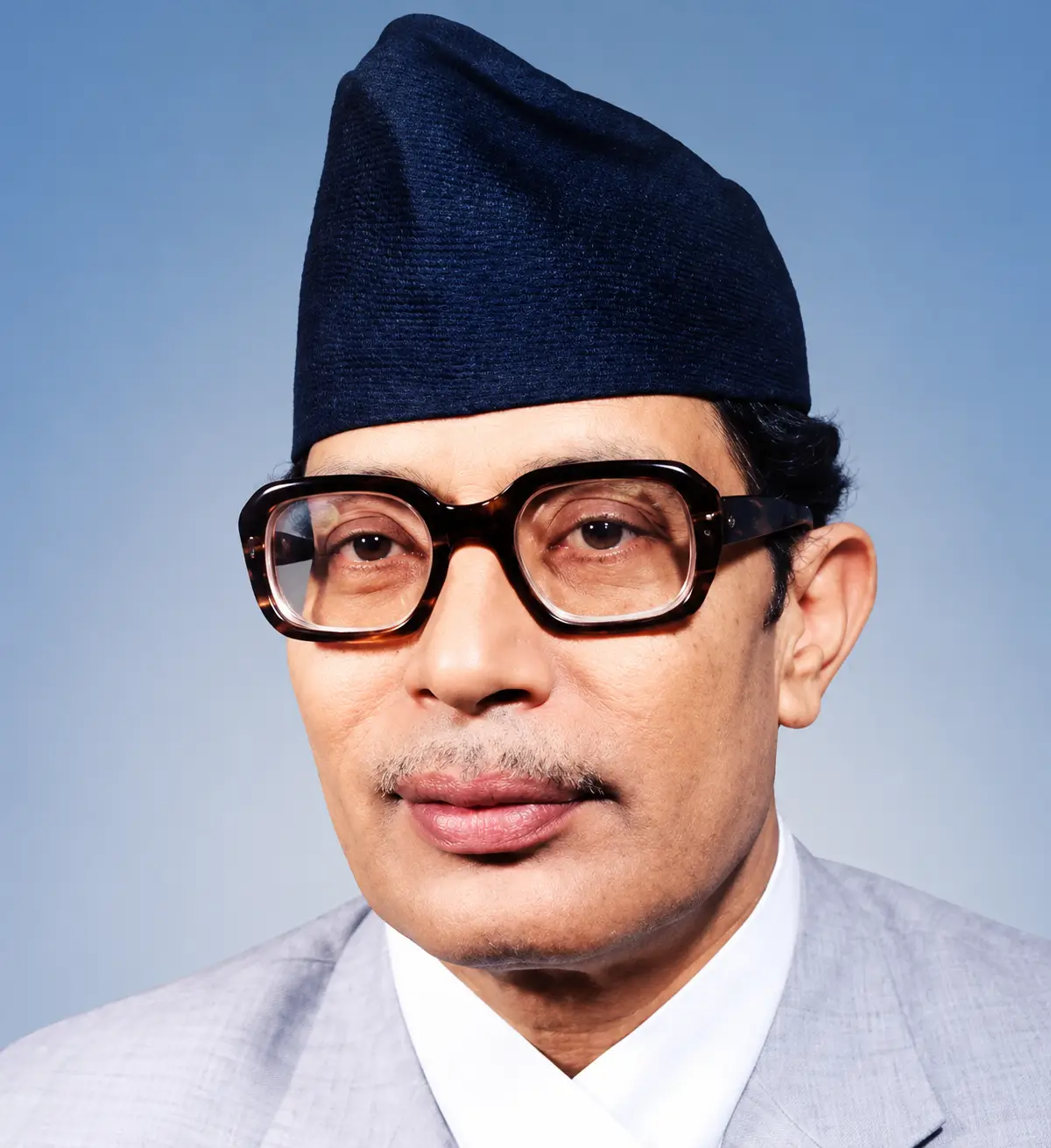
Narayan Gopal Guruwacharya was a Nepali modern music singer and composer widely known as Swar Samrat (Emperor of Voice). His musical career, spanning the 1960s until 1990, included singing, composing melodies, stage performances and writing about music. His identity as an artist extended beyond solo singing. His collaborations with lyricists, composers and fellow singers, his editorial work for the magazine Bagina, and his leadership role at the Cultural Corporation were also important parts of his public life.
Narayan Gopal had family and cultural connections with Kilagal, Kathmandu. Through his distinctive voice and compositions, he contributed to the development of a recognizable identity for modern Nepali songs. "Swargaki Rani," "Ae Kanchha Thattaima," "Aankhako Bhaka Aankhaile," "Euta Manchheko Mayale" and "Yo Samjhine Man Chha" are among the well-known songs associated with his singing.
He died on 5 December 1990 (19 Mangsir 2047 BS). However, historical records contain conflicting information about his birth. This biography therefore distinguishes between details supported by available evidence and those on which published sources disagree.
Narayan Gopal: Quick Facts
|
Detail |
Information |
|---|---|
|
Full name |
Narayan Gopal Guruwacharya |
|
Popular names |
Narayan Gopal; Swar Samrat |
|
Reported birthplace |
Kilagal, Kathmandu, according to most sources; Bhagwanpur, Siraha, according to a later biography review |
|
Reported birth date |
18 Asoj 1996 BS in several sources; Asoj 1998 BS in Madan Puraskar Guthi records |
|
Father |
Asha Gopal Guruwacharya |
|
Mother's name |
Ramdevi in Madan Puraskar Guthi records; Rammaya in Nagendra Thapa's memoir |
|
Main areas of work |
Singing, music composition, cultural management and editing |
|
Major institutional position |
General Manager, Cultural Corporation |
|
Major recognition |
Jagadamba Shree Award, 2045 BS, among others |
|
Date of death |
19 Mangsir 2047 BS (5 December 1990) |
Birth, Family Background and Childhood
Kilagal in Kathmandu is widely mentioned as Narayan Gopal's birthplace. Madan Puraskar Guthi, Radio Nepal and his friend Nagendra Thapa have all identified this location. However, a book review published in Gorkhapatra about a biography written by Prakash Sayami presents a different account, stating that he was born in Bhagwanpur, Siraha.
Because no conclusive birth registration or contemporary primary record was available for this account, neither location is presented as an undisputed fact.
His father, Asha Gopal Guruwacharya, was a sitar player associated with classical music. Growing up in a family where singing, instrumental performance and musical practice were part of everyday life exposed Narayan Gopal to music from an early age. Memoirs by his contemporaries and subsequent biographical studies also mention his interest in tabla playing and singing.
Published sources differ on his birth date as well.
In a biographical account published in Madhupark in 2048 BS, his close associate and lyricist Nagendra Thapa recorded his birth date as 18 Asoj 1996 BS. Radio Nepal also mentions 1996 BS.
In contrast, Madan Puraskar Guthi's biographical record gives Asoj 1998 BS, while another biographical article published in Kantipur mentions 18 Asoj 1997 BS.
Without verification from an original record, none of these conflicting years can be treated as the conclusively established date of birth.
There is also a discrepancy concerning his mother's name. Madan Puraskar Guthi identifies her as Ramdevi, whereas Nagendra Thapa's published account names her Rammaya Guruwacharya. Given this inconsistency, it would be inappropriate to treat either name as definitively established.
For understanding Narayan Gopal's musical development, the influence of his family environment is more relevant than a complete list of family members.
His father was active in classical music, while Narayan Gopal was also drawn to modern Nepali songs. Memoirs by close friends suggest that these two musical traditions were given different priorities within the family. However, those accounts do not provide sufficient grounds for further conclusions about his personal psychology or family relationships.
Education and Study of Classical Music
Narayan Gopal studied at Tri-Chandra College in Kathmandu. His student years there are associated with his introduction to lyricist Ratna Shumsher Thapa and his early musical activities.
Different biographies provide inconsistent information about his level of study and academic qualifications. Claims that he completed a particular degree should therefore be treated cautiously.
He later travelled to Baroda, India, to study classical music.
According to Nagendra Thapa's memoir, Narayan Gopal was studying in Baroda but eventually returned to Kathmandu without completing his studies. Similar accounts appear in other biographical materials.
There is an important distinction between studying classical music and completing a specific formal academic qualification. The available accounts support the former but do not establish the latter.
Contemporary musicians and critics have discussed Narayan Gopal's pronunciation, control over musical notes and ability to express emotions according to the meaning of a song's lyrics.
These qualities cannot be attributed solely to formal education. His family's musical environment, personal practice, original compositions and collaborations with other musicians also formed part of his artistic development.
Radio Nepal and the Beginning of His Singing Career
Narayan Gopal's association with Radio Nepal was an important early stage in his public musical career.
He passed a vocal audition and performed songs on the radio. However, published accounts differ regarding the exact year of the audition, so it would be inappropriate to present a single year as an undisputed fact.
During his early years, he maintained musical associations with Manik Ratna Sthapit and Prem Dhoj Pradhan.
His introduction to lyricist Ratna Shumsher Thapa at Tri-Chandra College marked another important development in his recording career.
According to an article by lyricist Bhupendra Khadka published in Kantipur, Narayan Gopal composed songs using lyrics written by Ratna Shumsher Thapa and travelled to Kolkata, India, to record some of his early work.
Recordings from around 2018 BS are associated with songs such as "Swargaki Rani," "Ae Kanchha Thattaima," "Aankhako Bhaka Aankhaile," "Kunjama Gunjiyo" and "Bho Bho Malai Nasodha."
The Paleti music archive also identifies Ratna Shumsher Thapa as the lyricist of "Swargaki Rani" and Narayan Gopal as its composer and original singer.
This early period demonstrates Narayan Gopal's work as both a singer and a composer.
While he provided vocals for various songs, some also featured melodies he composed himself. It would therefore be incorrect to assume that he wrote the lyrics or composed the music for every song associated with his name.
Understanding his recording history requires distinguishing the separate contributions of singers, lyricists, composers and duet partners.
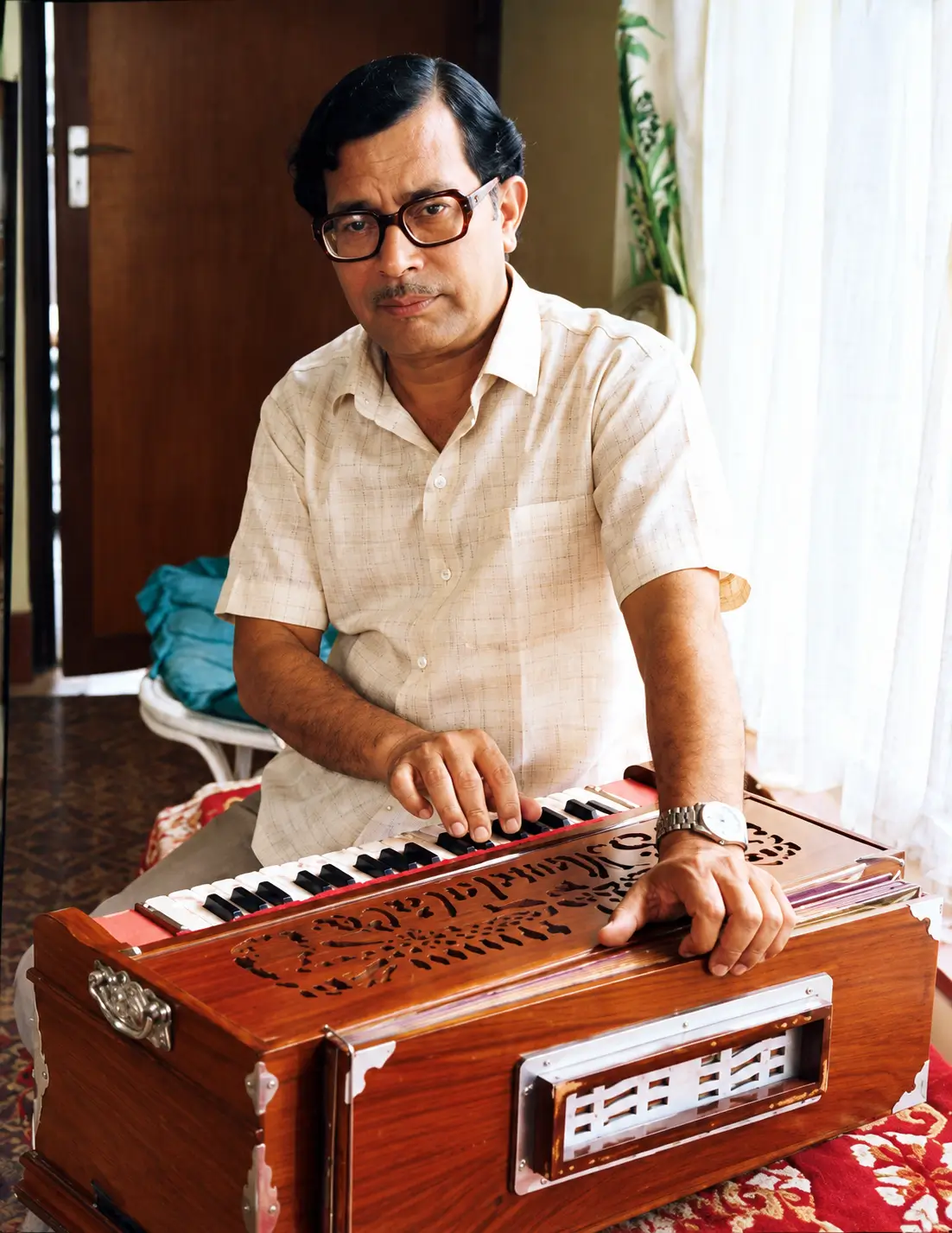
Connection with Darjeeling and Collaboration with Gopal Yonzon
Narayan Gopal's association with writers and musicians from Darjeeling was an important part of his musical journey.
According to lyricist Nagendra Thapa's memoir, Thapa was acquainted with Gopal Yonzon while studying in Darjeeling. It was in this cultural setting that poet Ishwar Ballav introduced Narayan Gopal to Gopal Yonzon.
A close friendship and musical partnership subsequently developed between the two artists.
Their relationship was also known through the term Mitjyu, reflecting their close personal bond.
This friendship can be understood as an example of cultural exchange between the Nepali-speaking creative communities of Nepal and Darjeeling. The roles of Nagendra Thapa, Ishwar Ballav and other contributors should not be overlooked when examining this relationship.
Songs composed by Gopal Yonzon were performed in Narayan Gopal's voice.
"Lau Suna Ma Bhanchhu Mero Ramkahani" and "Galti Hajar Hunchhan" are among the songs frequently mentioned in discussions of their collaboration.
Gopal Yonzon was an established lyricist and composer in his own right. Narayan Gopal's contribution to these works centred on providing vocals and participating in their musical presentation.
Mitjyu Night: Joint Stage Performances
The partnership between Narayan Gopal and Gopal Yonzon was not limited to studio recordings.
They also appeared in joint musical programmes known as Mitjyu Night.
In a memoir published in Kantipur, poet Manprasad Subba described personally attending such a programme around 1971 at Kumudini Homes School in Kalimpong.
His account indicates that the event involved singers, lyricists, instrumentalists and presenters. Nagendra Thapa was associated with the announcements and presentation of the programme.
This account helps explain why Narayan Gopal's performances should not be viewed solely as the achievements of an individual singer. They were also the result of collective musical work.
Such events appear to have provided opportunities for direct interaction and creative exchange among artists from Kathmandu and Nepali-speaking cultural communities in India.
Because a complete list of performances and their dates is unavailable, no unverified number of tours or stage appearances is given here.
Songs, Singing Style and Creative Work
Narayan Gopal sang songs exploring love, separation, memories, personal experiences and social emotions.
Many of his songs featured lyrics written by literary figures. An assessment of his singing must therefore consider not only his voice but also the lyrics, melody, rhythm and manner of presentation.
Among the popular songs associated with him are "Yo Samjhine Man Chha," "Euta Manchheko Mayale," "Malai Nasodha Kahan Dukhchha Ghau," "Aankha Chhopi Narou Bhani," "Ma Ta Laligurans Bhayechhu," "Timile Bhaneka Sara Dev Chhoera" and "Timro Jasto Mutu Mero Pani."
These songs illustrate the variety of his musical work. However, recording years and creative credits should not be assigned to every song without sufficient documentary evidence.
Collaboration with Lyricists and Composers
Narayan Gopal performed songs written by several prominent lyricists, including Ratna Shumsher Thapa, Ishwar Ballav, Nagendra Thapa, Hari Bhakta Katuwal, Kali Prasad Rijal and Dinesh Adhikari.
His musical collaborations also involved composers such as Gopal Yonzon, Amber Gurung and Shambhujeet Baskota.
Some of the most useful evidence of these collaborations comes from recorded statements by the artists directly involved.
For example, in an interview with The Kathmandu Post, Shambhujeet Baskota stated that Narayan Gopal sang "Timile Bhaneka Sara Dev Chhoera," a song written by Bishwambhar Pyakurel and composed by Baskota.
This example illustrates how different artists contributed to a song through lyrics, composition and vocal performance.
In the case of "Swargaki Rani," available records confirm that Ratna Shumsher Thapa wrote the lyrics, while Narayan Gopal composed the music and provided the original vocals.
Accurately identifying these contributions is important for preserving the historical record of Nepali music.
Selected Songs and Verified Creative Credits
Narayan Gopal's collaborations become clearer when the roles of singer, lyricist and composer are considered separately.
The following examples are drawn from Paleti's music archive and published accounts by musicians directly involved in the recordings.
|
Song |
Lyricist |
Composer |
Original singer |
|---|---|---|---|
|
Swargaki Rani |
Ratna Shumsher Thapa |
Narayan Gopal |
Narayan Gopal |
|
Ae Kanchha Thattaima |
Ratna Shumsher Thapa |
Narayan Gopal |
Narayan Gopal and Tara Devi |
|
Bichhodko Pida |
Ratna Shumsher Thapa |
Narayan Gopal |
Narayan Gopal |
|
Yasai Gari Bitaidinchhu |
Kali Prasad Rijal |
Narayan Gopal |
Narayan Gopal |
|
Yo Samjhine Man Chha |
Dinesh Adhikari |
Narayan Gopal |
Narayan Gopal |
|
Pokhiera Ghamka Jhulka |
Hari Bhakta Katuwal |
Amber Gurung |
Narayan Gopal |
|
Ajai Ra Rati |
Madhav Prasad Ghimire |
Natikaji |
Narayan Gopal |
|
Timro Jasto Mutu |
Gopal Yonzon |
Karma Yonzon and Gopal Yonzon |
Narayan Gopal |
|
Galti Hajar Hunchhan |
Gopal Yonzon |
Gopal Yonzon |
Narayan Gopal |
|
Mayako Aadhar |
Divya Khaling |
Divya Khaling |
Narayan Gopal |
|
Timile Bhaneka Sara Dev Chhoera |
Bishwambhar Pyakurel |
Shambhujeet Baskota |
Narayan Gopal |
Later artists who performed new versions of these songs are not identified as the original singers in this table.
Both the lyrics and composition of "Mayako Aadhar" are credited to Divya Khaling.
Similarly, Paleti's record for "Timro Jasto Mutu" credits both Gopal Yonzon and Karma Yonzon for the music.
These examples demonstrate why creative credit should not be assigned to a single artist through general assumption.
Understanding Narayan Gopal's Singing Style
Music critics and contemporary performers have frequently discussed the clarity of Narayan Gopal's pronunciation and his ability to use his voice according to the meaning of a song's lyrics.
Some of his songs feature slow, serious musical arrangements, while others are lively, conversational or performed as duets.
Describing him exclusively as a singer of songs about separation would therefore provide an incomplete picture of his work.
Although he is better known for performing lyrics written by other artists, his original compositions also establish his role as a composer.
His recordings provide useful material for examining the relationship between classical musical training, traditional instruments and contemporary arrangements in Nepali modern music.
However, identifying the instrumentalists who performed on a particular recording requires separate documentary evidence.
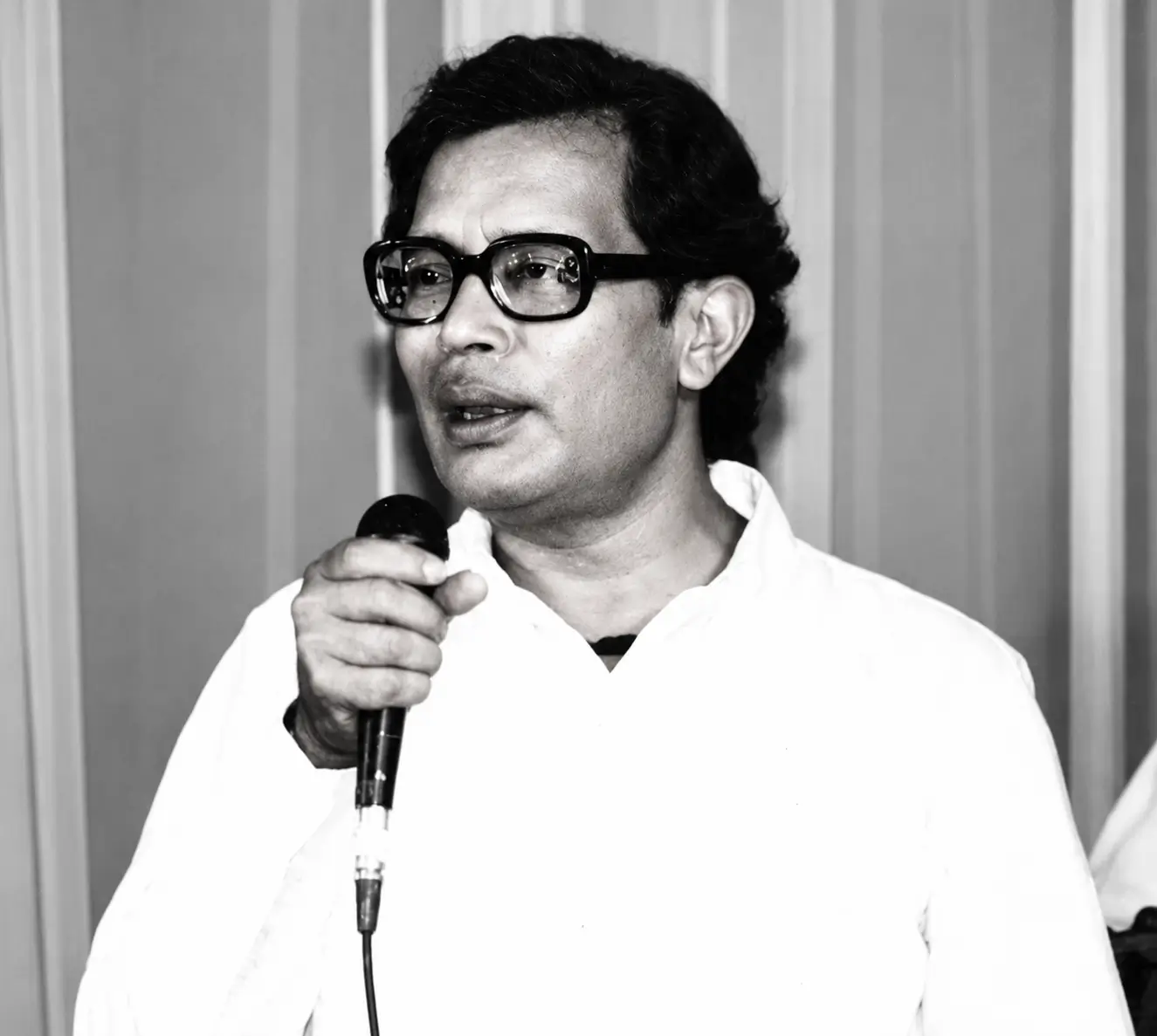
Duet Singing and Musical Drama
Narayan Gopal's musical career also included performances with other singers.
His duet recordings with Tara Devi include songs such as "Ae Kanchha Thattaima."
The Kathmandu Post has also discussed his performance of "Manchheko Maya Yahan" with Gyanu Rana.
Narayan Gopal's Role in Malati Mangale
Malati Mangale, a musical drama written by Madhav Prasad Ghimire, is an important work connecting Narayan Gopal's singing with theatrical music.
Amber Gurung composed its music.
Narayan Gopal, Tara Devi, Sukmit Gurung and Kiran Pradhan were among the artists who participated in its songs.
Journalist and music writer Prakash Sayami discussed the recording of songs for Malati Mangale and the involvement of different performers in an article published in Nagarik.
There is an important distinction between Narayan Gopal providing vocals for this musical drama and claiming that he independently created all its lyrics and music.
The first statement is supported by the available evidence. The second would be incorrect.
Nagendra Thapa's biographical account also mentions that Narayan Gopal wrote the story for a musical drama titled Kanchi Masyang.
However, sufficient evidence concerning its publication or stage production is unavailable to establish further details with certainty.
Playback Singing in Nepali Films
Narayan Gopal's work was not confined to modern solo songs. He also provided playback vocals for Nepali films.
Music Nepal has identified his singing contributions in connection with films such as Lahure, Chino, Koseli and Dakshina.
In the song "Mohani Lagla Hai" from Chino, he performed a duet with Asha Bhosle.
The lyrics were written by Kusum Gajmer, while Ranjit Gazmer composed the music.
A singer who participated in a recording should not automatically receive credit as its lyricist or composer.
Similarly, "Pahadko Mathimathi" from Lahure is associated with the duet singing of Narayan Gopal and Asha Bhosle.
In film songs, his voice helped communicate the emotions of characters, stories and scenes.
The impact of these songs resulted from the combined efforts of singers, lyricists, composers, instrumentalists and the films' creative teams.
Bagina Magazine: Contributions Beyond Singing
In addition to singing and composing music, Narayan Gopal participated in music-related writing and editorial work.
One of the most important examples was the magazine Bagina.
The quarterly publication covered subjects associated with baja (musical instruments), git (songs) and nach (dance). Available records indicate that it began publication in Kartik 2030 BS.
Narayan Gopal, Gopal Yonzon and Nagendra Thapa played shared roles in establishing the magazine.
According to an article by Prabhakar Gautam published in Nepal News, based on a study of its early issues, Narayan Gopal served as editor of the first issue, Nagendra Thapa as publisher and Gopal Yonzon as manager.
Their formal responsibilities changed in subsequent issues.
Bagina did more than publish song lyrics and artist biographies.
It featured articles about Nepali musical instruments, music history, foreign composers, performances, critical reviews and cultural experiences.
Narayan Gopal also contributed articles on various subjects.
According to the archival material discussed in Nepal News, one of his articles, "Kalo Theki: Bismritiko Gherabata," concerned the veteran singer Ashtaman Shrestha.
In "Ghanta Bajchha Bishwabhari," he examined the bell as a musical instrument and a means of signalling.
His article "Aitihasik Yatra: Sanskritik Yatra Uttar Koreyako" addressed a cultural visit to North Korea.
These writings demonstrate that Narayan Gopal's cultural interests extended beyond vocal performance.
Although Bagina could not maintain continuous publication over a long period, its original issues remain important historical material for understanding Nepali musical heritage, the institutional circumstances of the time and the views of participating artists.
Published accounts also differ regarding the magazine's total number of issues, partly because commemorative editions are counted differently. A definite total is therefore not provided here.
Swarnim Sandhya and Solo Stage Performances
Swarnim Sandhya was a notable programme in Narayan Gopal's stage career.
During the event, he performed his songs accompanied by live instrumental music.
The visual record of the programme, broadcast by Nepal Television, gave audiences an opportunity to watch the singer whose voice they had previously encountered through radio and audio recordings.
Published memoirs do not agree on the programme's exact date.
For that reason, an unverified day or year of the event is not presented as a confirmed fact.
Its historical importance lies in its audiovisual documentation of Narayan Gopal's solo performance and its connection with the stage presentation of Nepali songs.
Leadership Role at the Cultural Corporation
Narayan Gopal held an institutional position at the Cultural Corporation, also known as Rastriya Nachghar.
The corporation's official list of former general managers includes his name and records the date 15 Bhadau 2036 BS in connection with his appointment as General Manager.
His service in this leadership position is therefore supported by an official institutional source.
For performing artists, the Cultural Corporation provided an institutional setting for drama, music, dance and other cultural programmes.
Serving in a leadership position at the institution was an important part of Narayan Gopal's public work beyond singing.
However, it would be inaccurate to attribute every programme, administrative decision or institutional achievement during his tenure exclusively to him.
Nagendra Thapa's memoir also mentions Narayan Gopal's involvement as an adviser to the Ministry of Communications.
A clear original administrative record establishing the formal duration and authority of this appointment has not been identified.
This information should therefore be understood as an account provided by a contemporary associate rather than confirmation of a specific official term.
Awards and Honours
Narayan Gopal received recognition at different stages of his career for his contributions to singing, music and the circulation of Nepali-language songs.
Some of his major awards and honours include:
-
2023 BS: Recognition as Best Music Composer at a musical programme organized by Radio Nepal.
-
2024 BS: Recognition as Best Singer at an event organized by Radio Nepal.
-
2040 BS: Indra Rajya Laxmi Pragya Puraskar.
-
2044 BS: Chhinnalata Award.
-
2045 BS: Jagadamba Shree Award from Madan Puraskar Guthi.
-
2048 BS: Trishaktipatta, Third Class, awarded posthumously.
Among these honours, the Jagadamba Shree Award is particularly well documented.
Madan Puraskar Guthi's official list of recipients identifies Narayan Gopal as the first recipient of the Jagadamba Shree Award for 2045 BS.
The Guthi recognized his contribution to bringing Nepali-language songs to audiences within Nepal and abroad through music.
Although the award year was 2045 BS, the presentation ceremony took place on 20 Asoj 2046 BS.
The names and years of the other listed honours are supported by published media accounts and Nagendra Thapa's biographical writing.
Additional awards with weaker documentation or inconsistent names have not been included.
Personal Life and Pemala's Role
Narayan Gopal married Pemala Lama.
In his memoir, close friend Nagendra Thapa connected their acquaintance with Darjeeling's musical community and their exchange of letters.
Subsequent studies of their correspondence also indicate that documentary material concerning their relationship exists in the public record.
Because sources differ regarding the exact date of their marriage, no specific day or year is presented here.
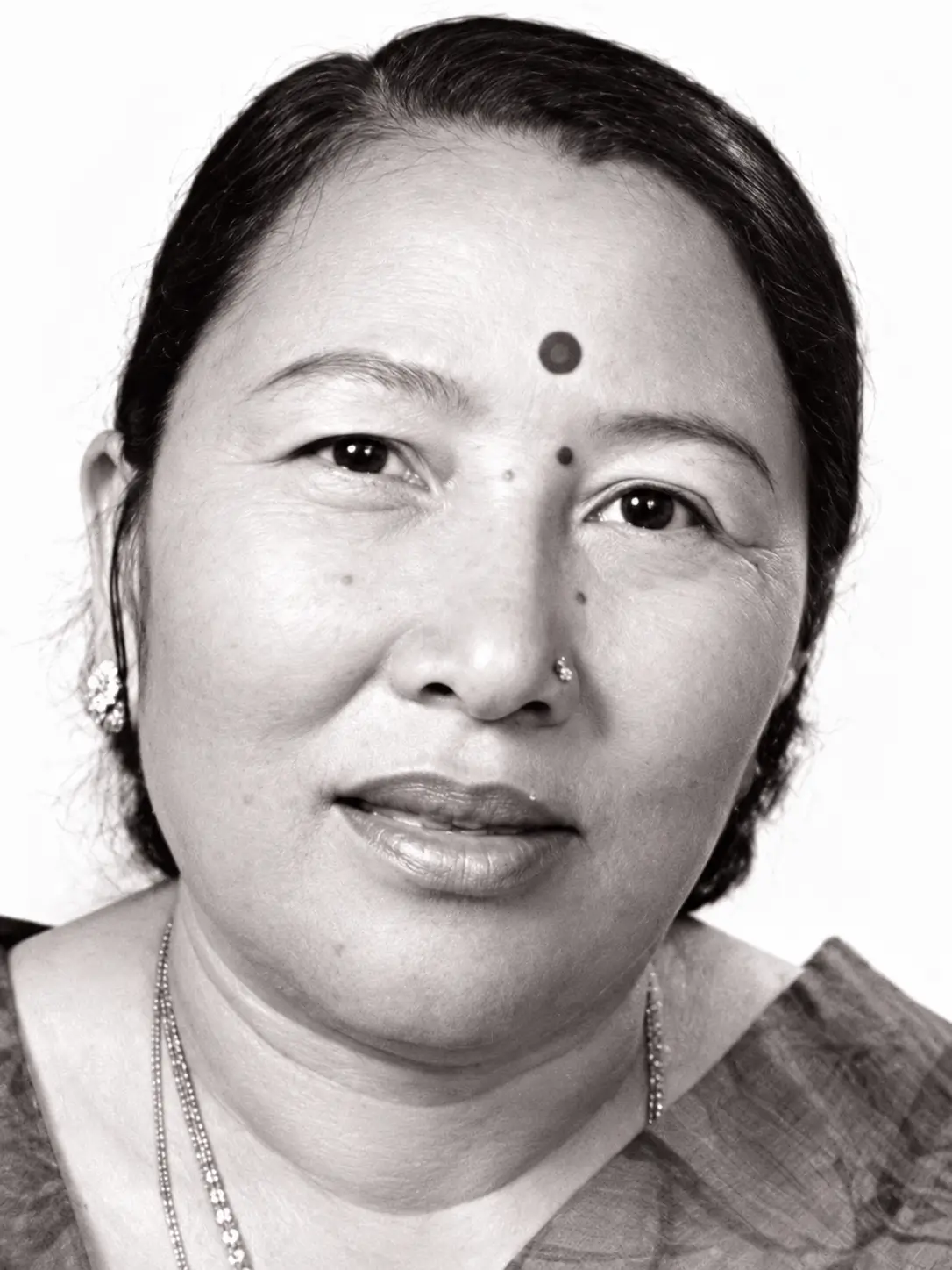
After Narayan Gopal's death, Pemala Guruwacharya became involved in efforts to preserve materials and memories related to his music.
She was associated with the establishment and operation of the Narayan Gopal Music Fund.
Public records describe the fund's activities, including memorial programmes, recognition of musicians and efforts to preserve musical heritage.
Her contribution demonstrates the importance of considering the individuals and institutions that worked to protect Narayan Gopal's musical legacy after his death.
An artist's public legacy depends not only on recorded songs but also on the continuing work of preservation, performance and documentation.
Final Years and Death
Narayan Gopal died on 19 Mangsir 2047 BS, corresponding to 5 December 1990.
By that time, he was an established singer and composer of modern Nepali music.
His work during the final decade of his life included singing, stage performances, musical drama and involvement with cultural institutions.
Although published accounts contain various details about the circumstances of his death and his final years, personal medical information that is not sufficiently verified or necessary to this biography has been excluded.
The date of his death and the subsequent preservation of his music are important aspects of his life and legacy.
Narayan Gopal's Place in Nepali Music
Narayan Gopal's contributions can be understood through his recorded songs, collaborations with contemporary artists, institutional responsibilities and writing about music.
Considered together, these aspects demonstrate that his public identity was not based solely on his singing voice. He was also involved in musical composition and the broader process of cultural discussion.
His career connected artists from different Nepali-speaking creative communities.
These connections ranged from Ratna Shumsher Thapa and Prem Dhoj Pradhan in Kathmandu to Gopal Yonzon, Nagendra Thapa and Ishwar Ballav in Darjeeling.
Programmes such as Mitjyu Night and publications such as Bagina provide evidence of how artists and writers collaborated across the Nepali-speaking cultural community during that period.
The title Swar Samrat remains closely associated with Narayan Gopal because it became a widely recognized form of public address.
However, assessing his historical significance does not require declaring him indisputably greater than every singer from every period.
His documented achievements provide a substantial basis for understanding his importance.
The Jagadamba Shree recognition recorded by Madan Puraskar Guthi and the official list of general managers maintained by the Cultural Corporation offer institutional evidence of his public contribution.
The original issues of Bagina, recordings of his songs and memoirs by his contemporaries provide further material for studying his creative work.
The continued performance of his songs by newer artists and the organization of commemorative programmes demonstrate ongoing interest in his music.
Nevertheless, new performances, recordings and interpretations should not automatically be credited as original creations by Narayan Gopal.
Distinguishing original vocals from later renditions, original compositions from new arrangements, and historical recordings from subsequent interpretations is essential for accurate documentation of musical history.
References and Sources
1. Madan Puraskar Guthi. "Narayan Gopal" — Biographical profile and details of the Jagadamba Shree Award.
2. Madan Puraskar Guthi. "Jagadamba Shree" — Official information about the establishment of the award and its recipients.
3. Cultural Corporation. "General Managers Till Date" — Official institutional list.
4. Radio Nepal. "32nd Memorial day of Narayan Gopal being observed today." 5 December 2022.
5. Nagendra Thapa. "Ek Jhimkaima Naran." Originally published in Madhupark, Baisakh 2048 BS; republished by Ratopati in Mangsir 2079 BS.
6. Bhupendra Khadka. "Bichhodko Pida, Narayan Gopal ra Dashain." Kantipur, 4 October 2022.
7. Divya Giri. "Narayan Gopalbhitra Narayan Gopal" — Review of Prakash Sayami's biography. Gorkhapatra, 17 Falgun 2081 BS.
8. Manprasad Subba. "Flashbackma Mitjyu Night." Kantipur, 2 December 2023.
9. Prabhakar Gautam. "Narayan Gopal Special" — Study of historical issues of Bagina magazine. Nepal News, 5 December 2025.
10. Prakash Sayami. "Natakma Git" — Article discussing Malati Mangale and other musical dramas. Nagarik, 2020.
11. Paleti. "Swargaki Rani" — Original vocal performance, lyrics and composition credits.
12. Paleti. "Ae Kanchha Thattaima" — Duet performance and creative credits.
13. Paleti. "Bichhodko Pida" — Original song record.
14. Paleti. "Yasai Gari Bitaidinchhu" and "Yo Samjhine Man Chha" — Records of composers and lyricists.
15. Paleti. "Pokhiera Ghamka Jhulka" and "Ajai Ra Rati" — Original vocal, composition and lyric credits.
16. Paleti. "Timro Jasto Mutu," "Galti Hajar Hunchhan" and "Mayako Aadhar" — Song credits.
17. Ankit Khadgi. "Music legend Shambujeet Baskota picks his 12 memorable songs." Interview containing Baskota's first-hand account. The Kathmandu Post, 5 June 2021.
18. Music Nepal. "Mohani Lagla Hai" — Information about the song from Chino and credits for other film songs. 22 December 2019.
19. The Kathmandu Post. "Gyanu Rana evokes Dharmaraj Thapa's legacy at Paleti." 2 November 2025.
20. Nepal Magazine. "Narayan Gopalkai Lagi Janmieki" — Article concerning Pemala Guruwacharya and the music fund. 11 April 2018.
21. Rastriya Samachar Samiti (RSS)/Setopati. "Pura Hundaichha Narayan Gopalka Tin Sapana" — Information concerning the Narayan Gopal Music Fund.
22. Madan Puraskar Guthi. "Madan Puraskar Presentation Ceremony (2046 BS)" — Record of the Jagadamba Shree presentation ceremony.
23. Prakash Sayami. "Narayan Gopal Aghi ra Narayan Gopal Pachhi" — Memoir discussing Swarnim Sandhya. Nagarik, 2019.
24. Nagarik. "Swar Samrat Narayan Gopal Sanga Ko Samsmaran" — Account discussing Nepal Television's broadcast of Swarnim Sandhya. 2023.



Comments 0
No comments yet. Be the first to start the conversation.