



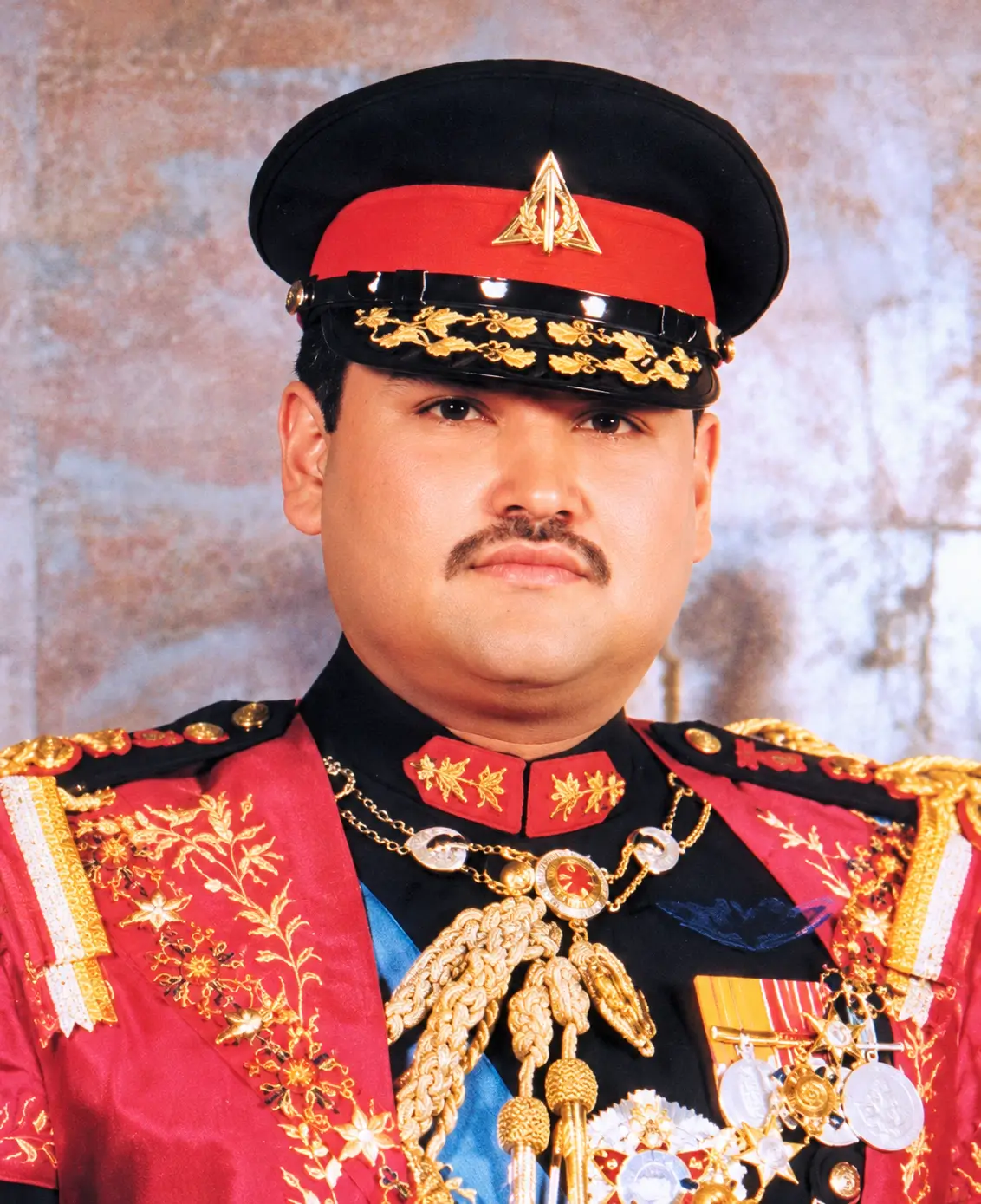
Dipendra Bir Bikram Shah Dev (13 Ashadh 2028 BS – 22 Jestha 2058 BS; 27 June 1971 – 4 June 2001) was the eldest son of Nepal's King Birendra Bir Bikram Shah Dev and Queen Aishwarya Rajya Lakshmi Devi Shah. He remained Crown Prince and heir to the Shah dynasty's throne for nearly three decades. Following the royal massacre at Narayanhiti Palace on 1 June 2001, he was declared King of Nepal while unconscious.
Dipendra received his education in Nepal and the United Kingdom. He attended Budhanilkantha School, Eton College in England, and Tribhuvan University. He pursued higher education in geography and was also involved in military training, aviation, and sporting activities.
On 1 June 2001 (19 Jestha 2058 BS), a massacre at Narayanhiti Royal Palace resulted in the deaths of King Birendra, Queen Aishwarya, and other members of the royal family. Dipendra, who was seriously injured in the incident, was declared king on 2 June. Following his death on 4 June, his uncle, Gyanendra Bir Bikram Shah, became King of Nepal.
A high-level investigation committee established to examine the massacre concluded that Crown Prince Dipendra had been involved in the incident. However, questions were raised about the investigation process, the available evidence, and the circumstances surrounding the event. Therefore, any examination of Dipendra's life and the events of 2001 must distinguish between the official inquiry's findings and the questions raised about them.
Dipendra Bir Bikram Shah: Quick Facts
|
Details |
Information |
|---|---|
|
Full Name |
Dipendra Bir Bikram Shah Dev |
|
Date of Birth |
13 Ashadh 2028 BS (27 June 1971) |
|
Place of Birth |
Narayanhiti Royal Palace, Kathmandu |
|
Date of Death |
22 Jestha 2058 BS (4 June 2001) |
|
Place of Death |
Birendra Military Hospital, Chhauni, Kathmandu |
|
Age at Death |
29 years |
|
Nationality |
Nepali |
|
Father |
King Birendra Bir Bikram Shah Dev |
|
Mother |
Queen Aishwarya Rajya Lakshmi Devi Shah |
|
Brother |
Prince Nirajan Bir Bikram Shah |
|
Sister |
Princess Shruti Rajya Lakshmi Devi Shah |
|
Royal Dynasty |
Shah dynasty |
|
School Education |
Kanti Ishwari School, Budhanilkantha School, and Eton College |
|
Higher Education |
Tri-Chandra Campus and Tribhuvan University |
|
Major Academic Subject |
Geography |
|
Military Training |
Royal Nepalese Military Academy, Kharipati |
|
Public Involvement |
Royal ceremonies, sports, and youth activities |
|
Proclamation as King |
20 Jestha 2058 BS (2 June 2001) |
|
Period of Royal Succession |
1–4 June 2001 |
|
Successor |
King Gyanendra Bir Bikram Shah |
Birth, Family and Childhood
Birth and Royal Background
Dipendra Bir Bikram Shah was born on 13 Ashadh 2028 BS (27 June 1971) at Narayanhiti Royal Palace in Kathmandu. At the time of his birth, Nepal was ruled by his grandfather, King Mahendra Bir Bikram Shah Dev. His father, Birendra, was then the Crown Prince.
Following King Mahendra's death on 31 January 1972 (17 Magh 2028 BS), Birendra became King of Nepal. Dipendra, who was seven months old, consequently became the first in line to the throne.
Dipendra had two siblings, Princess Shruti Rajya Lakshmi Devi Shah and Prince Nirajan Bir Bikram Shah. Both grew up at Narayanhiti Royal Palace.
As the eldest child of the royal family and heir to the throne, particular attention was given to Dipendra's education, discipline, and preparation for royal responsibilities from childhood.
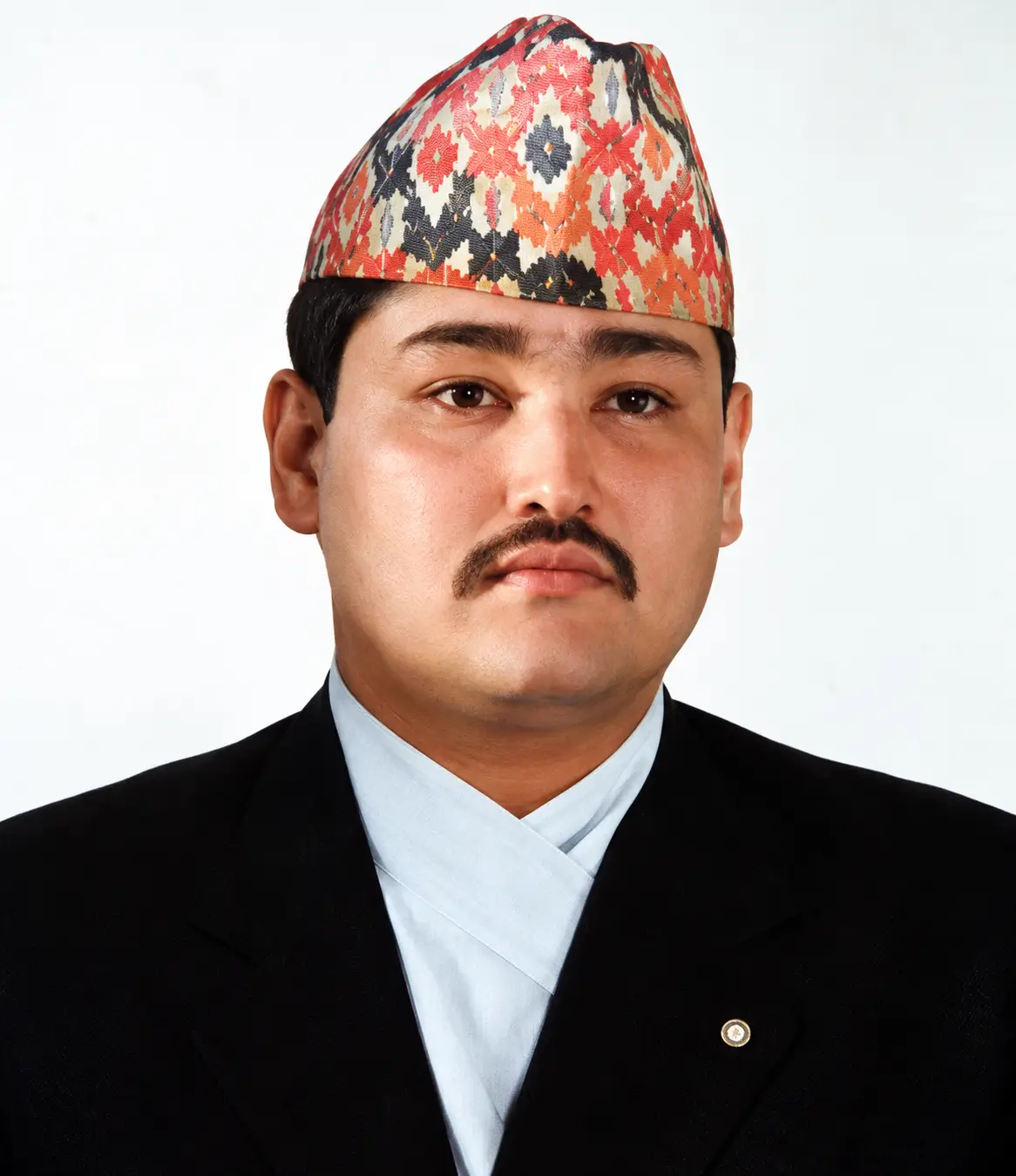
Growing Up in the Royal Palace
Dipendra spent his childhood within the traditions and security arrangements of Nepal's royal family.
His father, King Birendra, had studied in Darjeeling and the United Kingdom. Dipendra likewise attended schools in Nepal before being sent to Britain for further education.
He therefore experienced both the royal palace's surroundings and the academic life of boarding schools.
Education and Academic Life
Dipendra studied at schools in Nepal, Eton College in the United Kingdom, and Tribhuvan University. Geography was his principal subject in higher education.
Early Education and Budhanilkantha School
Dipendra began his early education at Kanti Ishwari School in Kathmandu. He subsequently attended Budhanilkantha School.
At Budhanilkantha, he studied alongside other students in a residential school setting. He was interested in extracurricular activities and sports in addition to his academic studies.
Memoirs published later about his school years describe various aspects of his studies, behaviour, and educational experiences outside the royal palace.
Education at Eton College in the United Kingdom
Dipendra enrolled at Eton College in Berkshire, England, in 1987. He studied there until July 1990.
Alongside his academic studies, Dipendra developed an interest in karate. Contemporary news reports described him as a karate black belt who also helped fellow students practise the martial art.
According to an account provided in 2001 by his former housemaster, Tom Holden, Dipendra completed three A-level subjects before leaving Eton College in July 1990.
His father, King Birendra, was also a former student of Eton College.
Higher Education at Tribhuvan University
After returning from the United Kingdom, Dipendra continued his higher education in Nepal.
He undertook undergraduate studies at Tri-Chandra Campus in Kathmandu. He subsequently completed postgraduate studies in geography at Tribhuvan University.
Contemporary accounts published in 2001 reported that he had passed his undergraduate degree in the first division and obtained a master's degree in geography.
Following his postgraduate studies, Dipendra was also involved in doctoral research. However, he was unable to complete his studies before his death.
Military Training and Interest in Aviation
Dipendra also received military training as part of his preparation as heir to the throne.
He trained at the then Royal Nepalese Military Academy in Kharipati, Bhaktapur. His association with the military was also connected to his preparation for royal responsibilities.
In 1990, he was awarded the honorary title of Colonel-in-Chief in the then Royal Nepalese Army.
Dipendra was also interested in aviation. According to contemporary news reports, he underwent helicopter flight training and obtained a pilot's licence.
His educational experience thus extended beyond formal schooling and university studies to military and aviation training.
Political Changes in Nepal and Dipendra's Role as Crown Prince
The People's Movement of 1990 and Constitutional Changes
Nepal underwent significant political changes during Dipendra's years as Crown Prince.
Following the People's Movement of 2046 BS (1990), the partyless Panchayat system ended, and multiparty democracy was restored.
A new constitution was promulgated in 2047 BS (1990), establishing Nepal as a constitutional monarchy.
Under this system, the monarchy's role was subject to constitutional limits. Dipendra's public and royal responsibilities as heir to the throne were also connected to these constitutional arrangements.
Responsibilities in the Council of Royal Representatives
As Crown Prince, Dipendra participated in official state ceremonies, public programmes, and royal activities.
In 1992, he was appointed Chairman of the Council of Royal Representatives.
According to contemporary news reports, the council's responsibilities included matters relating to the performance of royal duties during the king's absence.
Dipendra also represented the royal family at various national and international events.
Dipendra's Involvement in Sports
Sports occupied a significant place in Dipendra's public life. Besides his personal interest in athletics, he participated in sports-related programmes, competitions, and institutional activities.
Association with the National Sports Council
Dipendra was involved in activities associated with Nepal's National Sports Council.
According to contemporary reports, he visited sports facilities to review infrastructure and preparations for competitions.
On 1 June 2001, he visited the sports complex at Satdobato. Contemporary accounts of the day's events record that he inspected facilities including the swimming pool, shooting range, and squash courts.
Eighth South Asian Federation Games
The Eighth South Asian Federation Games (SAF Games) were held in Kathmandu from 25 September to 4 October 1999.
Nepal won 65 medals, comprising 31 gold, 10 silver, and 24 bronze medals. The country finished second in the medal standings behind India.
These medal figures are recorded in the official archives of the Olympic Council of Asia.
Dipendra's public sporting activities were also associated with the period surrounding the competition.
According to records of the Nepal Olympic Committee, he visited the Nepal Olympic Museum on 22 September 1999. He returned to the museum on 4 October and donated sporting materials.
In July 2000, the museum also organised a photographic exhibition featuring Dipendra and sporting activities.
These records confirm his public association with sports. However, Nepal's medal achievements cannot be attributed to the contribution of any single individual.
Personal Sporting Interests
Dipendra was interested in karate, swimming, squash, and other sporting activities.
During his years at Eton College, he showed particular interest in karate and held a black belt.
Contemporary accounts also mention his interests in music, literature, and aviation.
Personal Life and Relationship with Devyani Rana
One of the widely discussed aspects of Dipendra's personal life was his relationship with Devyani Rana.
Devyani is the daughter of politician Pashupati Shumsher Jung Bahadur Rana. Following the 2001 royal massacre, Dipendra's relationship with Devyani and the possibility of their marriage became subjects of widespread public discussion.
Relationship with Devyani Rana
The high-level investigation committee examining the royal massacre reported that Dipendra and Devyani shared a close relationship.
According to information collected by the committee, the two had also communicated by telephone on the day of the incident.
Devyani Rana's statement was obtained through Bhekh Bahadur Thapa, Nepal's then ambassador to India. Her statement was included in the committee's investigation materials.
According to the statement, Devyani described her relationship with Dipendra as a personal matter and declined to comment further.
Reported Family Disagreement over Marriage
Several news reports published in 2001 stated that Dipendra wanted to marry Devyani Rana but that members of the royal family did not support the proposed marriage.
However, it has not been conclusively established that disagreement over the marriage was the cause of the royal massacre.
The investigation committee's principal mandate was to collect factual information about the incident. A comprehensive investigation into the psychological reasons behind the event, aimed at reaching a definitive conclusion, was not its primary responsibility.
The reported disagreement over marriage should therefore be understood as part of the historical record surrounding Dipendra's personal life rather than as an undisputed explanation for the massacre.
The 2001 Narayanhiti Royal Massacre
The massacre at Narayanhiti Royal Palace on 19 Jestha 2058 BS (1 June 2001) was one of the most serious events in Nepal's modern history.
King Birendra, Queen Aishwarya, and several other members of the royal family died as a result of the incident. Dipendra was also found seriously injured.
Location and Circumstances of the Incident
The incident took place at Tribhuvan Sadan within the Narayanhiti Royal Palace complex.
A regular family gathering had been organised that day. According to the high-level investigation committee's report, members of the royal family and their relatives attended the gathering.
Tribhuvan Sadan had also been used as Dipendra's residence.
The investigation committee reconstructed the night's events using eyewitness statements, materials recovered from the scene, and medical records.
Findings of the Official Investigation
The high-level investigation committee concluded that Crown Prince Dipendra had been involved in the royal massacre.
The committee's report included statements from royal family members, security personnel, and other witnesses.
It also relied on physical evidence recovered from the scene and medical information in reaching its findings.
However, because Dipendra had died, he did not have an opportunity to present a legal defence or have the allegations against him examined in a court hearing.
The official committee's findings should therefore not be treated as equivalent to a determination of criminal guilt by a court.
Members of the Royal Family Who Died
According to the high-level investigation committee, a total of 10 people, including Dipendra, died as a result of the royal massacre.
|
S.N. |
Name |
Relationship to the Royal Family |
|---|---|---|
|
1 |
Birendra Bir Bikram Shah |
Then King of Nepal |
|
2 |
Aishwarya Rajya Lakshmi Devi Shah |
Then Queen of Nepal |
|
3 |
Dipendra Bir Bikram Shah |
Then Crown Prince, later proclaimed King |
|
4 |
Nirajan Bir Bikram Shah |
Prince |
|
5 |
Shruti Rajya Lakshmi Devi Shah |
Princess |
|
6 |
Dhirendra Shah |
Brother of King Birendra |
|
7 |
Shanti Rajya Lakshmi Devi Singh |
Sister of King Birendra |
|
8 |
Sharada Rajya Lakshmi Devi Shah |
Sister of King Birendra |
|
9 |
Khadga Bikram Shah |
Husband of Sharada Rajya Lakshmi Devi Shah |
|
10 |
Jayanti Rajya Lakshmi Devi Shah |
Member of the royal family |
According to the committee's medical records, eight people were pronounced dead on the night of 1 June 2001. Dipendra and Dhirendra Shah died on 4 June.
Royal Family Members Injured in the Incident
In addition to those who died, the investigation committee's report identified the following four people as injured:
-
Komal Rajya Lakshmi Devi Shah
-
Shobha Rajya Lakshmi Devi Shahi
-
Kumar Gorakh Shumsher Jung Bahadur Rana
-
Ketaki Chester
The committee's report, citing medical information received from Birendra Military Hospital, stated that these individuals had sustained serious injuries.
Dipendra's Three-Day Reign
Dipendra's reign is recorded as an unusual episode in Nepal's royal history. He was proclaimed king while unconscious and was unable to perform royal duties throughout his reign.
Proclamation as King While Unconscious
Following King Birendra's death on 19 Jestha 2058 BS (1 June 2001), the provisions governing succession to the throne came into effect.
As the first in line to the throne, Dipendra was proclaimed King of Nepal by the Royal Council on 20 Jestha 2058 BS (2 June 2001).
At the time, he was unconscious and receiving treatment at Birendra Military Hospital in Chhauni, Kathmandu.
Because Dipendra was unable to discharge his royal responsibilities, his uncle, Gyanendra Shah, was assigned regency duties.
Death of King Dipendra
Dipendra's condition did not improve while he was receiving treatment.
His death was announced at 3:45 a.m. on 4 June 2001 (22 Jestha 2058 BS) at Birendra Military Hospital.
He was 29 years old.
Dipendra's period of royal succession is generally considered to have extended from 1 to 4 June 2001, although he was formally proclaimed king on 2 June.
For this reason, his reign is commonly described as a three-day reign.
Accession of Gyanendra Shah
Following Dipendra's death, Gyanendra Bir Bikram Shah was proclaimed King of Nepal on 4 June 2001.
Gyanendra was the brother of the late King Birendra.
After Gyanendra's accession, a high-level committee was formed to investigate the royal massacre.
High-Level Investigation into the Royal Massacre
Formation of the Investigation Committee
On 4 June 2001, the formation of a high-level investigation committee was announced to collect factual information about the royal massacre.
Initially, three officials were appointed to the committee.
|
Name |
Position and Role at the Time |
|---|---|
|
Keshav Prasad Upadhyaya |
Chief Justice and Chairman of the Committee |
|
Taranath Ranabhat |
Speaker of the House of Representatives and Committee Member |
|
Madhav Kumar Nepal |
Leader of the Main Opposition and Nominated Committee Member |
Madhav Kumar Nepal decided to withdraw from the committee based on his party's decision.
The investigation was subsequently conducted by a two-member committee consisting of Keshav Prasad Upadhyaya and Taranath Ranabhat.
Investigation Process
The committee began its work on 8 June 2001.
It examined the incident by inspecting the scene, recording eyewitness statements, studying medical records obtained from the hospital, and reviewing available physical evidence.
Its mandate also included gathering information from royal family members, security personnel, palace employees, medical professionals, and other individuals connected to the incident.
The committee was initially given three days to complete its work. An additional four days were later granted to complete the investigative examinations.
The committee submitted its report in mid-June 2001.
Conclusions of the Investigation Report
Based on the statements collected and the available evidence, the committee concluded that Crown Prince Dipendra had been involved in the incident.
These findings remain part of the official record of the government investigation.
However, the committee's report cannot be regarded as a final judicial determination of every question surrounding the incident.
The official findings, the scope of the investigation, and the limitations of the available evidence must therefore be considered separately.
Questions Raised About the Official Investigation Report
Questions about the investigation process and its conclusions continued after the report on the royal massacre was made public.
Although these questions are historically significant, they do not automatically establish the accuracy of any alternative account of the incident.
Duration and Scope of the Investigation
The investigation committee was established with a limited timeframe and a defined mandate.
Its primary responsibility was to collect factual information about the incident.
In a later interview, Shree Prasad Pandit, a former registrar of the Supreme Court who worked with the committee, stated that its mandate was narrower than that of an ordinary criminal investigation.
He explained that the committee had been assigned to prepare an account of the incident but did not have the authority to conduct a full criminal investigation.
Questions About Medical and Physical Evidence
The absence of formal post-mortem examinations of the royal family members who died in the massacre was another major subject of public criticism.
Contemporary news reports and later accounts of the investigation have discussed this issue.
The committee examined medical records and materials recovered from the scene. Nevertheless, questions persisted about the overall investigative process and the sufficiency of the evidence.
Public Disagreement and Alternative Interpretations
Following the royal massacre, various comments and alternative explanations emerged concerning responsibility for the incident and its possible causes.
Some political figures and writers have expressed disagreement with the official findings.
However, it would be inappropriate to conclude, without evidence, that any particular person, institution, or other party was involved in the incident.
A historical examination must distinguish the conclusions presented by the official investigation committee from questions raised about its evidence and procedures.
Presenting unverified allegations or assumptions as established facts would be inconsistent with factual historical writing.
Impact on Nepal's Political History
The Narayanhiti royal massacre brought an immediate change in Nepal's royal succession.
Before the incident, King Birendra was the constitutional head of state, while Dipendra was heir to the throne.
However, the events between 1 and 4 June 2001 included the death of King Birendra, Dipendra's proclamation as king, his subsequent death, and the accession of Gyanendra Shah.
These changes, which occurred within a few days, represent a significant episode in the history of Nepal's Shah dynasty.
The Final Years of the Monarchy
Following Gyanendra Shah's accession, Nepal initially remained a constitutional monarchy.
However, the country's political situation continued to change in the following years.
On 19 Magh 2061 BS (1 February 2005), Gyanendra assumed direct rule, deepening the conflict between the monarchy and political parties.
Following the People's Movement of 2062/63 BS (2006), the peace process, and elections to the Constituent Assembly, Nepal moved towards the establishment of a republic.
On 15 Jestha 2065 BS (28 May 2008), the first meeting of the Constituent Assembly abolished the monarchy and declared Nepal a federal democratic republic.
However, this political transformation cannot be explained as the result of the royal massacre alone.
The establishment of Nepal's republic was connected to several historical developments, including the armed conflict, movements led by political parties, the king's direct rule, the peace process, and the Constituent Assembly's decision.
Historical Significance of Dipendra Bir Bikram Shah
Dipendra Bir Bikram Shah's life is connected to Nepal's royal succession, education, sports, and political history.
He studied in Nepal and the United Kingdom and received military and aviation training. As Crown Prince, he participated in various royal ceremonies and public activities.
Some details of his sporting interests and public involvement have been preserved in contemporary news reports and the records of sporting institutions.
However, the most sensitive aspect of his historical record is associated with the Narayanhiti royal massacre of 2001.
The official investigation into the incident concluded that he had been involved. Nevertheless, questions were raised about the investigation process, the evidence, and the circumstances surrounding the event.
An assessment of Dipendra's life therefore requires a factual examination of his education and public activities, the arrangements governing royal succession, and the historical records relating to the royal massacre.
Conclusion
Dipendra Bir Bikram Shah Dev was the eldest son of Nepal's King Birendra and Queen Aishwarya and the heir to the throne of the Shah dynasty.
He studied in Nepal and the United Kingdom and participated in sporting activities, military training, and royal engagements.
Following the massacre at Narayanhiti Royal Palace on 19 Jestha 2058 BS (1 June 2001), he was proclaimed king while unconscious. He died on 22 Jestha 2058 BS (4 June 2001).
The official investigation committee concluded that Dipendra had been involved in the royal massacre. However, questions concerning the investigation process and evidence make it necessary to examine this subject with a clear understanding of the available historical sources.
Dipendra's biography provides an important reference for understanding the educational and public lives of Nepal's former royal family, the arrangements for royal succession, and the final phase of the country's monarchy.
References
1. High-Level Investigation Committee (2058 BS). Investigation Report on the Incident at Narayanhiti Royal Palace on 19 Jestha 2058 BS. Unofficial English translation of the summary available through Nepal Research.
2. Nepali Times (15 June 2001). It Was Dipendra. Contemporary reporting on the investigation committee's findings and related accounts.
3. Nepali Times (22 June 2001). 4 Days, 3 Kings. An account of the royal succession events between 1 and 4 June 2001.
4. Nepali Times (1 June 2024). 1 June 2001. English translation of Devyani Rana's statement included in the investigation committee's records.
5. The New Yorker (30 July 2001). Royal Blood. An account of Dipendra's education, personal life, and public activities.
6. The Telegraph India (3 June 2001). Playing Fields of Eton to Battlefield of Love. Contemporary reporting on Dipendra's education, military training, and royal responsibilities.
7. Olympic Council of Asia. Kathmandu 1999. Official medal records of the Eighth South Asian Federation Games.
8. Nepal Olympic Committee. Activities. Records of activities associated with the Nepal Olympic Museum.
9. DCNepal (5 June 2022). Royal Massacre: Investigation Committee Had No Mandate to Find Culprits. Information concerning the investigation committee's mandate and procedural limitations.
10. Office of the President of Nepal. History and Background. Official information concerning Nepal's constitutional changes, abolition of the monarchy, and establishment of the republic.


Comments 0
No comments yet. Be the first to start the conversation.