



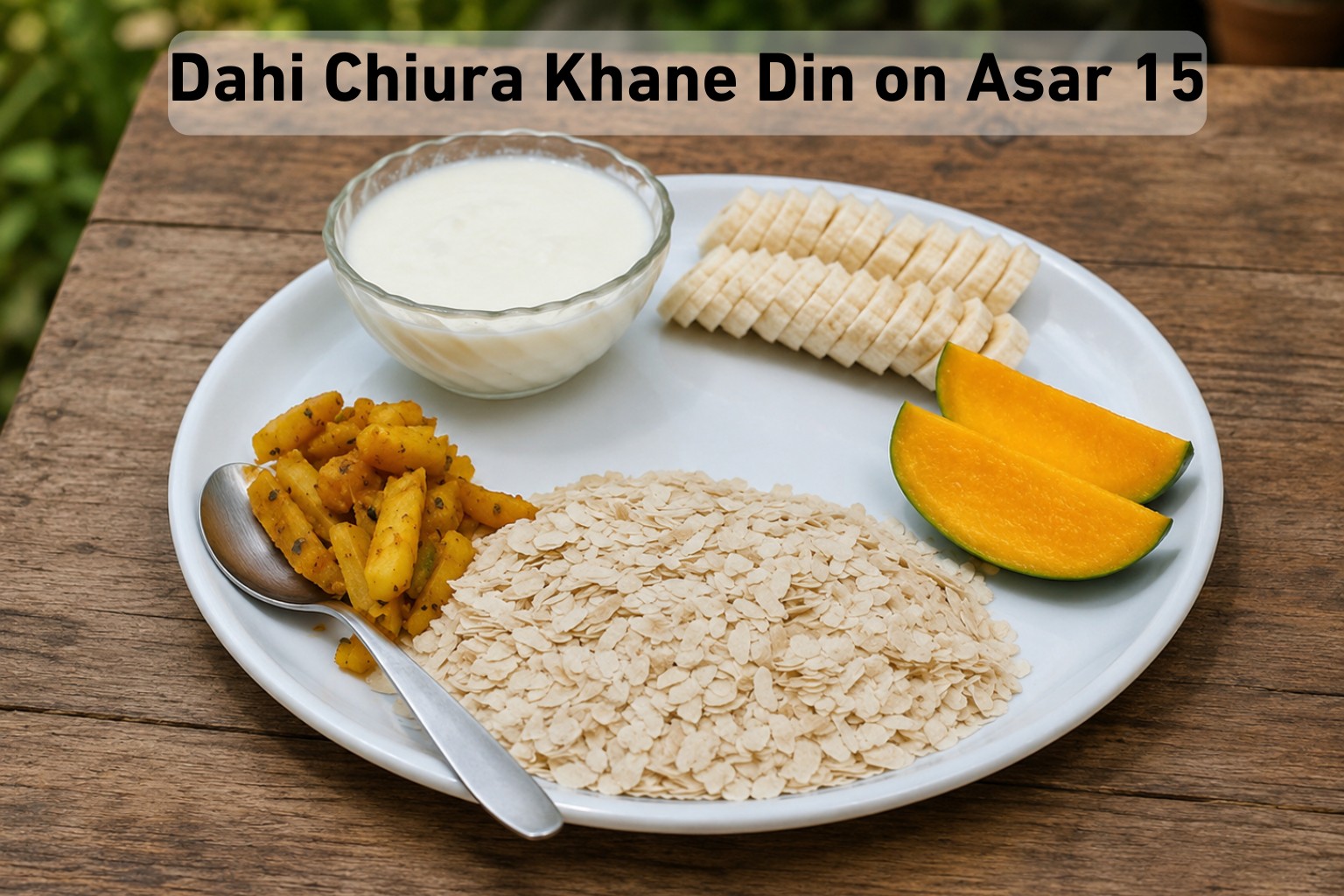
Dahi Chiura Khane Din (दही चिउरा खाने दिन) is observed on Asar 15 in Nepal, when people eat curd and beaten rice as part of a seasonal tradition linked with National Paddy Day and the main rice planting period. The day honors farmers, monsoon agriculture, and the cultural importance of rice in Nepali life.
For many Nepali families, Asar 15 brings a familiar picture to mind: wet paddy fields, rice seedlings, monsoon rain, asare geet, and plates of dahi chiura served with banana, mango, sugar, or local side dishes. For people living in towns, cities, or abroad, the day may be marked more simply by preparing curd and beaten rice at home. Both forms of celebration carry the same message: food, farming, memory, and community are closely connected.
Asar 15 is also associated with Rashtriya Dhan Diwas, or National Paddy Day. It should therefore not be understood only as a food day. It is also a reminder that rice begins long before it reaches the kitchen. It begins with soil, seed, water, weather, labor, and the timing of the monsoon.
Table of Content
- Dahi Chiura Khane Din at a Glance
- What Is Dahi Chiura Khane Din?
- Why Is Asar 15 Important in Nepal?
- Connection Between Dahi Chiura, National Paddy Day and Ropai Diwas
- How Nepalis Celebrate Asar 15
- Why Do Nepalis Eat Dahi and Chiura on Asar 15?
- Cultural Meaning: Farmers, Monsoon and Rice Planting
- Dahi Chiura in Modern Nepal and the Nepali Diaspora
- When Is Dahi Chiura Khane Din This Year?
- How to Celebrate Dahi Chiura Khane Din Respectfully
- Conclusion
Dahi Chiura Khane Din at a Glance
| Item | Meaning |
|---|---|
| Nepali date | Asar 15 |
| English date | Changes by year; in 2083 BS, Asar 15 fell on Monday, June 29, 2026 |
| Main food | Dahi chiura, or curd and beaten rice |
| Related observance | National Paddy Day, also called Rashtriya Dhan Diwas |
| Cultural frame | Ropai Diwas, rice planting, monsoon, farmers, and community work |
| Main message | Respect for farmers, food culture, and Nepal’s rice-based agricultural life |
What Is Dahi Chiura Khane Din?
Dahi Chiura Khane Din literally means “the day of eating curd and beaten rice.” Dahi means curd, and chiura means flattened or beaten rice. Chiura is light, dry, portable, and common in Nepali households. Dahi adds softness, freshness, and taste. Together, they make a simple meal that can be prepared quickly and shared without elaborate cooking.
This practical quality explains why dahi chiura is closely linked with farm work. Asar is a busy month in rice-growing areas of Nepal. Paddy transplantation requires farmers and workers to prepare fields, manage water, carry seedlings, and plant rice by hand in wet soil. During such work, a meal that is filling, easy to serve, and not complicated to cook fits naturally into the season.
The phrase Dahi Chiura Khane Din therefore has both literal and symbolic meaning. Literally, people eat curd and beaten rice. Symbolically, the meal reminds people that the food on the plate is connected with the labor in the field.
Why Is Asar 15 Important in Nepal?
Asar is the third month of the Bikram Sambat calendar and usually falls between mid-June and mid-July in the Gregorian calendar. This period overlaps with Nepal’s monsoon season, when rainfall supports paddy transplantation in many parts of the country.
Asar 15 is important because it comes near the heart of the rice planting season. In many farming communities, paddy is not only a crop. It is linked with household food security, rural income, seasonal labor, and local identity. Rice fields are part of the landscape in the Terai, inner valleys, and many hill areas, although the exact planting period can vary by rainfall, irrigation, altitude, soil, and local farming practice.
Nepal also marks Asar 15 as National Paddy Day. The day is used to recognize paddy cultivation, honor farmers, and remind the public that rice production is closely connected with food security. Agriculture-related institutions, schools, community groups, and media outlets often use the day to discuss rice planting and farmers’ contributions.
This is why Asar 15 should not be reduced to a photo opportunity. Mud play, festive programs, and social media posts may be part of the modern celebration, but the central meaning remains respect for agricultural labor.
Connection Between Dahi Chiura, National Paddy Day and Ropai Diwas
Dahi Chiura Khane Din, National Paddy Day, Rashtriya Dhan Diwas, and Ropai Diwas are closely related, but they are not identical.
Dahi Chiura Khane Din refers to the food tradition of eating curd and beaten rice on Asar 15. National Paddy Day, or Rashtriya Dhan Diwas, is the agriculture-focused observance connected with paddy cultivation and farmers. Ropai Diwas refers to the rice-planting cultural frame, where people enter fields, transplant seedlings, sing asare geet, and mark the monsoon planting season together.
These terms often appear together because they belong to the same seasonal moment. The food tradition gives families and urban communities an easy way to participate. The agricultural observance keeps attention on farmers, rice planting, and food security. The ropai tradition connects the day with fieldwork, songs, mud, and collective effort.
How Nepalis Celebrate Asar 15
The way people celebrate Asar 15 depends on place, family background, occupation, and access to farmland. In rural areas, the day may be part of actual paddy transplantation. Families, neighbors, and hired workers may gather in fields, plant seedlings, sing folk songs, and share food during or after work.
In some places, local groups organize ropai programs where participants can experience rice planting. Such programs can be meaningful when they respect the field, the crop, and the farmers who depend on that land.
In towns and cities, the celebration is often food-centered. Families buy curd and chiura from local shops and serve them with banana, mango, sugar, honey, ghee, pickles, or other side dishes according to local taste. Schools may hold cultural activities. Offices and community groups may serve dahi chiura to mark the day.
For Nepalis living abroad, Dahi Chiura Khane Din can be a simple way to keep cultural memory alive. Preparing dahi chiura at home and explaining Asar 15 to children can connect younger generations with Nepali food culture, even when they are far from paddy fields.
Why Do Nepalis Eat Dahi and Chiura on Asar 15?
Nepalis eat dahi chiura on Asar 15 for practical, seasonal, and cultural reasons.
Practically, the meal is easy to prepare. Chiura does not need cooking at the time of eating, and curd makes it softer and more filling. This matters during the planting season, when farmers and workers may not have time for a complicated meal in the middle of fieldwork.
Seasonally, Asar is a warm and humid monsoon month. Many people associate curd with freshness and comfort during this period. It is also common to hear that dahi chiura helps cool the body or restore energy after fieldwork. Such claims should be treated as traditional belief and everyday food wisdom, not as verified medical advice unless supported by nutrition or health sources.
Culturally, food often becomes a marker of seasonal identity in Nepal. Kheer Khane Din, Kwati Khane Din, Yomari Punhi, and other food-centered traditions show how meals can carry meaning beyond taste. Dahi Chiura Khane Din works in the same way. A simple plate of curd and beaten rice becomes a symbol of monsoon, paddy planting, family, and gratitude.
Cultural Meaning: Farmers, Monsoon and Rice Planting
The deeper message of Asar 15 is respect for agricultural labor. A bowl of rice may look ordinary on the dining table, but it represents months of work. Farmers prepare land, wait for rainfall or irrigation, select seedlings, transplant paddy, manage weeds and pests, and protect the crop until harvest.
The Nepali saying “mano ropera muri ubjaune” is often connected with the rice planting season. It roughly means producing a large harvest by planting a small measure of seed. The phrase captures hope, effort, and the relationship between small beginnings and future food supply.
Asar 15 also reflects community cooperation. Paddy transplantation often needs many hands because the work must be completed at the right time. Families and neighbors help each other, and the hard labor is softened by songs, jokes, shared meals, and seasonal customs. This is why Asar 15 is not only an agricultural day. It is also a social and cultural day.
At the same time, responsible coverage should avoid romanticizing hardship. The day is more meaningful when it helps people understand food systems, rural work, local production, and the challenges faced by farming communities.
Dahi Chiura in Modern Nepal and the Nepali Diaspora
Modern Nepal is changing. Many young people live in cities, study abroad, work outside agriculture, or grow up with limited direct experience of farming. Still, Dahi Chiura Khane Din remains visible because it is easy to understand and easy to practice. A family does not need a field to observe the day. One plate of dahi chiura can open a conversation about land, rain, food, and family history.
Schools can use Asar 15 as a learning opportunity. Instead of limiting the day to eating dahi chiura, teachers can explain the Nepali calendar, monsoon farming, paddy transplantation, farmers’ roles, and food security. Students can learn why rice is central to Nepali meals and why agriculture remains important even for people who do not farm.
Media platforms can also improve how they cover the day. Useful coverage should separate the food tradition from the official agriculture observance, avoid unsupported health claims, verify the English date each year, and keep farmers at the center of the story.
When Is Dahi Chiura Khane Din This Year?
Dahi Chiura Khane Din is observed every year on Asar 15 according to the Nepali calendar. In the English calendar, the date usually falls in late June, but it should be checked every year because the Nepali and Gregorian calendars do not always align in the same way.
For 2083 BS, Asar 15 fell on Monday, June 29, 2026. Calendar sources listed the day with Dahi Chiura Khane Din and Rashtriya Dhan Diwas. The Department of Agriculture also published official material for the 23rd National Paddy Day and Ropai Mahotsav 2083.
Anyone publishing a school notice, event article, social media post, or institutional update should verify the date from a reliable Nepali calendar or official notice for that year. Public holiday status should not be assumed unless it is confirmed by an official government holiday notice. Local or province-specific arrangements may differ, so they should not be generalized without verification.
How to Celebrate Dahi Chiura Khane Din Respectfully
The simplest way to observe the day is to prepare and share dahi chiura. Use fresh curd, clean chiura, and seasonal fruits or local side dishes if available. Families can explain the meaning of the day to children instead of treating it only as a food trend.
Schools can organize short discussions on rice planting, farmers, monsoon, and Nepali food culture. A short classroom activity can be more meaningful than a decorative program if it helps students understand where food comes from.
For public ropai programs, respect the field, the crop, and the farmer. Mud play should not damage seedlings or turn a working farm into only a photo location. Participants should follow local instructions, avoid waste, and recognize that the field is someone’s livelihood.
Conclusion
Dahi Chiura Khane Din on Asar 15 is a simple tradition with deep meaning. It celebrates curd and beaten rice, but it also points to paddy fields, monsoon rain, farmers’ labor, and Nepal’s agricultural heritage.
As National Paddy Day, the occasion reminds Nepal that rice is not only a daily meal. It is the result of timing, teamwork, land, water, and hard work. Whether observed in a village field, a city home, a school classroom, or a Nepali kitchen abroad, Asar 15 connects people with the roots of Nepali food culture.
A plate of dahi chiura may be small, but the story behind it is wide: soil, rain, rice, farmers, family, and gratitude.




Comments 0
No comments yet. Be the first to start the conversation.