



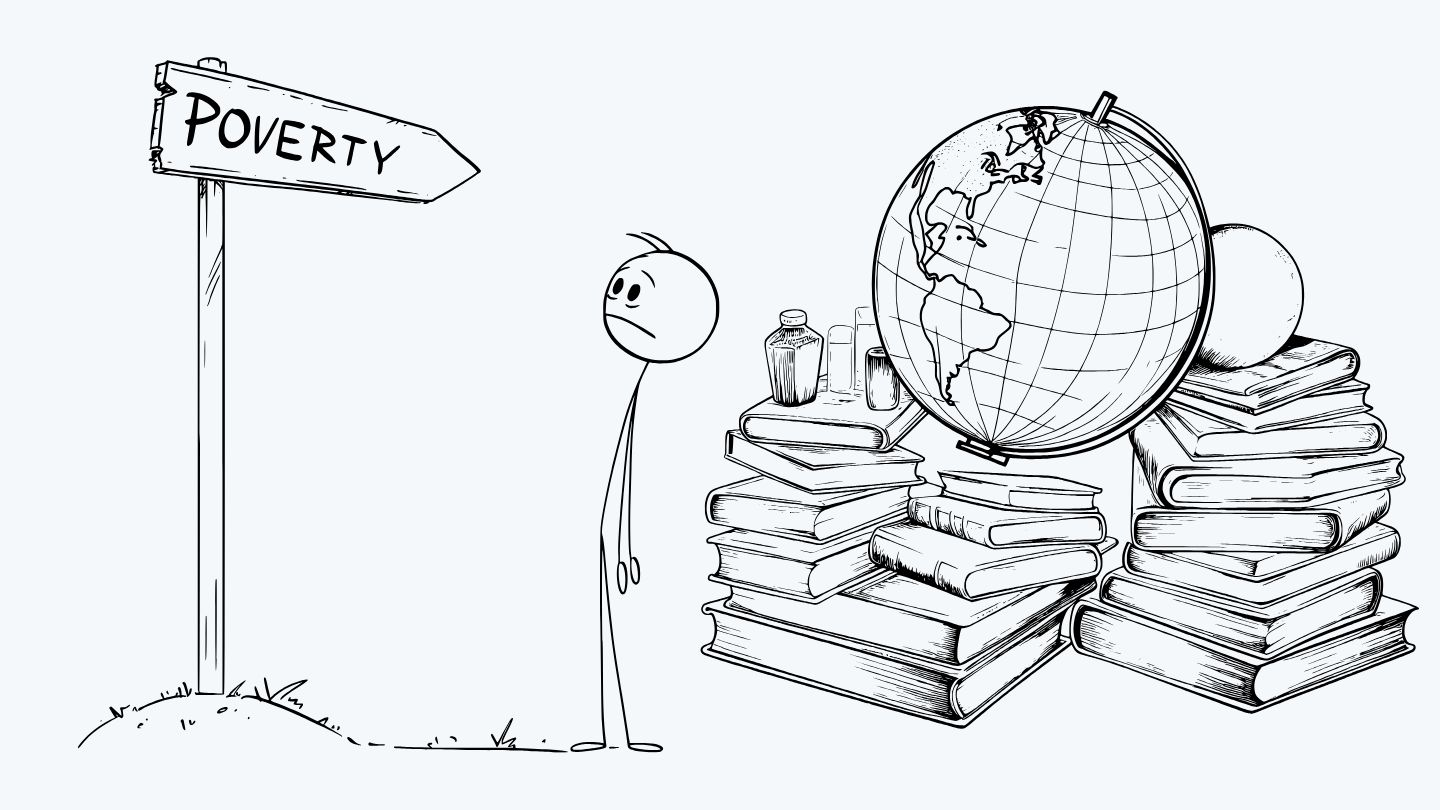
The Need for Production-Oriented Education for the Country’s Economic Development and Poverty Reduction
A large population in the country is still below the poverty line. Poverty is not an individual’s choice or desire; it is a condition created by the lack of education, knowledge, skills, and opportunities. Since education up to the university level has not been able to guide the educated class toward avenues and aspects of income generation, educated human resources with higher education have had to remain unemployed. A large number of young people have earned academic certificates, but they have not been able to engage in production, enterprise, research, or employment creation. Viewed in this way, it is clear that the country’s education and income generation have not been interconnected.
South African leader Nelson Mandela had said, “Ending poverty is not a matter of charity or philanthropy; it is an act of justice.” In fact, the long-term measure for removing poverty from society or any particular class cannot be achieved only by distributing relief or providing reservation facilities. If justice means making an individual or society economically self-reliant, then, as Mandela said, providing quality and income-generating education to all is considered essential.
Education is the foundation of personality development and national development. The economic function of education is to produce capable human resources who can achieve economic progress within the country. Education should provide individuals with knowledge, skills, technology, respect for labor, and entrepreneurial thinking. Education that can increase national production, create employment, and enable the use of the country’s natural resources is the need of the present time. Unless education can make people self-reliant in income generation, the slogan of poverty reduction in society remains limited only to words. It cannot be experienced in results.
When citizens are trained through productive education, they do not develop only their own economy; they can contribute to the economic progress of the home, family, society, and nation. The Greek philosopher Aristotle had said, “The roots of education are bitter, but its fruit is sweet.” His statement means that acquiring education is difficult, but once it is acquired, the result it gives is sweet. Education helps in the all-round development of an individual. One important aspect of all-round development is economic development. For this, research-friendly and vocational education is considered essential.
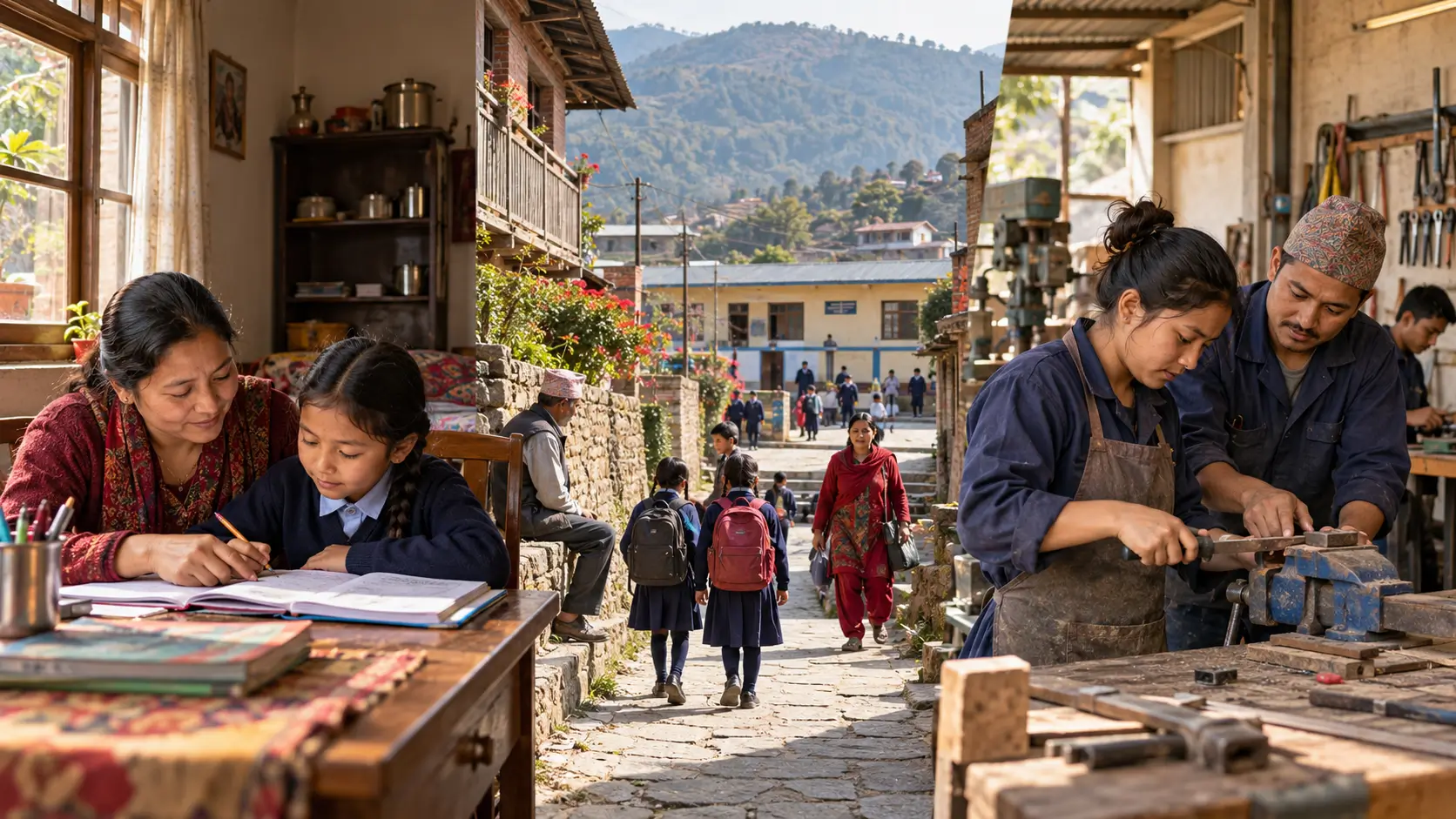
In a developing country like Nepal, education becomes even more important for poverty alleviation. For an individual to become economically prosperous, it is necessary to be skilled in some profession. If school and university education provided to citizens can be linked with the needs of the labor market and productive work, educated youth can start enterprises in their own villages and localities. They can become self-employed. From this perspective, practical, skill-based, and productive education is needed to solve the problems of unemployment and youth migration seen in society.
Education is often described as the light of consciousness. Education is a powerful medium for developing an individual’s social, economic, cultural, and scientific thinking. Until education enables individuals to stand on their own feet and fulfill their needs, poverty reduction for individuals and society is not possible. Per capita income cannot improve. Unless an individual becomes prosperous, their home, family, society, and country cannot become wealthy. When every person in society is educated and self-reliant, the foundation for social transformation is created.
Only when individuals have the capacity to choose and seek an occupation according to their interest and ability, earn income, and live comfortably can society become economically self-reliant. Educated human resources do not have to live a life of economic scarcity. Poverty in society gradually disappears. Until human resources with the knowledge and skills to use the natural resources available in the country are produced, the identification, search, research, excavation, and use of these resources cannot take place. This is what is happening at present. In this sense, making education research-oriented is not only necessary but also an essential condition.
There is a common acceptance that the existing education system has not been able to produce production-oriented skilled human resources. It is often heard that unless education is linked with income generation, the problems of poverty, economic scarcity, and unemployment in society cannot be solved. Unfortunately, the state does not appear to have succeeded in making education a powerful instrument of poverty reduction.
The standard of economic prosperity of any nation is per capita income. Our country is far behind in the human development index. To increase per capita income, every person in society must be capable of income generation. In this sense, education should teach educated people the knowledge and skills needed to become entrepreneurial, production-oriented, and professional. Educational institutions in the country now appear like academic factories that distribute certificates and produce unemployed human resources. Therefore, the existing state of education must be changed and made production-oriented. In doing so, education should be connected with agriculture, technology, vocational skills, financial literacy, entrepreneurship, and innovation.
Our country is rich in natural resources. Water, land, medicinal herbs, forests, petroleum products, and mines and treasures such as gold, silver, diamonds, and pearls are available in sufficient quantity in the country’s subsoil, but their search, research, excavation, and use have not been possible. Until human resources can use the natural resources available in the country, neither national development nor poverty reduction can take place.
Finally, the state must make education a reliable foundation for poverty reduction. In doing so, education should be linked with production according to geography, climate, soil, and biodiversity. Education should develop among educated human resources an interest in work, a tendency to become entrepreneurs, self-reliance, and entrepreneurial ability in income-generating sectors. For this, timely revision, refinement, and change in the existing education policy, national objectives of education, strategies, curriculum, textbooks, and teaching-learning practices are considered desirable.




Comments 0
No comments yet. Be the first to start the conversation.