Daneshwor Hari Multiple Campus (दानेश्वरहरि बहुमुखी क्याम्पस, मझुवा, कञ्चनपुर) is a community campus in Jimuwa, Ward No. 10 of Bhimdatta Municipality, Kanchanpur District, Sudurpashchim Province. Affiliated with Tribhuvan University, it conducts undergraduate programs in management and education.
The campus grew from a local effort to bring bachelor’s-level education closer to families in the northern area of Bhimdatta Municipality. It previously operated as Shree Janaekata Multiple Campus and spent twelve years using classrooms, office rooms, and other premises at Shree Siddhanath Secondary School before moving its academic activities to its own buildings.
| Field | Details |
|---|---|
| Institution | Daneshwor Hari Multiple Campus |
| Nepali Name | दानेश्वरहरि बहुमुखी क्याम्पस, मझुवा, कञ्चनपुर |
| Institution Type | Community campus |
| Location | Jimuwa, Bhimdatta Municipality–10, Kanchanpur |
| Province | Sudurpashchim Province |
| Affiliation | Tribhuvan University |
| Academic Level | Undergraduate |
| Programs | Four-year BBS and four-year B.Ed. |
| Academic Areas | Management and Education |
| Campus Code | 858 |
The campus was formed in response to the higher education needs of communities in Wards No. 7, 8, 9, and 10 of Bhimdatta Municipality. Local parents, teachers, social workers, intellectuals, political representatives, and education supporters took part in the initiative.
Travelling outside the area for higher education was difficult for many families, particularly those with limited financial resources. Establishing a community campus in Jimuwa allowed students to continue bachelor’s studies while remaining closer to home.
Hari Singh Bist, who served as chairperson of the Campus Management Committee, transferred 0-02-00 kattha of land, equivalent to 677.26 square metres, from land registered in his and his son’s names during a general assembly held in 2073 BS. This land supported the development of the campus’s permanent physical base.
Shree Siddhanath Secondary School also had a central role in the campus’s early operation. The campus used the school’s classrooms, offices, and other physical resources for twelve years. Teaching and non-teaching staff from the school also contributed to campus activities on a part-time basis.
Daneshwor Hari Multiple Campus is affiliated with Tribhuvan University for the Bachelor of Business Studies and Bachelor of Education programs.
The BBS program operates under the Faculty of Management, while the B.Ed. program is conducted under the Faculty of Education. Both are four-year undergraduate programs following Tribhuvan University’s annual system.
| Program | TU Academic Unit | Campus Subject Areas |
|---|---|---|
| Bachelor of Business Studies | Faculty of Management | Accounting, Finance, Marketing |
| Bachelor of Education | Faculty of Education | Nepali, English, Health Education |
The four-year Bachelor of Business Studies program develops students’ understanding of business, administration, economics, accounting, finance, management, marketing, taxation, entrepreneurship, and organizational practice.
Tribhuvan University’s BBS structure includes compulsory courses, core business courses, concentration subjects, business research methods, and final project work. During the fourth year, students study subjects from a selected concentration area and complete a project connected with organizational or business practice.
At Daneshwor Hari Multiple Campus, the stated BBS concentration areas are:
Accounting
Finance
Marketing
The program may suit students seeking an undergraduate management degree while studying within Kanchanpur. Its course structure provides a base for further management education and work related to business, administration, finance, accounting, marketing, and entrepreneurship. Career outcomes depend on the student’s academic performance, practical skills, experience, and the requirements of individual employers.
The four-year Bachelor of Education is a professional and academic teacher-education program under Tribhuvan University’s Faculty of Education.
The TU curriculum combines communication courses, professional education courses, major and minor specialization areas, and teaching internship or practicum. Students are required to complete 22 courses carrying 2,200 marks across the four years.
Daneshwor Hari Multiple Campus offers the following B.Ed. subject areas:
Nepali
English
Health Education
The program is intended for students preparing for teaching and education-related work. It covers educational foundations, educational psychology, curriculum and evaluation, subject specialization, teaching methods, and supervised teaching practice.
B.Ed. Eligibility: Applicants seeking admission to the first year of the four-year B.Ed. program must have obtained an overall C grade, stated as grade 2.01 or above, in Grade 12 from a recognized educational institution or passed a 10+2 equivalent qualification with at least second division.
Tribhuvan University also applies subject-related entry requirements for different B.Ed. specialization areas. Students selecting Nepali, English, Health Education, or another specialization must meet the relevant academic conditions for that subject.
BBS Eligibility: Applicants must have completed 10+2 in business or commerce, or an equivalent course recognized by Tribhuvan University. They must also meet any additional entry conditions prescribed by the Faculty Board or the campus.
The campus has arranged tuition-fee concessions linked to academic achievement and inclusion. The stated provisions include:
A 100% tuition-fee discount for students who passed in the distinction category and achieved a GPA of 3.6 or above.
A 50% tuition-fee discount for students who passed in the first-division category and achieved a GPA of 3.2 or above.
A 20% tuition-fee discount for Dalit students, Indigenous students, students with disabilities, and students who achieved a GPA of 2.7 or above.
The campus’s strategic priorities also include widening scholarship access for academically capable students and those from economically disadvantaged backgrounds.
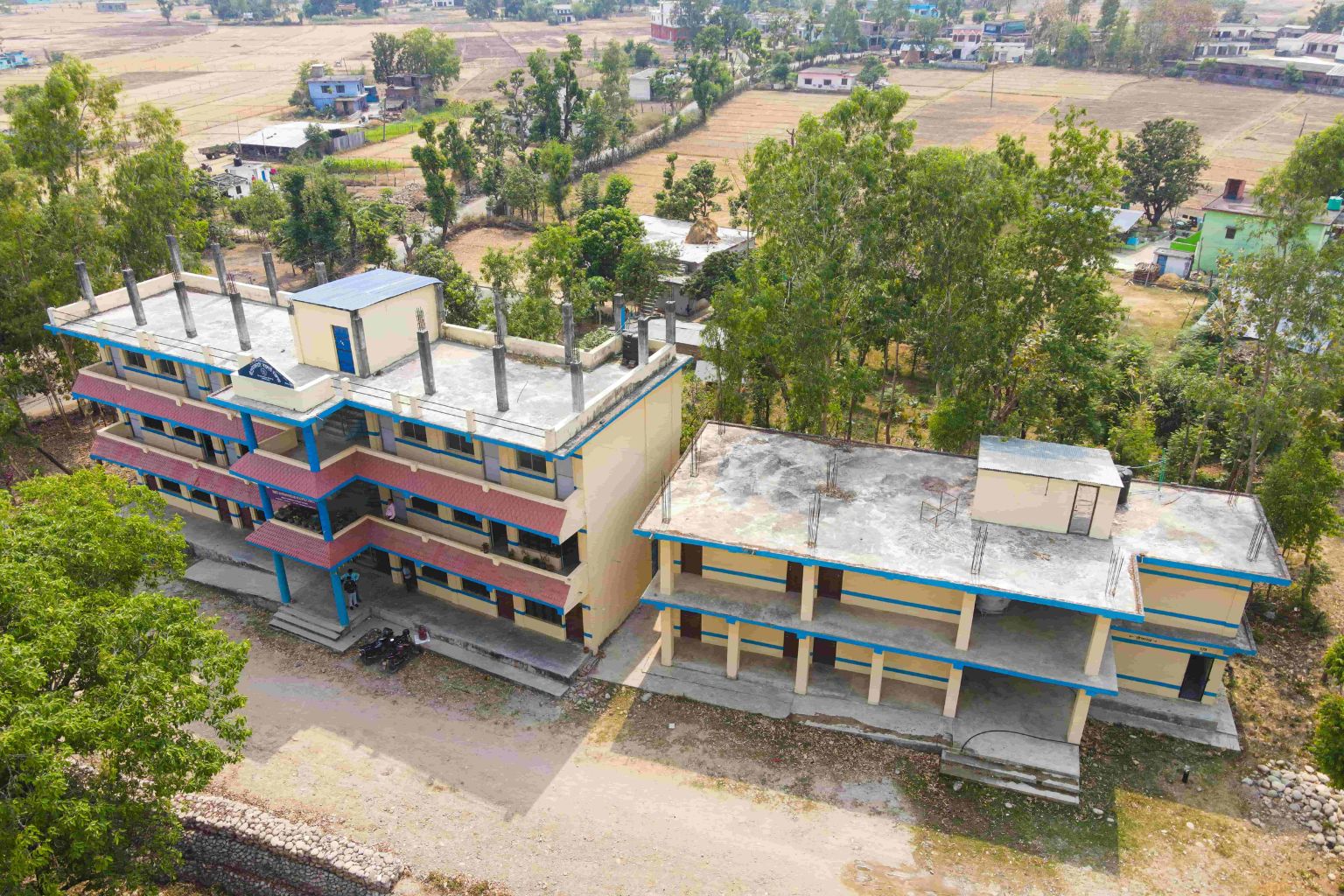
Daneshwor Hari Multiple Campus now conducts BBS and B.Ed. classes in its own buildings. The permanent infrastructure was developed with support from the University Grants Commission, Bhimdatta Municipality, and the Sudurpashchim Province Government.
A three-storey building was completed with grant assistance of Rs. 1 crore from the University Grants Commission. A separate four-room, two-storey building was constructed with assistance from the Ministry of Social Development of the Sudurpashchim Province Government.
The physical infrastructure includes:
| Facility | Available Provision |
|---|---|
| Total land area | 2 kattha |
| Building-covered area | 6,240 square feet |
| Buildings | 2 |
| Classrooms | 12 |
| Computer room | 1 |
| Toilets | 6 for male and female students |
| Drinking-water facility | 1 |
The campus also has desks, benches, chairs, tables, cabinets, whiteboards, noticeboards, and office furniture required for regular academic and administrative work.
The campus library contains approximately 1,600 books, including books connected with the BBS and B.Ed. curricula. The collection also contains older titles, making the continued addition of current textbooks and reference materials an identified area for development.
The library has a separate room and a study room. A computer is available for reading or downloading digital books, and academic journals are also included among its learning resources.
The library supports students who require textbooks, references, reading space, and basic digital access during their studies.
The campus has begun using digital tools in both academic and administrative work. Software is used for accounting, examinations, and library management.
Its educational and office equipment includes:
11 desktop computers with monitors
7 laptops
3 overhead or multimedia projectors
4 photocopiers and printers
Internet service
11 internet-connected computers
Telephone and office communication equipment
Multimedia projectors have been installed in several classrooms. This allows teachers to use presentations and digital learning materials alongside regular classroom teaching.
The campus has been working to move beyond an entirely teacher-centred classroom model. The use of multimedia projectors, internal examinations, attendance monitoring, additional classes, and special classes forms part of its academic approach.
Extra classes may be arranged on Saturdays, public holidays, or designated dates when regular teaching schedules are affected. The campus also plans to involve guest professors and support teachers in research, publication, M.Phil., PhD, and other academic development activities.
Its five-year development planning gives attention to timely course completion, systematic internal assessment, improved student attendance, research-based activities, and the use of technology in teaching and administration.
Student welfare is included within the campus’s institutional planning. Academic consultation, scholarship selection, student feedback, alumni involvement, skills programs, and community participation are among the areas identified for continued work.
Planned student-focused activities include:
Scholarship access for economically disadvantaged and academically strong students
Student counselling related to competitive examinations and employment-oriented preparation
Computer training based on the capacity of the computer laboratory
English-language and information-technology programs
Leadership-development activities
Student involvement in community relations
Alumni participation in campus development
Environmental cleanliness and campus–community collaboration are also included among the campus’s main activities.
Daneshwor Hari Multiple Campus envisions a well-educated, cultured, equitable, and prosperous society in Kanchanpur District.
Its mission centres on providing higher education to students who have completed the intermediate or Grade 12 level and widening their access to bachelor’s education.
To provide accessible higher education.
To support the development of practical, competent, disciplined, and committed citizens.
To strengthen academic and institutional capacity.
To improve physical infrastructure and learning resources.
To maintain cooperation between the campus and the surrounding community.
The campus operates through a community-based governance structure. Its development depends on coordination among the Campus Management Committee, teachers, employees, students, local residents, public bodies, and other stakeholders.
Financial statements have been audited by a chartered accountant under Nepal Standards on Auditing. Institutional planning covers financial resource management, academic development, infrastructure, student welfare, governance, and community relations.
The campus has also prepared and implemented a five-year Strategic Development Plan. Its main areas are:
Physical infrastructure development
Academic and institutional capacity
Student welfare and extracurricular activities
Financial resource management
Institutional governance
Campus–community relations
The campus continues to work within financial and infrastructure limits. Dependence on public grants, community participation, and local support remains an important part of its development model.
Community participation has shaped the campus from its beginning. Local residents have supported land management, building construction, environmental activities, institutional governance, and resource mobilisation.
The campus also seeks to involve teachers, staff members, and students in community activities. Its social priorities include cooperation with local government bodies and organizations, broader access to higher education, public awareness, and participation in matters of local concern.
Plans for wider community involvement include working with former students, including student representatives in campus governance, and encouraging local professionals, businesspeople, social workers, and community members to contribute to institutional development.
Daneshwor Hari Multiple Campus is relevant to students in Jimuwa and surrounding parts of Kanchanpur who want to study a Tribhuvan University bachelor’s program without relocating far from home.
Its academic identity is focused on two undergraduate fields: management through the BBS program and teacher education through the B.Ed. program. The campus combines community management, tuition concessions, its own buildings, library access, computer facilities, and locally available university education.
Campus Name: Daneshwor Hari Multiple Campus
Address: Jimuwa, Bhimdatta Municipality–10, Kanchanpur, Sudurpashchim Province, Nepal
Affiliation: Tribhuvan University
Programs: Four-year BBS and four-year B.Ed.
Email: info@dhmc.edu.np / dhmcjimuwa10@gmail.com
Website: www.dhmc.edu.np
Phone: +977-9848722065, +977-9848842222, +977-9868592087