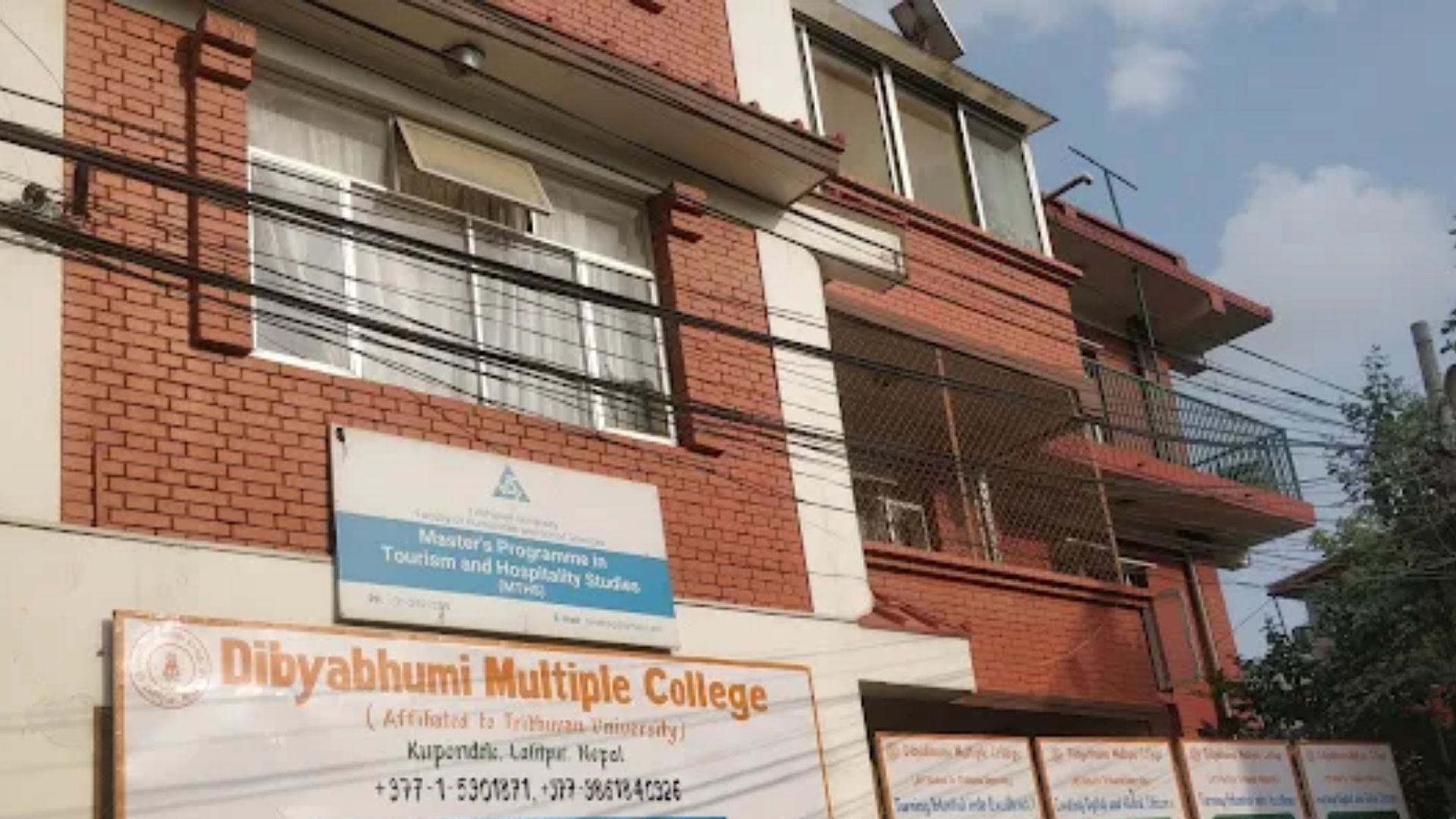
Dibyabhumi Multiple College (DMC) is a Tribhuvan University (TU) affiliated college in Kupandole, Lalitpur, Nepal, and a member of the United Nations Academic Impact (UNAI). Established in 2014, the college presents itself as a learning space where academic study is linked with real situations, field exposure, and student-led activities.
Dibyabhumi Multiple College (DMC), affiliated with Tribhuvan University and offers bachelor’s programs in Humanities, Social Sciences, Social Work, Media, and BCA.
DMC describes its purpose in social terms: education that supports responsible citizenship, ethical conduct, and service to community life. Alongside TU course requirements, the college states that it runs added learning components such as leadership skills, social entrepreneurship, global citizenship, critical thinking, creative writing, graphics, video editing, proposal writing, foreign language classes, and MOOC-based learning.
For students and parents, this profile focuses on practical facts: programs, entry requirements, teaching-learning practices, facilities, student life, scholarships, and the college’s wider academic connections.
Affiliation: Tribhuvan University (TU)
UNAI: Member of United Nations Academic Impact (UNAI)
Established: 2014
Main academic area: Humanities and Social Sciences
Programs listed by the college: BSW, BAJM/BJMC, BA Major English, BA Psychology, BA Rural Development, BA Gender Studies, BCA
Seat information (per academic session): Most programs show 48 seats; BCA shows 35 seats
Student–teacher ratio: 24:1 for multiple programs
Core learning activities: guest lectures, seminars/workshops, conferences, round tables, internships, OJT
Key facilities: projector-connected classrooms, computer/projector classroom setup, library, Wi-Fi, canteen, drinking water, parking
Communication for online admission/entrance link (stated): dibyabhumicollege@gmail.com
DMC presents its foundation as a response to students who need accessible higher education in Nepal, with an effort to connect university learning to changing social and work contexts. It also explains the meaning of its name: “Dibya” as light and “Bhumi” as place, using this as a symbolic identity linked to spreading knowledge.
The mission focuses on preparing students for change through relevant knowledge, life-long skills, and responsible global citizenship, with attention to social issues and community advancement. The stated goal is to create “digital and global citizens.”
DMC’s quality statement links teaching, research, and creative work to the preparation of competent and ethical graduates who can respond to challenges in a rapidly changing world. In practice, this appears in the college’s focus on classroom learning supported by presentations, student projects, field engagement, and structured training opportunities beyond standard lectures.
DMC lists bachelor’s programs under TU, mainly within Humanities and Social Sciences, plus Bachelor in Computer Application (BCA). The programs below are presented as four-year degrees in yearly format for several programs, while BCA is shown as eight semesters.
BSW is presented as multidisciplinary, drawing from social sciences and practice-based learning. For students, this typically means learning about society, institutions, community work, and professional values while taking part in field activities connected to real community settings.
The college describes a strong emphasis on applying classroom learning in field work and building professional readiness through exposure, internships, and organizational interaction. Graduates commonly pursue work in social sector roles across government bodies, NGOs/INGOs, development projects, and community-focused organizations, depending on the student’s interests and the labor market.
The journalism and mass communication program is presented as relevant to Nepal’s media environment and communication needs across sectors. Students can expect study in media principles, reporting and writing practices, communication tools, and field-based learning linked to media work.
The DMC also notes exposure to roles such as RJ, VJ, MC, and news reading as part of program-related activities. Career paths can include media houses, communication roles in organizations, and information/communication positions in public and private institutions, based on skills and experience.
The BA Major English track is described as supporting systematic study of literary texts and strengthening reading and writing skills, inquiry, logical reasoning, and critical appreciation of literature. For many students, this program fits goals such as teaching, writing, publishing, research-oriented study, and communication-focused careers, especially when paired with practical training and strong writing output.
DMC lists a Bachelor in Psychology as a four-year undergraduate degree and mentions admission calls for the 2082 BS (2025) academic session under TU’s Faculty of Humanities and Social Sciences. Students entering this field should expect academic work on human behavior, learning, development, and applied psychological understanding, with the broader expectation that professional practice in psychology depends on further qualifications and regulatory requirements.
The Bachelor in Rural Development is listed as a four-year undergraduate program, with admission information connected to the TU calendar for the 2082 BS (2025) session. This degree generally suits students interested in community development, local governance, planning, agriculture-linked development, and program work in rural settings.
The Bachelor in Gender Studies is listed as a four-year undergraduate degree under TU FOHSS, with admission information tied to TU’s calendar for the 2082 BS (2025) session. Students can expect study connected to gender, society, policy, inclusion, rights, and research methods, with strong links to social analysis and community engagement.
DMC lists BCA as a proposed program under Tribhuvan University, with a four-year duration (eight semesters) and 35 seats per academic session. This program generally suits students who want a computing degree with software and application-focused learning. The entrance form can be obtained from the college or downloaded from TU FOHSS (tufohss.edu.np).
For students, BCA often connects to roles in software development, web and mobile applications, databases, IT support, and tech-enabled services, shaped by personal skill-building and project experience.
DMC states that applicants to BSW, BJMC, BPsy, BGS, BRD, BCA, and BA Major English should have completed Intermediate level (PCL/A-Level/HSEB 10+2) or equivalent in any faculty recognized by TU.
10+2 / PCL / A-Level or equivalent from a TU-recognized board or university
Minimum 2.0 CGPA with not less than D+ in each subject is stated for multiple programs
For Psychology, Rural Development, and Gender Studies, the DMC links admission and class start to the TU academic calendar.
For certain sessions, the college mentions that entrance exams can be taken physically or online within 7:00 AM to 3:00 PM (Sunday to Friday), with an online communication link available on request through the college email.
Because TU schedules and admission notices can change by faculty and year, applicants should confirm the current academic calendar and any entrance requirements before final submission.
DMC’s internal writing highlights learning that goes beyond lecture-only formats. It mentions learning-by-doing, expert interaction, library visits, field involvement, and experience-based learning.
In practical terms, students can expect:
Classroom teaching supported by projector-based sessions and digital classroom setup
Guest lectures where professionals (including retired experts) share field experience
Academic events such as seminars, trainings, workshops, conferences, and round tables
Internship and OJT opportunities linked to social and corporate sectors
The college also states a student–teacher ratio of 24:1 across several programs. For many learners, this ratio supports clearer academic follow-up, regular feedback, and better coordination for field-based tasks.
DMC lists facilities intended to support daily learning and campus routines. These include:
Well-ventilated classrooms
Computer and projector-connected classrooms for presentation-based teaching
Library
Wi-Fi internet facility
Audio and video records of lecture classes (stated as available)
Canteen, drinking water, and parking
The library is described as a learning resource center with books and reading materials such as journals, dailies, periodicals, manuals, and publications to support student and faculty needs.
Student life at DMC is closely connected to academic events and student-managed activities. The college mentions frequent events such as seminars, workshops, conferences, and trainings organized with active student participation.
A key structure mentioned is the College Students’ Council (CSC). The DMC describes it as a student body whose executive members are elected and nominated by the college management team, with responsibilities that include organizing extracurricular activities and regular programs. The CSC is also described as a bridge between students and management, supporting communication and campus environment.
For many students, this kind of student body becomes a real setting for leadership practice, event planning, teamwork, and public speaking.
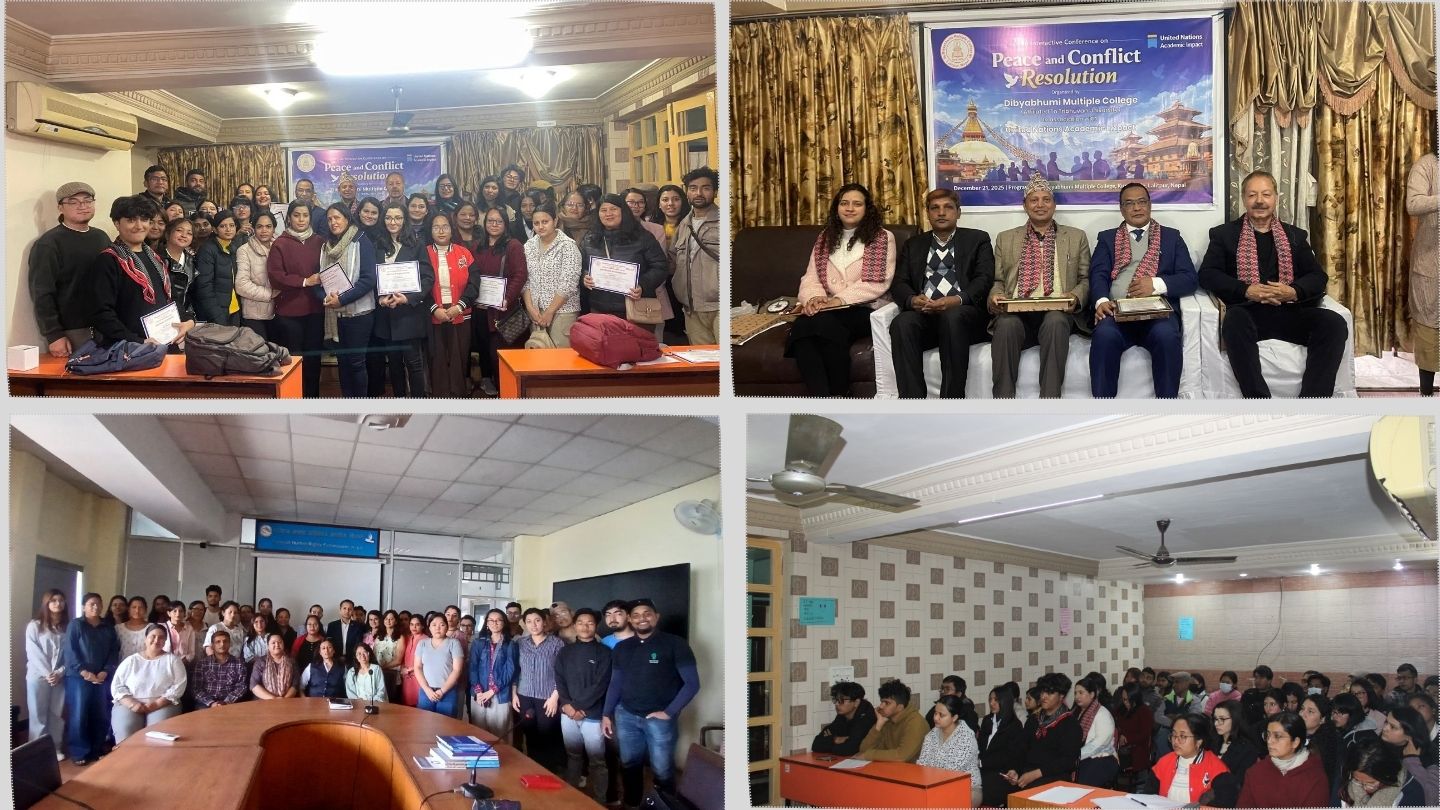
The extracurricular activity is a learning beyond the classroom that supports physical, mental, social, and career-related growth. DMC states that it organizes programs and also supports student participation in external activities, giving students exposure to diverse settings and responsibilities.
In student terms, this can include participation in campus events, volunteering, field visits, group presentations, community engagement, and skill-based sessions that support communication and professional readiness.
DMC states that it offers scholarships to support access for qualified and financially challenged students.
The listed scholarship areas include:
Merit-based support
Students from low economic background
National sportspersons and selected profiles such as media personalities and actors
Students from marginalized and disadvantaged groups, remote areas, and martyrs’ families
The college also describes broader financial aid support through sponsors, bank loan facilitation, and coordination with social-sector organizations for student research support.
The DMC states full and partial scholarships, with a note that many awards are need-based and that early application can support access. Students should confirm current deadlines and criteria at the time of application.
DMC highlights academic engagement and institutional networking as part of its milestone narrative. It notes MOUs with national and international academic and professional partners for academic development and joint work connected to student and academic benefit.
It also states that DMC and UNDP Nepal started a lecture series on the UN Sustainable Development Goals (SDGs) and the 2030 Agenda for college and university students. The college also mentions an MOU with UNESCO Centre for Global Education linked to education and youth-related work.
The founder’s message references performance reports across 2071–2082 BS (2014–2025 AD) and reports distinctions in TU examinations, along with attention to student job readiness during study.
Choosing a college is usually about fit: program relevance, teaching practice, learning support, and how well a campus helps a student grow into work and community life. Based on the college’s own stated information, DMC may be a good match for students who want:
A TU-affiliated bachelor’s degree in Humanities and Social Sciences fields
Learning that includes field exposure, expert interaction, and event participation
Structured activities like OJT, internships, and training sessions connected to real organizations
A campus culture that values student leadership through bodies like the CSC
Added learning themes such as digital citizenship, leadership skills, proposal writing, and skill-based sessions beyond standard course outlines
Parents and planners may also value the college’s stated efforts to build networks with academic and development partners and to run academic lecture series linked to SDGs and education themes.
Dibyabhumi Multiple College (DMC) is positioned as a TU-affiliated, UNAI-member college established in 2014, with bachelor’s programs centered on Humanities and Social Sciences and a listed BCA program. Its stated learning style connects classroom study with presentations, library use, field exposure, expert talks, internships, OJT, and student-managed activities.
For students, the practical takeaway is clear: confirm eligibility, understand TU calendar requirements, compare programs with your long-term study and work goals, and ask the college office about current admission notices, scholarship deadlines, and the exact format of entrance processes.
Yes. The college states that it is affiliated to Tribhuvan University.
The DMC lists BSW, BCA, BA in Journalism and Mass Communication, BA Major English, BA Psychology, BA Rural Development, and BA Gender Studies.
The college states that applicants should have completed 10+2/PCL/A-Level or equivalent in any faculty recognized by TU, and several program sections state a minimum 2.0 CGPA with not less than D+ in each subject.
Yes. It lists merit-based, need-based, and category-based scholarships, and also describes support through sponsors and bank loan facilitation.
The DMC lists projector-connected classrooms, library, Wi-Fi, access to recorded lectures, canteen, drinking water, and parking.
Yes. It describes OJT placement support and mentions internship and training exposure linked to organizations.
Contact Dibyabhumi Multiple College's administrative office for detailed information on the course, admissions, location, fees, scholarships, facilities, counseling, or eligibility.
Email Address: dibyabhumicollege@gmail.com
Phone Number: +977-1-5541460, +977-1-4260468, +977-1-5901871
Website: www.dibyabhumi.edu.np
Location: Kupandole, Lalitpur, Nepal