Himalayan Institute of Science and Technology (HIST) is an engineering college located at Gwarko, Lalitpur-17. Established in 2002 (2059 BS), the college runs bachelor's and master's level engineering programs affiliated with Purbanchal University. Its academic setup combines classroom study, laboratories, workshops, drawing facilities, computer resources, library access, and project-based work.
HIST conducts its bachelor's programs in the morning and master's programs in the evening. The college's location near Gwarko junction and its separate schedules for undergraduate and graduate study are practical points for students comparing engineering study options in Lalitpur.
Established in 2002 (2059 BS) and located at Gwarko, Lalitpur-17.
Affiliated with Purbanchal University.
Offers engineering programs at both bachelor's and master's levels.
Bachelor's classes are conducted in the morning from 6:30 AM to 12:30 PM.
Master's classes are conducted in the evening from 5:30 PM to 8:30 PM.
Offers Bachelor of Civil Engineering (BE Civil) with 60 seats.
Offers BE Computer Engineering with 48 seats.
Offers M.Sc in Information System Engineering with 30 seats.
Offers M.Sc in Engineering Management with 40 seats.
Campus facilities include lecture halls, engineering laboratories, drawing halls, a computer center, library, workshop facilities, and project space.
Provides optical-fiber-based broadband internet connectivity and an E-lab facility.
Academic activities include practical sessions, engineering projects, field visits, workshop work, and discipline-specific laboratory activities.
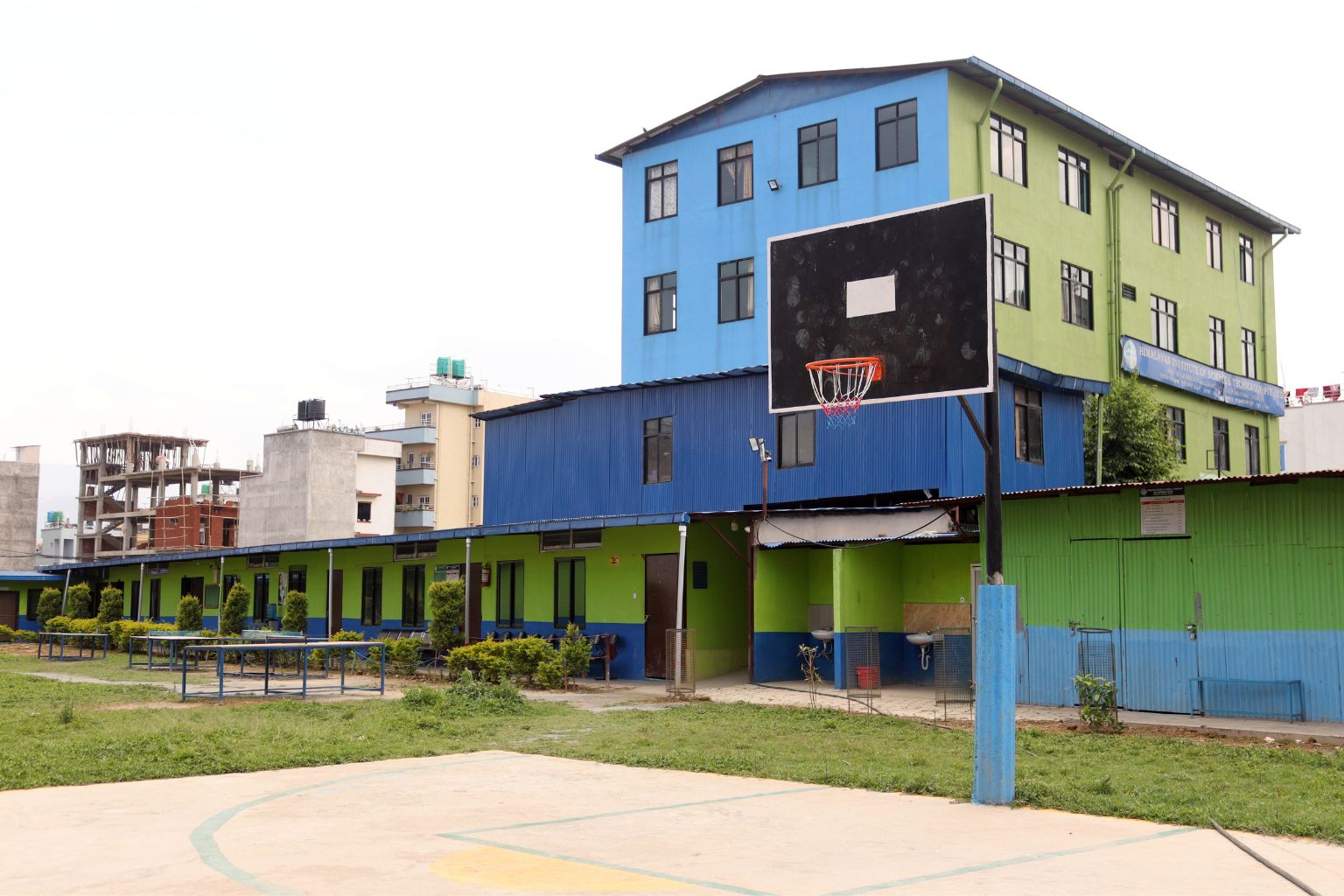
HIST is situated at Gwarko, Lalitpur-17, alongside Asian Engineering College. The campus is accessible from the Gwarko junction road.
The college occupies an area of about one and a half ropanis. Academic departments, lecture rooms, laboratories, drawing spaces, computer facilities, the library, administrative offices, and project areas are arranged within the campus buildings.
HIST is affiliated with Purbanchal University and conducts engineering education at bachelor's and master's levels.
Its engineering programs operate under the academic norms and guidelines of Purbanchal University and the Nepal Engineering Council. The course structures available for its Bachelor in Civil Engineering and Bachelor in Computer Engineering programs follow the Purbanchal University Faculty of Engineering curriculum effective from the 2021 batch.
The regular study schedule is divided by academic level:
Bachelor's programs: 6:30 AM to 12:30 PM
Master's programs: 5:30 PM to 8:30 PM
This arrangement keeps undergraduate teaching in the morning while graduate classes are held in the evening.
HIST has four engineering programs across bachelor's and master's levels.
| Program | Level | Seats |
|---|---|---|
| Bachelor of Civil Engineering (BE Civil) | Bachelor's | 60 |
| BE Computer Engineering | Bachelor's | 48 |
| M.Sc in Information System Engineering | Master's | 30 |
| M.Sc in Engineering Management | Master's | 40 |
The bachelor's options cover civil and computer engineering, while the graduate programs focus on information system engineering and engineering management.
The Bachelor in Civil Engineering curriculum effective from the 2021 batch begins with mathematics, chemistry, applied mechanics, civil engineering materials, basic electrical engineering, engineering drawing, and workshop technology.
As students progress, the curriculum moves into subjects directly connected with civil engineering practice. These include building technology, strength of materials, fluid mechanics, surveying, engineering geology, hydraulics, structural theory, concrete technology and masonry structures, civil engineering drawing, soil mechanics, water supply engineering, transportation engineering, engineering hydrology, steel and timber structure design, and foundation engineering.
The course structure also contains practical and field-oriented components. Survey work, drawing, laboratory sessions, workshop activity, programming, and a survey camp form part of different stages of the curriculum.
This mix gives the BE Civil program a clear progression from mathematics and engineering fundamentals into structural, geotechnical, water, transportation, surveying, and construction-related study.
The Bachelor in Computer Engineering curriculum effective from the 2021 batch starts with mathematics, physics, English for Technical Communication, computer programming, computing fundamentals, engineering drawing, and workshop technology.
Later semesters include Object Oriented Programming with C++, Digital Logic, Data Structure and Algorithm, Object Oriented Analysis and Design, Computer Graphics, electronic devices and circuits, Database Management System, Python Programming, Discrete Structure, Microprocessor, Communication System, Probability and Statistics, Algorithm Analysis and Design, Computer Architecture and Design, Numerical Methods, Operating System, Engineering Economics, Research Methodology, Artificial Intelligence, Computer Network, and Software Engineering.
Project work is included at different stages of the program. The curriculum combines programming and software subjects with computing systems, electronics, communication, mathematics, research, and engineering-oriented coursework.
HIST runs two graduate engineering programs: M.Sc in Information System Engineering and M.Sc in Engineering Management.
The M.Sc in Engineering Management has a two-year duration and 40 seats. Its coursework brings engineering and management subjects into the same graduate program. The curriculum includes Quantitive Method, Research Methodology, Organization Behavior, Engineering Economics, Entrepreneurship, Engineering Economic Analysis, Operational Research, System Modeling and Risk Management, Strategic Management, Quality Management, Human Resource Management, Technology Marketing, Managerial Accounting, Project Management, electives, and a Dissertation/Thesis.
The fourth semester includes the Dissertation/Thesis component, carrying 16 credits.
The M.Sc in Information System Engineering has an intake of 30 students and forms the college's other master's-level engineering option.
HIST is housed in its own building complex on approximately one and a half ropanis of land.
The main building has four storeys with a basement and a total built-up area of 11,475 square feet. It contains academic departments, lecture halls, a computer lab, drawing halls, and administrative offices.
A separate three-storey building with a basement is located on the southwest side of the main building. This structure was developed for the library and computer center and has a total built-up area of 2,265 square feet.
An additional 675-square-foot building area on the south side of the main building is used for laboratory extension. These spaces give the college dedicated areas for classroom teaching, computer work, drawing, laboratory activity, administration, and library use.
The college has an open-access library system for students and an E-lab facility. A separate part of the campus building complex is allocated to the library and computer center.
HIST also has optical-fiber-based broadband internet connectivity. Computer facilities form part of both general campus infrastructure and the teaching requirements of its engineering programs.
For engineering students, these facilities sit alongside lecture halls, drawing halls, laboratories, workshop resources, and project areas rather than functioning as isolated services.
Laboratory and workshop work is relevant across the engineering programs offered by HIST. The campus has laboratory space, workshop facilities, computer facilities, and drawing halls.
The Purbanchal University civil and computer engineering curricula also contain practical components alongside theory and tutorial hours. Civil engineering students encounter practical work in subjects such as materials, surveying, hydraulics, soil-related study, and other technical courses, while computer engineering students have practical components in programming, computing, electronics, database, graphics, networking, and project courses.
The curriculum therefore requires students to work across lectures, tutorials, practical sessions, drawing activities, field-based work, and projects depending on the subject.
HIST has a project room where students can work on hardware and software projects. The purpose of the space is to connect engineering theory with practical project activity.
Project work also appears directly within the academic structure of the Bachelor in Computer Engineering program, including Project I and Project II.
For civil engineering students, practical components include surveying and a survey camp, along with laboratory, drawing, and discipline-specific technical work.
The college also includes field visits to project sites and industries among its academic activities.
HIST redefined its vision, mission, and objectives through its Vision Document 2012. The 20-year institutional goal set for 2032 (2089 BS) is to develop HIST as a major center for science and technology learning in Nepal and work toward becoming a deemed Technological University.
Its stated objectives focus on four areas:
Conduct bachelor's and master's engineering degree programs aimed at preparing skilled human resources for national development.
Prepare engineers and managers through engineering and management education.
Develop engineering education with attention to responsible professional practice.
Continue institutional capacity building toward its stated goal of becoming a center of learning and, ultimately, a deemed Technological University.
These objectives place engineering education, professional preparation, institutional development, and graduate-level study within the same long-term academic direction.
HIST has been operating since 2002 (2059 BS) with engineering education as its central academic area. Its current program mix covers two bachelor's degrees and two master's degrees, with study schedules divided between morning undergraduate classes and evening graduate classes.
The campus arrangement is closely connected with the type of education it provides. Lecture halls support regular coursework, drawing halls are available for engineering drawing, laboratories and workshops support practical subjects, computer facilities support technical work, and the project room provides space for student projects.
For students considering HIST, the clearest points of comparison are its Gwarko location, Purbanchal University affiliation, engineering-only program mix, morning and evening schedules, specified seat numbers, and the academic facilities attached to its engineering courses.

.png)