The Bachelor of Civil Engineering (BE Civil) at Himalayan Institute of Science and Technology (HIST), Gwarko, Lalitpur-17, is a bachelor's-level engineering program affiliated with Purbanchal University. HIST has 60 seats for the program, and bachelor's classes are conducted in the morning from 6:30 AM to 12:30 PM.
The curriculum follows the Purbanchal University Faculty of Engineering course structure effective from the 2021 batch. Study is arranged across eight semesters, moving from mathematics, mechanics, engineering materials, drawing, and basic engineering subjects into surveying, structures, geotechnical engineering, water resources, transportation, construction management, project work, and internship.
Affiliation: Purbanchal University
Level: Bachelor's
Academic Structure: Eight semesters
Seats: 60
Curriculum: Effective from the 2021 batch
Class Schedule: Morning shift, 6:30 AM to 12:30 PM
Survey Camp: Minimum 12 days in the fifth semester
Project Work: Civil Engineering Project I and Civil Engineering Project II
Internship: 30 working days in the eighth semester
Practical components are included in surveying, materials, hydraulics, structures, geotechnical, transportation, and other technical subjects.
Eligibility: Applicants must have passed 10+2 (Science) from a recognized university or board with at least second division or 45% marks.
Entrance Examination: Applicants must pass the entrance examination conducted by Purbanchal University.
The first two semesters establish the mathematical, scientific, mechanical, drawing, and materials foundation needed for later civil engineering subjects. Mathematics-I, Chemistry, Applied Mechanics-I, Civil Engineering Materials, Basic Electrical Engineering, Engineering Drawing-I, and Workshop Technology are followed by Mathematics-II, Physics, Applied Mechanics-II, Building Technology, thermodynamics and heat transfer, and Engineering Drawing II.
From the third semester onward, the curriculum moves more directly into civil engineering disciplines.
| Semester | Major Subjects | Credit Hours |
|---|---|---|
| First | Mathematics-I, Chemistry, Applied Mechanics-I, Civil Engineering Materials, Basic Electrical Engineering, Engineering Drawing-I, Workshop Technology | 19 |
| Second | Mathematics-II, Physics, Applied Mechanics-II, Building Technology, Thermodynamics and Heat Transfer, Engineering Drawing II | 18 |
| Third | Strength of Materials, Fluid Mechanics, Survey I, Engineering Geology, Computer Programming | 20 |
| Fourth | Survey-II, Hydraulics, Theory of Structure-I, Concrete Technology and Masonry Structures, Civil Engineering Drawing | 20 |
| Fifth | Soil Mechanics, Survey Camp, Theory of Structure-II, Water Supply Engineering, Transportation Engineering-I, Engineering Hydrology | 20 |
| Sixth | Foundation Engineering, Irrigation Engineering, Sanitary Engineering, Transportation Engineering-II, Numerical Methods, Engineering Economics | 18 |
| Seventh | Reinforced Concrete Structure, Hydropower Engineering, Estimation and Valuation, Safety Engineering, Construction Project Management, Project I, Elective-I | 18 |
| Eighth | Civil Engineering Project II, Engineering Professional Practice, Elective-II, Internship | 11 |
Surveying forms a distinct sequence in the curriculum. Survey I is taught in the third semester, followed by Survey-II in the fourth semester. Both include practical work.
The fifth semester includes a two-credit Survey Camp with a minimum duration of 12 days. This gives surveying a field-based component in addition to classroom and practical study.
Structural study develops across several semesters through Strength of Materials, Theory of Structure-I, Theory of Structure-II, Design of Steel and Timber Structure, Concrete Technology and Masonry Structures, and Design of reinforced concrete structure.
Construction-related study also includes Building Technology, Civil Engineering Drawing, Estimation and valuation, Safety Engineering, and Construction Project Management.
The curriculum covers several branches of civil engineering rather than concentrating on one technical area.
Fluid Mechanics and Hydraulics lead into Water Supply Engineering, Engineering Hydrology, Irrigation Engineering, Sanitary Engineering, and Hydropower Engineering. Transportation Engineering-I and Transportation Engineering-II are taught in the fifth and sixth semesters.
Geotechnical study includes Engineering Geology, Soil Mechanics, and Foundation Engineering.
Civil Engineering Project I appears in the seventh semester. Civil Engineering Project II continues project-based study in the eighth semester and carries three credit hours.
The final semester also includes a three-credit internship of 30 working days alongside Engineering Professional Practice and Elective-II.
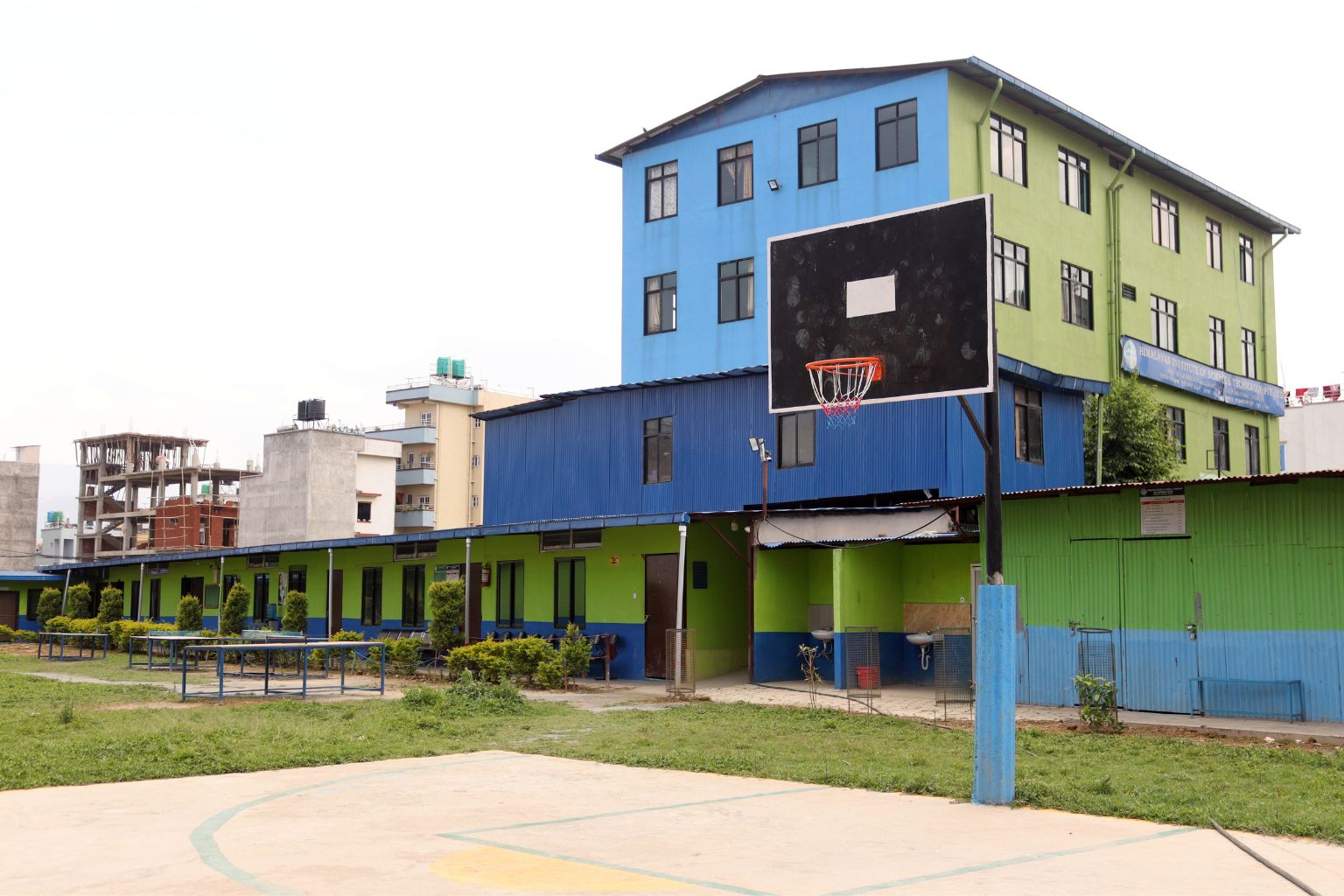
HIST has laboratory and workshop facilities for civil engineering students. Laboratory work, workshops, field visits, survey camp, and project activities form part of the college's engineering study environment.
The campus also contains lecture halls, drawing halls, a computer lab, library and computer center, and additional laboratory space. These facilities correspond with a curriculum that combines lectures with drawing, practical sessions, field activities, surveying, and project work.
BE Civil at HIST follows an eight-semester Purbanchal University curriculum covering structural engineering, surveying, geotechnical engineering, water-related subjects, transportation, construction management, engineering drawing, practical work, project study, and internship.
The combination of a minimum 12-day survey camp, two civil engineering project components, practical subjects, and a 30-working-day internship gives field and applied study a defined place within the academic structure.

.png)