Orchid College of Management & Technology is located in Gaushala, Kathmandu. Established in 2024 AD, the college offers undergraduate and postgraduate programs in information technology, artificial intelligence, business administration, and management.
The college is affiliated with Purbanchal University. Its academic team brings together people from computing, engineering, management, business, and teaching backgrounds. The academic approach combines classroom study with laboratory work, projects, case analysis, presentations, research assignments, and other program-specific activities.
| Area | Details |
|---|---|
| Established | 2024 AD |
| Location | Gaushala, Kathmandu |
| Affiliation | Purbanchal University |
| Programs | BIT, BTech in Artificial Intelligence, BBA, and MBA |
| Seat Capacity | BIT: 48; BTech in AI: 48; BBA: 96; MBA: 33 seats in each fall and spring intake |
| Academic Approach | Classroom learning combined with laboratory work, projects, case studies, presentations, research assignments, internships, seminars, and thesis work |
| Facilities | Computer laboratory, digital electronics laboratory, library, seminar activities, and a futsal ground |
| Student Support | Academic counselling, project supervision, research guidance, workshops, guest sessions, and scholarship opportunities based on applicable criteria |
| External Collaboration | Collaboration with Global Interaction for student leadership, international exposure, and entrepreneurial learning |
| Student Activities | Conferences, orientation programs, sports, cultural events, clubs, societies, and volunteer activities |
OCMT has four academic programs: Bachelor in Information Technology, Bachelor of Technology in Artificial Intelligence, Bachelor of Business Administration, and Master of Business Administration. The undergraduate programs cover technical and management education, while the MBA provides postgraduate study in management.
| Program | Academic structure | Seats |
|---|---|---|
| Bachelor in Information Technology | Four-year undergraduate program | 48 |
| Bachelor of Technology in Artificial Intelligence | Four years and eight semesters | 48 |
| Bachelor of Business Administration | 120 credit hours, including internship | 96 |
| Master of Business Administration | Four semesters and 69 credit hours | Fall: 33; Spring: 33 |
The course and seat structure places technology and management within the same college. Students interested in computing can choose between the broader information technology curriculum of BIT and the specialised artificial intelligence curriculum of BTech AI. The BBA and MBA cover management at undergraduate and postgraduate levels.
The Bachelor in Information Technology is a four-year undergraduate program. Its curriculum combines computing, mathematics, communication, management, electrical systems, programming, laboratory work, and semester projects.
The first semester includes Mathematics I, Fundamentals of Information Technology, Technical Communication, Basic Electrical System and Circuit, Principles of Management, Computer Programming I, and Project I. This combination introduces students to software, hardware, mathematical reasoning, communication, and project-based study from the beginning of the program.
The curriculum later covers areas such as programming, database systems, computer networks, software development, system administration, and related information technology subjects. Laboratory hours and project courses form part of the academic schedule rather than being treated as separate extracurricular activities.
BIT students are expected to work through theory classes, tutorials, programming exercises, practical sessions, assignments, and projects. The presence of management and communication subjects alongside computing courses also gives the program a broader organisational context.
The Bachelor of Technology in Artificial Intelligence is an eight-semester undergraduate program completed over four academic years. English is the medium of instruction and examination.
The curriculum begins with subjects such as Introduction to Programming, Digital Logic, Calculus, Introduction to Artificial Intelligence, Technical Report Writing and Presentation, and Society and Professional Ethics. These courses establish the mathematical, computing, communication, and ethical basis required for later study.
Project work begins in the second semester and continues through the remaining semesters. Students work under academic guidance to define a problem, set objectives, conduct research, prepare a plan, develop a solution, assess the work, write a report, and present the result. Projects may be completed in groups of up to three students.
Assessment is distributed across class participation, assignments, laboratory work, tests, quizzes, practical evaluation, and end-semester examinations. Courses that combine theory and laboratory components carry separate internal, practical, and final-examination marks. The program also requires at least 80 per cent attendance in lectures, tests, and tutorial classes for eligibility to sit for a subject’s final examination.
The Bachelor of Business Administration is a full-time undergraduate management program under the Faculty of Management of Purbanchal University. It contains 120 credit hours distributed across 40 course components, including an internship.
The curriculum is organised into foundation, core, capstone, specialisation, and internship components. Foundation courses cover Business Mathematics, English, Business Economics, Business Communication, Macroeconomic Analysis and Policy, and Business Statistics.
Core courses extend across accounting, finance, marketing, taxation, auditing, human resource management, business law, research methodology, project management, organisational behaviour, management information systems, entrepreneurship, supply chain management, and e-commerce.
International Business and Strategic Management serve as capstone courses. Students also select a specialisation area from Finance, Marketing, Human Resource Management, Accounting, or International Business. The internship carries five credit hours and connects the academic program with organisational experience and formal reporting.
The BBA structure therefore moves from basic quantitative and communication courses to functional management subjects, specialised study, strategic courses, and internship work.
The Master of Business Administration is a 69-credit postgraduate program completed across four semesters. Its structure includes management core courses, electives, seminars, specialisation subjects, research work, and a thesis.
The first semester covers Marketing for Managers, Communication for Managers, Accounting for Managers I, Legal Framework of Business, Decision Sciences, and an elective. Later semesters include Human Resource Management and Organisational Behavior, Economics for Managers, Financial Management, Operations Management, Entrepreneurship and Social Enterprises, Research Methodology and Thesis Proposal, Information Technology Management, International Business, Strategic Management, and Corporate Governance and Corporate Social Responsibility.
Students choose one specialisation area from:
Marketing
Finance
Human Resource Management
Operations and Supply Chain Management
Each specialisation contains a set of subject options. Marketing includes areas such as marketing research, product and brand management, sales and retailing, service marketing, and advertising management. Finance includes corporate financial reporting, capital structure, investment management, financial institutions, and financial derivatives.
Human Resource Management covers team building, conflict management, industrial relations, training, talent management, and performance management. Operations and Supply Chain Management includes inventory, warehousing, procurement, network design, supply-chain management, and facility-location subjects.
Three seminar courses and a five-credit thesis are included in the MBA structure. These components require students to examine management questions, organise evidence, communicate findings, and complete sustained academic work.
Teaching at OCMT is organised around both subject knowledge and assigned academic work. The type of activity varies by program, but the overall learning process may include:
Lectures, tutorials, and classroom discussions
Programming and computer laboratory sessions
Digital logic and electronics experiments
Individual and group projects
Case studies and management problem analysis
Research assignments and term papers
Presentations, seminars, and conferences
Organisational attachment and internship work
Practicum, project reports, and thesis writing
This structure is particularly visible across the four curricula. BIT and BTech AI contain laboratory and project components, BBA includes an internship, and MBA includes seminars, research preparation, and a thesis.
Continuous assessment is also part of the technical programs. Students complete work throughout the semester rather than depending only on a final examination. Assignments, practical tasks, presentations, tests, projects, and participation may contribute to internal evaluation.
The teaching team includes educators and practitioners from computing, management, business, and related academic areas. Their responsibilities extend beyond lectures to laboratory instruction, project supervision, research guidance, assignment review, presentation assessment, and academic counselling.
Workshops and seminar sessions may bring academic and professional speakers into discussions with students. Subject areas may include information technology, computer security, cybercrime, human resource management, organisational behaviour, psychology, business, and social issues.
The college’s links with IT professionals, management practitioners, business organisations, software companies, and non-governmental organisations can support guest sessions, institutional interaction, internship activity, and exposure to working practices. Such activities remain connected to the requirements and subject matter of the relevant program.
The computer laboratory supports programming practice, database work, software use, project development, and other computing assignments. It is relevant to BIT and BTech AI students, though management students may also require computing facilities for research, presentations, and information-management work.
The digital electronics laboratory is intended for practical work involving digital devices, logic systems, computer hardware, and electronics-related subjects. It supports courses in which students need to connect theoretical concepts with circuit or device-level experiments.
The library contains academic materials related to computer science, management, mathematics, social science, and associated subjects. Students may use available materials for coursework, assignments, projects, presentations, and research.
These facilities correspond with the academic structure of the programs. Technical courses require computing and electronics practice, while management courses require reference reading, case analysis, research, and report preparation.
Presentations, workshops, seminars, and conferences form part of the wider academic environment. They allow students to present their work, listen to invited speakers, discuss subject-related issues, and practise formal communication.
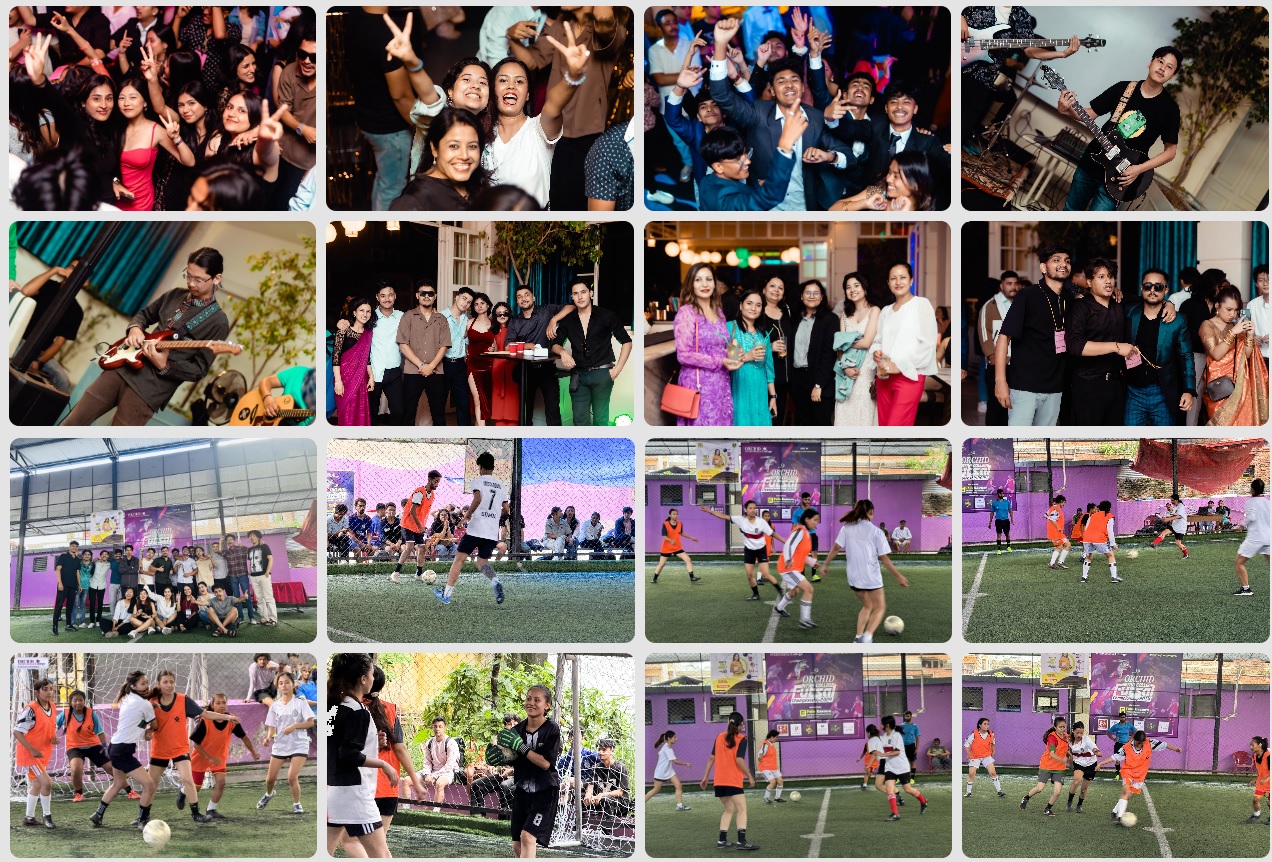
College activities have included a national conference and orientation sessions for new students. Orientation introduces students to the college environment, faculty members, academic expectations, and peer groups.
The student calendar has also included games and sports events, Guru Purnima observances, Bollywood Night, Prom Night, and Holi activities. These events add cultural, social, and recreational elements to college life without replacing the academic requirements of the programs.
Clubs, societies, sports, and volunteer activities offer additional ways for students to participate outside regular classes. The sports provision includes a futsal ground used for football, cricket practice, and related activities.
OCMT has a focused program portfolio rather than a large collection of unrelated degrees. Its two technology programs address information technology and artificial intelligence, while its management programs cover undergraduate business education and postgraduate management study.
The curricula also create several points of connection between the two academic areas. BIT includes management and technical communication. BTech AI includes report writing, presentation, and professional ethics. BBA includes database management systems, management information systems, and e-commerce. MBA includes information technology management and digital-business electives.
This combination is relevant for students seeking a college where computing and management are taught within the same academic setting. The choice between programs still depends on the student’s previous education, subject interest, eligibility, and preferred level of study.
Admission requirements vary by program. Technical and management courses have separate academic eligibility rules, entrance provisions, and assessment structures under Purbanchal University.
Applicants need to consider the exact program title, entry qualification, required subjects, intake session, available seats, and entrance procedure before applying. The MBA has both fall and spring seat allocations, while the undergraduate programs have their own listed intake capacities.
Orchid College of Management & Technology is a Purbanchal University-affiliated college in Gaushala, Kathmandu. Established in 2024 AD, it offers BIT, BTech in Artificial Intelligence, BBA, and MBA programs.
Its academic structure includes lectures, tutorials, laboratory sessions, projects, case studies, presentations, internships, seminars, research, and thesis work, depending on the program. Computing laboratories, a digital electronics laboratory, library resources, workshops, conferences, and student activities support the academic setting.