Rajdhani Model College (RMC) is located at Devkota Marga, Pipalbot, Old Baneshwor, Kathmandu. Established in 2013 and affiliated with Pokhara University, the college works across management, hospitality, and information technology education.
Its academic portfolio consists of the Bachelor of Business Administration (BBA), Bachelor of Hotel Management (BHM), Bachelor of Computer System and Information Technology (BCSIT), and Master of Business Administration (MBA) offered in an evening shift.
RMC was founded by academicians and professionals with backgrounds in education, research, management, and entrepreneurship. Its academic approach combines classroom study with assignments, presentations, practical work, projects, workshops, guest sessions, field exposure, and internships according to the structure of each program.
The college's affiliation with Pokhara University places its degree programs within the university's academic, curriculum, and examination framework.
| Particular | Details |
|---|---|
| College: | Rajdhani Model College (RMC) |
| Established: | 2013 |
| Location: | Devkota Marga, Pipalbot, Old Baneshwor, Kathmandu, Nepal |
| Affiliation: | Pokhara University |
| Undergraduate Programs: | BBA, BHM, BCSIT |
| Graduate Program: | MBA – Evening Shift |
| Academic Areas: | Management, hospitality, computer systems and information technology |
| Email: | info@rmccollege.edu.np |
| Phone: | 01-4471162, 4465705 |
| P.O. Box: | 9327 |
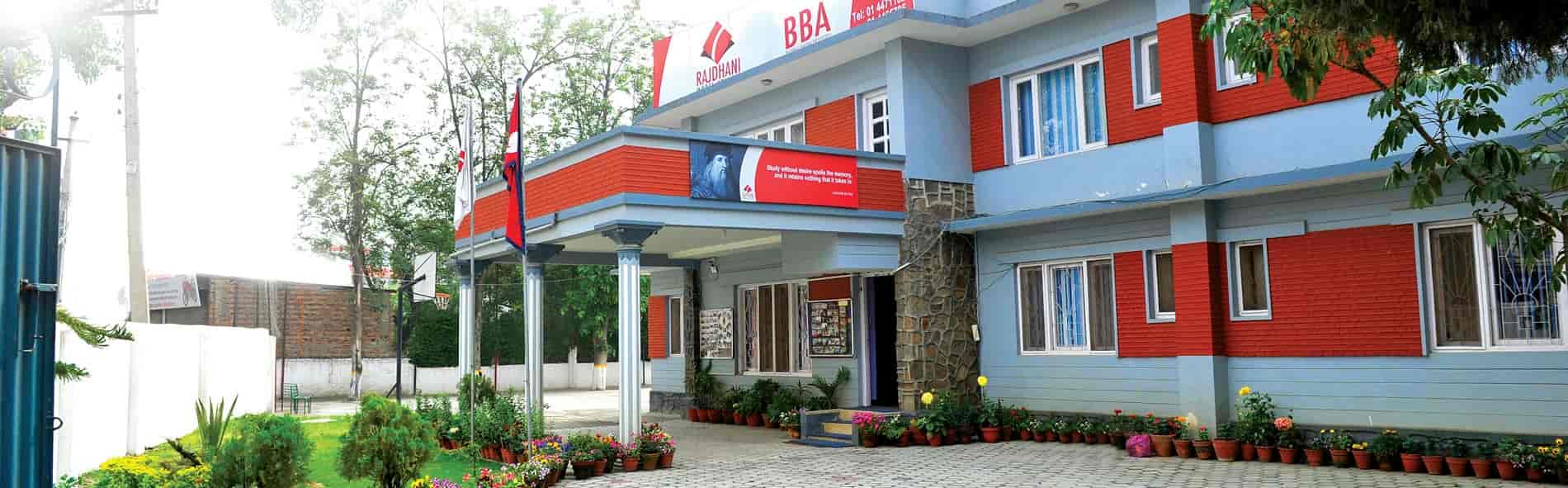
RMC's stated vision focuses on strengthening business education through a pragmatic curriculum suited to wider market needs. Its mission is to develop professionals, managers, and leaders who can contribute to the growth of corporate Nepal.
The college identifies five institutional values:
Honesty and Integrity
Adherence to Regulation
Mutual Respect
Continuous Learning
Personal Accountability
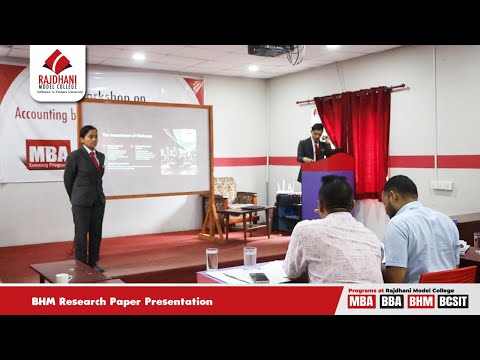
These values are reflected in an academic environment that places importance on both subject knowledge and student participation. Regular teaching is supplemented by presentations, discussions, projects, practical exercises, seminars, workshops, field exposure, and other program-specific activities.
Faculty involvement also extends beyond classroom instruction. Academic staff have backgrounds in areas including teaching, research, entrepreneurship, and management and contribute to academic practices and student-related activities.
The four programs at RMC cover different academic and professional areas. BBA focuses on business and management, BHM on hospitality operations and management, BCSIT on computing and information systems combined with management, and MBA on graduate-level management education.
| Program | Academic Structure | Main Study Area |
|---|---|---|
| BBA | 4 years, 8 semesters, 120 credits | Business and management |
| BHM | 4 years, 8 semesters, 120 credits | Hospitality and hotel management |
| BCSIT | 4 years, 8 semesters, 127 credits | Computing, information systems, and management |
| MBA – Evening | 60 credits, 6 trimesters | Graduate management education |
The Bachelor of Business Administration (BBA) is a four-year undergraduate program organized over eight semesters with 120 credits.
It introduces students to the main functional areas of business and management. Areas covered include accounting, finance, marketing, human resource management, and other management-related subjects.
At RMC, the academic setting for BBA extends beyond regular lectures. Seminars, workshops, guest lectures, conferences, assignments, and presentations are used alongside the curriculum. These activities require students to discuss business issues, present ideas, work with cases, and apply classroom concepts through academic tasks.
Among RMC's undergraduate programs, BBA is the most broadly focused on business administration. It differs from BHM, which is directed toward hospitality, and BCSIT, which combines management study with computing and information systems.
The Bachelor of Hotel Management (BHM) is a four-year program spread over eight semesters. The program carries 120 credit hours, including coursework, project work, and internship.
The curriculum combines management education with the operational areas of hospitality. Students study subjects connected with food production, food and beverage service, accommodation operations, room division, hospitality communication, accounting, and management.
Teaching combines theory with practical and applied work. Depending on the subject, students take part in demonstrations, practical classes, case discussions, project assignments, presentations, and field visits.
Industrial exposure is an important part of the program. Internship activity takes place during the seventh and eighth semesters, with 48 weeks allocated for industry experience. Students may work across hospitality functions such as food production, food and beverage service, room division and accommodation operations, front desk, events, bakery, bar, casino, in-flight catering, and related areas.
Students record their observations and complete reports connected with their internship experience. The sixth-semester project also involves applied academic work. Students may prepare a business plan for a hospitality-related venture or undertake research in an area of tourism and hospitality, followed by a presentation.
BHM therefore places a stronger emphasis on practical hospitality operations and extended industry exposure than the other undergraduate programs offered at RMC.
The Bachelor of Computer System and Information Technology (BCSIT) is a four-year program structured over eight semesters. Students complete 127 credit hours through coursework, project work, and internship.
BCSIT was previously named Bachelor of Computer Information System (BCIS). The program combines computer systems and information technology with business and management education.
Its academic scope includes computer systems, hardware, software, programming, information technology, database management, networks, data-related study, business foundations, and managerial applications.
The curriculum is organized around several components:
Foundation courses covering areas such as communication, economics, statistics, mathematics, and the legal environment
Management core courses
Computer information systems core courses
Concentration courses
Project work
Internship
The capstone project requires students to complete independent work involving field-based information and prepare a formal report. The internship lasts six to eight weeks and introduces students to organizational work outside the classroom.
BCSIT classes may also use case studies, group discussions, project assignments, field visits, and presentations. This combination makes the program distinct within RMC because computing, information systems, and management are studied within one undergraduate degree.
The Master of Business Administration (MBA – Evening) is RMC's graduate-level management program.
The evening arrangement is designed to accommodate graduate management study outside a conventional daytime schedule. It has particular relevance for working students while remaining suitable for non-working students seeking graduate business education.
Under the Pokhara University MBA structure, the program carries 60 credit hours and is completed across six trimesters.
Its curriculum includes foundation and analytical courses, management core subjects, functional areas, integrative courses, concentration and elective work, practicum modules, a consultancy project, and internship.
Teaching methods include classroom discussions, presentations, group work, case analysis, guest sessions, simulations, projects, and other applied learning activities.
The evening shift also creates a classroom environment in which students from different professional backgrounds may bring workplace perspectives into management discussions.
Admission requirements differ across the four programs. Undergraduate applicants must meet the academic entry requirements attached to the relevant Pokhara University program, while MBA applicants must have completed the required level of prior university education.
| Program | Academic Eligibility | Selection |
|---|---|---|
| BBA | Intermediate/Higher Secondary or equivalent with the required academic standard | Admission test |
| BHM | 10+2/PCL or equivalent; minimum CGPA 1.80 with at least D in each subject, or 45%/second division | Entrance test; interview may be used |
| BCSIT | 10+2/PCL or equivalent with second division or equivalent | Entrance test conducted by the concerned college |
| MBA | Minimum 15 years of formal education and at least CGPA 2.0 or 45% at bachelor's level | Admission test and interview |
For BCSIT, applicants submit the completed application form, official transcripts, and properly attested copies of academic certificates. Eligible candidates take an entrance test, and an interview may also be used during final selection.
The BHM admission process follows a similar sequence. Applicants first submit the required application and academic records. Eligible candidates then take the entrance test, while an interview may form part of the final selection process.
For MBA admission, an applicant needs at least 15 years of formal education, consisting of 12 years of schooling followed by a bachelor's degree of at least three years. The minimum academic requirement is a CGPA of 2.0 or 45 percent at bachelor's level. Admission considers the entrance examination, personal interview, and previous academic record.
RMC uses different teaching methods according to the nature of each program. A management classroom, hospitality practical session, and information technology class require different forms of learning, and the college's academic activities reflect those differences.
Common teaching and learning activities include:
Case studies
Classroom and group discussions
Individual and group presentations
Term projects and project assignments
Guest lectures
Seminars and workshops
Conferences
Industrial visits and field trips
Practical sessions and demonstrations
Research-oriented assignments
Internship and workplace exposure
ICT-supported learning resources
BBA students primarily encounter applied management learning through projects, discussions, seminars, case work, and presentations.
BHM has a larger practical component because students must develop operational knowledge in areas such as food production, service, accommodation, and other hospitality functions. The long internship period further connects the curriculum with workplace experience.
BCSIT combines technical coursework with projects, field activities, presentations, and internship. Students therefore work with both computer-related subjects and organizational applications.
MBA students take part in case analysis, group work, presentations, simulations, projects, guest sessions, and other management-focused activities at graduate level.
RMC maintains facilities that support academic study and student activities. The library includes textbooks, reference materials, journals, magazines, and previous examination papers.
Computer and IT laboratory facilities support technology-related learning, while Wi-Fi access is available in areas including classrooms, the library, and cafeteria.
Campus facilities include:
Library and reference resources
Computer and IT laboratories
Wi-Fi access
Cafeteria
Basketball facilities
Badminton facilities
Table tennis
Outdoor game areas
Sports activities and competitions provide students with opportunities to take part in physical activity and teamwork outside regular classes.
Student life at RMC includes academic, extracurricular, and community-oriented activities.
Students have participated in social welfare work such as volunteering, health camps, cleanliness activities, and aid distribution. These activities provide a structured way to take part in community work alongside academic study.
Internship and industry exposure are also significant parts of student learning. Their role varies by program. BHM and BCSIT include formal internship requirements, while the MBA curriculum also contains internship and project components.
Industry visits, guest speakers, mentors, competitions, fairs, seminars, and workshops are used in relevant academic areas. These activities connect classroom subjects with professional settings without replacing the formal curriculum.
RMC includes scholarships and financial aid within its student-support arrangements. This support is connected with the institution's emphasis on making higher education accessible to students from different backgrounds.
The main distinction between RMC's programs lies in their academic focus.
Students interested in broad business functions may consider BBA, which covers areas such as management, accounting, finance, marketing, and human resource management.
BHM is more suitable for students whose academic interest is centered on hospitality. Its structure includes practical training and substantial industrial exposure in addition to management subjects.
BCSIT combines computing, information systems, and management. It is therefore suited to students who want to study technology within an organizational and business context.
MBA is a graduate program for students who have already completed a bachelor's degree and want further study in management. Its evening shift makes it possible to undertake graduate management education outside the standard daytime timetable.
Together, these four programs give RMC a concentrated academic scope covering business, hospitality, information technology, and graduate management education.
Rajdhani Model College is situated at Devkota Marga, Pipalbot, Old Baneshwor, Kathmandu.
| Contact Field | Details |
|---|---|
| Address: | Devkota Marga, Pipalbot, Old Baneshwor, Kathmandu, Nepal |
| Phone: | 01-4471162, 4465705 |
| P.O. Box: | 9327 |
| Email: | info@rmccollege.edu.np |
| Website: | www.rmccollege.edu.np |
RMC operates as a Pokhara University-affiliated college with four degree programs: BBA in business administration, BHM in hospitality management, BCSIT in computer systems and information technology with management components, and MBA Evening at graduate level. Across these programs, academic study is supported by projects, presentations, practical work, field exposure, industry interaction, and internship according to the requirements of each curriculum.
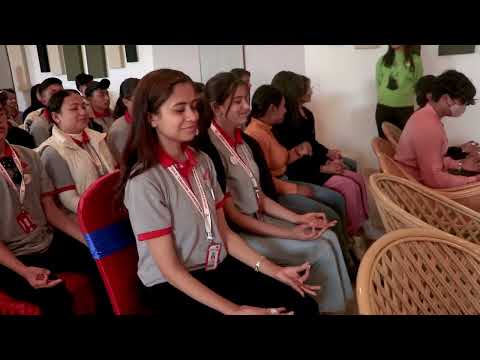
Rajdhani Model College is located at Devkota Marga, Pipalbot, Old Baneshwor, Kathmandu, Nepal.
Rajdhani Model College is affiliated with Pokhara University.
The college offers four degree programs:
Bachelor of Business Administration (BBA)
Bachelor of Hotel Management (BHM)
Bachelor of Computer System and Information Technology (BCSIT)
Master of Business Administration (MBA – Evening Shift)
BBA, BHM, and BCSIT are four-year undergraduate programs divided into eight semesters. BBA and BHM carry 120 credits, while BCSIT requires 127 credits.
Yes. RMC offers a Master of Business Administration in an evening shift. The program is designed for graduate management study and is suitable for applicants who meet the required bachelor's-level eligibility.
Admission requirements vary by program. Undergraduate applicants must meet the academic eligibility prescribed for the relevant program and complete the required entrance process. MBA applicants must meet the bachelor's-level academic requirement and complete the applicable admission test and interview process.
Yes. Depending on the program, students take part in projects, presentations, case studies, practical sessions, field visits, seminars, workshops, guest lectures, industrial exposure, and internships.
Yes. BHM includes extended industry exposure during the seventh and eighth semesters as part of the academic program.
Yes. BCSIT includes project work as well as an internship component, allowing students to combine computing and information technology study with applied organizational experience.
Campus facilities include library and reference resources, computer and IT laboratories, Wi-Fi access, a cafeteria, basketball facilities, badminton facilities, table tennis, and outdoor game areas.
Rajdhani Model College includes scholarships and financial aid within its student-support arrangements.
RMC has a focused academic portfolio covering business and management, hospitality management, computer systems and information technology, and graduate management education.