Samayathan Multiple Campus (समयथान बहुमुखी क्याम्पस, खरेन्द्रपुर, कपिलवस्तु) is a community-based higher education institution in Shivraj Municipality-4, Kharendrapur, Kapilvastu, Lumbini Province, Nepal. Established in 2070 BS (2013 AD), the campus was founded through the joint efforts of local educationists, social workers, teachers, students, intellectuals, public representatives, and community members who wanted accessible university education within the local area. The institution operates under the affiliation of Tribhuvan University and offers Bachelor of Business Studies and Bachelor of Arts at the bachelor level.
The campus was created for students who faced economic, geographic, and social barriers to higher education, especially students from rural communities, girls, Dalits, Janajatis, and other educationally disadvantaged groups. From a small beginning that relied on the physical resources of Samayathan Secondary School, the institution has grown into a functioning public campus with academic buildings, hostel facilities, transportation support, scholarship provisions, and a developing digital academic environment. Its institutional direction combines local access, structured university study, and community participation.
Established: 2070 BS (2013 AD)
Type: Community-based public campus
Location: Shivraj Municipality-4, Kharendrapur, Kapilvastu, Lumbini Province, Nepal
Affiliation: Tribhuvan University
Programs Offered: Bachelor of Arts (BA), Bachelor of Business Studies (BBS)
Academic System: Four-year TU-affiliated bachelor programs under the annual structure
Student Strength: 413 students
Human Resources: 13 teaching staff and 4 administrative staff
Institutional Support: University Grants Commission (UGC), Shivraj Municipality, provincial government, and federal government support
Scholarship Support: Need-based and merit-linked tuition support
Facilities: Library, hostel, transport, seminar hall, playground, e-learning portal, counseling, computer and science-related resources
Website: samayathancampus.edu.np
Phone: +977-9847370669, +977-9857050008, +977-9857037581
Samayathan Multiple Campus emerged from a local demand for university education in and around Kharendrapur. Community members from Chanai, Thuniya, Manpur, Birpur, Bishunpur, Jawabhari, Lalpur, Shivpur, and Shivdadi worked together to establish a public campus after recognizing that many families could not send their children outside the district for higher studies. The early organizing effort gained shape through a general gathering held at Samayathan Secondary School on 3rd Falgun 2067 BS. That step became the foundation of the campus.
The early years involved repeated organizational work, fundraising, and community mobilization. A proposed campus management structure was first formed for a B.Ed. initiative, though that affiliation was not obtained at the time. A reformed management committee later pushed the institution forward, and the campus secured affiliation for BBS on 17th Ashwin 2070 BS and for BA on 16th Mangsir 2070 BS. The first BBS class began with ten students and used the physical infrastructure of Samayathan Secondary School.
Community finance played a central role in the campus’s establishment. Money was borrowed by campus management members and teaching staff to secure affiliation, and a Dhandhanchal Maha Yagya was organized in Magh 2070 BS to clear affiliation-related expenses and strengthen the financial base. This pattern of local participation remained part of the campus identity. Land and financial support from donors and stakeholders later helped the institution move beyond its borrowed beginnings.
The campus identifies itself as a public, non-profit academic institution serving socio-economically less privileged communities in Kapilvastu and nearby districts. Its mission focuses on producing skilled human resources with patriotic and moral values. The broader institutional goals include widening higher education access, promoting research-oriented learning, strengthening co-curricular growth, modernizing academic and administrative systems, and enriching library and teaching resources.
Its development has also been shaped by public-sector support. The campus receives assistance from the University Grants Commission (UGC), Shivraj Municipality, the Lumbini Provincial Government, and the Federal Government of Nepal. It is also a member of the Nepal Public Campus Association. Over time, it has moved from a minimal-resource campus into an institution with permanent buildings, a hostel, a seminar hall, transportation support, and digitization work.
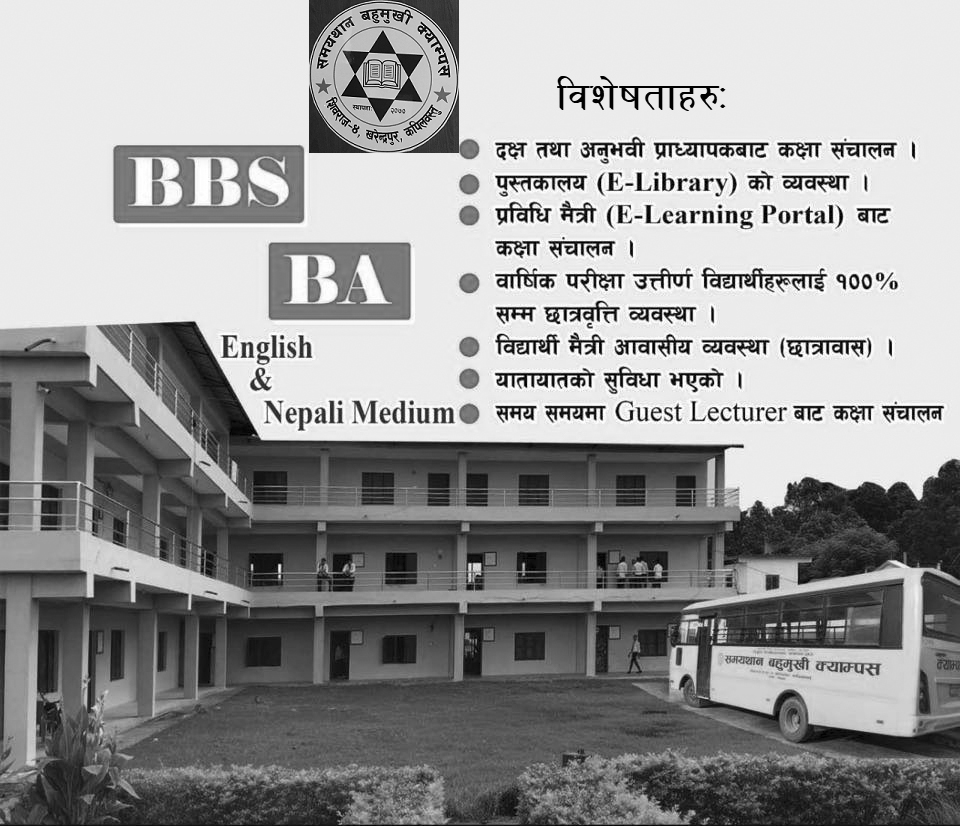
Samayathan Multiple Campus currently offers two TU-affiliated bachelor programs. Both are four-year programs conducted under the annual structure and follow the applicable rules, calendar, examination system, and academic procedures of Tribhuvan University.
A four-year program under the Faculty of Management, Tribhuvan University. The BBS program is annual-examination based and focuses on the study of business, administration, and management practice. Its academic purpose is to build broad knowledge of organizations and management while preparing students for further study and work in business, industry, entrepreneurship, and public institutions.
The program follows the wider TU BBS framework, which combines foundation and core business courses with concentration options. The course pattern includes English, statistics, economics, business law, communication, accounting, financial management, organizational behavior, business environment, taxation, entrepreneurship, research methods, and concentration areas such as accounting, finance, management, and marketing. Final project work is part of the fourth year.
A four-year program under the Faculty of Humanities and Social Sciences, Tribhuvan University. The program follows the TU annual structure and carries a total of 2,000 marks, with 500 marks assigned to each academic year.
Under the TU framework, students study compulsory English, Nepali, and Nepal Studies, along with major and elective subjects. Written examinations carry 70 marks and internal assessment carries 30 marks for each subject. At the campus level, BA was launched in 2075 BS with specializations in Nepali, Sociology, and Economics according to local educational demand.
These two programs reflect the campus’s dual academic focus: management education under TU’s Faculty of Management and humanities education under TU’s Faculty of Humanities and Social Sciences. The campus has also expressed the aim of expanding its academic portfolio in the future by adding B.Ed. and MBS.
Admission to bachelor-level study at Samayathan Multiple Campus follows the regulations of the concerned faculty, the campus, and Tribhuvan University. The general process is structured and follows the usual sequence used for TU-affiliated bachelor programs.
The campus publishes or announces admission notices for available programs.
Eligible applicants submit the prescribed application form along with the required academic documents.
Admission may involve faculty or campus criteria, merit-based selection, or other procedures applied by the institution and TU framework.
Selected students complete admission by submitting final documents and paying the prescribed fees.
Academic registration, examinations, and result processes follow TU rules, guidelines, and the annual academic calendar.
Final examinations for annual-system bachelor programs are conducted by Tribhuvan University through the Office of the Controller of Examinations.
For admission, applicants are expected to have completed Grade 12 or an equivalent qualification from NEB, TU, or another board or university recognized by TU, and meet the applicable grade and faculty requirements of the campus and concerned faculty.
The campus mentions core admission records for enrollment, and the standardized TU bachelor admission context also supports the broader set of documents generally required for admission processing.
Self-attested photocopies of marksheet or transcript
Character certificate
Transfer certificate from the previous institution
SEE, Grade 11, and Grade 12 academic records
Original migration certificate
Passport-size photographs
Completed campus admission or application form
Admission fee payment receipt
Citizenship certificate or birth certificate copy
Entrance scorecard, if required by the program or campus
Equivalence certificate, if the previous qualification is from a foreign board or university
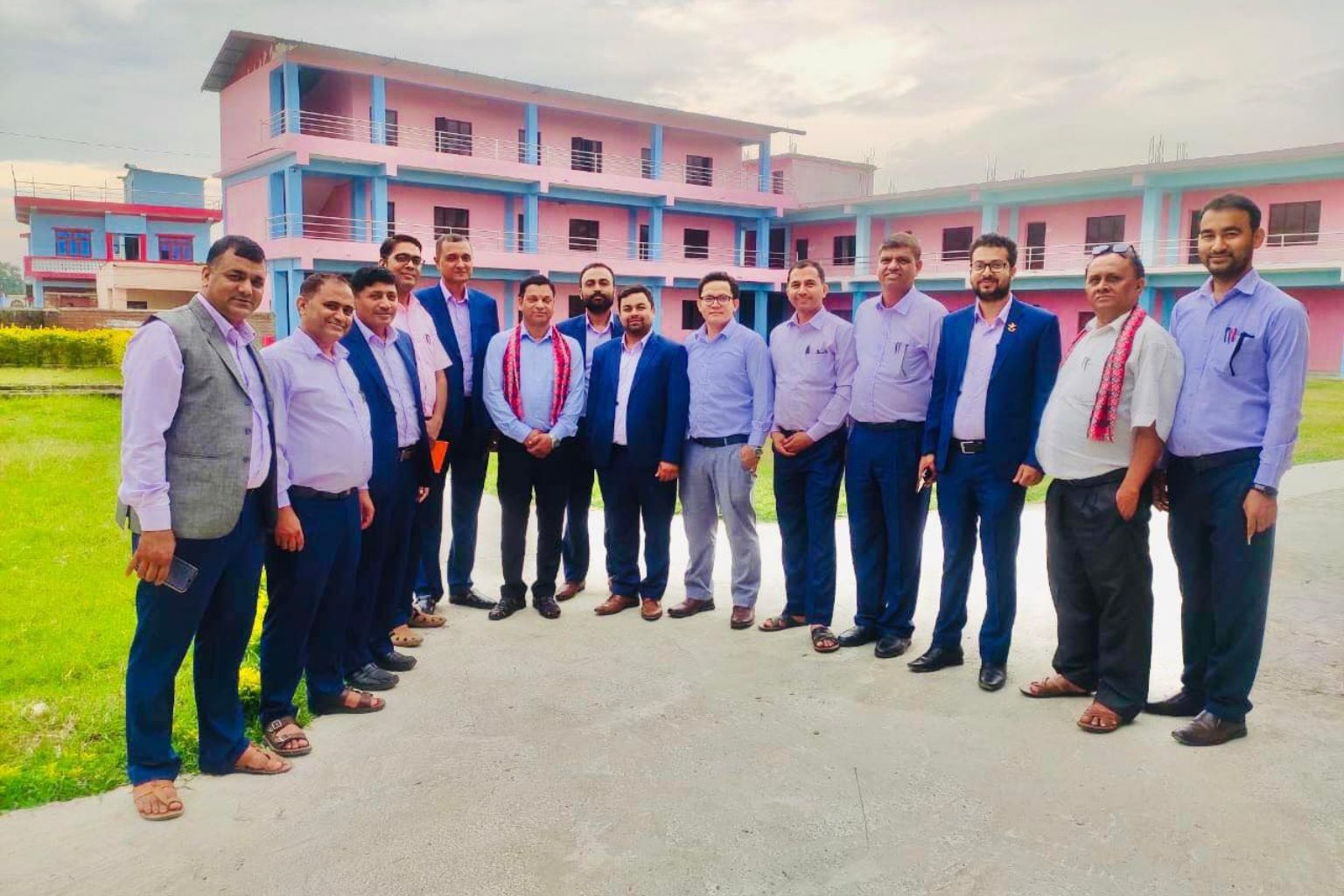
The campus identifies qualified and experienced professors as one of its central academic strengths. It also notes the use of guest lecturers from time to time, which adds external academic exposure to the learning environment. The available academic staffing record shows 13 teaching staff, supported by an academic department that plans, implements, and monitors educational programs, oversees syllabus completion, maintains academic standards, manages student assessment processes, and provides academic counseling.
Teaching at the campus is shaped by both classroom instruction and applied learning. The institution describes its academic approach as time-relevant and linked to curriculum outcomes. It places emphasis on the use of technology in learning and on research-oriented teaching. The campus also mentions compulsory pre-internship arrangements in relevant institutions to connect academic study with practical settings.
The learning methods identified by the campus include project work, group discussion, problem-solving, field visits, question-answer practice, demonstration, inductive learning, deductive learning, and exploratory learning. This shows that instruction is not limited to lecture delivery alone. The combination of classroom teaching, assignments, discussion, and guided practical exposure helps align the campus environment with the needs of undergraduate study under TU.
The institution also reports the use of a tech-friendly e-learning portal and software-based information management. Administrative and academic information is communicated through the website, and digitization is part of the campus’s recent institutional progress. This digital direction supports both academic operations and student communication.
The physical growth of Samayathan Multiple Campus is one of its clearest institutional developments. What began without land, a building, or furniture has expanded into a campus with permanent structures and supporting facilities for learning and student life.
Three-storey 19-room academic building
One-storey two-room eastern building
Four-room southern building
Assembly hall building
Ten-room one-storey hostel building
Around 12 kattha of land
Library with course books, reference books, journals, and plans for separate e-library access
Tech-friendly e-learning portal
Seminar hall
Playground
Canteen
Boys’ hostel with capacity for 30 students
Campus bus for student transportation
Computers, printers, laptops, photocopier, inverter, and water filters
Classrooms furnished with desk-bench sets, chairs, tables, cabinets, and rostrums
Science-related, computer-related, multimedia, counseling, journal, sports, dance, music, tour, and ECA support
Safe drinking water through water purification support and hand pumps
Toilets on every floor of the main academic block, with separate facilities for boys and girls
Attached toilets and bathrooms in the boys’ hostel
The campus is also physically accessible. It lies near the East-West Mahendra Highway and close to the Kharendrapur and Mahajgunj link road, around three kilometers east of Chandrauta. Transport service connects students from Bahadurgunj, Jawabhari, Chandrauta, and Shivpur. The same bus facility is also used for travel to examination centers and educational tours.
The infrastructure plan extends beyond current assets. The campus mentions continued work on digital and academic facilities such as an e-library, an e-portal or LMS, a video recording room, and classroom projection or smart-board support.
Student life at Samayathan Multiple Campus is shaped by its public-campus character, local accessibility, and community connection. The institution serves many students from socio-economically weaker backgrounds, including students from rural settlements and neighboring districts. This gives the campus a social role beyond classroom instruction.
The physical setting is practical for commuting students and also supportive of those coming from farther areas. Hostel provision helps students who need residential support, while the bus service expands day access. The presence of a library, seminar hall, sports-related opportunities, counseling, and campus-based tours adds structure to the student experience.
Academic life is tied closely to community life. Students are involved in training and project work with cooperatives and financial institutions. The campus also opens its seminar hall for wider local use by public bodies, social organizations, and other groups. This keeps the institution connected to the surrounding society and gives students exposure to public activities beyond routine classes.
The general campus environment is described as peaceful, and the institutional culture places value on discipline, responsibility, staff commitment, and community participation. For students seeking a local TU-affiliated campus with hostel access, transport support, and a community-oriented academic setting, the campus offers a practical study environment.
The campus connects student development with co-curricular and extracurricular activities alongside formal academics.
Sports participation and support
Tree plantation activities
Municipality-level sanitation campaigns
Participation in fairs and festivals
Educational tours
Dance and music-related activities
Counseling support
Group project work and field-based learning
Seminar hall activities and public programs
Guest lecture sessions
Training and project involvement with cooperatives and financial institutions
Scholarship support is a major part of the campus structure, especially for students facing financial barriers.
Scholarship support is available for deserving students.
The campus follows the principle that no student should be deprived of education because of financial hardship.
Support has been directed toward women, Dalits, Janajatis, persons with disabilities, poor students, and talented students.
At the time of first-year enrollment, tuition scholarship support ranges from 25 percent to 70 percent based on Grade 12 GPA.
Students who pass the annual examination in first division receive a 100 percent tuition fee scholarship.
Students who pass the annual examination receive a 50 percent tuition fee scholarship.
The campus also notes a moderate fee structure for its available programs.
Institutional development has received financial support from UGC, three levels of government, and community contributors.
The institutional journey of Samayathan Multiple Campus includes several notable milestones in establishment, growth, and infrastructure.
Community decision to establish the campus was taken on 3rd Falgun 2067 BS.
BBS affiliation was obtained on 17th Ashwin 2070 BS.
BA affiliation was obtained on 16th Mangsir 2070 BS.
The first BBS batch started with ten students.
BA was launched in 2075 BS with specializations in Nepali, Sociology, and Economics.
The campus has been selected under the UGC Excellence Management Program for Higher Education for digitization work.
Academic and administrative information is now communicated through the campus website.
The campus has expanded to 413 students, 13 teaching staff, and 4 administrative staff.
Permanent infrastructure now includes a three-storey academic building, hostel, seminar hall, library, and transportation support.
Land holding and physical assets have grown significantly since establishment.
The institution has set a target of obtaining QAA status from UGC.
Students and families looking at Samayathan Multiple Campus may find the following points useful in decision-making:
Community-based campus with a local access mission
TU-affiliated BA and BBS programs
Four-year bachelor study under the annual structure
Scholarship support linked to need and academic performance
Moderate fee environment
Qualified and experienced teachers, with guest lectures at intervals
Research-oriented and technology-supported teaching approach
Hostel facility for students coming from farther areas
Transportation facility connected to nearby routes
Library, seminar hall, playground, counseling, and student support resources
Strong community backing from local stakeholders and public bodies
Academic setting designed for students from rural and underrepresented backgrounds
The leadership messages attached to the campus reflect two recurring themes: access and collective responsibility. Chairperson Mr. Ishwari Prasad Pandeya places emphasis on the campus as a community-managed institution created to open university education for underprivileged students. His message recognizes the role of the Campus Assembly, Campus Management Committee, teaching and non-teaching staff, founders, well-wishers, parents, students, and stakeholders in the institution’s development.
Campus Chief Mr. Sishir Lamichhane highlights the academic side of that same journey. His message points to practical and research-focused education, the trust of the community, and the role of transparent administration, committed professionals, and disciplined students in campus growth. Together, these leadership statements present the institution as a campus built through shared effort rather than private initiative.
Samayathan Multiple Campus, Kapilvastu, stands as a locally established public campus created to widen access to university education in a region where many students previously faced barriers to higher study. Its history shows sustained community participation, public support, and steady institutional growth from borrowed classrooms to a structured campus with academic buildings, hostel support, transportation, scholarships, and a developing digital environment.
For students seeking TU-affiliated bachelor study in management or humanities within Kapilvastu, the campus offers a grounded academic setting shaped by local needs. Its BA and BBS programs, scholarship provisions, faculty-led teaching, practical learning methods, and community-linked student life make it a relevant option for higher education in the area.
Contact Samayathan Multiple Campus's administrative office for detailed information on the course, admissions, location, fees, scholarships, facilities, counseling or eligibility.
Samayathan Multiple Campus
Phone Number: +977-9847370669, +977-9857050008, +977-9857037581
Email: samayathanmcampus2070@gmail.com
Website: https://www.samayathancampus.edu.np
Location: Shivraj Municipality- 4, Kharendrapur, Kapilvastu, Lumbini Province, Nepal
Samayathan Multiple Campus is a community-based public campus established in 2070 BS (2013 AD) in Shivraj Municipality-4, Kharendrapur, Kapilvastu, Lumbini Province, Nepal.
The campus is affiliated with Tribhuvan University for its bachelor-level programs.
The campus offers Bachelor of Business Studies (BBS) under the Faculty of Management and Bachelor of Arts (BA) under the Faculty of Humanities and Social Sciences.
The campus is located in Shivraj Municipality-4, Kharendrapur, Kapilvastu, near the East-West Mahendra Highway in Lumbini Province.
Yes. The campus provides scholarship support for deserving students, including support for women, Dalits, Janajatis, persons with disabilities, poor students, and talented students. It also applies tuition scholarship schemes based on Grade 12 GPA and annual examination results.
Students have access to academic buildings, a library, seminar hall, playground, transportation, hostel support, drinking water, toilets, counseling, and various academic and extracurricular resources.
Yes. The campus has a boys’ hostel with ten rooms and capacity for 30 students.
Admission follows the rules of the campus, the concerned TU faculty, and Tribhuvan University. Students submit an application form and academic documents, complete the required admission process, and follow TU registration and examination procedures.
The profile includes messages from Chairperson Mr. Ishwari Prasad Pandeya and Campus Chief Mr. Sishir Lamichhane.