Siddhartha Campus is a community-based higher education institution in Banaganga Municipality, Kapilvastu. Established in 1991 AD (2048 BS), the campus serves students from Banganga and nearby municipalities and rural areas who seek access to secondary, bachelor’s, and master’s level study within the district. It is affiliated with Tribhuvan University for higher education programs and the National Examinations Board (NEB) for Ten Plus Two programs.
The campus grew through local initiative and continues to function as a non-profit community institution with a strong public service orientation. Its academic structure, student support, facilities, scholarship priorities, and community participation reflect a campus model built around access, continuity of study, and long-term institutional development.
Established: 1991 AD (2048 BS)
Institution Type: Community, non-profit, co-educational campus
Location: Banaganga Municipality-1, Bungchi, Kapilvastu
Affiliation: Tribhuvan University and National Examinations Board (NEB)
Academic Levels: Ten Plus Two, bachelor’s, and master’s
Ten Plus Two Programs: Ten Plus Two in Education, Ten Plus Two in Humanities, Ten Plus Two in Management
Bachelor’s Programs: Bachelor of Arts (BA), Bachelor of Education (B.Ed.), Bachelor of Business Studies (BBS)
Master’s Programs: Master of Education (M.Ed.), Master of Business Studies (MBS)
Exam System: +2 under NEB; BA, B.Ed., and BBS under TU annual system; M.Ed. and MBS under TU semester system
Campus Land: 12 bighas
Teaching Faculty: 36 teaching faculty members
Library: Separate library building with e-library and more than 21,000 books
Computer Lab: 40 computers with internet access
Transportation: Bus service for students from longer distances
Siddhartha Campus (सिद्वार्थ क्याम्पस, वाणगंगा, कपिलवस्तु) was established to widen access to higher education for students from socio-economically less privileged backgrounds in Kapilvastu and nearby areas. From its beginning, the campus has focused on students who might otherwise have had to leave the district for further study, especially girls and educationally disadvantaged groups. Its location on the East-West Highway near the Banganga River has made it reachable for students from the surrounding catchment area.
The campus runs programs from Ten Plus Two to the master’s level under the two major academic frameworks used in Nepal: NEB for school-level higher secondary education and TU for university-level study. This structure allows students to continue their academic path within one institution across multiple levels and disciplines.
As a community campus, Siddhartha Campus has grown through local participation from residents, social workers, teachers, guardians, public representatives, and other stakeholders. Its institutional direction combines access, academic continuity, facilities growth, and support for students who face economic or social barriers. The campus vision centers on educational excellence in higher education, while its mission focuses on producing skilled and competitive human resources with moral and national values.
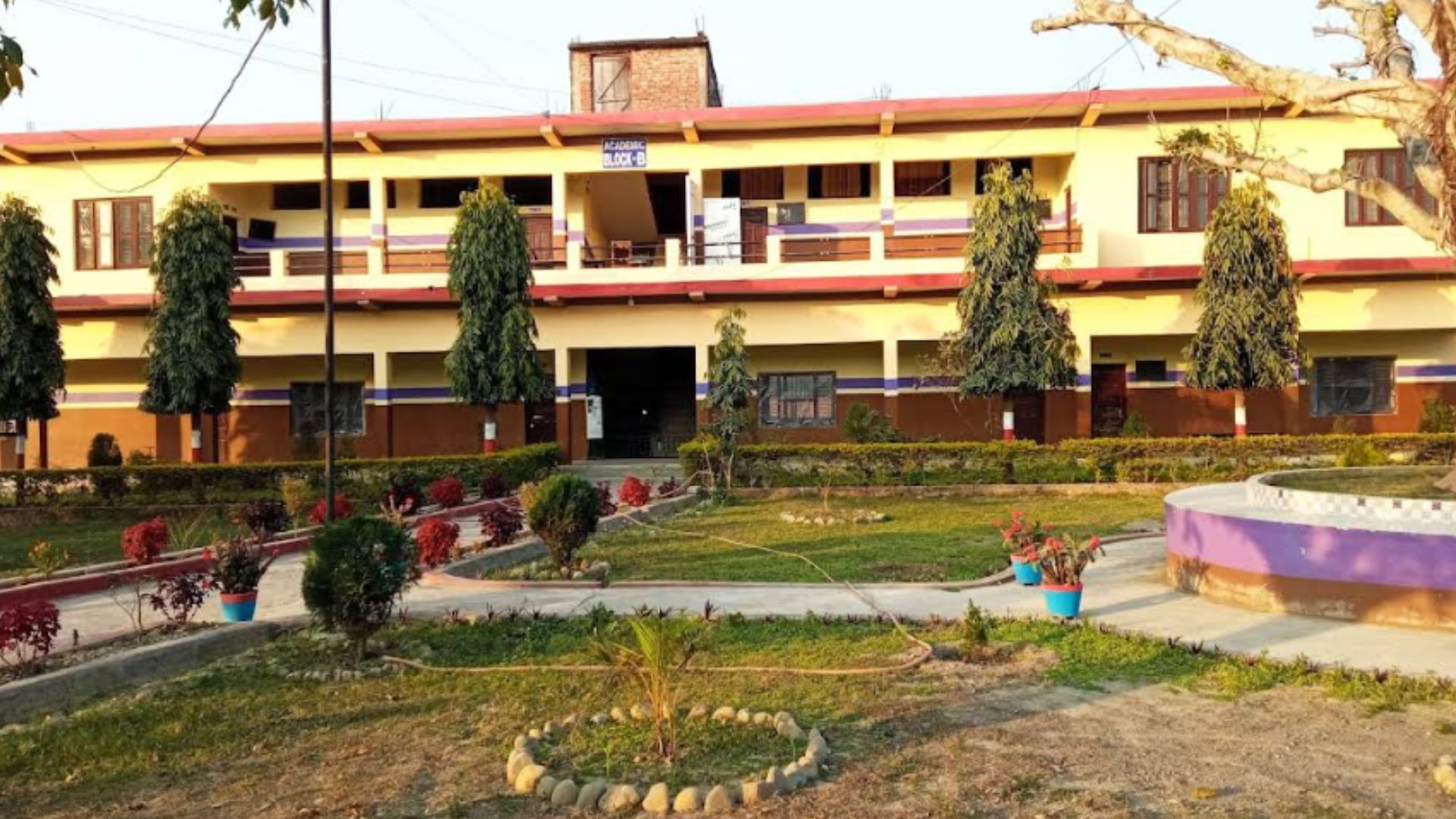
The campus emerged from a local effort to establish higher education opportunities within the area. A general gathering of education-minded community members and local stakeholders led to its formation in 2048 BS. The institution began by enrolling 155 students and running early classes from Bal Secondary School, Bairiya. As the demand for local higher education grew, the campus shifted to its present location in 2054 BS after community members arranged land and built its own structure.
Its academic expansion followed the educational needs of the region. The campus later started TU-affiliated bachelor’s education in 2058 BS. The BBS program began in 2062 BS, the BA program in 2064 BS, the M.Ed. program in 2065 BS, and the MBS program in 2070 BS. Over time, Siddhartha Campus moved from a modest local beginning to a multi-level institution serving students from Banganga Municipality and neighboring places such as Buddhabhumi, Kapilvastu, Sainamaina, Shitaganga, and nearby rural municipalities.
The campus identifies itself as a public, non-profit educational center. It was shaped by the local need to provide affordable and accessible education at a time when many families, especially in rural areas, could not send their children to urban centers for study. That social purpose remains visible in its scholarship priorities, its emphasis on disadvantaged groups, and its continued community links.
The institutional framework includes a campus assembly, management committee, campus chief, assistant campus chiefs, program coordinators, department heads, faculty members, and administrative staff. Administrative work is divided into examination, accounting, and library sections. The campus operates in morning and evening shifts, with bachelor’s classes generally run in the morning and master’s classes in the evening.
Siddhartha Campus offers academic programs at the higher secondary, bachelor’s, and master’s levels through NEB and TU.
Ten Plus Two in Education
Ten Plus Two in Humanities
Ten Plus Two in Management
These programs are NEB-affiliated and run as two-year full-time higher secondary programs. Admission to Grade 11 generally begins after SEE results, and class registration and subject registration are completed under the NEB framework. Class 12 is the final national board examination stage under NEB.
Bachelor of Arts (BA) – TU, Faculty of Humanities and Social Sciences, 4 years, annual system
Bachelor of Education (B.Ed.) – TU, Faculty of Education, 4 years, annual system
Bachelor of Business Studies (BBS) – TU, Faculty of Management, 4 years, annual system
At Siddhartha Campus, the B.Ed. program has run since 2058 BS. The major subject areas include English Education, Nepali Education, Health and Physical Education, and Mathematics Education. The BA program has included major areas such as Sociology and Rural Development. The BBS program has run since 2062 BS under TU.
For TU bachelor’s annual-system programs, final examinations are conducted through the Office of the Controller of Examinations according to TU rules and the applicable academic calendar.
Master of Education (M.Ed.) – TU, Faculty of Education, 2 years, 4 semesters
Master of Business Studies (MBS) – TU, Faculty of Management, 2 years, 4 semesters
The M.Ed. program runs in the semester system and the campus has operated postgraduate classes in areas such as Nepali, English, and Health and Physical Education. The MBS program runs under the Faculty of Management in the semester system. For semester-based master’s programs, semester-end examinations follow the Dean’s Office schedule and TU rules.
Admission at Siddhartha Campus varies by academic level and affiliation.
Admission to Grade 11 usually begins after the publication of SEE results.
Students submit the required application form and academic records.
Depending on the stream and campus process, admission may involve an entrance process, interview, or merit-based selection.
Enrollment and subject registration are completed under the NEB system.
For the referenced NEB eligibility standard, students seeking Grade 11 admission are required to have at least GPA 1.6 in SEE.
Admission notices are published by the campus in line with TU faculty and campus procedures.
Eligible applicants submit the prescribed application form and academic documents.
Students seeking admission to bachelor’s programs at Siddhartha Campus must pass the entrance examination conducted by the campus or the university.
Admission is made on the basis of merit after interviews and group discussions.
Selected candidates complete admission after document submission and fee payment.
Academic registration, examinations, and results follow TU rules and the applicable academic calendar.
Admission notices are published by the concerned campus, department, or faculty.
Eligible applicants submit the prescribed form and required records.
Admission may include an entrance examination depending on the program.
At Siddhartha Campus, entry to master’s programs also follows entrance, merit, interview, and group discussion procedures.
Final enrollment is completed according to TU rules and campus scheduling.
Document requirements differ by level.
SEE marksheet or grade sheet
SEE character certificate or school leaving certificate
Transfer certificate from the previous school
Migration certificate, if applicable
Citizenship certificate or birth certificate copy
Passport-size photographs
NEB Class 11 registration or subject registration form
Class 12 or equivalent academic transcript
Character certificate from the previous institution
Migration certificate, if the previous board or university is different
Transfer certificate from the previous school or college
Citizenship certificate or birth certificate copy
Passport-size photographs
Entrance examination scorecard, if required
Completed campus admission or application form
Admission fee payment receipt
Equivalence certificate for foreign qualifications, if applicable
Bachelor’s degree transcript or marksheet
Bachelor’s degree certificate or provisional certificate
Character certificate from the bachelor-level institution
Migration certificate, if the bachelor’s degree is from another university
Transfer certificate from the previous campus or college
Citizenship certificate or birth certificate copy
Passport-size photographs
Entrance examination scorecard, if required
Completed admission or application form
Admission fee payment receipt
Equivalence certificate for foreign qualifications, if applicable
Siddhartha Campus has 36 teaching faculty members. Among them are associate professors, lecturers, and full-time and contract teachers. The campus runs subject-based departments, including Management, English, Nepali Language and Education, Mathematics, Health and Physical Education, and Social Science. Each department has a committee led by a department head, which plans and carries out academic work within the department.
Teaching is supported by a departmental structure, internal examination procedures, and practical academic activities. The campus uses smart boards and multimedia projectors in its teaching-learning process. BBS classes are conducted in both English and Nepali medium. Practical work, field surveys, and practice teaching receive emphasis in relevant subjects, especially in education-related study.
The academic environment is not limited to classroom lectures. Departments also run workshops such as research report writing and dissertation writing. Students take part in subject-based training and workshop activities. The campus has also formed a Student Counselling Cell to guide students on academic and personal issues and to support counseling and employment-related guidance.
Internal evaluation is part of the campus academic system. In each academic session, three internal and unit examinations are arranged with continuous evaluation. The campus also analyzes student performance and adopts improvement measures based on results. This adds a layer of academic follow-up beyond final university or board examinations.
The campus runs bachelor’s classes mainly in the morning shift and master’s classes in the evening shift. This schedule helps accommodate students at different levels and supports multi-level program operation within one institution.
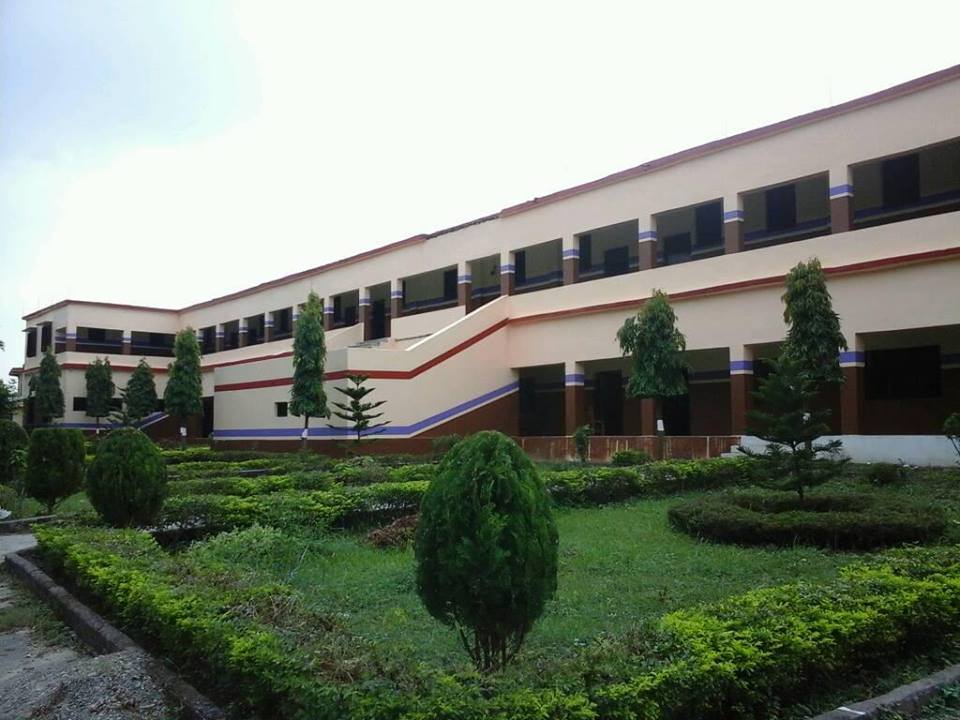
Siddhartha Campus has developed a broad set of academic and student facilities across its 12 bighas of land.
Four teaching buildings for academic use
Teaching Building A with classrooms, office space, staff room, departments, physical education laboratory, and store room
Teaching Building B with classroom space
Separate library building
E-library arrangement
More than 21,000 books in the library through a barcode system
Three additional classrooms on the upper floor of the library building
Computer lab with 40 computers
Internet access in the computer lab
Safe drinking water arrangements, including filtered water
Vehicle parking for bicycles, motorcycles, and cars
Student Union room
Cafeteria
Stage for internal programs
Separate toilets for male and female students
Additional staff toilets
Two large playgrounds covering about 3 bighas
Football field, basketball court, volleyball court, badminton court, and cricket pitch
Sports materials for multiple games
First aid room with support from Kapilvastu Community Hospital
Inquiry room
Assembly hall with around 800-seat capacity
Main entrance gate
Bus service for students from longer distances
The separate library building was built with support from the University Grants Commission (UGC). The combination of library space, e-library access, internet-based computer resources, and large assembly and sports facilities gives the campus a broad learning environment that extends beyond classroom teaching.
Student life at Siddhartha Campus reflects its community-based character. The campus includes students from rural areas of Kapilvastu and neighboring districts, with many from groups that have historically had less access to higher education. The institution has long placed attention on female students, Janajati students, Dalit students, and other educationally disadvantaged groups.
In the academic year 2080/81, the campus enrolled 1,124 students, including 276 male and 848 female students. This shows a strong female presence in the student body and aligns with the campus objective of increasing higher education access to students who may face social or economic barriers.
The Free Students’ Union plays an active role in campus life. It functions as a representative student body and helps manage co-curricular and extracurricular activities. The relationship among faculty, non-teaching staff, and students is presented as cooperative, with each group involved in campus activity and student support.
The campus atmosphere combines academic work with public participation. Community members, guardians, political representatives, local institutions, alumni, and stakeholders remain connected to campus events and assemblies. This creates a setting where campus life is linked closely with local society rather than separated from it.
Students also experience campus life through sports grounds, the library, assembly hall, workshops, counseling support, and social participation activities. The campus flower garden, open grounds, and accessible location add to the day-to-day student environment.
Games and sports competitions
Quiz contests
Speech competition participation
Student rallies
Cultural and public event participation
Workshops on research report writing
Workshops on dissertation writing
Subject-based training activities
Practice teaching
Field surveys
Community survey work
Health awareness programs
HIV/AIDS awareness activities
Human rights awareness programs
Gender-based violence and discrimination awareness interactions
Anti-drug awareness activities
Traffic awareness programs
Self-defense awareness programs
Street cleaning activities
Literacy rallies
Participation in Kapilvastu Festival and related exhibitions
These activities connect student learning with public awareness, communication, leadership, and community participation.
Scholarships for needy and deserving students
Scholarships for outstanding students admitted through merit-based processes
Priority support for poor, women, indigenous groups, Dalits, persons with disabilities, and educationally disadvantaged students
Continued scholarship support for extremely poor and socially disadvantaged students
Endowment support of Rs. 500,000 from Bishnu Prasad Gautam for scholarships targeted at poor, Dalit, and disabled students
The scholarship system is part of the campus social mission. It is linked not only to merit but also to access and inclusion. This is consistent with the institution’s founding purpose of widening higher education opportunities for students who face economic, social, and geographic barriers.
Established in 1991 AD (2048 BS) as a community campus in Kapilvastu
Expanded from local early classes to multi-level programs from +2 to master’s study
B.Ed. program started in 2058 BS
BBS program started in 2062 BS
BA program started in 2064 BS
M.Ed. program started in 2065 BS
MBS program started in 2070 BS
Received Nepal Chhatra Vidyapadak 2069 after securing first place in Nepal in bachelor’s level Faculty of Education through student Banantara Budathoki
Achieved repeated district, provincial, and national-level academic results in BA, B.Ed., BBS, and MBS
Obtained Quality Assurance and Accreditation (QAA) certificate from UGC in 2077 Ashadh 8
Identified as the first QAA-certified campus in Kapilvastu District
Selected in a national UGC improvement project competition among community campuses
Succeeded in Scheme C under the Second Higher Education Project of UGC
Built a separate library building with UGC support
Developed an e-library and barcode-based library management system
Systematized accounts and examination sections through software
Formed multiple units and committees for examination, extracurricular activities, research and publication, public relations, maintenance, and student counseling
Continued support from local community, institutions, and stakeholders across the campus development process
The campus has also recorded student-level achievements across different years in B.Ed., BBS, BA, and MBS, showing regular academic performance from district level to national level.
Community-based, non-profit institutional model
Tribhuvan University and NEB affiliation
Multiple study options from +2 to master’s level
Accessible location on the East-West Highway in Banaganga Municipality
Scholarship support for merit and disadvantaged groups
Strong female student participation
QAA-certified academic institution
Departmental academic management and internal evaluation system
Smart boards, multimedia teaching support, and practical academic work
Separate library building, e-library, and 40-computer lab
Sports grounds, assembly hall, cafeteria, first aid room, and student union facilities
Bus service support for students from longer distances
Ongoing community participation in campus development
Siddhartha Campus represents a long-running community effort to keep higher education accessible within Kapilvastu. Its growth from a locally initiated institution to a campus running NEB, bachelor’s, and master’s programs shows steady academic expansion shaped by public need rather than commercial orientation. The combination of TU and NEB affiliations, scholarship focus, departmental teaching system, practical learning activities, and broad campus facilities gives the institution a stable academic base.
The campus also stands out for the way it connects education with local participation. Its work in student support, social awareness activities, internal academic follow-up, and inclusion of disadvantaged groups reflects a campus model rooted in the needs of its region. For students seeking study options in Education, Humanities, Management, and related higher education pathways in Kapilvastu, Siddhartha Campus offers continuity from Ten Plus Two to the master’s level within one institution.
Contact Siddhartha Campus's administrative office for detailed information on the course, admissions, location, fees, scholarships, facilities, counseling, or eligibility.
Email Address: siddhartha.kv.48@gmail.com
Phone Number: +977-76-550122, +977-76-550297
Website: https://sidharthacampus.edu.np
Location: Banaganga - 1 Bungchi, Kapilvastu
Siddhartha Campus is affiliated with Tribhuvan University for higher education programs and the National Examinations Board for Ten Plus Two programs.
The campus is located at Banaganga Municipality-1, Bungchi, Kapilvastu, near the East-West Highway.
The campus offers Ten Plus Two in Education, Humanities, and Management, along with BA, B.Ed., BBS, M.Ed., and MBS programs.
Students seeking admission to bachelor’s and master’s programs must pass the entrance examination conducted by the campus or the university. Admission is then made on the basis of merit after interviews and group discussions.
Required documents vary by level. Common records include academic transcripts, character certificate, transfer certificate, migration certificate where applicable, citizenship or birth certificate copy, passport-size photographs, application form, and fee receipt. Entrance scorecards and equivalence certificates apply where relevant.
Yes. The campus provides scholarships for needy and deserving students, outstanding students, and students from poor, Dalit, disabled, indigenous, and other educationally disadvantaged groups.
The campus has teaching buildings, a separate library building, e-library, more than 21,000 books, a 40-computer lab with internet, an assembly hall, sports grounds, cafeteria, student union room, first aid room, toilets, parking, and bus service support.
Ten Plus Two programs follow the NEB annual framework. BA, B.Ed., and BBS follow the TU annual system. M.Ed. and MBS follow the TU semester system.
Yes. The campus uses smart boards and multimedia projectors and gives attention to practical work, field surveys, practice teaching, workshops, and internal evaluation.