Unique College of Medical Science, Saptari is a health science institution in Rajbiraj, Saptari. Established in January 2001, the institution is also known as Unique Medical College & Teaching Hospital (UMCTH) and Unique College of Medical Science and Hospital (UCOMSH).
The college runs diploma/PCL and bachelor-level health science programs. Its diploma and proficiency certificate programs are affiliated with the Council for Technical Education and Vocational Training (CTEVT), while its Bachelor of Public Health and Post-Basic Bachelor of Nursing Science programs are under Purbanchal University.
Established in January 2001 in Rajbiraj-6, Saptari, Madhesh Province of Nepal.
Offers health science education through both CTEVT diploma/PCL programs and Purbanchal University bachelor-level programs.
Academic areas include general medicine, nursing, pharmacy, medical laboratory technology, Ayurveda, public health, and post-basic nursing.
Runs a 55-bed teaching hospital that supports clinical learning for relevant health programs.
Clinical exposure also includes Gajendra Narayan Singh Sagarmatha Zonal Hospital and other hospitals and health posts according to curriculum requirements.
CTEVT programs follow the applicable curriculum, entrance, scholarship, examination, assessment, and certification rules of CTEVT.
Bachelor-level medical and nursing admissions that fall under the national common entrance framework follow the prevailing Medical Education Commission requirements, including MECEE-BL where applicable.
Graduates of regulated health programs must meet the licensing or registration requirements of the respective professional council before entering professional practice.
Practical, laboratory, hospital, and community-based learning are integrated according to the structure of each program.
Relevant professional bodies include the Nepal Health Professional Council, Nepal Nursing Council, and Nepal Pharmacy Council.
The institution began as a health training school in Rajbiraj and developed its academic activities around nursing, paramedical education, pharmacy, laboratory technology, general medicine, public health, and Ayurvedic health education. It also has a wing at Raipur.
Its educational approach combines academic study with clinical and community practice. The stated objectives emphasize patient-centered care, evidence-based practice, professional ethics, teamwork, clinical judgment, appropriate use of information and technology, and continued professional development.
The college also aims to prepare nursing and paramedical graduates for responsibilities in hospitals and communities, with attention to professional conduct, patient confidentiality, preventive care, promotive care, curative services, and rehabilitation.
The college operates under different academic frameworks according to the level and discipline of each program.
Purbanchal University provides the university framework for the Bachelor of Public Health and Post-Basic Bachelor of Nursing Science programs. The Bachelor of Public Health follows an eight-semester structure, while the Post-Basic Bachelor of Nursing Science is structured over three years.
CTEVT governs the diploma and PCL programs, including the applicable curriculum, academic structure, assessment, examination, and certification requirements.
Professional regulation varies by discipline. Relevant bodies include the Nepal Health Professional Council (NHPC), Nepal Nursing Council, and Nepal Pharmacy Council.
Graduates entering regulated health professions must meet the licensing or registration requirements of the professional council responsible for their field before entering professional practice.
The college offers a combination of CTEVT diploma/PCL programs and Purbanchal University bachelor-level health science programs.
| Program | Academic Body | Structure |
|---|---|---|
| PCL in Ayurveda | CTEVT | Diploma/PCL |
| PCL in General Medicine (Health Assistant) | CTEVT | 3 years, yearly system |
| Diploma in Pharmacy | CTEVT | 3 years, yearly system |
| Certificate in Medical Laboratory Technology (CMLT) | CTEVT | 3 years, yearly system |
| PCL Nursing / Staff Nurse | CTEVT | 3 years, yearly system |
| Bachelor of Public Health (BPH) | Purbanchal University | 8 semesters |
| Post-Basic Bachelor of Nursing Science (PBNS) | Purbanchal University | 3 years |
PCL in General Medicine is a three-year program under the yearly system. It is designed to prepare middle-level technical health personnel with academic knowledge and practical skills related to general medicine.
The curriculum covers areas such as patient assessment, provisional diagnosis, treatment within the defined level of practice, referral, maternal and child health, medical investigations, emergency care, health administration, record keeping, and community health services.
Clinical and community learning form part of the program, allowing students to connect classroom instruction with practical responsibilities in healthcare settings.
Diploma in Pharmacy is a three-year yearly-system program. Its curriculum includes pharmaceutical sciences, pharmacology, pharmaceutical chemistry, pharmacognosy, pharmacotherapeutics, pharmaceutical management, public health pharmacy, hospital and clinical pharmacy, community pharmacy practice, pharmaceutical jurisprudence, and professional field practice.
The program prepares students for technical responsibilities related to medicines, dispensing, pharmaceutical services, and pharmacy practice in hospital, community, and related settings.
Certificate in Medical Laboratory Technology is a three-year yearly-system program focused on diagnostic laboratory practice.
Students study areas such as clinical microbiology and immunology, hematology and blood banking, clinical biochemistry, medical parasitology, clinical pathology, histopathology and cytopathology, laboratory instrumentation, automation, and laboratory management.
The curriculum includes practical and clinical components intended to develop laboratory skills alongside theoretical knowledge.
PCL Nursing is a three-year CTEVT program delivered through the yearly system.
The curriculum includes fundamentals of nursing, community health nursing, medical-surgical nursing, behavioral science and mental health nursing, midwifery, gynecological nursing, child health nursing, and leadership and management.
Theory, practical learning, and clinical education are integrated throughout the program.
Bachelor of Public Health is an eight-semester program under Purbanchal University.
The curriculum begins with foundational public health and basic health science subjects and continues through epidemiology, family health, nutrition, environmental and occupational health, demography, reproductive health, communicable and non-communicable diseases, and field-based public health study.
Laboratory and field-based components are included within different stages of the program.
Post-Basic Bachelor of Nursing Science is a three-year Purbanchal University program.
Its curriculum covers anatomy and physiology, pharmacology, pathophysiology, microbiology and parasitology, biochemistry, medical-surgical nursing, nursing concepts and theories, pediatric nursing, midwifery, community health nursing, psychiatric nursing, epidemiology, geriatric nursing, leadership and management, research and biostatistics, oncology nursing, and elective nursing study.
The program combines nursing theory with practical learning across its academic years.
Clinical education is an important part of the health science programs offered by the college. The institution has its own 55-bed hospital with different clinical units and services, providing a setting for supervised clinical exposure.
Students also receive clinical exposure through Gajendra Narayan Singh Sagarmatha Zonal Hospital. Depending on curriculum requirements, learning may also involve specialty hospitals and health posts within and outside the district.
These arrangements are relevant to programs such as nursing, general medicine, medical laboratory technology, pharmacy, and other health disciplines in which clinical or practical experience forms part of the curriculum.
The academic approach places attention on both technical competence and professional conduct. Areas reflected in the college's educational objectives include:
evidence-based healthcare education
patient-centered diagnosis and care
clinical decision-making
professional ethics and confidentiality
teamwork across health professions
clinical and community practice
use of information and technology in healthcare
continued professional development
participation in community health activities
The broader aim is to prepare nursing and paramedical personnel who can work within health teams in hospital and community settings.
Diploma and PCL programs follow the prevailing CTEVT framework for curriculum, admission, entrance procedures, scholarship provisions, examinations, assessment, certification, and other academic regulations.
Program-specific entry requirements and academic conditions depend on the applicable CTEVT curriculum and the rules in effect for the relevant admission cycle.
CTEVT regulations, scholarship provisions, examination procedures, certification requirements, and related academic conditions may be revised according to decisions of the responsible authority.
For bachelor-level medical and nursing education that falls under the national common entrance framework, admission follows the prevailing rules of the Medical Education Commission (MEC), including MECEE-BL requirements where applicable.
The applicable MEC framework governs entrance and admission procedures, scholarship provisions, seat allocation, fee structure, code of conduct, and related admission requirements.
Seats, fees, scholarship arrangements, allocation systems, and examination guidelines are subject to revision according to MEC decisions and the official MEC calendar. Seat numbers therefore depend on the determination made for the relevant admission year.
Academic graduation and professional authorization are separate requirements in regulated health professions.
Graduates must complete the licensing or registration process required by the council responsible for their discipline before entering professional practice. Nursing, pharmacy, and allied health graduates follow the respective professional council requirements applicable to their fields.
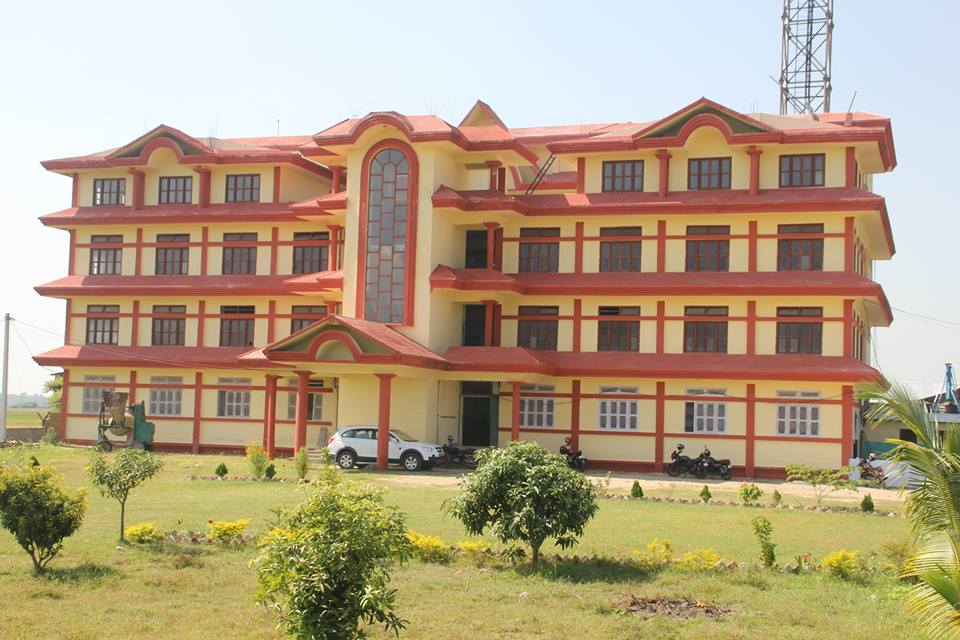
The college operates from its institutional infrastructure in Rajbiraj and maintains a teaching hospital connected with its academic activities. The hospital has 55 beds and different clinical units and services.
Its academic arrangements support classroom, laboratory, hospital, and community-based learning according to individual curriculum requirements. Laboratory-oriented programs such as CMLT and Diploma in Pharmacy contain practical components, while Nursing and General Medicine include clinical and community practice.
Unique College of Medical Science brings together CTEVT diploma/PCL education and Purbanchal University bachelor-level health science education within one institutional setting in Rajbiraj.
Its programs cover general medicine, nursing, pharmacy, medical laboratory technology, Ayurveda, public health, and post-basic nursing. Academic study is supported by practical, laboratory, clinical, and community-based learning according to the requirements of each program.
Students considering admission need to follow the academic, entrance, regulatory, and professional requirements applicable to their chosen program and admission year.
Unique College of Medical Science is located in Rajbiraj-6, Saptari, Nepal. The institution also has a wing at Raipur.
The institution was established in January 2001 as a health training institution in Rajbiraj, Saptari.
Unique College of Medical Science is affiliated with Purbanchal University for its bachelor-level programs and CTEVT for its diploma and PCL programs.
The college offers PCL in Ayurveda, PCL in General Medicine, Diploma in Pharmacy, Certificate in Medical Laboratory Technology, PCL Nursing, Bachelor of Public Health, and Post-Basic Bachelor of Nursing Science.
Yes. The institution operates a 55-bed teaching hospital with different clinical units and services that support clinical learning for relevant health science programs.
Clinical learning is supported through the college's teaching hospital. Students also receive exposure through Gajendra Narayan Singh Sagarmatha Zonal Hospital and, according to curriculum requirements, other specialty hospitals and health posts within and outside the district.
PCL in General Medicine, Diploma in Pharmacy, Certificate in Medical Laboratory Technology, and PCL Nursing are structured as three-year programs under the yearly system.
The Bachelor of Public Health program under Purbanchal University follows an eight-semester structure.
The Post-Basic Bachelor of Nursing Science program under Purbanchal University is structured over three years.
Yes. CTEVT diploma and PCL programs follow the applicable CTEVT curriculum and prevailing rules concerning admission, entrance procedures, scholarships, examinations, assessment, certification, and other academic requirements.
Bachelor-level medical and nursing education that falls under the national common entrance framework follows the prevailing Medical Education Commission requirements, including MECEE-BL where applicable. Seat allocation, fees, scholarships, and related admission provisions are governed by the rules in effect for the relevant admission cycle.
Graduates entering regulated health professions must complete the licensing or registration requirements of the professional council responsible for their discipline before beginning professional practice. Relevant regulatory bodies include the Nepal Health Professional Council, Nepal Nursing Council, and Nepal Pharmacy Council.