



The PCL in General Ayurved Medicine (AHA) at Unique College of Medical Science, Saptari is a three-year Ayurveda health science program under the Council for Technical Education and Vocational Training (CTEVT).
The curriculum prepares middle-level Ayurveda health personnel with study in Ayurveda and general medicine, followed by hospital and community-based practical learning. Successful completion leads to the Proficiency Certificate Level in Health Science (Ayurveda), with the professional role identified as Health Assistant (Ayurveda).
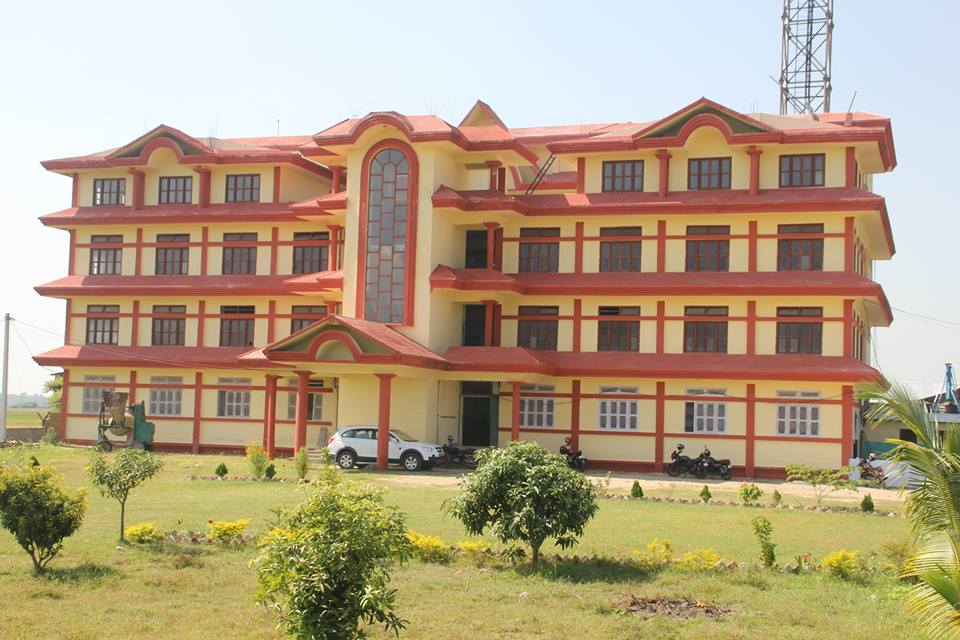
| Field | Detail |
|---|---|
| Course: | PCL in General Ayurved Medicine (AHA) |
| Qualification: | Proficiency Certificate Level in Health Science (Ayurveda) |
| Professional Focus: | Health Assistant (Ayurveda) |
| Level: | Diploma / Proficiency Certificate Level |
| Duration: | 3 years |
| Academic Body: | CTEVT |
| College: | Unique College of Medical Science, Saptari |
| Location: | Rajbiraj-6, Saptari, Nepal |
The program is structured to prepare middle-level personnel for Ayurveda health services in clinical and community settings. It combines Ayurveda with general medical knowledge rather than limiting study to a single therapeutic area.
Its academic objectives include developing knowledge and practical skills in Ayurveda and general medicine, identifying community health problems, managing primary health problems, and applying appropriate Ayurveda and modern procedures within the level of training. The curriculum also addresses professional conduct, leadership, primary health care management, and the use of modern technology alongside Ayurveda practice.
The course progresses from foundational sciences to medical study and then to applied clinical and community practice.
The first year concentrates on basic sciences and foundation subjects used across health diploma and PCL education. Foundational areas include:
English
Nepali
Physics
Chemistry
Mathematics
Ayurveda-related disciplinary study is also incorporated within the overall three-year structure.
The second year places greater emphasis on medical science subjects and the disciplinary knowledge required for Ayurveda health practice.
This stage connects the scientific foundation developed in the first year with more focused medical and Ayurveda study, preparing students for the applied work undertaken during the final year.
The third year gives greater weight to applying theory and developing professional skills through hospital and community practice. The curriculum includes project work and practical learning in real healthcare settings.
Third-year Ayurveda subjects associated with the 2018 curriculum include Roga-nidana and Kayachikitsa I, Community Medicine, Roga-nidana and Kayachikitsa II, Shalya Tantra, Shalakya Tantra, Balaroga, General Medicine, and Prasuti and Striroga-Vigyan.
A defining feature of AHA study is the combination of Ayurveda health science with general medicine.
Students are expected to develop an understanding of Ayurveda principles while also studying approaches relevant to primary healthcare and general medical practice. The program aims to prepare graduates to identify and address health problems using knowledge and procedures drawn from both areas within the scope of their training.
Roga-nidana and Kayachikitsa address disease assessment and internal medicine within Ayurveda study, while subjects such as General Medicine and Community Medicine connect the course with broader primary and community health responsibilities.
The final stage of the program is built around the application of knowledge in hospital and community environments. The curriculum is intended to move students from theoretical study into supervised practical work connected with the responsibilities of middle-level Ayurveda health personnel.
At Unique College of Medical Science, the wider health science learning environment includes its 55-bed teaching hospital. The institution also uses external healthcare settings for relevant clinical and community learning according to curriculum requirements.
For AHA students, the course structure itself places particular importance on hospital practice, community exposure, project work, and the application of Ayurveda and general medical knowledge.
The course develops knowledge and practical ability across several connected areas:
Ayurveda health science and general medicine
identification and management of primary health problems
community health assessment
preventive and promotive health services
clinical and hospital-based practice
community-based healthcare
Ayurveda approaches to disease assessment and treatment
professional conduct and leadership
primary health care management
project and workplace-based learning
These areas reflect the program's role in preparing Health Assistant (Ayurveda) personnel for middle-level health service responsibilities.
The curriculum is designed around more than treatment after illness occurs. It includes preventive, promotive, and curative dimensions of healthcare.
This approach connects Ayurveda education with community health work, where students learn to identify health problems and participate in primary-level health services. It also reflects the course objective of preparing personnel who can work in both clinical settings and communities.
As a CTEVT program, AHA follows the applicable CTEVT framework for curriculum, admission, scholarship provisions, academic regulations, examinations, assessment, and certification.
These requirements apply according to the rules for the relevant academic and admission cycle. The course remains structured as a three-year CTEVT health science program leading to the Proficiency Certificate Level in Health Science (Ayurveda).
The curriculum connects professional conduct in Ayurveda health practice with the Nepal Ayurveda Medical Council and refers to its code of conduct for Ayurveda health personnel.
After completing the academic program, graduates entering regulated professional practice must meet the applicable professional licensing and registration requirements of the responsible council.
The qualification is structured around the role of Health Assistant (Ayurveda). Graduates may pursue work connected with Ayurveda health services in hospital, clinical, primary healthcare, and community settings within the professional scope applicable to their qualification.
The curriculum also includes leadership and primary healthcare management objectives, providing academic preparation for responsibilities associated with community health activities and Ayurveda health service delivery.
Employment depends on professional licensing, individual competence, employer requirements, available positions, and the rules governing the relevant professional role.
The program may be relevant to students whose academic interests include Ayurveda, general medicine, primary health care, and community health.
Its three-year structure requires engagement with foundational science, Ayurveda and medical subjects, hospital and community practice, and project-based learning. Students considering the course should be prepared for both theoretical study and practical healthcare training.
AHA refers to the Health Assistant (Ayurveda) pathway offered through PCL in General Ayurved Medicine at Unique College of Medical Science, Saptari. The qualification awarded on successful completion is Proficiency Certificate Level in Health Science (Ayurveda).
The program extends over three years. The first year focuses on basic sciences and foundation study, the second year emphasizes medical sciences, and the third year concentrates on applied learning and comprehensive practice in hospital and community settings.
Yes. The program is offered under CTEVT as a diploma/PCL-level health science program.
The course combines Ayurveda and general medicine. Its academic structure includes basic sciences, medical sciences, Ayurveda subjects, community medicine, project work, and hospital and community practice.
Third-year subjects associated with the Ayurveda curriculum include Roga-nidana and Kayachikitsa I and II, Community Medicine, Shalya Tantra, Shalakya Tantra, Balaroga, General Medicine, and Prasuti and Striroga-Vigyan.
Yes. The final year is designed around applying learned theory and developing skills through comprehensive practice in hospital and community settings. Project work and workplace-based learning are also included.
Successful candidates receive the Proficiency Certificate Level in Health Science (Ayurveda), with the curriculum preparing graduates for the Health Assistant (Ayurveda) role.






