



The Post-Basic Bachelor of Nursing Science (PBNS) at Unique College of Medical Science, Saptari is a three-year bachelor-level nursing program affiliated with Purbanchal University. It is offered under the university's Faculty of Medical and Allied Sciences.
The program is designed for nurses who have already completed proficiency certificate-level nursing education. Its academic structure combines advanced nursing study with clinical practice, community health work, educational science, leadership and management, research, and an elective nursing specialty.
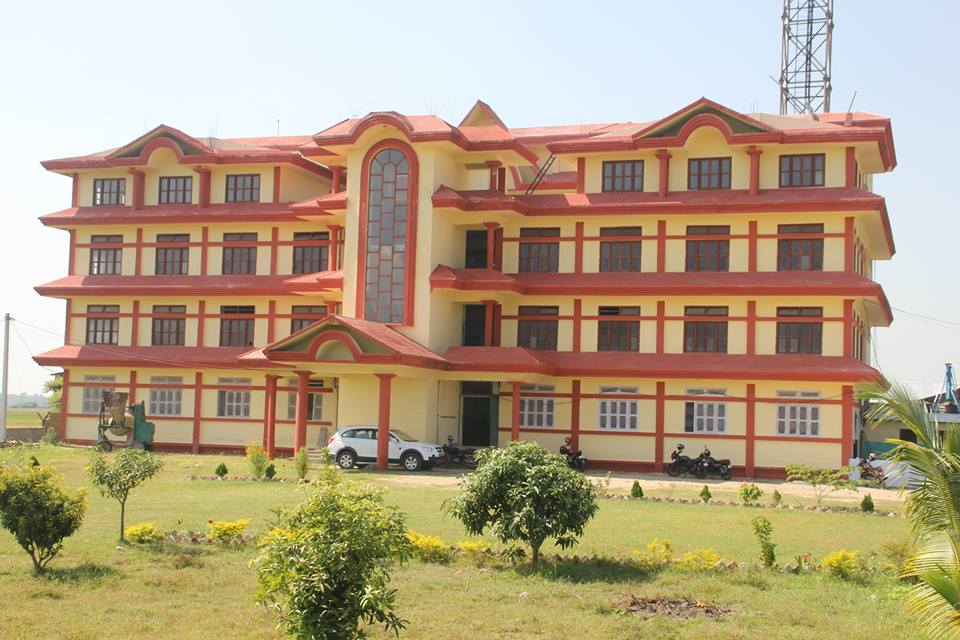
Course: Post-Basic Bachelor of Nursing Science (PBNS)
Level: Bachelor
College: Unique College of Medical Science, Saptari
Location: Rajbiraj-6, Saptari, Nepal
Affiliation: Purbanchal University
Duration: 3 academic years
Academic Area: Nursing Science
PBNS develops nursing knowledge beyond the proficiency certificate level, with attention to clinical care, management, health education, research, and specialized nursing practice.
The curriculum includes four elective areas: Midwifery, Community Health Nursing, Medical-Surgical Nursing, and Psychiatric Nursing. These areas allow students to undertake focused study and practical work within a major nursing field during the later stage of the program.
The program also addresses problem identification, planning and implementation of health activities, professional development training, evaluation, research, and nursing management.
The three academic years move from medical and nursing foundations to broader clinical, community, management, research, and specialty study.
First-year study establishes the scientific and nursing base needed for advanced practice. Subjects include:
Anatomy and Physiology
Pharmacology
Pathophysiology
Microbiology and Parasitology
Biochemistry
Nutrition and Dietetics
Basic Science and Nutrition Practical
Medical-Surgical Nursing I
Nursing Concepts and Theories
Pediatric Nursing
Medical Sociology/Anthropology
Professional English
Medical-Surgical Nursing and Pediatric Nursing include practical components alongside classroom study.
The second year moves further into nursing specialties and health education. It includes Midwifery I, Community Health Nursing I, Psychiatric Nursing I, Educational Science, Epidemiology, Geriatric Nursing, and Applied Computer Technology, with practical components attached to relevant subjects.
Clinical placement during this stage includes maternity and specialty hospital settings, mental health settings, senior citizen care, nursing educational institutions, and community health locations. Community practice can involve health offices, primary health care centers, health posts, and selected communities.
The third year includes Leadership and Management, Research and Biostatistics in Nursing, Oncology Nursing, and an elective nursing subject.
Students select from:
Community Health Nursing II
Midwifery II
Medical-Surgical Nursing II
Psychiatric Nursing II
The final year also includes management, clinical, research, and major-subject practical work. Research practicum covers proposal writing, conducting research, and report writing.
Clinical practice runs throughout the program rather than being concentrated in a single final placement.
First-year practice includes general and children's hospital settings as well as laboratory-based work in microbiology, parasitology, and biochemistry. Second-year practice expands into maternity, mental health, geriatric, educational, and community settings.
Third-year practical work includes leadership and management practice, oncology-related clinical exposure, research activity, and practice linked to the student's selected major subject.
At Unique College of Medical Science, relevant nursing education is also supported by the institution's 55-bed teaching hospital and its clinical learning arrangements described in the finalized college context.
The PBNS academic approach combines classroom teaching with group discussion, observation, demonstration, assignments, individual and group presentations, practical assignments, term papers, and self-directed and problem-based learning.
Observation visits and practical activities are also used where appropriate to connect nursing theory with professional settings.
The Purbanchal University PBNS curriculum specifies that applicants should have completed PCL Nursing from a recognized institution and have at least one year of work experience in a recognized health institution after obtaining a Nepal Nursing Council license.
For current bachelor-level nursing admission under the national medical education framework, candidates follow the prevailing MECEE-BL requirements and admission procedures of the Medical Education Commission (MEC).
Applicable MEC rules govern matters including entrance procedures, admission, scholarship provisions, seat allocation, fee structure, code of conduct, and related academic admission requirements. Seats, fees, scholarships, and admission arrangements may vary by intake according to MEC decisions and the official calendar.
The PBNS curriculum uses internal assessment and final examination.
For theory courses, the evaluation structure assigns 20 percent to internal assessment and 80 percent to the final examination. Practical evaluation gives 80 percent to internal assessment, with 20 percent assigned to the final examination in the major elective subject.
PBNS is a nursing degree, and professional practice remains subject to the requirements of the Nepal Nursing Council.
Students completing the program must satisfy the applicable professional licensing or registration requirements before entering practice in roles for which such authorization is required.
The course structure supports further development in:
advanced nursing assessment and care
medical-surgical and pediatric nursing
maternal and reproductive health nursing
community health nursing
psychiatric and geriatric nursing
nursing education
leadership and healthcare management
research design, data handling, and report writing
clinical decision-making
professional communication
These areas are developed through a combination of theory, supervised practice, field experience, management assignments, and research activity.
PBNS graduates may explore nursing responsibilities connected with hospitals, community health services, nursing education, healthcare management, clinical nursing specialties, research, and related health programs.
The chosen elective can give additional academic focus to Midwifery, Community Health Nursing, Medical-Surgical Nursing, or Psychiatric Nursing. Employment and professional responsibilities depend on licensing requirements, employer criteria, experience, available positions, and other applicable professional rules.
PBNS is intended for nurses who have completed PCL Nursing and want to continue into bachelor-level nursing education.
It may be relevant to nurses interested in developing stronger clinical, community, educational, research, or management capabilities while undertaking advanced study in a selected nursing specialty. Applicants should consider the three-year academic commitment, clinical requirements, entrance process, and professional licensing framework when planning admission.






