The Master of Education at Krishna Baijanath Multiple Campus is a postgraduate program affiliated with Tribhuvan University under the Faculty of Education. The campus began conducting M.Ed. classes in 2079 BS at Shuklaphanta Municipality-10, Jhalari, Kanchanpur.
The program follows a four-semester system and combines professional education courses, specialization study, teaching practice or practicum, and thesis writing. It is intended for students seeking advanced study in pedagogy, educational research, subject education, planning, management, and related areas of professional educational practice.
| Field | Details |
|---|---|
| Course | Master of Education |
| Duration | 24 months or four semesters |
| Total credits | 69 credit hours |
| System | Semester system |
| Affiliation | Tribhuvan University |
| Faculty | Faculty of Education |
| Campus | Krishna Baijanath Multiple Campus |
| Location | Jhalari, Kanchanpur |
The M.Ed. curriculum consists of 69 credit hours. Students complete 21 credit hours of core professional courses, 39 credit hours of specialization courses, three credit hours of teaching practice or practicum, and six credit hours of thesis writing.
The first three semesters each carry 18 credit hours, while the fourth semester carries 15 credit hours. The program includes seven core courses and seventeen specialization courses. Core study covers foundations of education, advanced educational psychology, measurement and evaluation, education and development, research methodology, and contemporary issues in education.
The Tribhuvan University curriculum provides specialization pathways in areas such as Curriculum and Evaluation, Educational Planning and Management, English Education, Nepali Education, Mathematics Education, Health Education, Physical Education, Economics Education, Geography Education, History Education, Political Science Education, ICT Education, and Special Needs or Inclusive Education.
Students select a specialization connected with the subject studied during their previous education degree. Teaching includes lectures, assignments, seminars, case studies, field studies, and project work.
Applicants with a Bachelor of Education or a Post-Graduate Diploma in Education from Tribhuvan University or another recognized university are eligible for admission.
Subject-specific requirements also apply to individual specialization areas. For example, applicants for Nepali, English, or Mathematics Education must have studied the corresponding subject during their previous degree. The normal program duration is 24 months, while the maximum completion period is five years.
Students complete a six-week teaching practice near the end of the fourth semester. The activity is arranged by the concerned department and takes place in schools or campuses under Faculty of Education regulations.
Students specializing in Educational Planning and Management complete a practicum instead of regular teaching practice. The same practicum arrangement applies to Special Needs Education students. This component carries three credit hours and requires students to apply their academic and pedagogical learning in a workplace setting.
Thesis writing carries six credit hours and is completed during the fourth semester. The first part develops academic writing, proposal preparation, research tools, and plans for data collection.
After approval of the proposal, each student conducts supervised research and prepares a thesis in the format prescribed by the Faculty of Education. Students present and defend their findings before the concerned research committee and subject expert.
In-semester activities account for 40 percent of the evaluation in each taught subject. Students also sit for a semester-end examination conducted by the Office of the Dean, Faculty of Education.
The passing grade for an individual semester-end paper is B minus, equivalent to a GPA of 2.7 or 55 percent. Students must obtain an overall grade of B or a cumulative GPA of 3.0 to pass the semester. Teaching practice, practicum, and thesis writing are practical components evaluated under the Faculty of Education system.
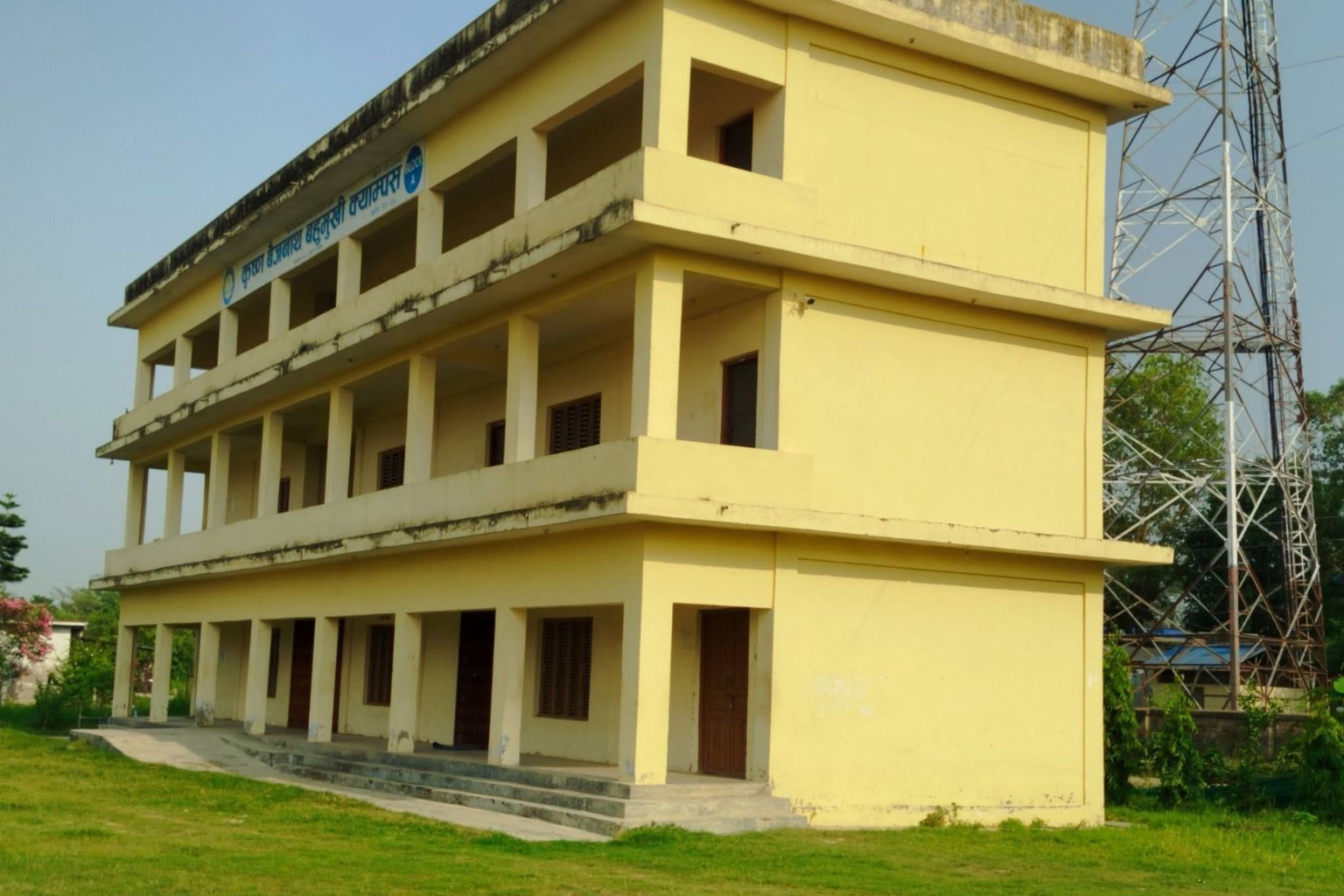
Krishna Baijanath Multiple Campus has 24 classrooms, a computer room, desktop computers, laptops, multimedia projectors, and internet connections. Its library holds 7,602 books and provides a separate study room, academic journals, newspapers, periodicals, and computer access for digital reading materials. These facilities support seminar preparation, assignments, classroom presentations, and research work required in the M.Ed. program.