The Ten Plus Two (+2) Humanities program at Baneshwor Campus, Shantinagar, New Baneshwor, Kathmandu, Nepal, is a two-year higher secondary program under the National Examinations Board (NEB).
The program introduces students to humanities and social science subjects connected with society, culture, language, human behavior, communication, and social development. Baneshwor Multiple Campus offers the program within a public, non-profit academic setting with classroom learning, internal assessment, library access, study rooms, sports spaces, and student support services.
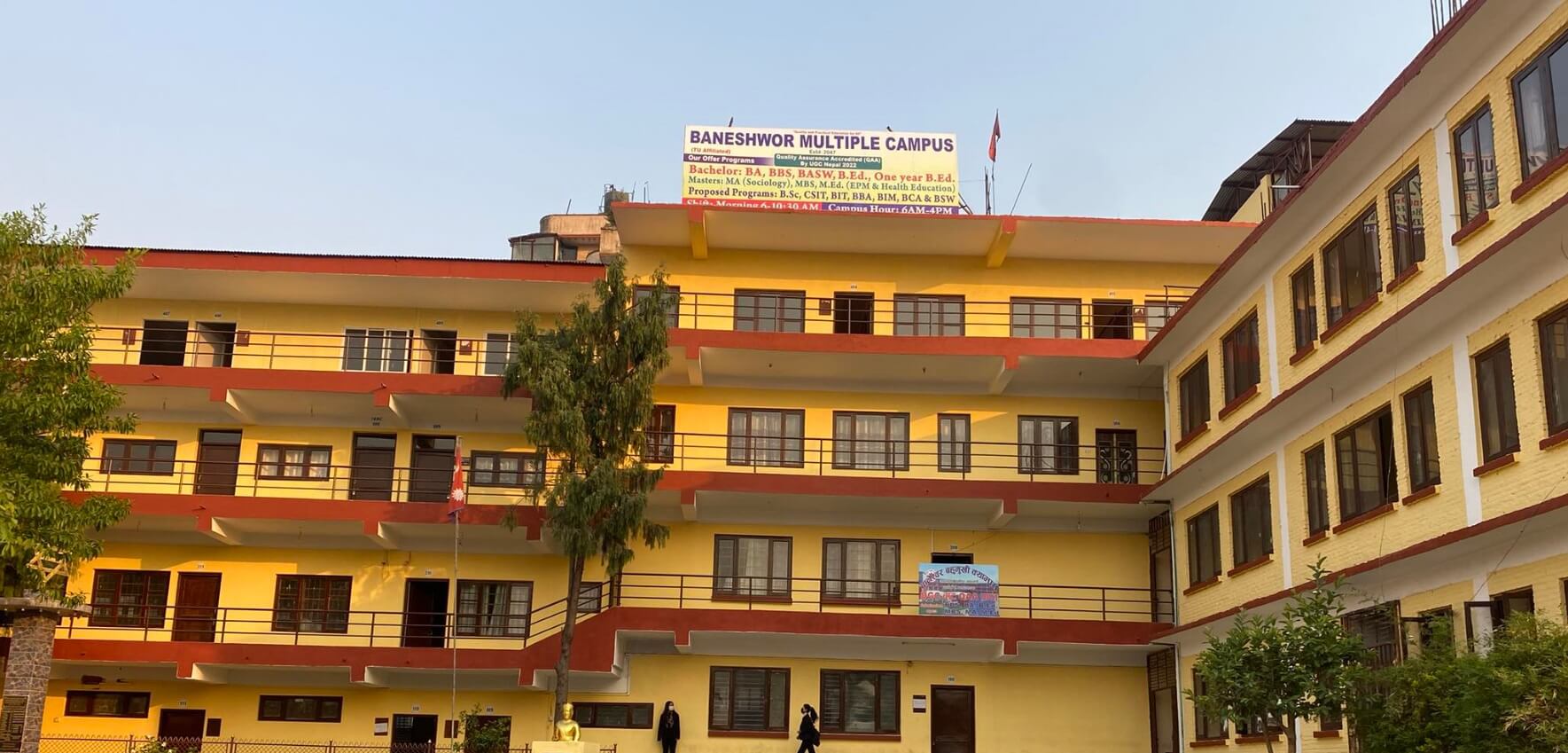
Course: Ten Plus Two (+2) Humanities
College: Baneshwor Multiple Campus
Also known as: Baneshwor Campus
Location: Shantinagar, New Baneshwor, Kathmandu, Nepal
Board: National Examinations Board (NEB)
Level: Higher secondary level
Duration: Two years
Academic focus: Humanities and social sciences
Major areas: Society, culture, language, communication, human behavior, and social development
Contact: +977-1-4620310, +977-1-4620332
Ten Plus Two (+2) Humanities at Baneshwor Multiple Campus is a higher secondary program for students who have completed secondary education and want to study humanities and social science-related subjects. The program supports academic learning in areas connected with people, society, culture, language, communication, social institutions, and social change.
The course is suitable for students planning to continue toward bachelor’s level programs in humanities, social sciences, arts, social work, sociology, anthropology, education, communication, public service, development studies, and related fields. At Baneshwor Multiple Campus, the program is offered as part of the campus’s +2, bachelor’s, and master’s level academic portfolio.
The Ten Plus Two (+2) Humanities program is a two-year course. It covers Grade 11 and Grade 12 under the higher secondary level.
The two-year structure allows students to build a foundation in humanities and social sciences before entering bachelor’s level study.
The program gives students a basic academic foundation in humanities and social science disciplines. Its academic focus includes:
Society and social institutions
Culture and human behavior
Language and communication
Social development
Community-related issues
Human-focused academic study
These areas help students understand social life, cultural settings, public issues, communication, and human relationships from an academic perspective.
Baneshwor Multiple Campus follows a teaching approach that includes classroom learning, practical orientation, internal exams, class tests, assessment, and feedback. The campus gives attention to discipline, academic planning, practical teaching, and student participation.
For +2 Humanities students, this learning environment supports regular study, classroom engagement, discussion-based learning, and subject-wise academic preparation. The campus also offers classes in both English and Nepali, with English-medium classes available for day-span students.
Baneshwor Multiple Campus provides facilities that support higher secondary study and campus life. Available facilities include classrooms, a library with more than 8000 books, a research hall, a science lab, an e-server, study rooms, sports spaces, a canteen, drinking water, toilets, a garden, and parking.
The campus also provides scholarship and fee-waiver opportunities for selected students. At the +2 level, scholarship support includes tuition fee waivers for campus toppers and faculty toppers. The campus also provides support for selected students from remote areas and students from fourteen earthquake-affected districts.
Scholarship and fee support connected with +2 students includes:
Campus Topper (EPS Scholarship): Rs. 5000.00 tuition fee waiver for the student obtaining the highest overall score on the campus
+2 Faculty Topper (Campus Scholarship): Rs. 2500.00 tuition fee waiver for the highest-performing student in each faculty at the +2 level
Highest Marks in Major Nepali at +2 Level (Khadakchandra Scholarship): Rs. 1000.00 tuition fee waiver
Remote-area support: Special discounts and scholarships for students from remote areas
Earthquake-affected district support: Special discounts and scholarships for students from fourteen earthquake-affected districts
+2 topper progression support: Full scholarship for the highest-performing boy and girl in each +2 faculty to continue at the bachelor’s level
After completing Ten Plus Two (+2) Humanities, students may continue toward bachelor’s level programs related to humanities, social sciences, arts, education, social work, sociology, anthropology, communication, development studies, and related academic fields.
At Baneshwor Multiple Campus, students may continue within the same campus through bachelor’s level programs such as Bachelor of Arts (BA), Bachelor of Arts in Social Work (BASW), and Bachelor of Education (B.Ed.), depending on eligibility and admission requirements.
College Name: Baneshwor Multiple Campus
Location: Shantinagar, New Baneshwor, Kathmandu, Nepal
Phone: +977-1-4620310, +977-1-4620332
Email: bmc@baneshworcampus.edu.np
Additional Email: info@baneshworcampus.edu.np
Website: https://baneshworcampus.edu.np
Ten Plus Two (+2) Humanities is a two-year higher secondary program focused on humanities and social science-related study.
The program is offered at Baneshwor Multiple Campus, Shantinagar, New Baneshwor, Kathmandu, Nepal.
The program is connected with the National Examinations Board (NEB).
The Ten Plus Two (+2) Humanities program has a duration of two years.
The program covers humanities and social science-related areas connected with society, culture, language, communication, human behavior, and social development.
Baneshwor Multiple Campus provides classrooms, a library with more than 8000 books, a research hall, a science lab, an e-server, study rooms, sports spaces, a canteen, drinking water, toilets, a garden, and parking.
Yes. The campus provides tuition fee waivers and scholarship support for selected students, including campus toppers, +2 faculty toppers, students from remote areas, and students from fourteen earthquake-affected districts.