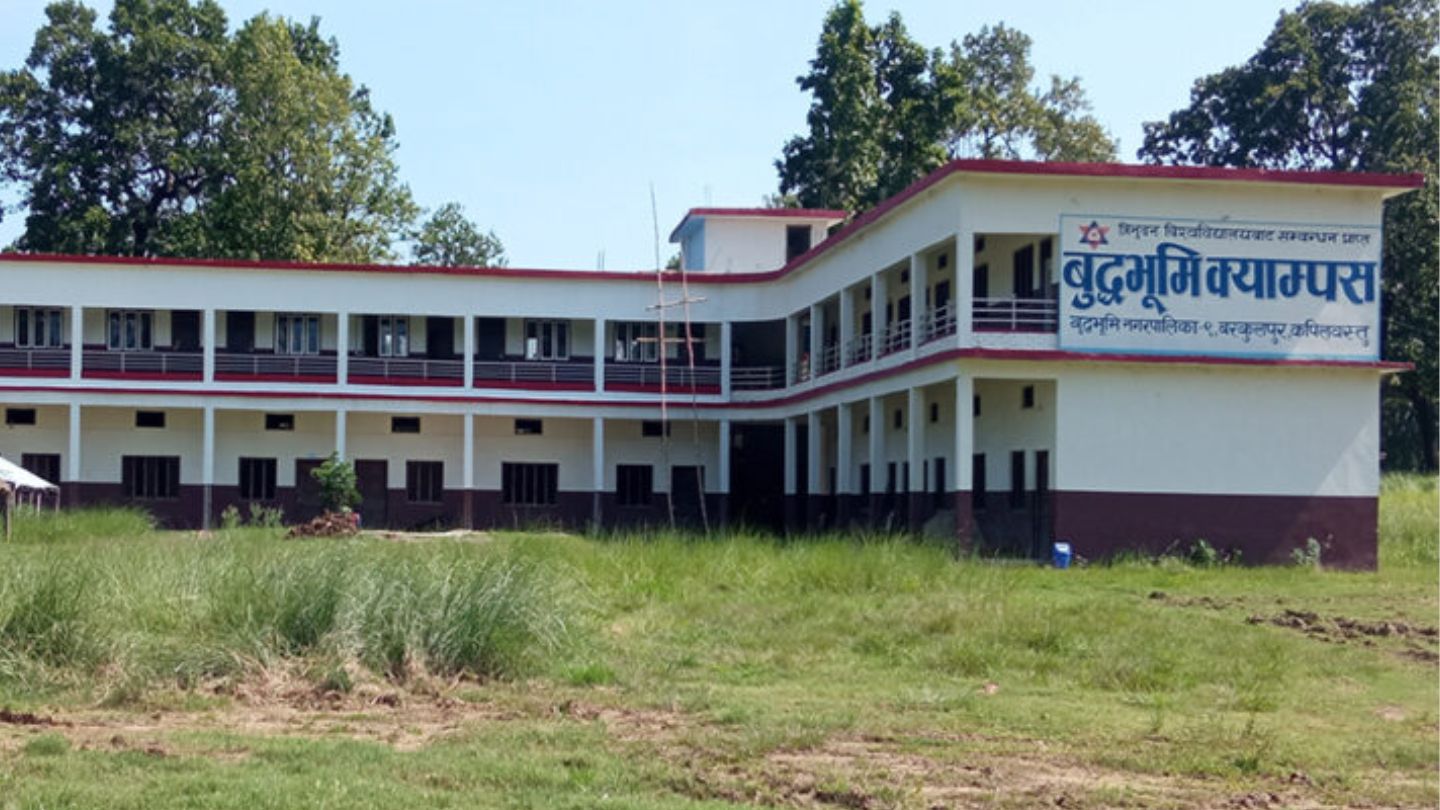
The Bachelor of Business Studies (BBS) at Buddhabhumi Campus is a four-year annual program offered under the Faculty of Management of Tribhuvan University. The campus is located in Buddhabhumi Municipality-2, Barkulpur, Kapilvastu, Lumbini Province, Nepal, and it is approved by the University Grants Commission of Nepal.
At Buddhabhumi Campus, the BBS program is part of the Management faculty and is delivered within a community-campus setting with library access, computer lab, multimedia support, counseling, scholarships, classrooms, sports, and extracurricular activities. The program follows the annual examination system of Tribhuvan University.
Four-year bachelor’s level program
Annual examination system
Offered under TU Faculty of Management
Designed to develop students into competent managers for organized sectors
Includes compulsory, core, concentration, research, and project components
Available at a community campus in Kapilvastu with scholarship support and a minimal fee structure
The BBS program at Buddhabhumi Campus follows the annual structure of Tribhuvan University. It is designed to provide both conceptual understanding and practical business-related study for students preparing for management roles, higher study, and related professional paths.
The curriculum includes compulsory courses, core management courses, concentration study, business research, and final project work. Key curriculum areas include:
Business English
Business Statistics
Microeconomics for Business
Business Communication
Macroeconomics for Business
Business Law
Financial Accounting and Analysis
Cost and Management Accounting
Principles of Management
Fundamentals of Marketing
Fundamentals of Financial Management
Organizational Behavior and Human Resource Management
Business Environment and Strategy
Taxation in Nepal
Entrepreneurship
Business Research Methods
Foundation of Financial Systems
Concentration courses in Accounting, Finance, Marketing, or Management
Final Project
The program extends over four academic years. The first three years build foundations in business concepts, tools, and management studies, while the fourth year includes concentration study, research methods, entrepreneurship, and project work.
Develop students into competent managers for organized sectors
Build broad knowledge of business and administration
develop practical skills and responsible managerial attitudes
encourage entrepreneurial capability
prepare students for higher study in management and related academic pathways
The BBS program at Buddhabhumi Campus supports students who want structured undergraduate study in business and management within a TU-affiliated academic setting. Its course design covers language, economics, law, quantitative methods, accounting, finance, marketing, organizational behavior, and business strategy.
The program also provides a foundation for further study in management, including progression to MBS at Buddhabhumi Campus. Its annual structure and final project component connect classroom learning with field-based academic work.
Understanding of core concepts in business and administration
Ability to study and analyze business and management issues
Development of communication and quantitative skills
Familiarity with accounting, finance, marketing, law, and organizational behavior
Exposure to concentration-based study in a chosen management area
Completion of research and final project work
Business communication
Statistical and economic analysis
Accounting and financial management
Marketing fundamentals
Organizational behavior and human resource management
Business research methods
Entrepreneurship
Project report preparation and presentation
The BBS program combines classroom-based learning with discussion, analysis, and practical academic activities. At Buddhabhumi Campus, this academic structure is supported by regular learning facilities and student support services.
The learning process includes:
Lectures
Group discussions
Problem-solving exercises
Guest lectures
Practical work
Project work
Case-based instruction where applicable
Use of library, computer lab, and multimedia support
Entry-level management-related roles
Business and administrative work in organized sectors
Entrepreneurship-related pathways
Teaching, research, and consultancy after further study
Academic progression in management
Scholarships for needy and deserving students
Scholarship support for Dalit, Muslim, Madheshi, Indigenous communities, persons with disabilities, martyrs’ families, and students with extremely weak economic conditions
Community-campus setting with a minimal fee structure
TU-affiliated BBS program in Kapilvastu
Community-campus environment with local access to higher education
Library, computer lab, multimedia, counseling, and classroom support
Scholarship access for multiple social and economic groups
Opportunity to continue management study at the same campus
Complete 10+2 in business or commerce, or an equivalent qualification from a board or university recognized by TU
Applicants who studied Mathematics or Economics as a full paper at the 10+2 level may also qualify under the stated eligibility framework
Submit the prescribed admission form with required academic documents
Follow the admission schedule and procedures of the campus and TU Faculty of Management
Complete enrollment after fulfilling the required admission formalities
Academic Transcript of Class 12 / +2 or equivalent
Character Certificate
Migration Certificate, if applicable
Transfer Certificate
Citizenship Certificate or Birth Certificate copy
Passport-size photographs
Completed admission or application form
Admission fee payment receipt
Equivalence certificate, if applicable
The BBS program follows the annual examination system. Final examinations are conducted by Tribhuvan University through the Office of the Controller of Examinations. Academic registration, examinations, and results follow TU rules, guidelines, and the applicable academic calendar.
To qualify for the annual examinations, students are required to maintain the required attendance. The program also requires students to pass theoretical, practical, and project components separately where applicable. The final project is part of the fourth-year academic requirement.
The BBS program at Buddhabhumi Campus provides a four-year TU management degree within a community-campus setting in Kapilvastu. With its annual structure, concentration options, project work, scholarship support, and core academic facilities, the program serves students seeking undergraduate study in business and management close to home.
The BBS program is a four-year bachelor’s degree under the annual examination system.
The program is affiliated with Tribhuvan University under the Faculty of Management.
Applicants must have completed 10+2 in business or commerce, or an equivalent qualification recognized by TU. Applicants who studied Mathematics or Economics as a full paper at the 10+2 level may also qualify within the stated eligibility framework.
Yes. The fourth year includes Business Research Methods and a Final Project.
The concentration options listed in the course structure include Accounting, Finance, Marketing, and Management.
Yes. The campus provides scholarships for needy and deserving students, including students from several socially and economically disadvantaged groups.