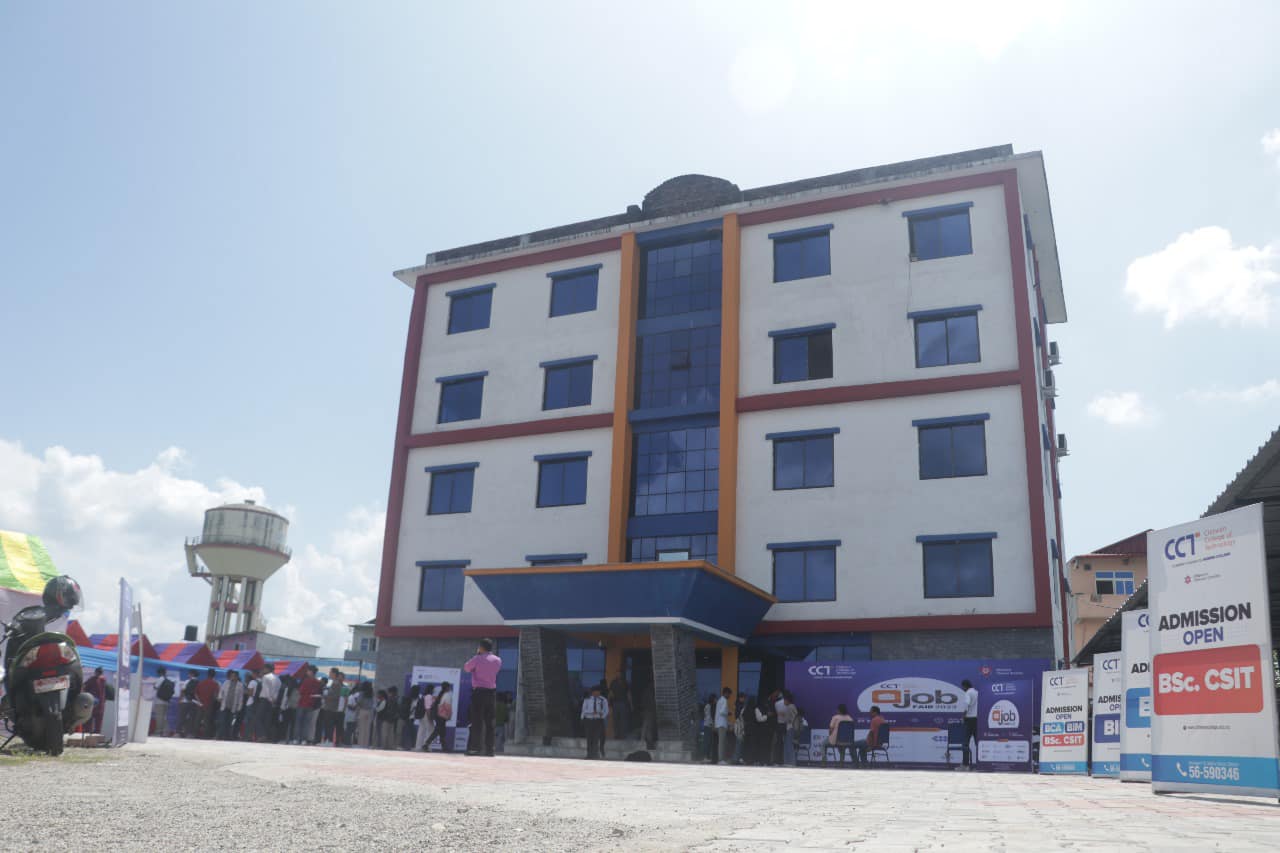
Bachelor of Computer Application (BCA) at Chitwan College of Technology (CCT), Bharatpur, Chitwan is a Tribhuvan University affiliated bachelor’s program offered for Students who want an application-focused entry into the IT field after +2 from any stream. The college lists BCA among its three main TU bachelor’s programs alongside BSc CSIT and BITM.
BCA is a four-year, eight-semester course. The document explains that the core purpose of this degree is application development. The focus includes learning how to build websites, mobile apps, and desktop software within the TU academic framework.
This program can suit You if You want a structured university degree and also want to develop practical confidence in creating software products that can solve real tasks in organizations and communities.
The college presents BCA as an option that stays open to Students from Science, Management, and Humanities backgrounds.
The key points stated in the document include:
Four-year, eight-semester academic structure under TU.
Main academic goal focused on application development across mobile, web, and desktop platforms.
Inclusion of some management and accounting subjects, which can support Students interested in business-side understanding of IT work.
Project work that assigns Students to build websites or apps for real clients.
The uploaded material does not provide a semester-wise list of BCA subjects. The document clearly frames the program as an application-centered course.
This framing suggests three major academic areas that shape BCA learning at CCT:
Core computing subjects that support programming logic and software building habits.
Application development learning that guides Students through web, mobile, and desktop project cycles.
Supporting management and accounting content that connects software work with basic business understanding.
You can request the latest TU BCA curriculum and CCT’s semester plan during admission to confirm the exact subject pattern.
BCA at CCT is presented as a pathway that helps Students become capable software professionals through application-focused learning. The college also states that it expects BCA Students to grow as problem solvers rather than only as coders.
This objective fits Students who enjoy practical building tasks and want to see visible outcomes from their learning, such as a working app or a functional website.
The scope described in the document connects BCA with both technical and entry-level management awareness. The inclusion of management and accounting subjects is presented as a useful base for Students who may want to start an IT-related business later.
This mix can also help You understand how software solutions are planned and justified inside real organizations.
Based on the course nature described in the file, Students who complete BCA at CCT should be able to:
Build application-based solutions across web, mobile, or desktop contexts through guided learning.
Apply problem-solving thinking while working on assignments and client-oriented projects.
Connect basic business ideas with technology work through the included management and accounting content.
The college explains that university curricula change over longer cycles while the IT field changes faster. CCT addresses this gap by running non-credit or add-on courses alongside formal teaching.
The document mentions examples such as React, Flutter, Python Data Science, and Blockchain as extra learning options beyond the regular classroom content.
The college also gives priority to speaking skills, interview preparation, and teamwork.
These add-ons can support BCA Students who want stronger confidence in internship interviews or client communication.
CCT describes a learning environment that discourages rote learning. The college uses case studies and real-world problem contexts to guide Students toward solution thinking.
The document states that minor projects are mandatory in every semester and a major project is required in the final year.
The college also mentions internship opportunities arranged within the college or through external companies.
This approach matters for BCA Students because application development grows faster when You practice regularly and receive structured feedback.
The document lists eligibility criteria for BCA admission at CCT.
Students need:
A minimum of D+ in each subject of grades 11 and 12 with an overall CGPA of 2.0 or above.
Or at least second division marks in 10+2, PCL, or equivalent in any discipline.
The file also notes that BCA applicants must pass a written entrance exam and interview.
The BCA admission process includes submitting the application form within the admission timeframe and providing academic transcripts for verification.
You should confirm the current intake requirements directly with the admission office because entrance formats and internal procedures can vary by year.
The document lists several career directions linked to BCA:
Web developer
App developer
QA engineer
Digital marketer
Graphic designer
These roles reflect the application-centered focus of the program. Students who build strong semester projects and use internships strategically may gain clearer entry routes into software companies, service organizations, and digital teams within Nepal.
CCT states that it offers scholarship support that can reach up to full fee coverage for eligible Students.
The document also indicates that scholarships are arranged based on merit within the admission process.
The file does not list detailed categories or annual quotas. You and Your family should ask for the latest scholarship guideline during the admission period.
BCA at CCT can be a practical choice for Students who want a TU degree that keeps application development at the center of learning. The college states that BCA projects may involve building websites or apps for real clients, which can help Students experience requirement gathering and delivery expectations.
The college’s broader learning practices also support BCA study:
Regular semester projects and a final-year major project.
Internship access through internal or external coordination.
Add-on technology classes to support current tools.
Communication and teamwork support relevant for client-facing IT roles.
BCA at Chitwan College of Technology is a four-year TU affiliated program that welcomes Students from any +2 stream and focuses on application development. The college highlights learning paths that include web, mobile, and desktop software building, supported by management and accounting exposure.
The stated project culture and internship access can help You move from classroom learning to practical confidence.
You can make a stronger decision by reviewing the latest TU curriculum and confirming entrance and scholarship details during admission counseling.
Yes. The document states that CCT is affiliated with TU and offers BCA at the bachelor’s level.
Students who have completed +2 from any stream can apply, provided they meet the minimum grade or division requirements listed in the document.
The document states that BCA is a four-year, eight-semester course.
The file states that the main objective is application development, including building mobile apps, websites, and desktop software.
Yes. The document states that Students are assigned to build websites or apps for real clients as part of project work.
CCT states that scholarship support is available and may reach up to full fee coverage for eligible Students. The document also mentions merit-based scholarship arrangement during admission.