



The B.Sc. (Hons.) in Agriculture at Ilam Community Agriculture Campus is a four-year bachelor’s degree affiliated with Purbanchal University. The program combines agricultural science, laboratory practicals, project work, field observation, research, and an internship.
Students study crop production, horticulture, livestock, soil, plant protection, biotechnology, agricultural economics, extension, and rural development before selecting an elective area. ICAC conducts the program in Ilam-9, Sera, where agricultural land, irrigation facilities, laboratories, classrooms, and satellite learning units support course-related learning.
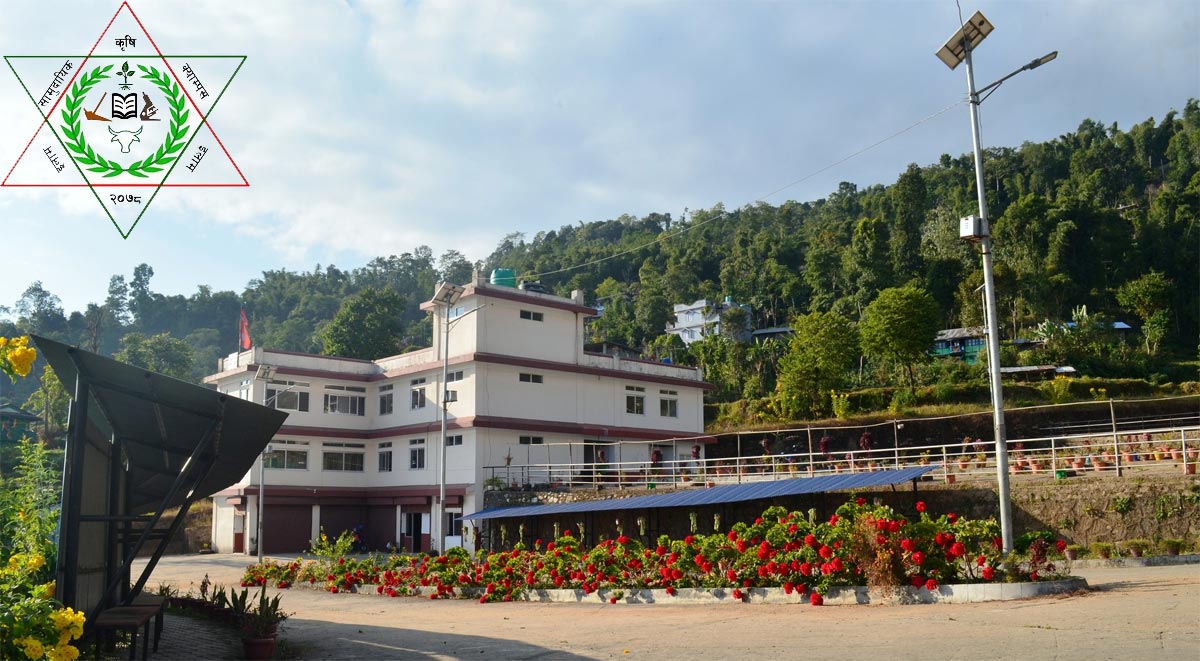
| Field | Details |
|---|---|
| Course | B.Sc. (Hons.) in Agriculture |
| College | Ilam Community Agriculture Campus |
| Affiliation | Purbanchal University |
| Level | Bachelor’s degree |
| Duration | Four years |
| Academic System | Eight semesters |
| Total Credit Hours | 166 |
| Medium of Instruction | English |
| Location | Ilam-9, Sera, Ilam, Koshi Province, Nepal |
The B.Sc. (Hons.) in Agriculture covers scientific, technical, economic, and social aspects of agriculture. Rather than concentrating on one subject from the beginning, students study several agricultural disciplines and later choose an elective area for focused coursework.
The program connects agricultural science with farmers’ practices, production constraints, market conditions, development institutions, and rural communities. Its objectives include preparing scientific human resources, introducing agricultural advancements and indigenous technologies, building communication and extension abilities, and developing an understanding of agricultural production and management challenges.
At ICAC, the course is placed within the agricultural setting of Ilam. The campus uses agricultural land, irrigation facilities, laboratories, and learning units to connect academic subjects with crop, livestock, horticultural, plantation, and enterprise-related activities.
The course runs for four years across eight semesters. It carries 166 credit hours, comprising 139 credit hours from core courses and 27 credit hours from electives, internship, and thesis work.
The credit distribution consists of 101 theory credits and 65 practical credits. Theory accounts for 60 percent of the program, while practical work accounts for 40 percent. Students complete internal assessment and assignments before appearing in the final examination of each semester.
Laboratory practicals form part of the curriculum from the early semesters. Project work begins in the third semester. The final year introduces research methodology, biostatistics, proposal preparation, thesis writing, elective study, field-based internship, and thesis research.
The first year establishes the scientific and social foundation of agriculture. Subjects include Plant Physiology, Microbiology, Introductory Soil Science, Crop Science, Introductory Animal Science, Rural Sociology, Economics, General Biochemistry, Crop Production, Horticulture, Livestock Production and Management, Extension Education and Communication, Farm Power and Machinery, and Agriculture Meteorology and Climate Change.
The second year moves into crop genetics, plant health, production practices, irrigation, and biotechnology. Students study Plant Genetics, Plant Pathology, Entomology, Crop Production, Vegetable and Spices Crop Production, Irrigation and Water Management, Plantation Crops Production, Plant Propagation and Nursery Management, Animal Nutrition, Plant Breeding, Crop Disease Management, Crop Pest Management, Soil Fertility and Nutrient Management, Fruit Crop Cultivation, Plant Biotechnology, and Plant Clinic.
Third-year coursework covers Agroforestry, Aquaculture, Post-Harvest Technology, Integrated Pest Management, Agricultural Resource and Marketing Management, Seed Technology, Animal Biodiversity and Management, and Livestock or Poultry Production project work.
Later subjects include Animal Genetics and Breeding, Social and Economic Development, Sustainable Agriculture and Rural Development, Ornamental Horticulture, Apiculture and Sericulture, Agriculture Policy and Planning, and agriculture-related project work.
The seventh semester includes Bio-Statistics, Research Methodology, and Proposal and Thesis Writing. Students also select one 12-credit elective group from the following areas:
Sustainable Agriculture
Horticulture
Plant Protection
Plant Breeding
Animal Science
Soil Science
Agricultural Economics and Business Management
Development Studies
The last semester includes a field-based internship and thesis research. Internship placements may be arranged in agro-based industries, research farms, private farms, or non-governmental organizations working in different agro-ecological settings.
The program’s practical component is supported by the campus library, laboratories, agricultural land, irrigation facilities, and smart classrooms. Students can also receive guidance from faculty members during academic and practical activities.
ICAC has satellite learning units in different agricultural settings of Ilam and nearby rural municipalities. These include:
Horticulture learning unit
Temperate agriculture learning unit
Agri-entrepreneurship learning unit
Plantation crop learning unit
Livestock learning unit
These units give students direct contact with different crops, production conditions, livestock activities, and farm enterprises. Intensive English courses in the first two semesters also support communication and academic writing.
Applicants must meet the following minimum criteria:
Passed SLC or an equivalent examination
Passed I.Sc. or 10+2 in Science or Agriculture with at least 50 percent aggregate marks
Studied English, Chemistry, and Biology with at least 100 full marks in each subject
Studied Mathematics and Physics with at least 50 full marks in each subject
Secured at least 50 percent in the relevant entrance examination
Be a Nepalese citizen
Candidates must present original hard copies during admission. The records must correspond with the documents submitted through the online application.
Required documents include:
Three passport-size photographs
Original Citizenship Certificate
Original SEE/SLC or equivalent mark sheet and character certificate
Original 10+2 or equivalent transcript, character certificate, provisional certificate, and migration certificate
Equivalence certificate for qualifications completed under a board other than a Nepal board
Original quota verification letter or certificate, where applicable
Original admit card for the relevant entrance examination
This course may suit students with a Science or Agriculture background who are interested in studying crops, horticulture, livestock, soil, farm management, rural development, agricultural research, or extension communication.
Students should also be prepared for laboratory sessions, field visits, project reports, practical assignments, an elective area, internship work, and thesis research. The program requires sustained study across biological science, production systems, economics, statistics, communication, and field-based agriculture.
The program takes four years and is divided into eight semesters.
The course is affiliated with Purbanchal University.
The program contains 166 credit hours, including core courses, electives, internship, and thesis work.
Yes. It includes laboratory practicals, project work, field visits, learning-unit exposure, internship, and thesis research.
Project work begins from the third semester alongside laboratory practicals.
Students complete a field-based internship and prepare a thesis based on their research.
The course is conducted at Ilam Community Agriculture Campus, Ilam-9, Sera, Ilam, Koshi Province, Nepal.






