



The Bachelor of Social Work at Janjyoti Multiple Campus is a four-year undergraduate program affiliated with Tribhuvan University. It operates under the Faculty of Humanities and Social Sciences and follows the annual examination system.
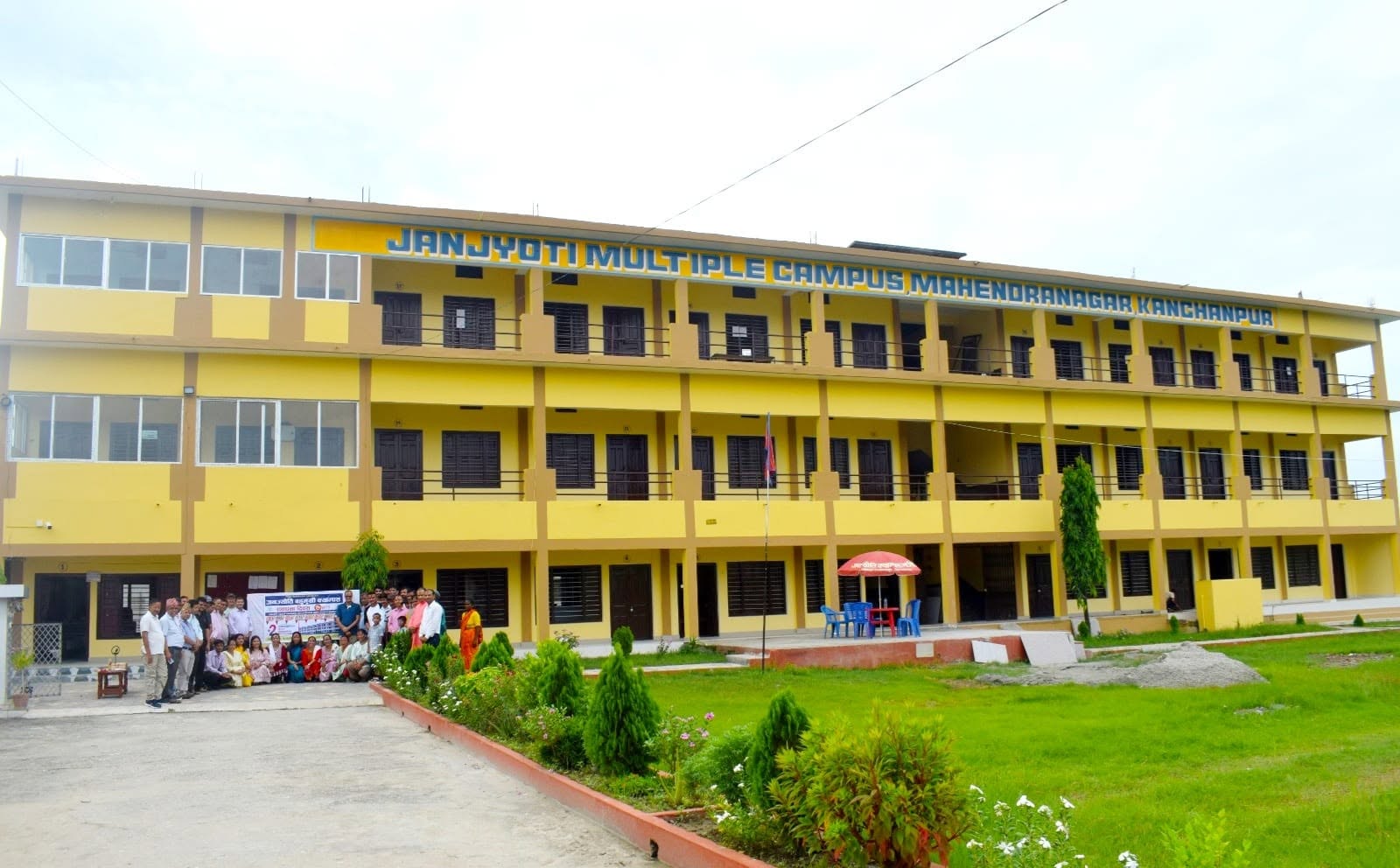
The course combines social work theory with fieldwork, research, academic writing, report preparation, casework, and group-work practice. Its academic focus includes understanding social problems, working with individuals and communities, and developing structured responses to social needs. Janjyoti Multiple Campus is located in Bhimdattnagar-18, Bhansi, Mahendranagar, Kanchanpur, Sudurpashchim Province.
| Course detail | Information |
|---|---|
| Course | Bachelor of Social Work |
| Abbreviation | BSW |
| Institution | Janjyoti Multiple Campus |
| Affiliation | Tribhuvan University |
| Faculty | Faculty of Humanities and Social Sciences |
| Academic level | Bachelor’s degree |
| Duration | Four years |
| Academic system | Annual examination system |
| Location | Bhimdattnagar-18, Bhansi, Mahendranagar, Kanchanpur |
| Main practical component | Compulsory fieldwork |
The BSW program prepares students to study social-work principles, methods, practices, and community issues. It combines classroom learning with practical activities designed to help students understand how social concerns affect individuals, groups, and communities.
The course places particular attention on:
Social-work concepts and principles
Sociology and psychology for social work
Casework with individuals
Social work with groups
Community problems and possible responses
Human rights and social justice
Field-based learning
Research and academic writing
Report preparation
Professional self-awareness
Students are expected to complete research activities, academic and report writing, and compulsory fieldwork during the degree.
The social-work major contains eight papers distributed across the four-year program. The confirmed core subjects and learning components include:
| Study area | Main academic focus |
|---|---|
| Introduction to Social Work | Concepts, principles, methods, and practice of social work |
| Basic Sociology for Social Work | Social structures, communities, relationships, and social behaviour |
| Basic Psychology for Social Work | Psychological perspectives relevant to social-work practice |
| Social Case Work Practice | Work with individuals and their social situations |
| Social Work Practice with Groups | Group processes and group-based social-work practice |
| Fieldwork | Practical learning in social and community settings |
| Research and academic writing | Social research, academic work, and structured analysis |
| Report writing | Recording, organising, and presenting field-based findings |
Compulsory academic components also include Nepali, English, Nepal Studies, and academic writing. Optional subjects form part of the later years of study.
Applicants must have completed higher-secondary education, including Ten Plus Two, PCL, or an equivalent qualification in any discipline recognized by Tribhuvan University.
The stated academic requirements are:
A minimum D+ grade in every subject of Grades 11 and 12 with a CGPA of 2.0 or above; or
A minimum second-division result in Ten Plus Two, PCL, or an equivalent qualification
The program accepts applicants from different academic streams when the completed qualification meets the applicable Tribhuvan University conditions.
Each subject is evaluated through written examination and internal or practical assessment.
| Assessment component | Weightage |
|---|---|
| Theoretical written examination | 70% |
| Practical or internal evaluation | 30% |
Students may use either English or Nepali when appearing in the Tribhuvan University board examination. Practical activities may include fieldwork, academic writing, research tasks, reports, and other course-related assignments.
Fieldwork is a compulsory part of the BSW program. It allows students to connect social-work concepts with the situations faced by individuals, groups, and communities.
Field-based study may involve:
Identifying community concerns
Understanding the social setting of a problem
Collecting and organising relevant information
Applying casework and group-work approaches
Preparing field reports
Examining possible social interventions
Reflecting on professional roles and responsibilities
Janjyoti Multiple Campus connects the program with community-based practical learning and provides career counselling and guidance for BSW students.
Through classroom study, fieldwork, research, and written assignments, students may develop skills in:
Social problem identification
Individual and group-work practice
Community interaction
Field observation
Research and information collection
Academic and report writing
Communication and presentation
Social analysis
Advocacy and mediation
Professional self-reflection
The development of these abilities depends on participation in field activities, consistent academic work, and the student’s engagement with practical assignments.
BSW students study in an academic environment that includes:
Community-based practical learning
Career counselling and guidance
Multimedia-supported classrooms
Technology-supported teaching
Library resources
Computer and internet facilities
Spacious classrooms
Scholarship provisions for deserving and economically disadvantaged students
These facilities support classroom instruction, reading, presentations, research activities, report preparation, and practical learning.
Graduates may consider work in organisations and sectors connected with social development, community services, research, education, and communication.
Possible areas include:
Non-governmental organisations
International non-governmental organisations
Academic institutions
Research organisations
Community-based organisations
Media organisations
Advocacy-related work
Social research
Group and community support activities
Career outcomes depend on practical experience, academic performance, communication ability, further training, location, organisational requirements, and available positions.
BSW graduates may continue to the Master of Social Work. Their undergraduate background in social-work theory, fieldwork, research, casework, group work, academic writing, and report preparation provides a foundation for postgraduate study in social work.
The program may suit students who:
Are interested in society, communities, and social issues
Prefer a course containing field-based learning
Are comfortable working with individuals and groups
Want to study social-work methods and community problems
Are prepared to complete research and report-writing assignments
Have an interest in advocacy, social development, or research
Plan to continue into postgraduate social-work study
Students should consider their interest in community engagement, writing, research, field activities, and working with people before selecting the course.
BSW stands for Bachelor of Social Work.
The program takes four years and follows the annual examination system.
BSW at Janjyoti Multiple Campus is affiliated with Tribhuvan University and operates under the Faculty of Humanities and Social Sciences.
Students who have completed Ten Plus Two, PCL, or an equivalent qualification in any discipline recognized by Tribhuvan University may apply when they meet the stated grade or division requirement.
Yes. Compulsory fieldwork is included alongside social-work theory, research, academic writing, and report preparation.
Each subject carries 70% theoretical written examination and 30% practical or internal evaluation.
Students may use either Nepali or English in the Tribhuvan University board examination.
Core areas include Introduction to Social Work, Basic Sociology for Social Work, Basic Psychology for Social Work, Social Case Work Practice, and Social Work Practice with Groups.
Graduates may continue to the Master of Social Work.
Campus: Janjyoti Multiple Campus
Address: Bhimdattnagar-18, Bhansi, Mahendranagar, Kanchanpur, Nepal
Phone: 099-418131
Additional Contact Numbers: +977-99-418131, +977-9858775085, +977-9858775096, +977-9858775083
Email: info@janjyoticampus.edu.np
Website: www.janjyoticampus.edu.np






