



The Master of Arts in Nepali at Janjyoti Multiple Campus is a two-year postgraduate program affiliated with Tribhuvan University under the Faculty of Humanities and Social Sciences. The curriculum is divided into four semesters and carries 64 credit hours.
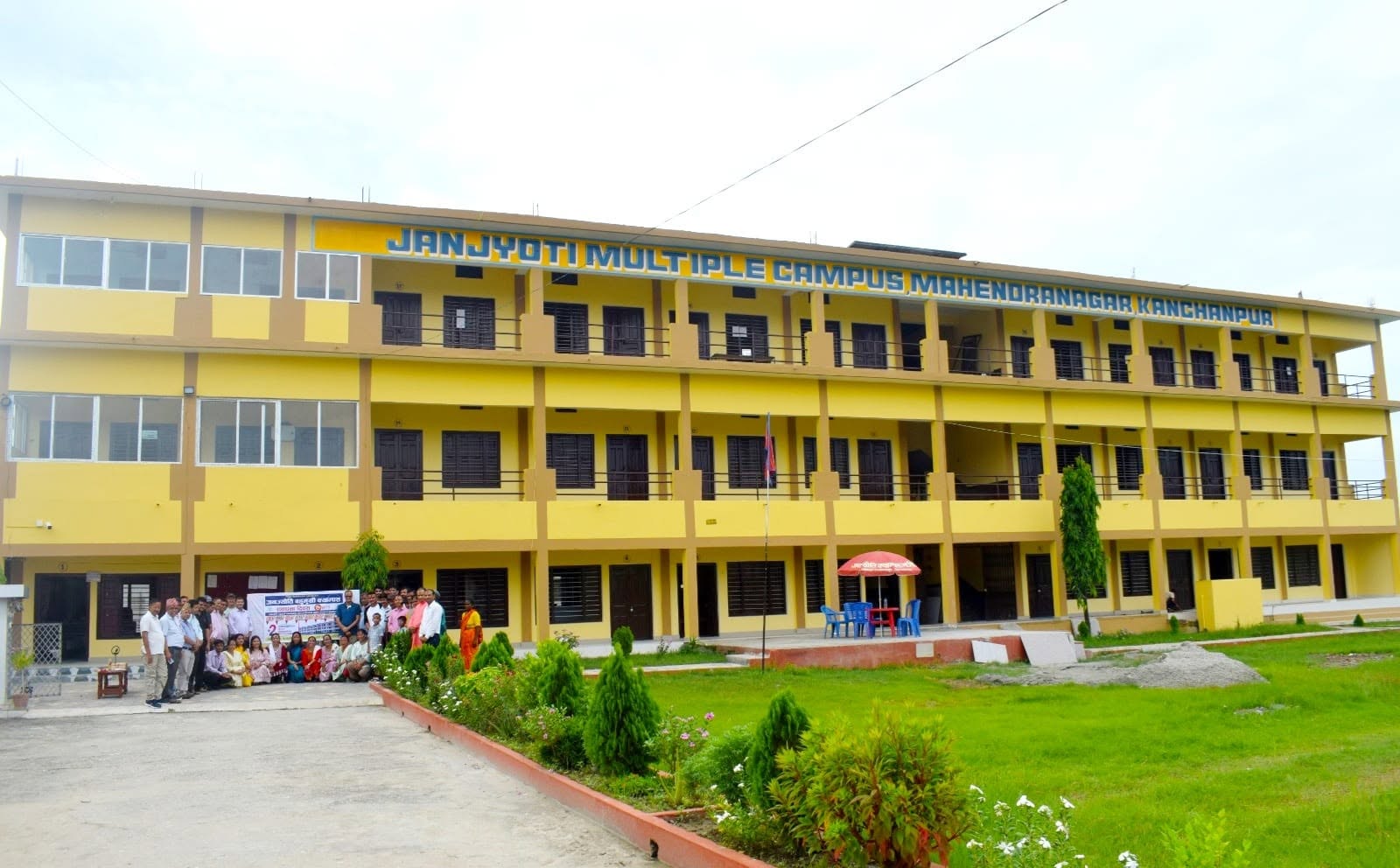
यो कार्यक्रम नेपाली भाषा, साहित्य, लोकसाहित्य, समालोचना, भाषाविज्ञान, अनुसन्धान, पाठसम्पादन र सिर्जनात्मक लेखनको उच्च तहको अध्ययनमा केन्द्रित छ। Students examine historical and modern Nepali literature while developing skills in critical reading, academic research, editing, and scholarly writing. Janjyoti Multiple Campus is located in Bhimdattnagar-18, Mahendranagar, Kanchanpur.
| Course detail | Information |
|---|---|
| Course | Master of Arts in Nepali |
| Abbreviation | MA Nepali |
| Institution | Janjyoti Multiple Campus |
| Affiliation | Tribhuvan University |
| Faculty | Faculty of Humanities and Social Sciences |
| Academic level | Master’s degree |
| Duration | Two years |
| Curriculum structure | Four semesters |
| Total credits | 64 credit hours |
| Credits per semester | 16 credit hours |
| Location | Bhimdattnagar-18, Mahendranagar, Kanchanpur |
MA Nepali is structured for advanced study of नेपाली भाषा, साहित्य र लोकसाहित्य. The curriculum connects literary history and criticism with linguistics, research, editing, and creative practice.
The program aims to develop students who can:
Analyse and review Nepali language, literature, and folklore
Conduct academic research in Nepali studies
Study literary works through Eastern and Western critical traditions
Work with language, grammar, linguistics, and sociolinguistics
Edit Nepali books, journals, and other published materials
Produce academic and creative writing in Nepali
Build an academic foundation for MPhil and PhD study
Develop subject knowledge relevant to teaching Nepali at higher education institutions
Applicants must have completed a bachelor’s degree from Tribhuvan University or another university recognized by Tribhuvan University.
The academic requirement includes:
A bachelor’s degree with Major Nepali carrying at least 300 full marks
Completion of the prescribed admission process
This requirement connects postgraduate study with prior academic preparation in Nepali as a major subject.
The curriculum carries 16 credit hours in each semester, making a total of 64 credit hours across the program.
| Semester | Main courses | Credits |
|---|---|---|
| First | Historical and Sociolinguistics; Sanskrit Poetics; Western Critical Theory and Nepali Criticism; Modern Nepali Essays and Folklore; Modern Nepali Miscellaneous Poetry | 16 |
| Second | General Linguistics; Western Literary Movements and Critical Methods; Pre-modern Nepali Literature; Modern Nepali Drama and Film Theory; Modern Nepali Khanda Kavya | 16 |
| Third | Modern Nepali Short Story; Modern Nepali Epic; Literary History Theory and Nepali Literary Historiography; specialization option; Research and Creative Method | 16 |
| Fourth | Modern Nepali Novel; Eastern Philosophy and Text Editing; specialization option; Thesis Writing or Creative Writing | 16 |
पहिलो सेमेस्टरमा भाषा, साहित्यिक सिद्धान्त, समालोचना, निबन्ध, लोकसाहित्य र आधुनिक कविताको आधार तयार गरिन्छ।
ऐतिहासिक तथा समाज भाषाविज्ञान
संस्कृत काव्यशास्त्र
पाश्चात्य समालोचना सिद्धान्त र नेपाली समालोचना
आधुनिक नेपाली निबन्ध र लोकसाहित्य
आधुनिक नेपाली फुटकर कविता
These courses introduce students to the historical and social development of language, literary interpretation, Nepali criticism, folklore, essays, and modern poetry.
दोस्रो सेमेस्टरमा सामान्य भाषाविज्ञान, साहित्यिक वाद, पूर्वआधुनिक साहित्य, नाटक, चलचित्र र खण्डकाव्यको अध्ययन गरिन्छ।
सामान्य भाषाविज्ञान
पाश्चात्य साहित्यका वाद र समालोचना पद्धति
पूर्वआधुनिक नेपाली साहित्य
आधुनिक नेपाली नाटक र चलचित्र सिद्धान्त
आधुनिक नेपाली खण्डकाव्य
The semester connects linguistic study with literary movements, critical methods, dramatic literature, film theory, and Nepali poetic traditions.
तेस्रो सेमेस्टर कथा, महाकाव्य, साहित्येतिहास, भाषिक अध्ययन र अनुसन्धान प्रक्रियामा केन्द्रित हुन्छ।
आधुनिक नेपाली कथा
आधुनिक नेपाली महाकाव्य
साहित्येतिहास सिद्धान्त र नेपाली साहित्यको इतिहासलेखन
भाषिक अध्ययन परम्परा वा लेखककेन्द्रित वैकल्पिक विषय
शोध तथा सिर्जनविधि
Author-focused options include the study of selected writers and their literary works, such as:
बालकृष्ण सम र उनका नाट्यकृति
लक्ष्मीप्रसाद देवकोटा र उनका कविताकृति
विजय मल्ल र उनका नाट्यकृति
मोहन कोइराला र उनका कविताकृति
चौथो सेमेस्टरमा उपन्यास, पूर्वीय दर्शन, पाठसम्पादन, भाषिक अध्ययन वा लेखककेन्द्रित अध्ययनसँगै शोधपत्र वा सिर्जनपत्र तयार गरिन्छ।
आधुनिक नेपाली उपन्यास
पूर्वीय दर्शन र पाठसम्पादन
भाषिक अध्ययनका प्रमुख पद्धति वा लेखककेन्द्रित वैकल्पिक विषय
शोधपत्र लेखन वा सिर्जनपत्र लेखन
Author-focused options cover selected narrative writers, including:
विश्वेश्वरप्रसाद कोइराला र उनका आख्यानकृति
भवानी भिक्षु र उनका आख्यानकृति
पारिजात र उनका आख्यानकृति
ध्रुवचन्द्र गौतम र उनका उपन्यासकृति
Students following the linguistic study route continue with the related language-study course. Those selecting an author-centred option continue through the corresponding literary study route.
Research forms an important part of the program. Students study research and creative methods before completing either a thesis or a creative writing paper in the final semester.
The academic work may involve:
Selecting and defining a research topic
Reviewing relevant literature
Applying research methods
Analysing language or literary texts
Organising arguments and evidence
Writing academic reports
Editing and presenting completed work
The creative writing route connects literary theory with the planned production of work in a selected literary genre.
The curriculum supports several forms of classroom and independent learning:
Lectures and guided explanation
Question-and-answer sessions
Classroom discussion
Individual and group assignments
Project work
Seminar papers
Study papers
Classroom presentations
Research and creative activities
Students are expected to engage with primary literary texts, criticism, reference books, research materials, and language-related academic resources.
Student performance is evaluated through internal assessment and the semester-end examination.
| Assessment component | Weightage | Main elements |
|---|---|---|
| Internal assessment | 40% | Attendance, participation, and two internal evaluations |
| Semester-end examination | 60% | Final examination for the concerned course |
The internal assessment is divided into:
Attendance: 5 marks
Participation in teaching and learning: 5 marks
First internal evaluation: 10 marks
Second internal evaluation: 20 marks
Internal work may include assignments, book or article reviews, classroom tests, project work, case or event studies, seminars, field-related activities, and individual or group reports.
नियमित अध्ययन, अनुसन्धान र लेखन अभ्यासबाट विद्यार्थीले निम्न क्षमता विकास गर्न सक्छन्:
Literary interpretation and criticism
Nepali language analysis
Linguistic and sociolinguistic study
Academic research
Thesis and report writing
Text editing and proofreading
Literary history writing
Creative writing
Classroom presentation
Critical comparison of literary theories
Analysis of poetry, fiction, drama, essays, and folklore
The level of development depends on reading practice, research engagement, writing quality, and participation in academic activities.
MA Nepali students study within a campus that has a library, e-library access, spacious classrooms, computer facilities, internet access, and multimedia-supported teaching facilities.
The library and digital resources can support:
Literary reading
Reference study
Research preparation
Thesis writing
Article and book review
Classroom presentations
Independent academic work
The campus also has scholarship provisions for deserving students and learners from economically disadvantaged backgrounds.
The curriculum can support academic and professional work connected with Nepali language and literature.
Graduates may consider areas such as:
Nepali language and literature teaching
Literary research
Editing and proofreading
Publication-related work
Literary criticism
Nepali content writing
Language-related institutional work
Creative writing
Research assistance
Academic project work
The degree also provides an academic foundation for MPhil and PhD study in Nepali and related areas. Career outcomes depend on academic performance, writing ability, research experience, institutional requirements, and available positions.
यो कार्यक्रम ती विद्यार्थीका लागि उपयुक्त हुन सक्छ जो:
नेपाली भाषा र साहित्यको गहन अध्ययन गर्न चाहन्छन्
कथा, कविता, नाटक, उपन्यास र निबन्धमा रुचि राख्छन्
भाषाविज्ञान वा समालोचनात्मक अध्ययन गर्न चाहन्छन्
अनुसन्धान तथा शोधपत्र लेखनमा रुचि राख्छन्
पाठसम्पादन वा सिर्जनात्मक लेखनमा काम गर्न चाहन्छन्
नेपाली विषयमा उच्च तहको अध्ययन जारी राख्ने योजना बनाएका छन्
Students should be prepared for extensive reading, analytical writing, classroom discussion, presentations, and independent research.
The program takes two years and its curriculum is divided into four semesters.
MA Nepali at Janjyoti Multiple Campus is affiliated with Tribhuvan University under the Faculty of Humanities and Social Sciences.
Applicants must have completed a bachelor’s degree with Major Nepali carrying at least 300 full marks from Tribhuvan University or another university recognized by TU.
The program carries 64 credit hours. Each semester contains 16 credit hours.
The course covers Nepali language, linguistics, literary criticism, poetry, drama, fiction, essays, folklore, literary history, philosophy, text editing, research, and creative writing.
The fourth semester includes an option between शोधपत्र लेखन, or thesis writing, and सिर्जनपत्र लेखन, or creative writing.
Assessment consists of 40% internal evaluation and a 60% semester-end examination. Internal evaluation covers attendance, participation, and two internal assessments.
Yes. The curriculum provides an academic foundation for MPhil and PhD study in Nepali and related areas.
The campus is located in Bhimdattnagar-18, Mahendranagar, Kanchanpur, Sudurpashchim Province, Nepal.
Campus: Janjyoti Multiple Campus
Address: Bhimdattnagar-18, Mahendranagar, Kanchanpur, Nepal
Phone: 099-418131
Additional Contact Numbers: +977-99-418131, +977-9858775085, +977-9858775096, +977-9858775083
Email: info@janjyoticampus.edu.np
Website: www.janjyoticampus.edu.np






