The Master of Business Administration (MBA) at Kantipur International College (KIC), Buddhanagar, New Baneshwor, Kathmandu, is a postgraduate management program affiliated with Purbanchal University. KIC has offered the MBA program since 2010.
The Purbanchal University MBA curriculum effective from the Fall 2022 session carries 69 credit hours across four semesters. It combines core management courses, electives, seminars, specialization study, research methodology, a thesis proposal, and a five-credit thesis. Students can specialize in Marketing, Finance, Human Resource Management, or Operations and Supply Chain Management.
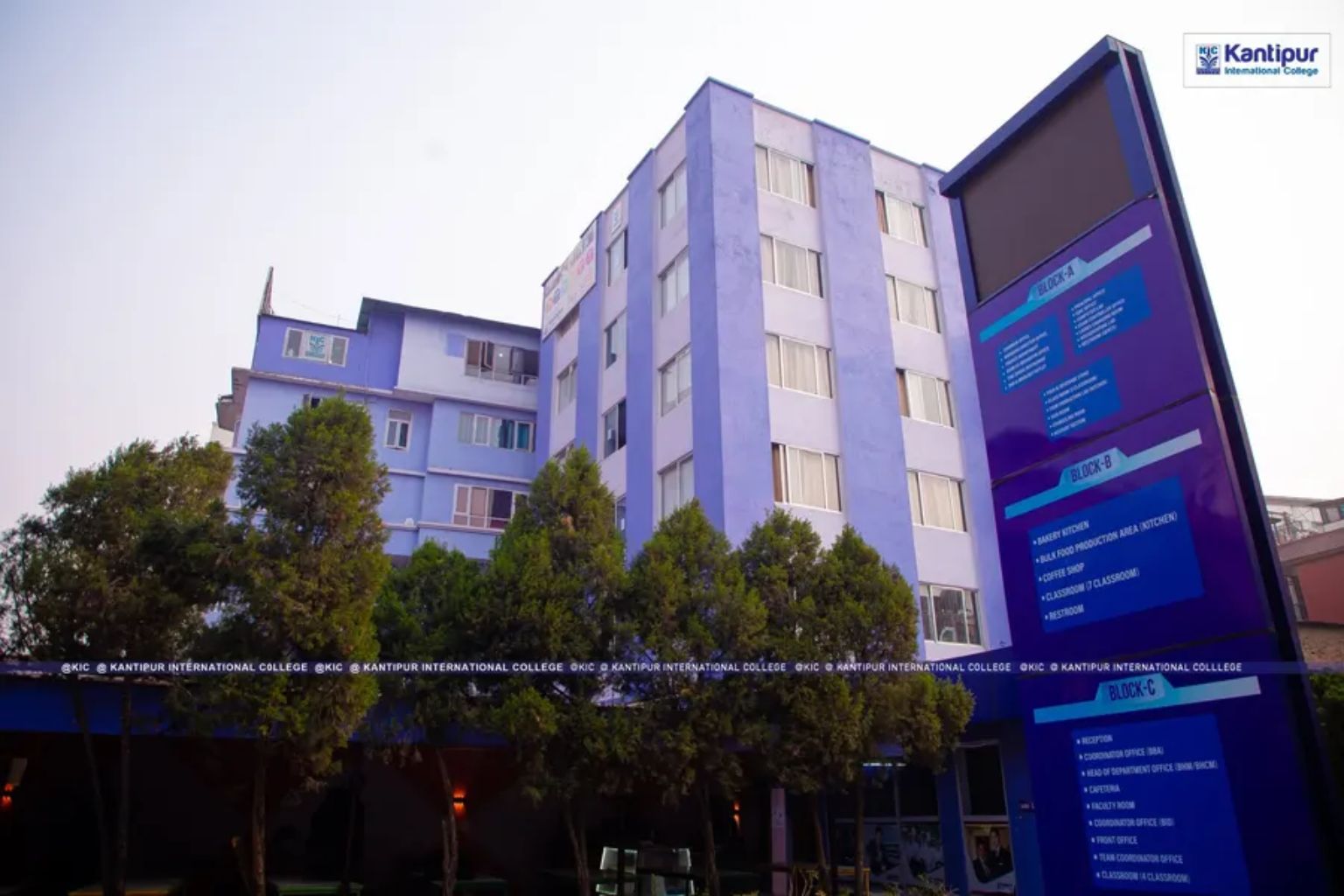
| Particular | Details |
|---|---|
| Program: | Master of Business Administration |
| Abbreviation: | MBA |
| Level: | Postgraduate |
| Institution: | Kantipur International College |
| Affiliation: | Purbanchal University |
| Faculty: | Faculty of Management |
| Location: | Buddhanagar, New Baneshwor, Kathmandu |
| Academic Structure: | 4 Semesters |
| Total Credits: | 69 Credit Hours |
| Seats: | 33 Fall / 33 Spring |
| Specializations: | Marketing, Finance, Human Resource Management, Operations and Supply Chain Management |
| Research Component: | Research Methodology and Thesis Proposal |
| Thesis: | 5 Credit Hours |
| Curriculum Reference: | Effective from Fall Session, Batch 2022 |
The MBA curriculum covers the main functional and strategic areas of management. Students study marketing, accounting, communication, business law, quantitative decision-making, human resource management, economics, finance, operations, entrepreneurship, information technology management, international business, strategy, corporate governance, and corporate social responsibility.
The program becomes more specialized in the third and fourth semesters. Students complete specialization courses in one selected management area while also working through seminars, research preparation, and thesis study.
This structure gives the MBA both a general management component and a focused area of advanced study.
The first semester carries 16 credit hours:
Marketing for Managers – 3 credits
Communication for Managers – 3 credits
Accounting for Managers-I – 3 credits
Legal Framework of Business – 2 credits
Decision Sciences – 3 credits
Elective-I – 2 credits
The opening semester builds a base in managerial communication, accounting, marketing, legal issues, and quantitative decision-making.
Semester II carries 19 credit hours:
Accounting for Managers-II – 3 credits
Human Resource Management & Organizational Behavior – 3 credits
Economics for Managers – 3 credits
Financial Management – 3 credits
Operations Management – 3 credits
Seminar I – 2 credits
Elective-II – 2 credits
This semester moves further into organizational, financial, economic, and operational management while introducing the seminar component.
Semester III carries 16 credit hours:
Entrepreneurship and Social Enterprises – 2 credits
Research Methodology and Thesis Proposal – 2+1 credits
Information Technology Management – 3 credits
Elective-III – 2 credits
Seminar II – 2 credits
Specialization I – 2 credits
Specialization II – 2 credits
Research preparation becomes a central part of the program at this stage. Students must develop a research proposal in the prescribed format and have it approved before progressing to the thesis work undertaken in the fourth semester.
The final semester carries 18 credit hours:
International Business – 2 credits
Strategic Management – 3 credits
Corporate Governance and Corporate Social Responsibility – 2 credits
Seminar III – 2 credits
Specialization III – 2 credits
Specialization IV – 2 credits
Thesis – 5 credits
The final semester brings together strategic, international, governance, specialization, seminar, and research components.
Three elective stages are included in the curriculum.
Students select one from:
Principles and Contemporary Practices of Management
Introduction to Computing
Students select one from:
E-commerce and Digital Marketing
Introduction to Public Relations
Students select one from:
Organization Design and Change
Project Management
The elective structure allows students to add selected management, technology, communication, organizational, or project-oriented study to the core curriculum.
Students select one specialization area and complete four courses within that area.
Marketing specialization options include:
Marketing Research
Product and Brand Management
Sales Management and Retailing
Service Marketing and CRM
Advertising Management
These courses extend the general marketing foundation into research, brands, sales, retailing, services, customer relationships, and advertising.
Finance specialization options include:
Corporate Financial Reporting and Analysis
Capital Structure
Security Analysis and Investment Management
Management of Financial Institutions
Financial Derivatives and Engineering
This area develops further study in corporate finance, investment, financial reporting, institutions, and financial instruments.
Human Resource Management options include:
Team Building and Conflict Management
Industrial Relations and Labor Legislation
Training and Development
Talent Management
Performance Management: Systems and Strategies
The specialization addresses employee development, workplace relations, team management, talent, and performance systems.
Available subjects include:
Inventory and Warehouse Management
Designing and Managing Supply Chain
Procurement and Materials Management
Network Design
Facility Location Management
This area concentrates on the movement and management of materials, inventory, procurement, facilities, and supply networks.
Research is built into the final half of the MBA rather than being confined to a single end-stage assignment.
The third-semester Research Methodology and Thesis Proposal course covers research problems, conceptual frameworks, objectives and hypotheses, research design, quantitative and qualitative approaches, measurement, sampling, data collection, analysis, proposal development, report writing, and academic citation.
Students are required to prepare and secure approval for a research proposal. The research learning from this stage is then used for the five-credit thesis in Semester IV, which is mandatory for completion of the MBA degree.
The curriculum contains Seminar I, Seminar II, and Seminar III, each carrying two credit hours. Seminar study sits alongside functional management courses, specialization subjects, and research work.
The program also includes Information Technology Management. This course covers areas such as IT management, alignment of IT with organizational goals, cloud-based server management, databases, IT governance, infrastructure management, and relationships between technology functions and business requirements.
Together, these components broaden the MBA beyond accounting, finance, and marketing by bringing organizational technology, research, seminar discussion, governance, and strategic decision-making into the program.
The MBA is part of KIC's management portfolio and is offered through its management setting at Buddhanagar, New Baneshwor, Kathmandu. Kantipur International College is affiliated with Purbanchal University and has offered MBA since 2010.
The college also offers the Bachelor of Business Administration, creating undergraduate and postgraduate management study within the same institutional setting.
The curriculum can support development in areas such as:
Managerial analysis and decision-making
Financial and accounting interpretation
Marketing planning
Human resource and organizational management
Operations management
Business communication
Entrepreneurship
Research design and analysis
Strategic management
Corporate governance
Information technology management
Seminar presentation and academic writing
Specialization study allows students to concentrate further on the management area closest to their academic or professional interests.
MBA graduates may explore management and coordination roles across organizations where finance, marketing, human resources, operations, administration, strategy, or project responsibilities are involved.
Possible areas include:
Business and corporate management
Banking and financial management
Marketing and sales management
Human resource management
Operations and supply chain functions
Project and administrative management
Entrepreneurship
Business research and analysis
The level and type of role available after graduation depend on prior experience, specialization, individual performance, organizational requirements, and professional development.
The MBA may suit graduates seeking postgraduate study across several business functions while retaining the option to specialize later in the program.
Students should be prepared for a combination of quantitative courses, managerial analysis, written assignments, seminars, specialization study, research proposal development, and thesis work. The program is particularly relevant to those whose interests align with finance, marketing, human resources, operations, entrepreneurship, strategy, or general management.
The MBA at Kantipur International College is affiliated with Purbanchal University.
The MBA is offered through Kantipur International College's management setting at Buddhanagar, New Baneshwor, Kathmandu.
The Purbanchal University MBA curriculum is structured across four semesters.
The program carries a total of 69 credit hours. Semester I carries 16 credits, Semester II 19 credits, Semester III 16 credits, and Semester IV 18 credits.
The stated intake is 33 seats for the Fall session and 33 seats for the Spring session.
Students can specialize in Marketing, Finance, Human Resource Management, or Operations and Supply Chain Management. Four specialization courses are completed within the selected area.
Yes. The fourth semester includes a five-credit thesis. Research Methodology and Thesis Proposal is completed in Semester III as preparation for the thesis.
The curriculum covers marketing, accounting, business communication, law, decision sciences, human resources, economics, finance, operations, entrepreneurship, information technology management, international business, strategic management, corporate governance, specialization courses, seminars, and research.