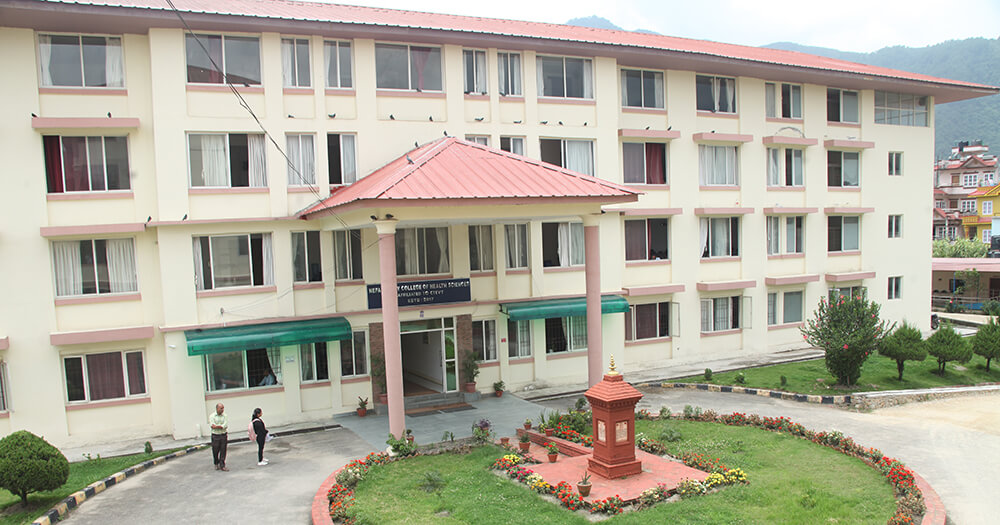
The Diploma in Pharmacy at Nepali Army College of Health Sciences (NACHS), Bhandarkhal, Sanobharyang, Kathmandu, is a three-year technical program designed to prepare pharmacy professionals who can contribute to safe and effective medication use in Nepal’s healthcare system.
Affiliated with the Council for Technical Education and Vocational Training (CTEVT), the course integrates foundational sciences, pharmaceutical knowledge, and practical training in hospital and community settings.
Course Title: Diploma in Pharmacy
Affiliation: CTEVT (Council for Technical Education and Vocational Training)
Duration: 3 Years (Annual System)
Intake Capacity: 40 Students (20 Army Quota, 20 Civil Quota)
Location: NACHS, Bhandarkhal, Sanobharyang, Kathmandu
Medium of Instruction: English and/or Nepali
Anatomy and Physiology
Chemistry
Physics
Social Studies
Nepali
English
Zoology
Botany
Mathematics and Statistics
Pharmaceutics-I
Pharmacology-I
Pharmaceutical Chemistry-I
Pharmacognosy
Biochemistry and Microbiology
Pharmacotherapeutics-I
Pharmaceutical Management
Public Health Pharmacy
Pharmaceutics-II
Pharmacology-II
Pharmaceutical Chemistry-II
Hospital and Clinical Pharmacy
Pharmaceutical Jurisprudence and Community Pharmacy Practice
Pharmacotherapeutics-II
Pharmaceutical Management
Comprehensive Field Practice
This program aims to:
Prepare competent middle-level pharmacy professionals for hospital and community services
Enable students to provide accurate guidance on medication usage, dosage, and side effects
Equip students to assess prescriptions, suggest corrections, and ensure rational drug use
Develop the capacity to produce, prepare, store, and distribute quality pharmaceutical products
Promote legal and ethical practices in pharmacy settings
Encourage critical thinking, problem-solving, and professional accountability
Diploma holders in Pharmacy are qualified for employment in:
Hospitals and health posts
Community pharmacies
Pharmaceutical industries
Academic institutions
Research and regulatory sectors
NGOs/INGOs
They are eligible for registration with the Nepal Pharmacy Council and may pursue further studies such as BPharm or Public Health degrees.
Graduates will be able to:
Interpret and validate prescriptions for accuracy
Dispense medicines with appropriate counseling
Identify drug interactions, contraindications, and side effects
Prepare and maintain pharmaceutical records
Adhere to ethical standards and regulatory frameworks
Deliver public health pharmacy services
Drug formulation and compounding
Inventory and store management
Legal compliance and ethics
Patient communication and counseling
Field training in hospital and rural pharmacy services
Illustrated lectures and group discussions
Practical demonstrations and supervised exercises
Hospital-based clinical training
Community-based pharmacy exposure
Presentation, documentation, and project work
Applicants must:
Have passed SEE/SLC with GPA ≥2.0 and minimum C grade in English, Mathematics, and Science
Submit valid academic and citizenship documents
Pass the entrance examination conducted by CTEVT
Army Quota (Total 20):
Regular Army Officer: 1 seat (50% discount)
Regular Army JCO: 1 seat (65% discount)
Regular Army OR: 2 seats (80% discount)
Retired Army (all ranks): 3 seats (discount as per rank)
Heroic death/disabled: 1 seat (100% discount)
Army TSLC Full Paying: 2 seats
Reserved Army Full Paying: 10 seats
Civil Quota (Total 20):
NACHS Full Scholarship: 2 seats
CTEVT Classified Scholarship: 3 seats
TSLC Quota: 2 seats
Foreign Full Paying: 1 seat
CTEVT Staff or Family: 1 seat
Target Group Quota: 3 seats
Full Paying (Open): 8 seats
Students must follow code of conduct throughout the academic cycle
Misconduct, including academic dishonesty, intoxication, or violence, leads to disciplinary actions including suspension or expulsion
Minimum of 90% attendance in each subject is mandatory to appear in the final examination
Three assessments in each subject annually
Practical and theory evaluations
Conducted by CTEVT
Students must pass both theory and practical components
Minimum 40% in theory
Minimum 50% in practical
Distinction: 80% and above
First Division: 65% to <80%
Second Division: 50% to <65%
Pass Division: Below 50%
Students must complete the program within six years from the date of admission
Final-year students can apply for a chance exam in case of failure in one subject
Upon successful completion, students receive the "Diploma in Pharmacy" accredited by CTEVT. They are eligible to:
Work in public and private health institutions
Register with Nepal Pharmacy Council
Continue higher education in relevant fields
Pharmacy professionals serve as a bridge between patients and treatment. Their roles include:
Ensuring rational use of medicines
Supporting drug monitoring and evaluation
Participating in preventive and screening services
Delivering counseling and therapeutic support
Collaborating in multidisciplinary care teams
Second and Third Year Faculty:
T/Col Baneera Thapa (Program Coordinator)
Ms. Nisha Adhikari (Coordinator)
Mr. Nand Kishor Mahato (Asst. Lecturer)
Mr. Vivek Shrestha (Asst. Lecturer)
Ms. Diwa Shrestha (Asst. Lecturer)
Part-time Faculty:
T/Lt. Col. Dr. Suresh Bastakoti (Lecturer)
Mr. Dinesh Dhakal (Lecturer)
T/Maj. Reshma Karki (Lecturer)
T/Capt. Bobi Shah (Asst. Lecturer)
T/Lt. Supriya Jha (Asst. Lecturer)
Mr. Rajesh Kumar Yadav (Asst. Lecturer)
Mr. Saugat Adhikari (Asst. Lecturer)
Ms. Asmita Luitel (Demonstrator)
Ms. Rakshya KC (Demonstrator)
First Year Basic Science Faculty:
Mr. Amar Gnawali
Mr. Surat Kumar Puri
Mr. Gajendra Pd. Chataut
Mr. Roshan Babu Adhikari
Mr. Tirtha Raj Bhandari
Mr. Sailesh Adhikari
Mr. Shekhar Pokharel
Mr. Tara Pd. Neupane
Mrs. Puspa Sharma
A recognized qualification in pharmacy under CTEVT
Structured curriculum aligned with national health needs
Practice-based learning in hospital and community settings
Opportunities for further education and employment in Nepal and abroad
The Diploma in Pharmacy at NACHS offers a structured, well-regulated, and meaningful path for students aspiring to enter the healthcare field. With strong academic guidance, practical exposure, and ethical training, graduates are equipped to contribute to improving public health and pharmaceutical services across Nepal.