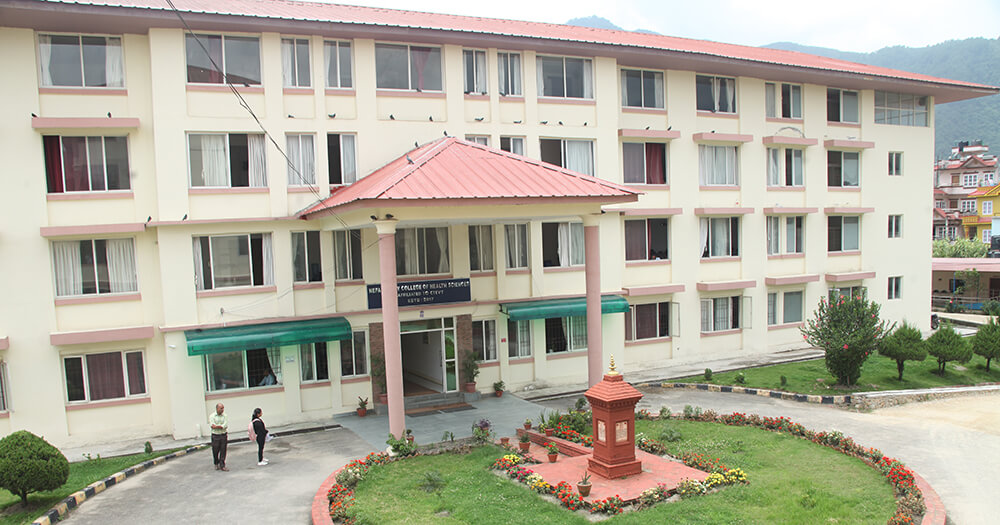
Nepali Army College of Health Sciences (NACHS), located in Bhandarkhal, Sanobharyang, Kathmandu, offers the nationally recognized PCL in Diagnostic Radiography program under the affiliation of the Council for Technical Education and Vocational Training (CTEVT). This program plays a vital role in producing skilled middle-level radiography professionals for Nepal’s growing healthcare system.
With a strong emphasis on both academic and practical learning, the three-year program is designed to equip students with essential skills in radiographic imaging, patient care, and radiation safety. Graduates are prepared to work in hospitals, health posts, diagnostic centers, and imaging units across the country.
Program Title: Certificate in Diagnostic Radiography
Affiliation: CTEVT, approved by Nepal Health Professional Council (NHPC)
Location: NACHS, Bhandarkhal, Sanobharyang, Kathmandu
Duration: 3 academic years (annual system)
Medium of Instruction: English and Nepali
Group Size: Maximum 30 students per batch
Eligibility: SEE or equivalent with GPA 2.0 and compulsory subjects (Mathematics, English, Science)
Selection: Entrance examination conducted by CTEVT
The primary objective of this program is to produce competent and qualified radiography technicians who can effectively serve in various health institutions across Nepal. The course focuses on practical skills, safety measures, and updated knowledge of modern imaging technologies.
Prepare middle-level professionals in diagnostic radiography.
Enable students to perform routine and special X-ray procedures.
Train students to manage and maintain imaging equipment.
Promote knowledge of imaging safety and radiation protection.
Prepare students to assist in patient care and emergency first aid.
Enable graduates to supervise junior staff and manage imaging records.
Encourage application of quality control practices in radiology.
Foster professional ethics and communication skills in clinical settings.
English (CFC 101)
Nepali (CFC 102)
Mathematics (CFC 103)
Physics (CFC 104)
Chemistry (CFC 105)
Anatomy & Physiology I (RDC 106)
Radiographic Physics (RDC 107)
Computer Application (CFC 108)
Behavioral Science & Sociology (CFC 109)
First Aid (CFC 110)
Anatomy & Physiology II (RDC 201)
Radiographic Technique I (RDC 202)
Radiographic Photography (RDC 203)
Radiological Equipment Maintenance (RDC 204)
Pathology and Microbiology (CFC 205)
Medical Ethics & Jurisprudence (CFC 206)
Community Diagnosis and Health Education (CFC 207)
Radiographic Technique II (RDC 208)
Radiographic Technique III (RDC 301)
Radiographic Technique IV (RDC 302)
Radiographic Technique V (RDC 303)
Radiotherapy (RDC 304)
Radiological Health and Safety (RDC 305)
Radiographic Clinical Placement I (RDC 306)
Radiographic Clinical Placement II (RDC 307)
Project Work and Report Writing (RDC 308)
NACHS combines theory with real-world practice using the following approaches:
Illustrated lectures, seminars, and group discussions
Demonstrations and simulations using modern imaging tools
Practical and clinical rotations in recognized hospitals
Role-plays, case studies, and report presentations
Online and media-assisted learning (as needed)
Theory Class: 1 teacher per 30 students
Practical Class: 1 teacher per 10 students
Institutional Ratio: 1:10 overall
75% of instructors must be full-time technical staff
To support effective learning, the following resources are used:
Printed materials (handouts, textbooks, assignments)
Demonstration tools, models, and physical imaging equipment
Multimedia aids and slide presentations
Web-based platforms and digital simulations
Audiovisual and computer-based learning tools
The program is delivered by experienced faculty and clinical instructors, including:
Asst. Lecturer Hirendra Prasad Yadav (Coordinator)
Asst. Lecturer Shamb B.C.
Demonstrator Jeewan Gurung
Associate Prof. Dr. Lee Budhathoki
Lect. Rajesh Shrestha
T/Maj. Asst. Lect. Ranju Shrestha
T/Lt. Asst. Lect. Bhagwan Thapa Magar
T/Lt. Asst. Lect. Upesh Poudel
Demonstrator Saugat Karki
Additional foundational subjects are taught by qualified instructors holding at least a master’s degree.
Regular performance evaluations and feedback
Continuous assessment of practical performance and attendance
Logbook maintenance and assignments
Minimum pass mark: 40% in theory and 40% in practical
Conducted by CTEVT in both theoretical and practical components
Practical evaluation includes real-case tasks, viva, and spot performances
Re-examination provision as per CTEVT policy
Students must pass all components within 6 years from enrollment
After completion of all three years, students are awarded the “Certificate in Diagnostic Radiography.”
Distinction: 80% and above
First Division: 65% to below 80%
Second Division: 50% to below 65%
Pass Division: Below 50% (minimum pass marks required)
Graduates of this program are eligible for Level 5 (Technical) positions in the government and private sectors, subject to the provisions of the Public Service Commission and NHPC registration.
Public hospitals and trauma centers
Private diagnostic and imaging centers
Nursing homes and clinics
Radiology departments of medical institutes
Mobile X-ray and screening units
Radiography Technician
X-Ray Technologist
CT Scan Operator
MRI Technician (with further training)
Mammography Technologist
Imaging Assistant in Emergency Units
After completing this program, students may pursue further education such as:
Bachelor in Medical Imaging Technology (BMIT)
Bachelor in Radiologic Technology
Bachelor or Master in Nuclear Medicine
Master in Medical Imaging Technology
MSc in Anatomy or Physiology
These programs open further pathways to become imaging technologists, radiology educators, or specialists in advanced diagnostic modalities.
Students enrolled in this program must adhere to strict academic and behavioral guidelines:
Academic dishonesty or misconduct may result in suspension or expulsion.
Drug use, violence, or possession of weapons is strictly prohibited.
Respect for patients, instructors, and peers is mandatory at all times.
Students are expected to demonstrate:
Responsibility and punctuality
Honest and professional conduct
Compassionate patient care
Strong teamwork and collaboration
Self-discipline and motivation
Willingness to adapt to new technologies and work environments
The PCL in Diagnostic Radiography program at NACHS is tailored for students who are passionate about healthcare and imaging sciences. With a balanced curriculum, dedicated faculty, and access to real-world hospital settings, this program ensures the development of competent and ethical radiography professionals capable of serving Nepal’s healthcare system and beyond.