Yeti Health Science Academy (YHSA), Kathmandu is a health science institution established in 2003. Located at Kanti Marga, Maharajgunj, Kathmandu, the academy conducts university-level and technical health education programs.
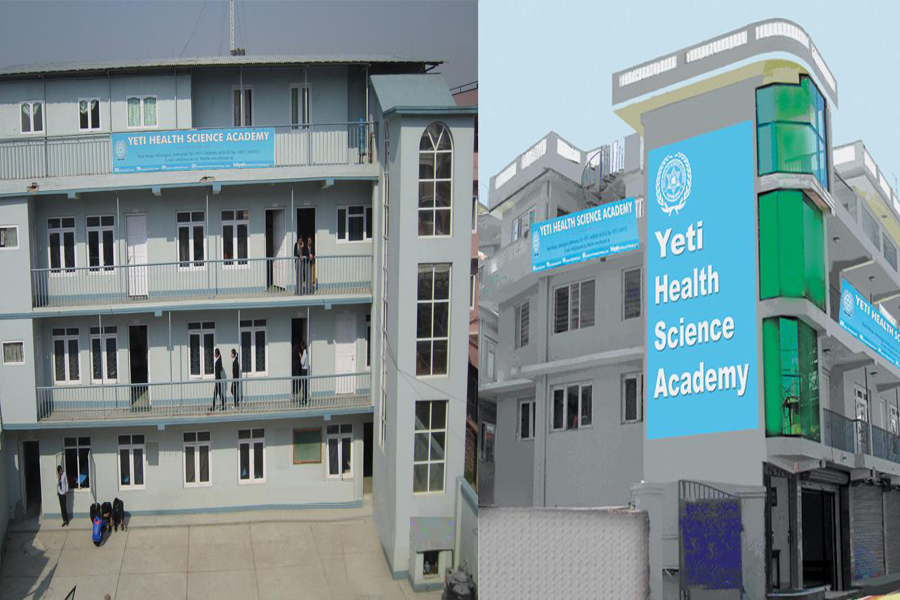
YHSA has its own academic buildings with classrooms, laboratories, a library, administrative space, and hostel facilities. Teaching combines classroom study with laboratory work, clinical exposure, field activities, and practical learning according to the requirements of each program.
The academy is managed by its two founding members, Chairman Mr. L.B. Tandan and Director Ms. Pramila Thapa. Its academic priorities include professional knowledge and skills, critical thinking, practical competence, interdisciplinary learning, and professional ethics.
| Particular | Details |
|---|---|
| Established | 2003 |
| Location | Kanti Marga, Maharajgunj, Kathmandu |
| University affiliation | Purbanchal University |
| Technical programs | CTEVT |
| Academic field | Health sciences |
| Clinical posting | Green City Hospital and other hospitals |
| Hostel | Girls' hostel |
| Management | Chairman Mr. L.B. Tandan and Director Ms. Pramila Thapa |
Bachelor-level programs at YHSA are affiliated with Purbanchal University (PU). The programs cover public health, nursing, and post-basic nursing education, with laboratory, clinical, community, research, and field-based components according to the respective curriculum.
YHSA also conducts certificate, diploma, and proficiency certificate health programs under the Council for Technical Education and Vocational Training (CTEVT). These programs follow applicable CTEVT provisions for curriculum, admission, scholarships, examinations, certification, and other academic requirements.
| Program | Academic body | Duration |
|---|---|---|
| Bachelor of Public Health (BPH) | Purbanchal University | 8 semesters |
| Bachelor of Science in Nursing | Purbanchal University | 4 years |
| Post-Basic Bachelor of Nursing Science (PBNS) | Purbanchal University | 3 years |
| Certificate in Medical Laboratory Technology (CMLT) | CTEVT | 3 years |
| Certificate in Diagnostic Radiography | CTEVT | 3 years |
| Diploma in Physiotherapy | CTEVT | 3 years |
The Bachelor of Public Health follows an eight-semester structure under Purbanchal University's Faculty of Medical and Allied Sciences. The program begins with public health foundations and basic health sciences, including anatomy, physiology, pathophysiology, microbiology, biochemistry, and applied professional English.
Subsequent study covers public health entomology, pharmacology and toxicology, first aid and safety, nutrition, environmental health, epidemiology, family health, demography, reproductive health, occupational health, non-communicable diseases, mental health, and related areas of public health practice.
Laboratory and field-based components are integrated into the curriculum. Students therefore encounter scientific foundations alongside epidemiology, community health, environmental health, population studies, and practical public health work.
The Bachelor of Science in Nursing is a four-year Purbanchal University program. First-year study includes anatomy and physiology, biochemistry, microbiology and parasitology, pathophysiology, pharmacology, nutrition and dietetics, foundation of nursing, and community health nursing.
Second-year study covers nursing concepts and theories, medical-surgical nursing, psychiatric nursing, community health nursing, medical sociology and anthropology, and geriatric nursing.
The third year includes pediatric nursing, midwifery, community health nursing, basic epidemiology, and gynaecology nursing. Fourth-year subjects include research and biostatistics in nursing, educational science, leadership and management, and advanced medical-surgical nursing.
Theory and practical learning are combined across major clinical areas of the program.
The Post-Basic Bachelor of Nursing Science is a three-year Purbanchal University program combining basic sciences with nursing theory, clinical nursing, community health, education, management, research, and specialized study.
First-year subjects include anatomy and physiology, pharmacology, pathophysiology, microbiology and parasitology, biochemistry, nutrition and dietetics, medical-surgical nursing, nursing concepts and theories, pediatric nursing, medical sociology and anthropology, and professional English.
Second-year study covers midwifery, community health nursing, psychiatric nursing, educational science, epidemiology, geriatric nursing, and applied computer technology.
The third year includes leadership and management, research and biostatistics in nursing, oncology nursing, and an elective area in community health nursing, midwifery, medical-surgical nursing, or psychiatric nursing.
The Certificate in Medical Laboratory Technology is a three-year CTEVT program under the yearly system. It is structured to prepare middle-level medical laboratory personnel through academic and practical laboratory study.
Major areas include clinical microbiology and immunology, hematology and blood banking, clinical biochemistry, medical parasitology, clinical pathology, public health and first aid, histopathology and cytopathology, instrumentation and automation, and clinical laboratory management.
Clinical practice covers microbiology and parasitology, hematology and blood banking, biochemistry, histopathology, and cytopathology. Students also study laboratory procedures, quality control, reporting, laboratory management, and instrument maintenance.
The CTEVT Certificate in Diagnostic Radiography is a three-year program under the yearly system. The first year focuses on foundational study, followed by radiography and imaging subjects and practical application in the later years.
The curriculum includes radiographic technique, radiological procedure, radiographic imaging, basic radiation physics, radiological anatomy, first aid and public health, basic radiographic pathology, clinical practice and ethics, and radiography practical work.
Practical learning takes place alongside technical study relevant to routine radiography and imaging work in health institutions and imaging settings.
The CTEVT curriculum for physiotherapy uses the title Proficiency Certificate Level in Medical Science (Physiotherapy). It is a three-year yearly-system program centered on physiotherapy practice in clinical and community settings.
Study areas include applied anatomy and physiology, basics of physiotherapy, biomechanics, pathology and pharmacology, medicine and surgery, behavioural science, rehabilitation and disability management, physiotherapy in medical and surgical conditions, rehabilitation and healthcare management, clinical practicum, and comprehensive community physiotherapy.
Practical components cover patient assessment support, treatment and rehabilitation procedures, follow-up care, referral-related responsibilities, and work within multidisciplinary health teams.
Admission to applicable medical and nursing bachelor-level programs is based on MECEE-BL and follows the prevailing requirements of the Medical Education Commission (MEC), Nepal. Where a medical education master's program applies, admission follows MECEE-PG.
Relevant MEC provisions cover entrance procedures, code of conduct, scholarship arrangements, seat allocation, fee structure, and admission processes. Seats are determined for each admission cycle and may vary from one academic year to another.
Fees, scholarships, seat distribution, examination provisions, and admission schedules are subject to revision according to MEC decisions and its official academic calendar.
For diploma and PCL programs, applicable CTEVT provisions govern curriculum, admission, scholarships, examinations, certification, and related academic requirements.
Graduates entering regulated health professions must meet the licensing requirements of the relevant professional council after completing the applicable academic program.
Nursing graduates are subject to the licensing requirements of the Nepal Nursing Council.
Graduates in applicable allied health disciplines come under the professional regulatory framework of the Nepal Health Professional Council (NHPC).
Licensing and professional registration requirements follow the prevailing provisions of the respective council.
Clinical exposure forms part of health science education at YHSA. The academy conducts clinical posting at Green City Hospital, identified as its own hospital. Students are also taken to other hospitals, including Bir Hospital, Kanti Children Hospital, Orthopedic Hospital, and Maternity Hospital.
The nature of clinical learning differs across programs. Nursing education involves patient-care and community practice, while public health, laboratory technology, radiography, and physiotherapy programs use practical settings related to their respective academic requirements.
This approach connects classroom study with laboratory work, clinical activities, and field-based learning.
YHSA maintains laboratory facilities for demonstration and practical classes in several health science areas, including:
Biochemistry
Microbiology
Parasitology
Hematology
Histopathology
Physiotherapy
Clinical practical work
The academy also has a computer laboratory with computers, broadband internet service, and Wi-Fi facilities.
Its academic buildings accommodate classrooms, laboratories, office functions, and teaching-learning resources required for regular academic activities.
The YHSA library provides textbooks, reference books, lecture notes, newspapers, magazines, newsletters, journals, and other academic publications.
Students and staff can use and borrow available library materials. The library supports course study, assignments, academic reading, and preparation related to health science education.
YHSA has a furnished girls' hostel for students requiring residential accommodation. Hostel rules address residence, visitor hours, permission for leaving the hostel, conduct, and day-to-day use of the facility.
The academy is situated at Kanti Marga, Maharajgunj, Kathmandu, with access to public transport.
YHSA places emphasis on professional education, practical learning, and ethical conduct. Its academic priorities include:
Student-centered professional education
Professional knowledge and practical skills
Critical thinking
Respect for diversity of thought
Interdisciplinary collaboration
Practical learning in different settings
Continuous learning
Professional ethics
Development of confidence and competence
Research and evidence generation related to the health sector
Its broader goal is to prepare graduates who can work in health-sector roles and contribute to health services, programs, policy, and research according to their respective areas of study.
Yeti Health Science Academy is managed by its two founding members. Mr. L.B. Tandan serves as Chairman, and Ms. Pramila Thapa serves as Director.
The academy brings together Purbanchal University bachelor-level health science programs and CTEVT technical programs, supported by laboratories, clinical exposure, library resources, computing facilities, and hostel accommodation for female students.
Admission requirements depend on the program and the academic authority responsible for it.
For applicable bachelor-level medical and nursing programs, MEC provisions determine entrance requirements, seats, scholarships, fees, and admission procedures for the relevant academic year.
For CTEVT certificate, diploma, and PCL programs, prevailing CTEVT provisions apply to admission, examinations, scholarships, curriculum, and certification.
Students entering regulated health professions are also subject to the licensing or professional registration requirements of the respective council after completing their academic program.