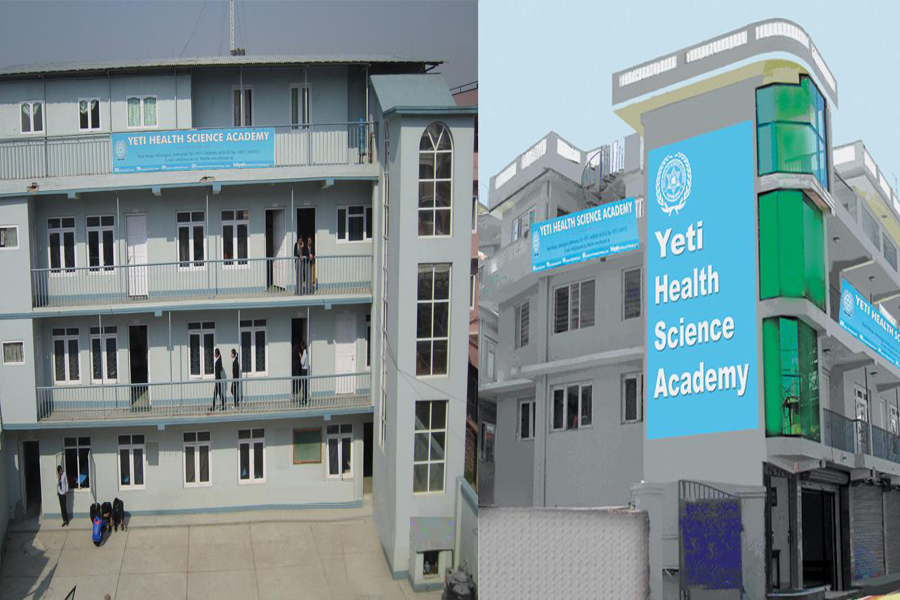
The Diploma in Physiotherapy at Yeti Health Science Academy (YHSA), Kathmandu is a three-year health science program under the Council for Technical Education and Vocational Training (CTEVT). The current CTEVT qualification is officially titled Proficiency Certificate Level in Medical Science (Physiotherapy) and follows the yearly system.
The curriculum prepares middle-level technical personnel for physiotherapy work in clinical and community settings. Training covers basic sciences, physiotherapy techniques, biomechanics, medicine and surgery, rehabilitation, disability management, clinical practice, and community physiotherapy. The current curriculum received its second revision in 2025 (2082 BS), with the revised second and third years effective from the 2082/83 academic intake.
| Particular | Details |
|---|---|
| Course: | Diploma in Physiotherapy |
| Official CTEVT title: | Proficiency Certificate Level in Medical Science (Physiotherapy) |
| College: | Yeti Health Science Academy, Maharajgunj, Kathmandu |
| Academic body: | CTEVT |
| Duration: | 3 academic years |
| System: | Yearly |
| Medium: | English and/or Nepali |
| Entrance: | CTEVT entrance examination |
| Attendance: | Minimum 90% in each subject |
Applicants can enter the program through either of these academic routes:
SLC pass or SEE with a minimum GPA of 2.0 and grades in Compulsory Mathematics, English, and Science; or
TSLC in a related program with at least 68.33%.
Applicants must also pass the entrance examination administered by CTEVT.
Admission, scholarships, examinations, certification, and other academic requirements follow the applicable CTEVT framework.
The program extends over three academic years under the yearly system. An academic year consists of up to 35 weeks, with up to 40 academic hours per week excluding the evaluation period.
The first year concentrates on basic science and foundational study. The second year introduces core physiotherapy theory and practical work. Third-year study moves into clinical conditions, rehabilitation, hospital-based practicum, and community physiotherapy.
Second-year subjects include:
Applied Anatomy and Physiology
Basics of Physiotherapy
Biomechanics
Pathology and Pharmacology
Medicine and Surgery I
Medicine and Surgery II
Behavioural Science
Rehabilitation and Disability Management
Third-year study includes:
Physiotherapy in Medical and Surgical Conditions I: Orthopedics, Pediatrics, and Geriatrics
Physiotherapy in Medical and Surgical Conditions II: Neurology, Cardiopulmonary, and Women's Health
Rehabilitation and Healthcare Management
Clinical Practicum
Comprehensive Community Physiotherapy
The clinical subjects address physiotherapy assessment and management across musculoskeletal, neurological, cardiopulmonary, pediatric, geriatric, and women's health conditions. Rehabilitation study also covers disability management, assistive products, community-based rehabilitation, activities of daily living, professional ethics, healthcare management, public health, and communication.
The third year contains a 20-week clinical practicum in hospitals and other suitable clinical settings. Practice covers orthopedics, neurology, cardiopulmonary care, pediatrics, women's health, and geriatrics. Students work under supervision and maintain practical records or logbooks during the placement.
A separate four-week Comprehensive Community Physiotherapy component is also included in the third-year structure.
Through these practical components, students work on patient assessment, treatment planning, supervised physiotherapy procedures, treatment evaluation, record keeping, communication, follow-up advice, and multidisciplinary teamwork.
YHSA has practical laboratory facilities for basic sciences and clinical learning, including a physiotherapy laboratory. Students also have access to classrooms, a library with textbooks and reference resources, and a computer laboratory with broadband internet and Wi-Fi.
These facilities support the classroom, laboratory, and practical components of the physiotherapy curriculum.
Students must maintain at least 90% attendance in each subject to appear in the respective final examination. The curriculum uses written and practical internal assessments along with final examinations. Three internal assessments are conducted for each subject during the academic year.
Students must pass both theory and practical components. The minimum pass requirement is 40% in theory and 50% in practical. Clinical practicum evaluation considers attendance, logbook maintenance, practical performance, and viva voce assessment.
Successful completion of all required components over the three years leads to the award of Proficiency Certificate Level in Medical Science (Physiotherapy).
The program prepares graduates to assist physiotherapists in patient assessment, treatment, rehabilitation procedures, follow-up care, referral, and multidisciplinary work in clinical and community settings.
Graduates entering regulated professional practice must meet the applicable registration and licensing requirements of the Nepal Health Professional Council (NHPC), including the relevant professional licensing examination.
Professional practice remains subject to the council requirements applicable when the graduate seeks registration.
After meeting applicable professional requirements, graduates may pursue physiotherapy-assistant roles connected with hospitals, clinical services, rehabilitation settings, and community-based services.
The work may involve supporting assessment, supervised treatment, rehabilitation activities, patient follow-up, record keeping, referral processes, and teamwork with other health professionals. Career options depend on professional registration, practical competence, recruitment requirements, experience, and available positions.