The Bachelor of Public Health (BPH) at Yeti Health Science Academy (YHSA), Kathmandu is a four-year, eight-semester bachelor-level program affiliated with Purbanchal University. The course combines basic health sciences with epidemiology, family and community health, environmental health, health education, statistics, research, health-service management, and field-based public health practice.
Students progress from scientific and public health foundations to community diagnosis, program supervision, health economics, research, project management, and residential field practice.
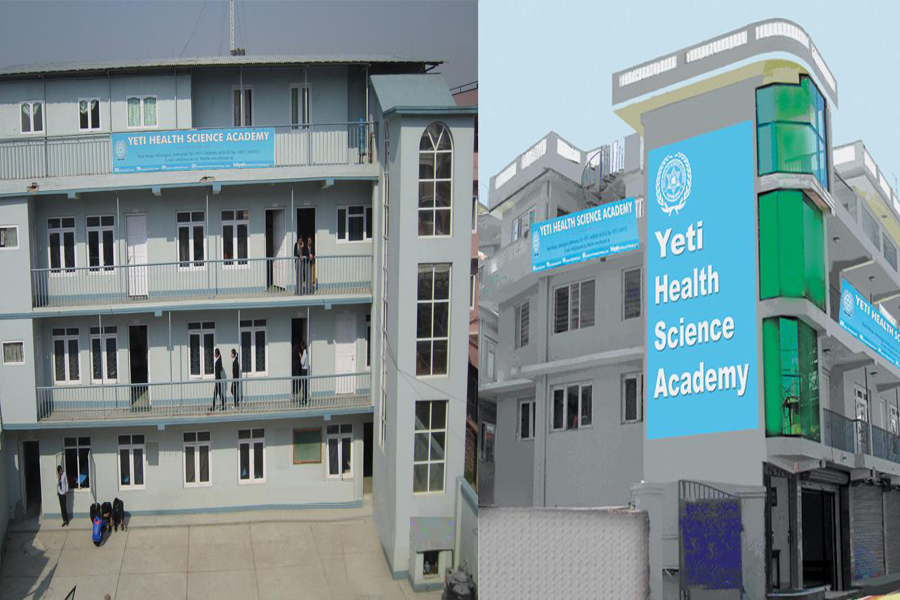
Course: Bachelor of Public Health (BPH)
College: Yeti Health Science Academy, Maharajgunj, Kathmandu
Affiliation: Purbanchal University
Duration: 4 years
Academic structure: 8 semesters
Medium of instruction: English
Entrance: MECEE-BL under the prevailing Medical Education Commission admission system
The BPH program is structured around population health, disease prevention, health promotion, community-based practice, research, and the planning and management of health services.
Its academic objectives cover public health knowledge and practical skills, research and management, communication, community participation, public health program planning, health education, and work related to population-level health needs.
The course may suit students whose interests are centered on community health, epidemiology, health education, research, health programs, environmental health, and public health management.
Applicants may qualify through either of the following academic routes:
10+2 Science or equivalent with Physics, Chemistry, and Biology, with at least 50% aggregate in total marks or GPA 2.4; or
Health Science Proficiency Certificate/Diploma with at least 50% aggregate in total marks and registration with the council related to the educational program.
Applicants are also required to be physically and mentally fit and meet the applicable entrance requirements.
Admission to BPH follows MECEE-BL and the prevailing rules of the Medical Education Commission (MEC), Nepal.
MEC provisions apply to entrance procedures, seat allocation, scholarships, fee structure, admission procedures, and related requirements. Seat numbers are determined for each admission cycle and may change from one academic year to another. Fees, scholarships, admission arrangements, and other applicable provisions are also subject to MEC decisions and its academic calendar.
The first semesters establish the scientific and public health base through Introduction to Public Health, Anatomy, Physiology and Pathophysiology, Public Health Microbiology, Public Health Biochemistry, Applied Professional English, nutrition, environmental health, pharmacology and toxicology, first aid, and epidemiology. Laboratory-based practice is included in relevant subjects.
The middle semesters move into communicable and non-communicable diseases, family health, applied public health nutrition, reproductive health and gender, environmental and occupational health, epidemiological methods, sociology and anthropology in public health, public health statistics, community participation, disaster management, health education, school health, and public health service management. Field-based and classroom-based practical work runs alongside several of these areas.
Later study covers community health diagnosis, public health and medical services in Nepal, health policy and programs, research, supervision and monitoring, health economics and financing, health management information systems, logistics management, human-resource education and training, public health profession and entrepreneurship, and public health project management.
The final stages include research proposal writing, residential public health management field practice, training-program work, project proposal writing, and a Public Health Research Practicum.
BPH is not limited to classroom study. The curriculum contains laboratory-based practice, concurrent field-based practice, community health diagnosis, residential field work, research activity, and public health management practice.
At YHSA, students also have access to classrooms, health science laboratories, a computer laboratory with internet and Wi-Fi, and library resources. These facilities support the scientific, statistical, research, and practical components of the program.
Semester-end examinations form part of the academic structure. The curriculum assigns 80% of theory marks to the final examination and 20% to internal assessment. Students are required to obtain at least 50% in theory and 60% in practical components separately to pass the relevant subject. Practical field and research components use their respective assessment arrangements.
BPH graduates may pursue work connected with governmental and non-governmental health agencies, hospitals, schools, research centers, academic institutions, health programs, and public health activities at different administrative levels. Career outcomes depend on the position, professional requirements, experience, and available opportunities.
After completing the program, graduates entering regulated professional practice must meet the applicable licensing requirements of the Nepal Health Professional Council (NHPC), including the relevant professional licensing examination.
The Bachelor of Public Health is a four-year program organized into eight semesters.
The program is affiliated with Purbanchal University.
Yes. Admission follows MECEE-BL and the prevailing admission system of the Medical Education Commission.
Yes. The course includes concurrent field-based practice, community health diagnosis, residential field practice, research work, and public health management practice.
Major areas include public health, epidemiology, family health, nutrition, environmental and occupational health, reproductive health, statistics, health education, health policy, research, health economics, program management, and community-based practice.
Graduates entering regulated professional practice must meet the applicable licensing requirements of the Nepal Health Professional Council.