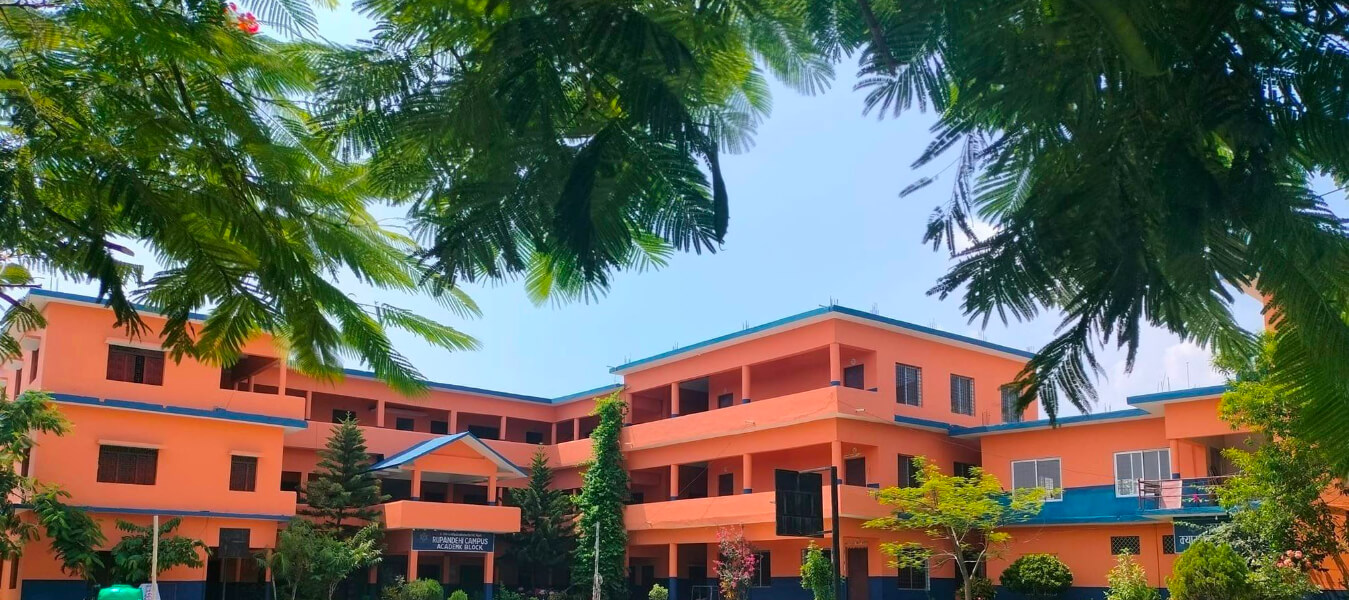
The Bachelor of Education (B.Ed.) at Rupandehi Campus is a four-year annual bachelor’s program under the Faculty of Education of Tribhuvan University. The campus is located in Siddharthanagar-9, Bhairahawa, within Siddharthanagar Municipality, and runs bachelor-level Education and Management streams. At campus level, the B.Ed. program is supported by a Faculty of Education that started in 2061 BS, reports 15 faculty members and 280 students, and includes the Department of Language, the Department of Education (Health and Mathematics), and the Department of Teaching Practice.
The TU four-year B.Ed. is a professional as well as academic program designed to prepare competent teachers who can teach two subjects at the secondary level. At Rupandehi Campus, the course sits within an academic environment that includes library and ICT facilities, research activity, faculty-student interaction, and links with schools and colleges in the region.
TU-affiliated Bachelor of Education (B.Ed.) program
Four-year annual system
Offered by the Faculty of Education at Rupandehi Campus
Faculty of Education started in 2061 BS
Faculty of Education reports 15 faculty members and 280 students
Supported by the Department of Language, Department of Education (Health and Mathematics), and Department of Teaching Practice
Morning shift operation
English and Nepali medium
Includes specialization major, specialization minor, and teaching internship/practicum
Campus-level support includes library, ICT lab, research activity, and scholarship funds
The B.Ed. curriculum follows the standard four-year annual structure of Tribhuvan University. It combines communication skills, professional core courses, specialization study, and teaching practice.
Duration: 4 years
Academic System: Annual system
Affiliation: Tribhuvan University
Total Structure: 22 courses
Full Marks: 2200
Group A: Communication Skills
Group B: Professional Core Areas
Group C: Specialization Major Courses
Group D: Specialization Minor Courses
Group E: Teaching Internship / Practicum
Communication Skills Courses: General Nepali and General English
Professional Core Areas: Philosophical and Sociological Foundations of Education, Educational Psychology, Curriculum and Evaluation, and one elective from Instructional Technology, ICT in Education, or ICT in Specialized Subject
Major Specialization Areas: Nepali, English, Mathematics, Science, Health and Physical Education, Population, Geography, Economics, History, and Political Science
Minor Specialization Areas: a second subject area different from the major, with options including Biology, Health Education, Physical Education, Primary Education, Early Childhood Development Education, Non-Formal Education, and Education Management where applicable
Prepare teachers who can teach two subjects at the secondary level
Combine subject specialization with professional education study
Build understanding of educational psychology, curriculum, and evaluation
Connect academic study with teaching internship and practicum
Support teacher preparation through disciplinary and interdisciplinary study
The B.Ed. program at Rupandehi Campus is tied closely to the campus’s Faculty of Education and its regional academic links. The faculty has working relationships with schools and colleges in the surrounding area, which adds practical relevance to a course built around subject specialization and teaching practice.
The presence of a dedicated Department of Teaching Practice, along with teaching areas such as English, Nepali, Mathematics, and Health and Physical Education, gives the program a clearer institutional setting than a generic course description. Students study within a campus that also supports research activity, library use, and ICT-based academic work.
Understand key foundations of education, educational psychology, curriculum, and evaluation
Develop subject knowledge in both major and minor specialization areas
Complete teaching internship and practicum as part of the degree structure
Build the academic base required for secondary-level teaching
Gain exposure to instructional technology or ICT-related elective study
Communication skills in Nepali and English
Subject specialization in selected teaching areas
Teaching practice through internship and practicum
Educational analysis through psychology, curriculum, and evaluation study
Use of instructional technology and ICT-related course options
At Rupandehi Campus, teaching and learning are organized through faculties, departments, and programs with a student-oriented approach. The campus also reports early and continued interaction between students and faculty, along with structured access to research and professional development opportunities.
Lectures
Discussions
Demonstrations
Surveys
Project work
PowerPoint presentations
Research-linked teaching activity through departments
School teaching at the secondary level after completing the required academic pathway
Education-related work connected with teaching and training
Academic progression to higher study in education
Roles linked to subject teaching, instructional support, and educational practice
The campus has donor-supported renewable scholarship funds
Community contribution to the campus includes scholarship support
The campus also receives grants from UGC and other government bodies
Admission opens after the campus publishes its notice
Applicants submit the prescribed application form with required academic documents
Students with HSE / Grade 12 pass, PCL, or equivalent are eligible for admission to the B.Ed. program
Additional eligibility depends on the selected specialization subject
English Education requires English or Linguistics major, or 50 percent in General English, or 50 percent in the entrance examination conducted by the concerned campus department
Nepali Education requires Nepali major with at least 200 marks
Mathematics Education requires Mathematics major with at least 200 marks
Science Education requires Physics, Chemistry, and Biology with at least 100 full marks in each subject
Health and Physical Education requires the relevant background or successful completion of the required physical fitness entrance test where applicable
Selected applicants complete admission through document submission and fee payment
Registration, examinations, and results follow TU rules and the applicable academic calendar
Class 12 / +2 or equivalent academic transcript
Character certificate
Migration certificate, if applicable
Transfer certificate
Citizenship certificate or birth certificate copy
Passport-size photographs
Entrance scorecard, if required
Completed admission form
Admission fee payment receipt
Equivalence certificate, if applicable
The B.Ed. program follows the annual examination system of Tribhuvan University. Final examinations are conducted by TU through the Office of the Controller of Examinations.
The course structure also includes teaching internship and practicum in the fourth year. Entrance, admission, examinations, and results follow TU rules, guidelines, and the applicable academic calendar.
The B.Ed. program at Rupandehi Campus combines the standard TU annual curriculum with a faculty structure that is already organized around language, education, and teaching practice. Its local academic setting, links with regional educational institutions, and campus-level research and learning facilities give the course a defined institutional context.
For students seeking a TU-affiliated four-year education degree in Bhairahawa, the program offers a clear route through specialization study, professional core courses, and final-year teaching practice.
The B.Ed. program runs for four academic years.
The program is affiliated with Tribhuvan University.
Yes. The course structure includes teaching internship and practicum in the fourth year.
The Faculty of Education includes the Department of Language, the Department of Education (Health and Mathematics), and the Department of Teaching Practice.
The program follows the annual system.
The campus has donor-supported renewable scholarship funds and also receives institutional grant support from UGC and other government bodies.