In Nepal, the “Right to Information” (RTI) is not only a matter for journalists or rights advocates—it is a fundamental right directly connected to students, guardians, service-seeking citizens, educational institutions, and public bodies. The Constitution of Nepal guarantees every citizen the right to request and receive information about matters concerning themselves or the public interest, while also providing exceptions for information that must be kept confidential according to law.
For the practical implementation of this right, the “Right to Information Act, 2064 (2007)” clarifies the process for requesting information, time limits, complaint/appeal mechanisms, provisions for fines and compensation, and the role of the National Information Commission.
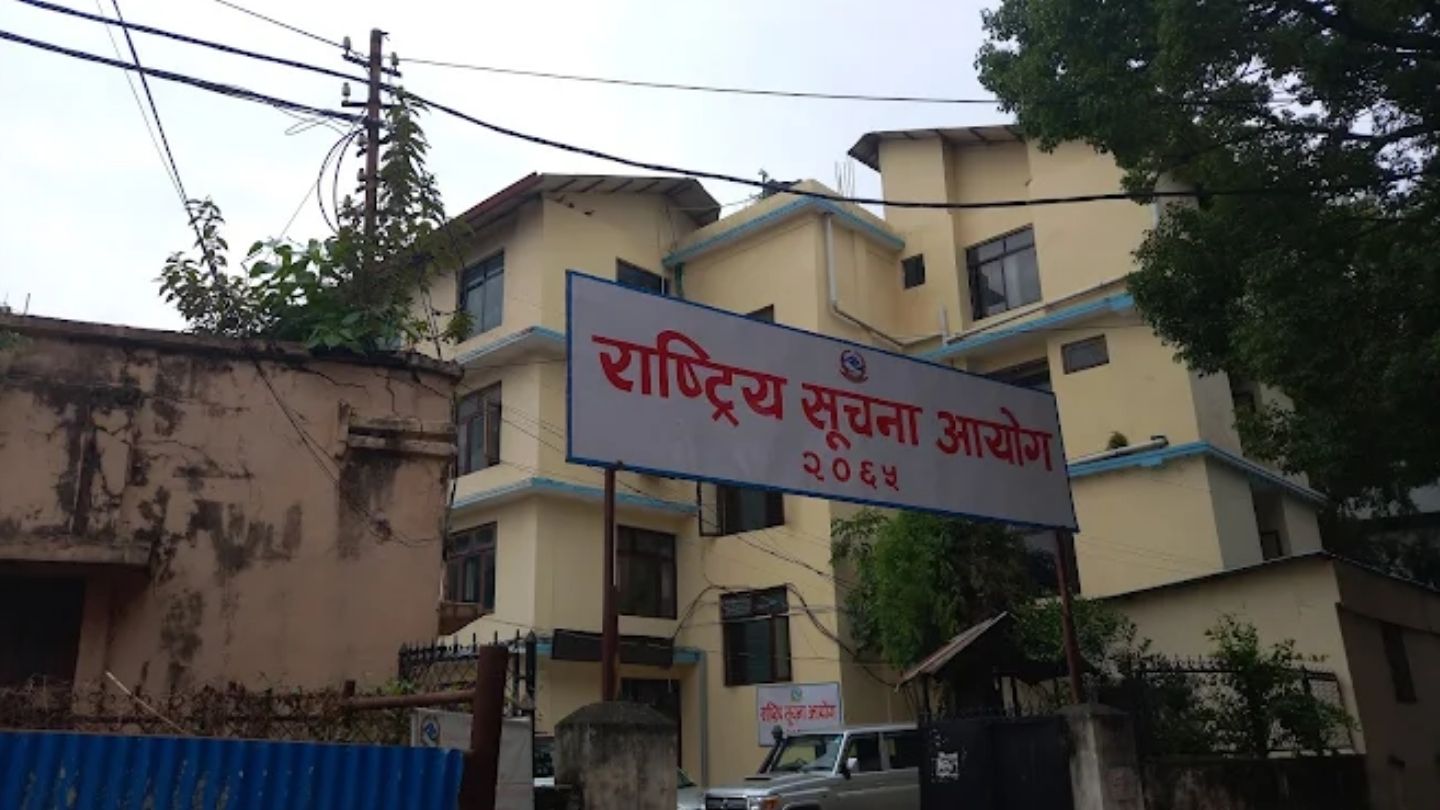
The National Information Commission (राष्ट्रिय सूचना आयोग/ Rastriya Suchana Aayog) is an independent commission established under this legal framework, with its central office located at Tripureshwor, Kathmandu.
In practice, when students do not receive clear information about scholarships, examination results/admission processes, public expenditure of colleges/schools, education programs of local levels, or the decisions and criteria of public bodies, confusion increases, time is lost, and the risk of wrong decisions rises. To reduce this risk, the Right to Information can become a “problem-solving tool”—but without identifying the right body, using the right wording, understanding the correct timelines, and maintaining a proper culture of written documentation, even exercising this right may not produce the expected results.
Therefore, this profile article explains, in a student-friendly and citizen-friendly manner, the role of the National Information Commission, the legal basis of the Right to Information, and the steps for requesting information and filing complaints, while also presenting practical improvement measures that public bodies and educational institutions can adopt.
When information is missing, citizens face three types of real problems:
Decision problem: Without knowing how to apply for a service/program, what documents are required, and what criteria apply, wrong decisions are made.
Time and cost problem: Without understanding “where to ask,” people may have to visit offices repeatedly, prepare unnecessary documents, or submit applications multiple times.
Accountability problem: Even when a public body makes a decision, if its basis, spending, plan, and results are not public, service seekers cannot question it.
For these reasons, the Right to Information is linked to transparency, accountability, and service quality—especially in areas such as education, health, social security, and public services, where access to information is decisive for both “personal decisions” and “public interest.”
Article 27 of the Constitution of Nepal provides every citizen the right to request and receive information on matters concerning themselves or the public interest, and also states that there is no obligation regarding information that must be kept confidential according to law.
The Act determines the framework for the information request process, the provision of information officers, timelines, complaints/appeals, the Commission’s powers, and fines and compensation.
In the international human rights system, the right to “seek, receive and impart information” is considered a part of freedom of expression (ICCPR Article 19). In addition, SDG 16.10 recognizes targets and indicator/measurement frameworks related to ensuring public access to information.
(These standards are directly or indirectly consistent with provisions in Nepal’s laws and Constitution; however, practical implementation follows the process of national law.)
The National Information Commission is established under the “Right to Information Act, 2064,” and its central office is located at Tripureshwor, Kathmandu. The Act also provides that the central office shall be in the Kathmandu Valley and that offices may be opened in various places as needed.
The Commission consists of:
1 Chief Information Commissioner
2 Information Commissioners (including at least 1 woman)
This structure is stated in the Act.
The Act provides for a recommendation committee for appointing the Chief Information Commissioner and Information Commissioners, consisting of the Speaker (Chair), the Minister of Information and Communications/concerned Minister or State Minister, and the President of the Federation of Nepali Journalists as a member. Based on the recommendation, the Government of Nepal appoints them, as provided by the Act.
Term: 5 years, with no reappointment to the same post (with a special provision allowing an Information Commissioner to be appointed as Chief Information Commissioner).
Qualification: Minimum bachelor’s degree from a recognized university, and at least 15 years of experience in mass communication/law and justice/public administration/information technology/management, as provided in the Act.
The Act defines the functions/duties/powers of the Commission in practical terms. Key points include:
The Commission can study and observe records/documents of public importance held by public bodies, and can issue orders for record listing and management.
The Act requires public bodies to regularly publish certain information related to their activities, income-expenditure, and decisions, and also mentions that such information must be updated every 3 months.
In practice, when this section is strong, pressure to file information requests decreases and service seekers save time.
The Act provides that the information officer must provide:
Information that can be given immediately, immediately, depending on its nature
Other information within 15 days
Information related to life and security within 24 hours
In cases where information is not provided, provided partially/incorrectly, or refused:
A complaint must be filed to the Chief within 7 days
If dissatisfied with the Chief’s decision, an appeal can be filed to the Commission within 35 days
The Commission must issue a final decision on the appeal within 60 days
The Commission can impose:
A fine from NPR 1,000 to NPR 25,000 if it is found that information was withheld/refused/incorrectly or partially provided/destroyed
A fine of NPR 200 per day for delay in providing information in time
A fine from NPR 5,000 to NPR 25,000 for misuse of received information
A fine up to NPR 10,000 if the Commission’s order is not complied with
Regarding compensation, the Act provides that if a person claims actual loss due to not receiving information or receiving incorrect information, they may submit an application for compensation to the Commission within 3 months.
The Act also provides that there will be a committee to classify certain information at the policy level, to determine the period for keeping it confidential, that it may be kept confidential for up to 30 years, and that it will be reviewed every 10 years.
The Act provides obligations to protect personal information held by public bodies from unauthorized publication, and in some cases, not to use it without written consent.
It also includes provisions to keep the identity of employees who provide information related to corruption/irregularities confidential, and provisions related to compensation if harm occurs.
When using the Right to Information, the most important step is to convert “your problem” into a clear sentence. Some common examples:
Annual budget of a school/college, public grants, expenditure details (if it falls within the scope of a public body)
Scholarship lists, selection criteria, cut-off/ranking rules
Criteria for examination/internal assessment, process for publishing results
Minutes of decisions on fee determination/discounts (if within the scope of the concerned public body/rules)
Annual plans, targets, budgets, and progress of education programs
School monitoring reports, teacher management, training/workshop details (except confidential/personal parts)
Student support programs, nutrition/material distribution lists (while protecting personal details, with overall details)
Application form of a program, required documents list, timelines
Decision-making body, basis/criteria of decisions, appeal process
Practical rule: Request “information,” not “explanations.” For example, specific demands such as “a copy of scholarship selection criteria” or “decision date and decision number” are more effective.
The requester must correctly identify the body that holds the information. The Act requires public bodies to designate an information officer.
Digital option: It appears that information can also be requested from public bodies through the National Information Commission’s “Information Request Portal (RTIMS).”
Generally, this is sufficient in an application:
Your name/address/contact
What information is needed (in a list/bullets)
The period for which information is required (e.g., 2080–2081)
The medium in which information is needed (paper, email, copies, inspection)
Signature with date
A format that can be used (sample):
Subject: Request to provide information pursuant to the Right to Information Act, 2064.
………… (Information 1: title/decision number/date/copy)
………… (Information 2: budget/expenditure details/progress report)
………… (Information 3: criteria/procedure/directive)
Applicant: name, address, contact
Date: …………
Note: The Act provides for stating a “reason” when requesting information. In practice, it is better to keep the reason short and objective (e.g., “educational purpose/personal concern/service use”); unnecessary debate or accusatory styles can complicate the process.
The Act provides timelines of “immediately/within 15 days/within 24 hours.”
When using RTIMS, it appears there is also a facility to track the status of the application.
The Act provides that fees must be based on actual cost and that if excessive fees are imposed, an application can be submitted to the Commission. (Specific fee rates may depend on regulations/office guidelines; applicable rates should be confirmed with the office.)
If the information officer does not provide information/refuses/provides partial or incorrect information, the Act provides that the concerned person must file a complaint to the Chief within 7 days.
If dissatisfied with the Chief’s decision, an appeal can be filed to the Commission within 35 days from the date of receiving notice of the decision.
The Act provides that the Commission must issue a final decision on the appeal within 60 days.
Depending on the nature of the violation, the Commission can impose fines (NPR 1,000–25,000; NPR 200 per day for delay; NPR 5,000–25,000 for misuse; up to NPR 10,000 for non-compliance with orders).
If there is a claim of actual loss due to not receiving information/receiving incorrect information/information being destroyed, an application for compensation can be filed to the Commission within 3 months.
The Act also provides that if dissatisfied with the Commission’s decision, an appeal can be filed to the Appellate Court within 35 days.
Article 27 of the Constitution states that there is no obligation regarding information that must be kept confidential according to law. Alongside this, Article 28 guarantees the right to privacy, requiring extra caution for personal data/documents/correspondence.
The Act provides for preventing unauthorized publication of personal information held by public bodies and, except in certain cases, not using it without written consent.
The maximum confidentiality period for policy-level classified information may be up to 30 years, with a review every 10 years.
Therefore, saying “confidential” does not always have to be accepted as the final answer in all cases—there are legal paths regarding the classification process/basis/period and review.
The Act provides that information received from public bodies must be used for the purpose for which it was obtained, and misuse may result in fines.
(This point is particularly important for students/researchers—practices such as citation, source protection, and removing personal details should be adopted.)
The Act imposes obligations on public bodies not only to “provide information,” but also to “manage information,” including:
Provision of an information officer
Provision of an information branch/section within the office (as needed)
Regular updating/publication of information—an update every 3 months is mentioned
Practical meaning: If public bodies perform proactive disclosure well, citizens can reach a point where they “find most things themselves,” and cases requiring Commission appeals decrease.
Problem: Scholarship “who and why?” is not clear
Solution: Request criteria, decision date/decision number, and minutes of the selection committee’s decision (excluding personal data).
Problem: Exam results delayed; rechecking/re-ranking unclear
Solution: Request, in bullet points, the results publication procedure, rechecking fee/timeline, and the decision-making body/contact.
Problem: Lack of clarity about public spending in schools/colleges
Solution: Request overall details of public grants, program budgets, and procurement-related information (excluding personal/confidential parts).
If guardians can see “official criteria” and “written decisions” when making education-related decisions for their children (school selection, fees, programs, facilities), reliance on rumors/informal brokerage information decreases.
If implementation improves rather than policy debate alone, disputes that reach the Commission decrease. Public bodies and educational institutions can adopt measures such as:
Clear identification of an information desk and information officer
Display clear information in the office: “Who is the information officer?” and “How to submit an application?”
Discipline of quarterly information publication (Proactive Disclosure)
The Act mentions an update every 3 months.
If summaries of budgets/progress/decisions are maintained regularly, many RTI requests decrease.
Records management (Records Management)
Problems of missing/unfindable records become a main excuse for “not providing information.” The Act also provides that the Commission can order record listing and management.
Digital tracking and timeline discipline
Using portals such as RTIMS to track applications/status increases citizen trust.
Personal data protection
To prevent unauthorized disclosure of personal details of students/employees, provisions related to personal information protection in the Act must be followed.
Q1: “If an office does not respond even after exceeding 15 days?”
The Act provides for providing information within 15 days. After exceeding the time limit, there is a path to file a complaint to the Chief within 7 days.
Q2: “If information is partial/incorrect?”
Providing partial/incorrect information is also a basis for complaint/appeal.
Q3: “Until when can an appeal be filed to the Commission?”
Within 35 days from the date of receiving notice of the Chief’s decision.
Q4: “If it is said to be confidential, nothing can be done?”
Not in all cases. The Constitution recognizes confidentiality exceptions, but the Act provides for a classification committee, a period (up to 30 years), and a review process.
Q5: “Can RTIMS be used to request information?”
It appears that there is a facility to request information from public bodies through the National Information Commission’s information request portal.
The National Information Commission is the “appeal and enforcement” center of Nepal’s Right to Information system—where the citizen’s right to request information and the public body’s duty to manage/provide information meet. By understanding and applying the fundamental right under the Constitution (Article 27) and the timelines, complaint-appeal mechanisms, fine-compensation provisions, and confidentiality balance provisions of the Right to Information Act, 2064, the Right to Information becomes not a “paper right” but a practical tool for solving problems in daily life.
Ultimately, an effective Right to Information system is not built by the Commission alone—only when it is linked with the record culture of public bodies, proactive disclosure, timeline discipline, and personal data protection does it build citizen trust. If students/guardians/educational institutions/policy-related stakeholders use the Right to Information responsibly and apply it institutionally, transparency, service quality, and decision reliability improve in the long term.
Disclaimer: This material is for informational and educational purposes. When using legal rights/processes, seek formal advice from a qualified legal professional or the concerned body according to your situation. This material is not a substitute for legal advice.
Constitution of Nepal, Article 27 (Right to information)
Right to Information Act, 2064 (timelines, complaint/appeal, fines/compensation, Commission powers)
National Information Commission (background/office)
RTIMS (information request portal)
ICCPR Article 19 (right to seek/receive information)
SDG 16.10 related UN/UNESCO metadata
Rastriya Suchana Aayog Right to Information (RTI) User Manual.PDF



.jpg)