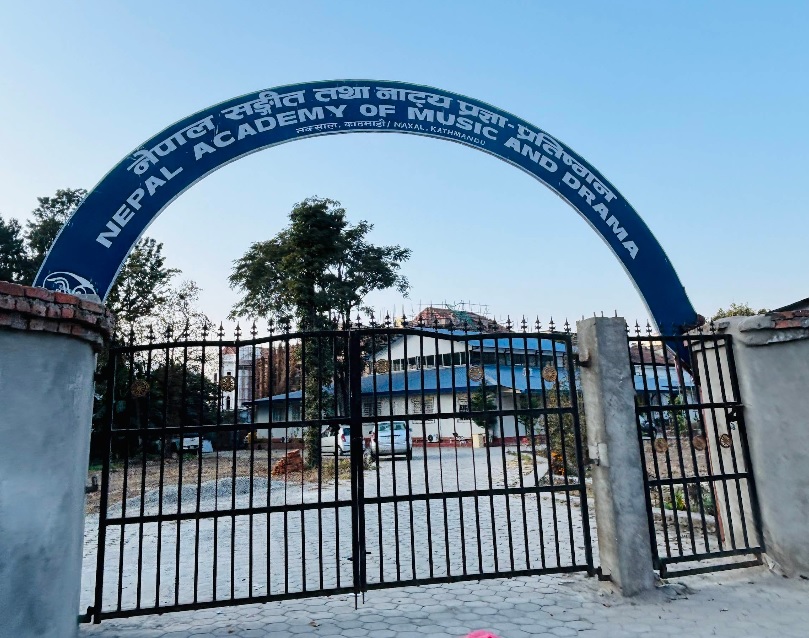
Nepal Academy of Music and Drama (नेपाल सङ्गीत तथा नाट्य प्रज्ञा-प्रतिष्ठान) is an autonomous national institution dedicated to the preservation, promotion, research, and development of music, dance, and theatre in Nepal. It was established under the Nepal Academy of Music and Drama Act, 2064 (2007 A.D.) and inaugurated in 2067 B.S.
The Academy emerged after the former Royal Nepal Academy was restructured into specialized cultural institutions. Its work covers academic research, cultural documentation, artist development, festivals, workshops, publications, national recognition, and international cultural relations. The Prime Minister of Nepal serves as Patron, while the Minister for Culture, Tourism and Civil Aviation serves as Guardian.
Official Name: Nepal Academy of Music and Drama
Nepali Name: नेपाल सङ्गीत तथा नाट्य प्रज्ञा-प्रतिष्ठान
Institutional Status: Autonomous national body
Legal Basis: Nepal Academy of Music and Drama Act, 2064 (2007 A.D.)
Inauguration: 2067 B.S.
Location: Naxal, Kathmandu, Nepal
Patron: Prime Minister of Nepal
Guardian: Minister for Culture, Tourism and Civil Aviation
Institutional Units: Seven departments
Chancellor: Mrs. Nisha Sharma
The Nepal Academy of Music and Drama was formed as part of the restructuring of the former Royal Nepal Academy. The restructuring established separate institutions with defined responsibilities for different areas of national culture.
The Academy operates under the Nepal Academy of Music and Drama Act, 2064 (2007 A.D.). It functions as an autonomous body responsible for protecting, studying, promoting, and developing Nepal’s musical, dance, dramatic, and theatrical traditions.
Its institutional scope includes both folk and classical art forms. The Academy also works with artists, researchers, cultural contributors, and institutions involved in Nepal’s performing arts.
The Academy seeks to serve as a national centre for artistic practice, research, and cultural preservation. Its vision combines the protection of Nepal’s cultural heritage with the continued development of creative work in music, dance, drama, and theatre.
It also aims to support the transfer of artistic knowledge and cultural traditions to future generations while providing space for new creative approaches within the performing arts.
The Academy’s mission is to protect, promote, and advance Nepal’s diverse musical, dance, dramatic, and theatrical traditions.
Its work focuses on academic research, documentation, professional artist development, national cultural programs, and platforms through which Nepali performing arts can be presented within Nepal and internationally.
The Nepal Academy of Music and Drama carries out institutional, academic, cultural, and administrative responsibilities related to the performing arts.
Its core functions include:
Promoting Nepali music, dance, drama, and theatre nationally and internationally
Preserving cultural heritage, artistic traditions, and folk practices
Organizing training programs, workshops, festivals, and cultural events
Conducting and supporting academic research
Producing publications and cultural documentation
Supporting artists and artistic development
Recognizing artists and cultural contributors
Assisting in the preservation of endangered folk traditions
Developing cultural institutions and related infrastructure
Building relations with international cultural institutions
The Academy is authorized to formulate policies and long-term plans for the growth of music, dance, drama, and theatre. This responsibility includes identifying institutional priorities and preparing programs for the protection and development of the performing arts.
Academic research is a major area of the Academy’s work. It conducts studies related to Nepali folk, classical, traditional, and contemporary performing arts.
Research and documentation activities support the preservation of artistic knowledge, performance practices, cultural histories, and traditions associated with different communities.
The Academy organizes workshops, training programs, festivals, and other activities for artists and cultural practitioners. It may also provide scholarships and other forms of support connected with artistic development.
These activities are intended to strengthen professional practice, encourage knowledge exchange, and create opportunities for artists to present their work.
The Academy is responsible for supporting the protection of Nepal’s musical, dance, and theatrical heritage. Its authority includes providing technical and financial assistance for efforts related to endangered folk traditions.
Preservation work may include research, documentation, performance programs, publications, recordings, and cooperation with artists and cultural institutions.
The Academy recognizes contributions made by artists and cultural figures. It may recommend and confer national-level honours and awards in areas related to music, drama, theatre, film, and other performing arts.
The Academy may establish and maintain relations with international cultural bodies. Such relations support cultural exchange and the presentation of Nepali performing arts beyond the country.
The Academy’s institutional structure includes three principal bodies responsible for academic, policy, administrative, and service-related functions.
The Academic Assembly (प्राज्ञ सभा) forms part of the Academy’s central institutional structure. It provides a formal platform for academic discussion, cultural planning, and institutional direction.
The Academic Council (प्राज्ञ परिषद्) is responsible for academic and program-related coordination within the Academy’s mandate.
The Service Commission (सेवा आयोग) is included in the institutional structure to address service-related and administrative responsibilities.
The Nepal Academy of Music and Drama has seven departmental units covering major areas of the performing arts and cultural documentation.
Dance Department
Drama Department
Theatre Department
Classical and Traditional Music Department
Department of Folk Music
Music Department
Audio Visual Department
Each department works within its assigned artistic or technical area while contributing to the Academy’s wider responsibilities in research, preservation, training, performance, and publication.
The Academy’s work in music covers folk, classical, traditional, and other forms of Nepali musical practice. Its departments support research, documentation, performance, training, and recognition of musical contributions.
The Dance Department addresses Nepal’s dance traditions and related artistic practices. Its work supports cultural preservation, artist participation, training, and performance activities.
The Drama Department and Theatre Department support dramatic and theatrical practice. Their responsibilities include programs connected with performance, research, training, festivals, and the development of theatre-related activities.
The Department of Folk Music focuses on Nepal’s folk musical heritage. This area is closely connected with the Academy’s responsibility to preserve traditions that may be endangered or insufficiently documented.
The Classical and Traditional Music Department works with established musical forms and practices passed through cultural and artistic traditions. Research, documentation, training, and presentation form part of this area.
The Audio Visual Department supports recording, documentation, and presentation activities. Audio-visual records can contribute to the preservation of performances, research materials, festivals, interviews, and cultural programs.
Mrs. Nisha Sharma serves as Chancellor of the Nepal Academy of Music and Drama. She is also identified as the Chairperson/Chancellor of NAMUDA.
The leadership of the Academy is responsible for guiding its institutional work, coordinating its cultural and academic responsibilities, and supporting collaboration among departments, artists, partners, and cultural stakeholders.
The Academy recognizes artists and cultural contributors through the Nepal Music and Drama National Academy Awards.
Prakash Dutraj: National Music and Drama Award
A total of two awardees were recognized in 2025:
Bhuwan KC: National Theatre and Film Award
Shambhujeet Baskota: National Music and Drama Award
These awards reflect the Academy’s responsibility to acknowledge contributions made in music, drama, theatre, film, and related cultural fields.
Address: Naxal, Kathmandu, Nepal
Phone: +977-01-4528404, +977-01-4528405
Email: namuda2067@gmail.com




.jpg)